

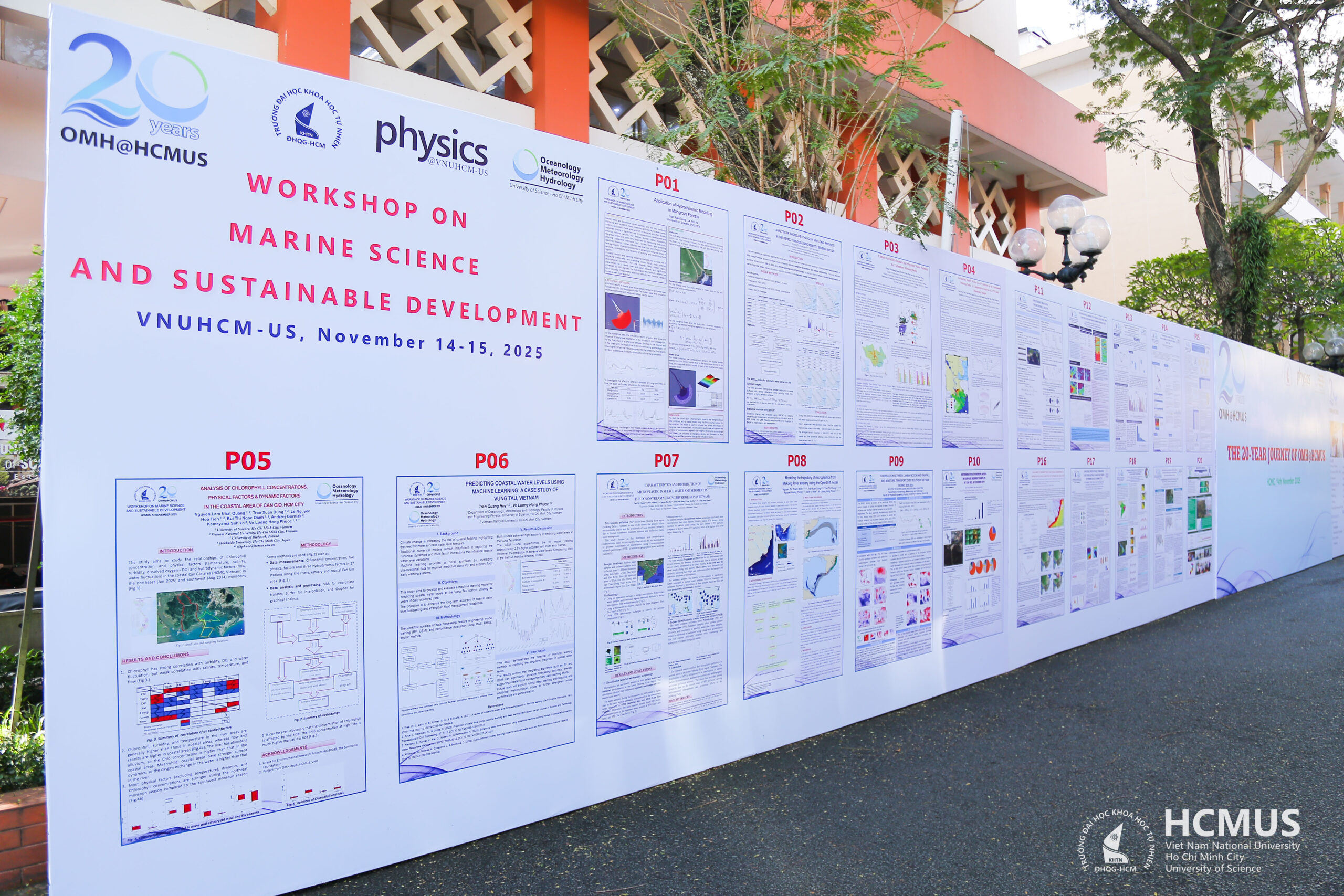
On 14 November, the Faculty of Physics – Engineering Physics, VNUHCM-University of Science inaugurated the Workshop on Marine Science and Sustainable Development, a special event marking the 20th anniversary of the establishment of the Oceanography discipline within the Department of Oceanography, Meteorology, and Hydrology. The opening ceremony took place in an exciting atmosphere, attended by many scientists, international experts, and young researchers who shared scientific perspectives on the ocean.
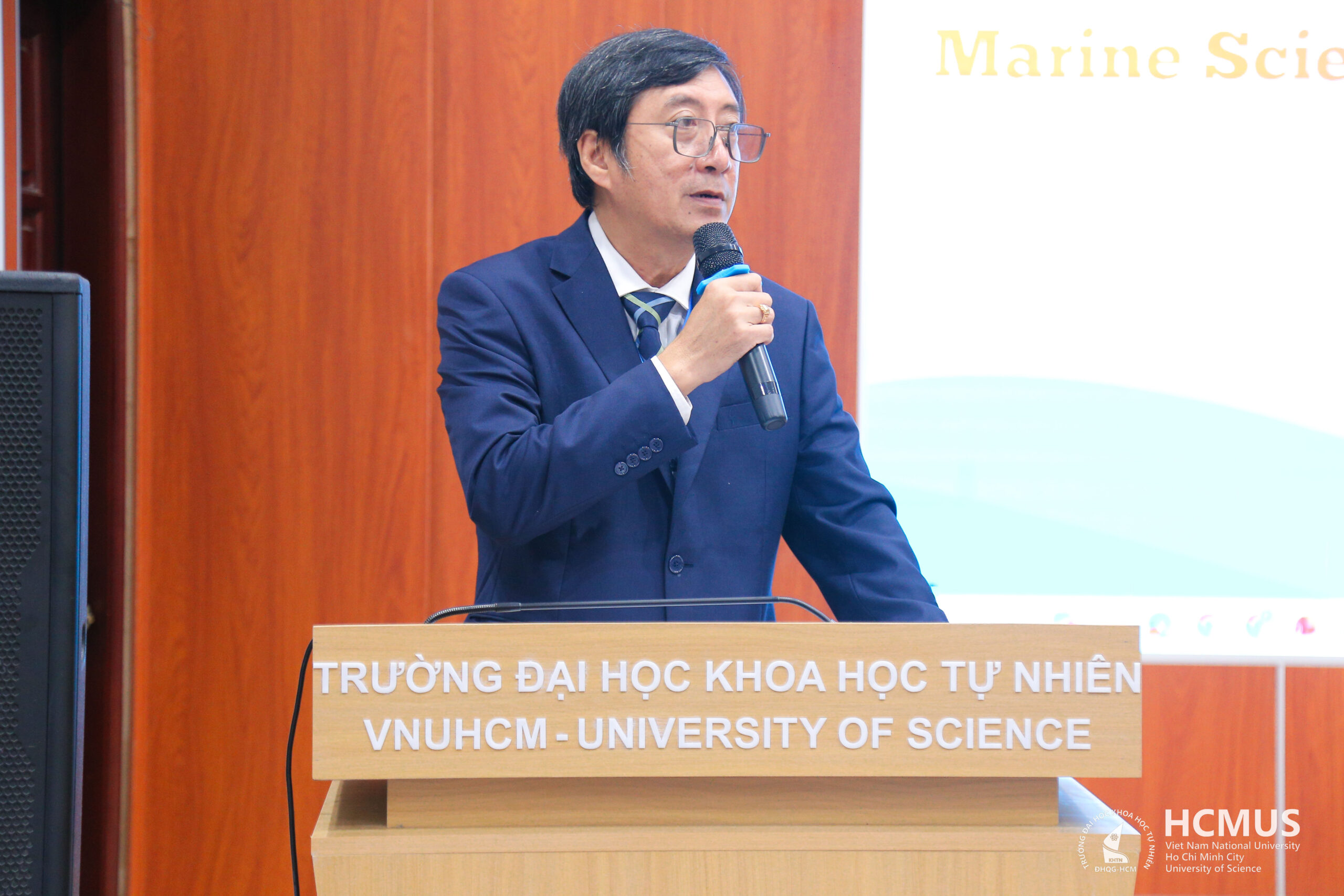
Speaking at the Opening Ceremony, Assoc. Prof. Trần Lê Quan—President of the University—expressed his honour in welcoming scientists, experts, and young researchers to this meaningful forum. The President of the University affirmed the critical role of the workshop: “Today’s event brings together scientists, experts, and young researchers to share the latest findings and innovative ideas aimed at a sustainable future for our oceans. This cooperation not only promotes marine science but also strengthens global connectivity in addressing shared challenges such as climate change, marine pollution, and sustainable coastal management.”
The Marine Science and Sustainable Development Workshop included 16 presentations, divided into three specialised discussion sessions:
Session 1: Marine Science and Sustainable Development
This session featured talks on the 20-year journey of OMH@HCMUS by Vo Luong Hong Phuoc; the advancement of coastal monitoring with indigenous HF radar development, presented by Hwa Chien; global trends in oceanic fronts and their implications for marine ecosystems, presented by Andrew Fischer, Kai Yang, and Phuc TD. Le; high-precision measurements in marine chemistry (DMS as example) surviving and advancing in any environment, presented by Sohiko Kameyama; and machine learning applications for classification and regression, presented by Quoc Pham.
Session 2: Microplastics – From Research to Forecasting
This session focused on urgent environmental challenges, beginning with Chemicaldrift – a new open source ocean pollution model, presented by Lars R. Hole, Manuel Aghito, and Øyvind Breivik. Further presentations included surface water contamination with microplastics in Poland, detailing trends and challenges, by Piotr Zieliński and Karolina Mierzyńska; classification and prediction of microplastics by Vo Luong Hong Phuoc and colleagues; the challenges and opportunities of detection and classification of microplastics using artificial intelligence, presented by Pham The Bao and a large group of co-authors; and integrating AI and GIS for forecasting saltwater intrusion in Ho Chi Minh City, Viet Nam under climate change, presented by Vo Thi Kim Kieu, Pham Thi Tuyet Huyen, and Nguyen Kim Loi.
Session 3: River–Sea Processes and Coastal Zones
This session addressed dynamic environments, with topics covering the formation mechanism of a sand bar in Cua Dai – Thu Bon River mouth, presented by Vu Tuan Anh and Nguyen Thi Thuy Dung; sub-mesoscale flows and near-inertial motions in the Mississippi-Atchafalaya River plume in the Gulf of Mexico, presented by Pat Welch; water resource characteristics of the Mekong Delta, including current status, challenges, and sustainable management solutions, presented by Tran Dang An; the use of sand on a global scale and the impact on the marine environment, by Klaus Schwarzer; coastal protection strategies with nature-based solution for climate change adaptation in coastal Mekong Delta, presented by Le Xuan Tu; and shifting tidal dynamics in the Mekong Delta, unravelling the acceleration of tidal amplification and its anthropogenic roots, presented by Nguyen Cong Thanh, Tran Van Xuan, Nguyen Nghia Hung, and Dang Truong An.
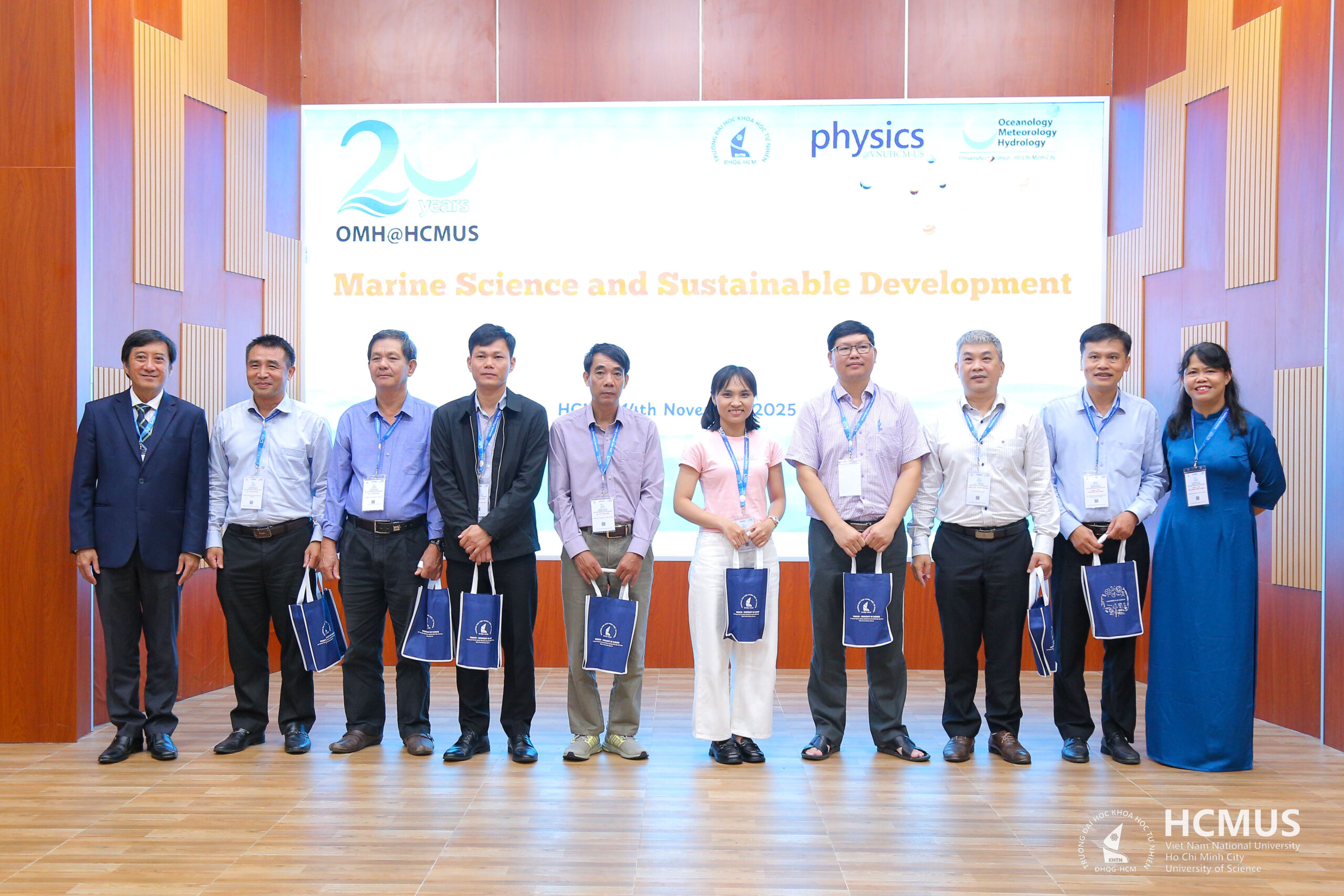
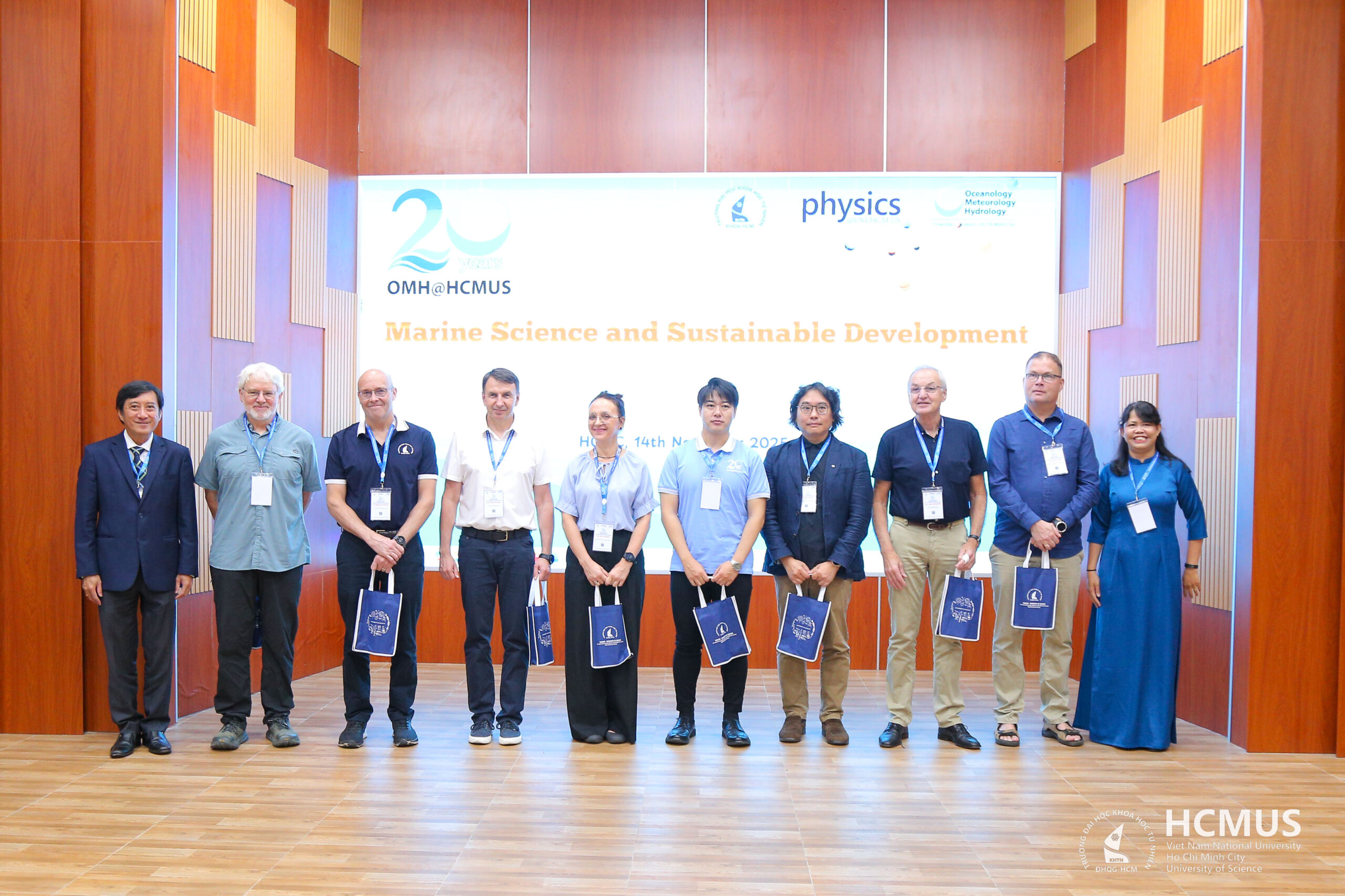
The event was attended by many scientists, international experts, and young researchers.
The workshop concluded with an affirmation of the crucial role of marine science in providing data, solutions, and strategic direction to protect the ocean sustainably and promptly against current environmental fluctuations. The specialised discussion sessions highlighted the importance of applying modern technology—from HF radar and precise chemical measurement methods to Artificial Intelligence (AI) and Machine Learning—to enhance the capacity for monitoring and forecasting complex ocean systems. The focus of the workshop was not only on basic research into ocean dynamics but also extended to urgent environmental challenges such as microplastic pollution on surface waters and the impact of climate change on coastal areas and estuaries. The solutions presented, from marine pollution modelling to nature-based coastal protection strategies, demonstrated the transformation of scientific knowledge into strategic action.

Leave a Reply