

![[OUTSTANDING ROLE MODELS] ASSOC. PROF. TRẦN THỊ NHƯ HOA: “RESEARCH IS A JOURNEY OF INTEGRITY, PERSISTENCE, AND MENTORSHIP”](https://en.hcmus.edu.vn/wp-content/uploads/2026/02/608543843_1284652037029256_3532234763361037157_n.jpg "608543843_1284652037029256_3532234763361037157_n")
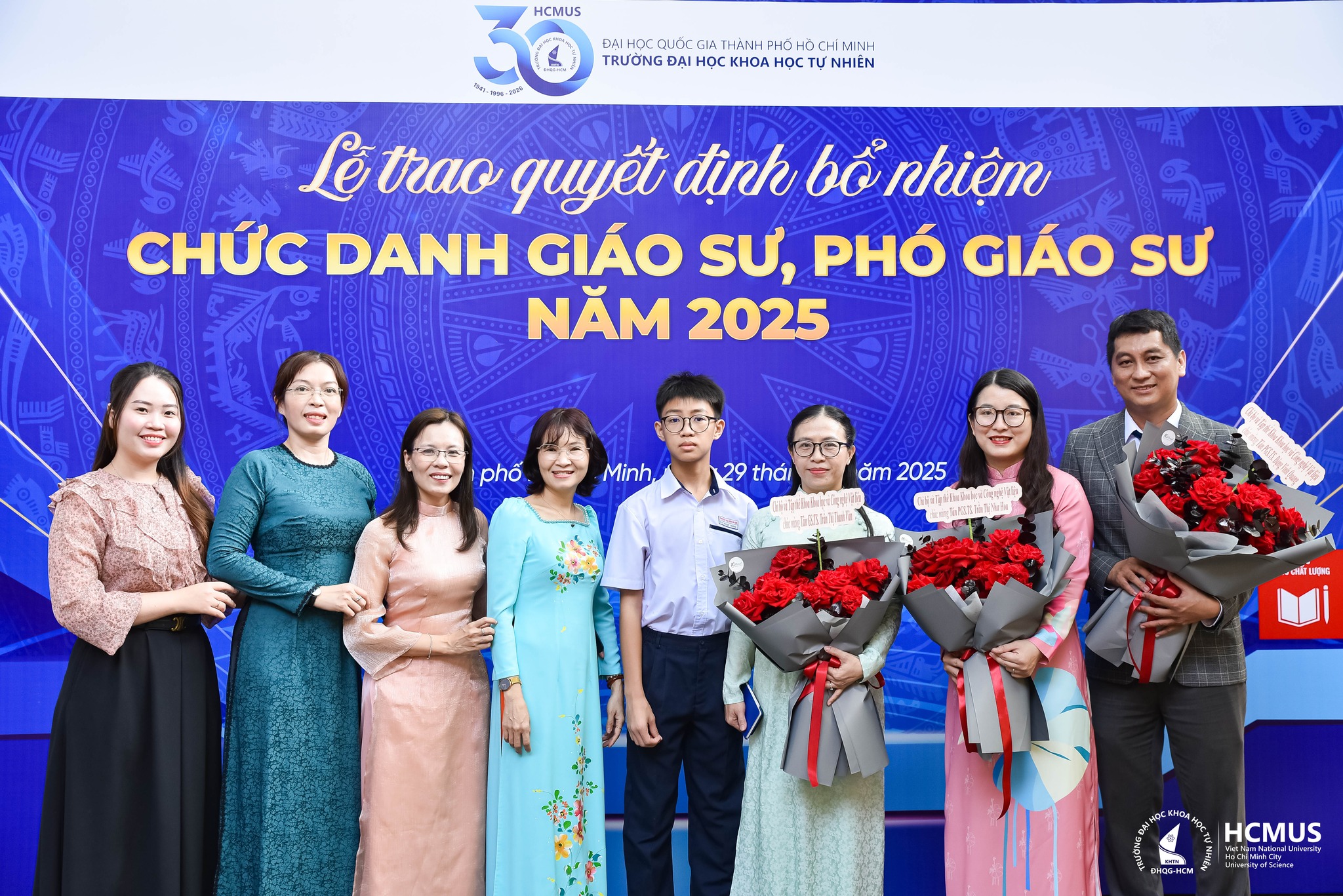
Assoc. Prof. Trần Thị Như Hoa at the appointment ceremony.
Appointed to the rank of Associate Professor on 19/11/2025, Dr Trần Thị Như Hoa – a lecturer at the Faculty of Materials Science and Technology, HCMUS – is a prominent young scientist with a distinguished record in nanomaterials and optical sensors. Her journey is a blend of scientific passion, resilience, and a deep commitment to her students. In the conversation below, she reflects on her path to science and the philosophy she pursues on her dedicated journey.
* Assoc. Prof. Trần Thị Như Hoa, what led you to scientific research and the field of nanomaterials – optical sensors?
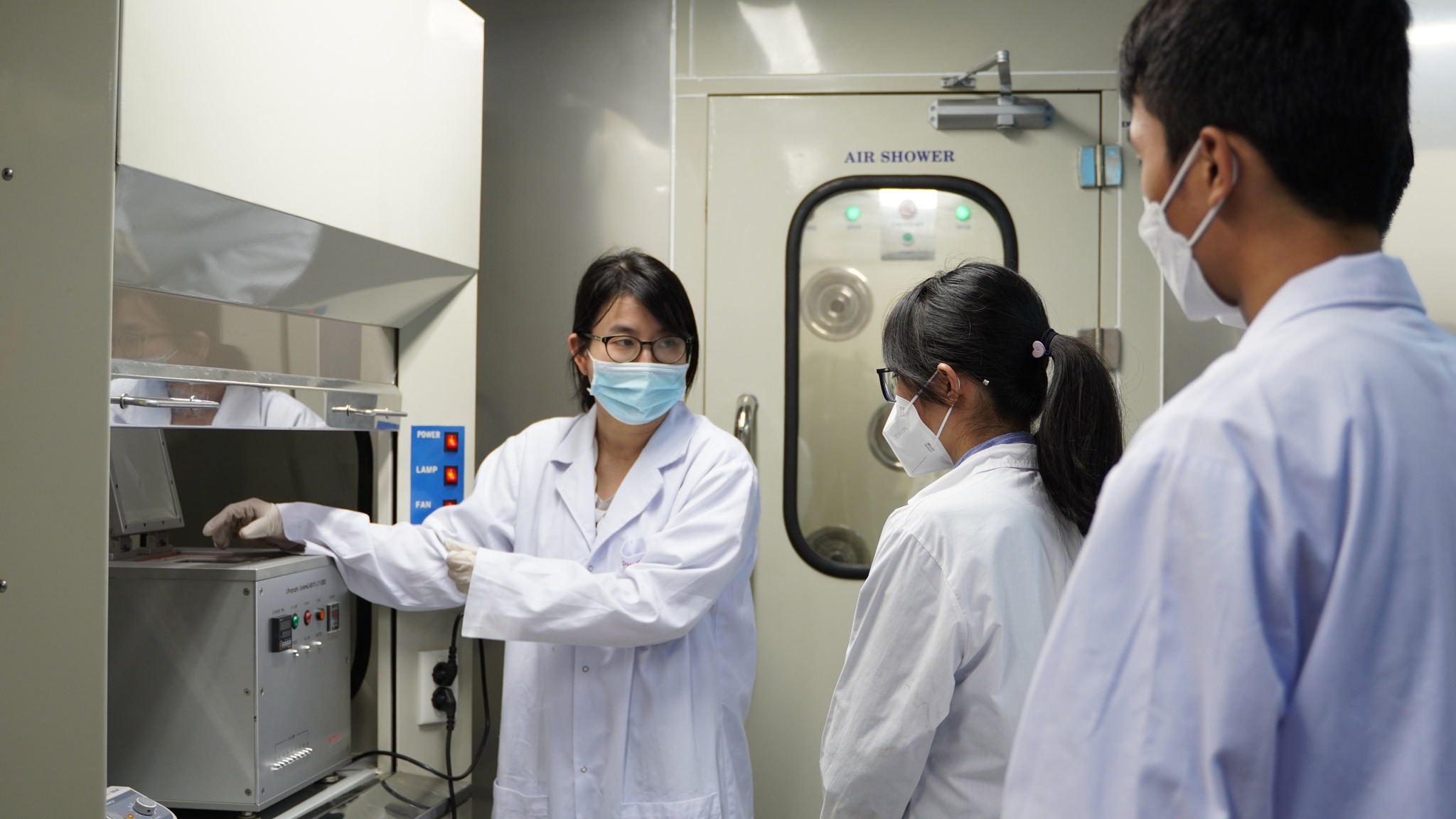
Born into a family with a strong educational tradition, I grew up with a natural curiosity and a habit of questioning everything. Upon entering university to study Thin Film Materials at HCMUS, I realised I enjoyed ‘doing’ as much as thinking. The laboratory sessions—the feeling of manually creating materials and verifying results—made me understand this was the long-term path for me.
A deeper turning point occurred during my graduation thesis. Dealing with real-world topics, hours of data analysis, and editing reports late into the night provided a sense of challenge and happiness. After graduating, I taught and continued researching. In 2015, I received a PhD scholarship in Nanophysics at Gachon University (South Korea). This period abroad deeply impacted me; it was my first time working in an environment with modern equipment, standard procedures, and specialized research groups. From there, I defined my direction: nanomaterials applied in sensors, especially optical sensors for bio-medicine, environment, and food—essential societal needs.
* In your studies and research, which figures, events, or environments created major shifts in your scientific thinking?
As a master’s student, I was fortunate to be supervised by Prof. Phan Bách Thắng. He was not only an expert but also a person who inspired a spirit of commitment to science. The models he built, from the INOMAR centre to the strong research groups of VNUHCM, showed me that research is not just about experiments, but about building a knowledge ecosystem, training the next generation, and creating real impact.
The next major milestone was a research collaboration at the University of Arizona (USA). At the Wyant College of Optical Sciences, I observed the scale and operation of international groups where optics, materials, bio-medicine, and image processing converged. That multidisciplinarity made me realise modern science no longer stands alone. Interestingly, this trip included a valedictorian student from the faculty. Experiencing an advanced research environment alongside a student helped me understand the teacher’s role more deeply: not just to lead, but to pave the way and create opportunities for the youth to step out into the world. Since then, I have actively involved students in projects, letting them participate in every step from experiments to writing papers. Looking back, the teachers, trips, and environments I experienced have all shaped my research mindset: science must be multidisciplinary, connected, and socially responsible.
* As a female scientist, what pressures have you faced, and how do you balance research, teaching, and family?
I believe everyone in research faces moments of instability, but for women, these are often multiplied. There was a stage where I had to simultaneously complete projects, write international papers, supervise student theses, coordinate the lab, and return home to the roles of mother and wife. There were nights I was finishing a manuscript for a journal while soothing my child to sleep. There were times only one experiment remained, but I had to set it aside because my child was ill. At those moments, I truly wondered if I had the strength to continue.
What helped me through was family. My parents have always been a strong spiritual support, reminding me that difficulties are temporary. My husband shares the housework, understands the job pressure, and lets me pursue my research passionately. Additionally, my students are a great source of motivation. Seeing them tackle research problems with perseverance makes me feel the meaning of my work. I remember during COVID-19, two of my students were stuck in HCMC and stayed at my house for a whole month. Sharing such circumstances with students made me realise that teaching is a journey of deep emotion.
Time has taught me one thing: no one balances everything perfectly, but we can choose what is most important to keep and what is unnecessary to let go.
* Of the many projects you have completed, which are you most proud of?
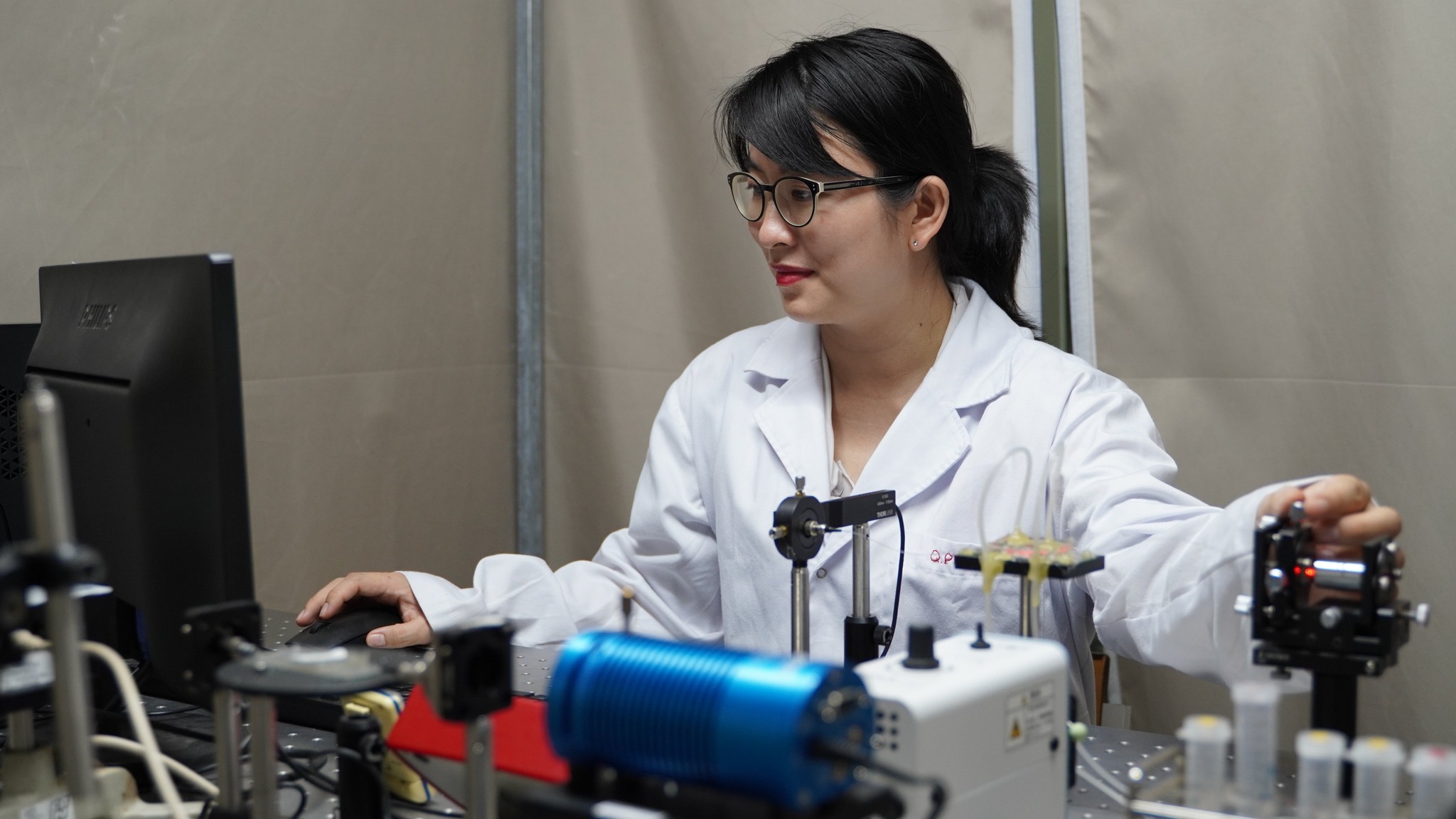
There are two works that bring back many emotions. First is the work published in RSC Advances (Q1, 2020) – the first project I conducted after returning to the country. It was also the topic where I supervised the K16 students – the first group I accompanied as a PhD. We used gold nanoparticles (AuNPs) to detect serotonin based on the LSPR phenomenon. It was a difficult project for final-year students, but they worked very seriously. The success was not just the paper, but the journey of the students: all three are now in postgraduate studies, with two pursuing PhDs in Taiwan and South Korea. This is a great source of pride for me, seeing the ‘seeds’ I sowed sprout.
The second is the paper in Materials Advances (Q1, 2025). We had to add DPPH experiments to answer reviewers while the lab lacked chemicals. I had to contact many colleagues to borrow materials and run the tests myself. It was a stressful period, but the paper was eventually accepted. That moment gave me a special feeling: science is a series of small efforts creating a grand result.
Beyond that, the research direction I am most ‘obsessed’ with is nanomaterials applied in sensors. This is a field where every small change in structure or solvent creates new results—both fundamental and applied, challenging and creative. I think of it as my ‘scientific identity.’
* What new responsibilities does the title of Associate Professor bring, and what is your message to young people entering research?
When I was recognised as an Associate Professor, my emotions were both overwhelming and reflective. I thought immediately of my parents, husband, children, and the generations of students who have accompanied me. The title is not just recognition but a reminder to strive harder. I have set three new responsibilities:
In research: Continuously improve the quality of work, ensuring transparency and applied value.
In training: Become a reliable teacher, inspiring and creating the best environment for students.
With the scientific community: Actively cooperate internationally, participate in councils, share knowledge, and raise the research capacity of Viet Nam.
If I were to send a message to the youth, I would say that research is not a shortcut. It is a journey of curiosity, patience, and honesty. Failure is not scary. What is most scary is not trying. Keep the passion, maintain scientific integrity, and take steady steps. Success will come as a consequence of persistence.
Thank you very sincerely, Assoc. Prof. Trần Thị Như Hoa, for sharing your time!
Leave a Reply