

![[OUTSTANDING ROLE MODELS] ASSOC. PROF. TRẦN NGỌC DIỄM MY: FROM CHILDHOOD ‘WILD DREAMS’ TO A STEADFAST JOURNEY IN ECOLOGICAL SCIENCE](https://en.hcmus.edu.vn/wp-content/uploads/2026/02/613334782_1286666543494472_3682813916983481453_n.jpg "613334782_1286666543494472_3682813916983481453_n")
Assoc. Prof. Trần Ngọc Diễm My at the appointment ceremony.
From childhood dreams of oceans and wild forests to over two decades of dedication to environmental ecology and natural resource conservation, the scientific journey of Assoc. Prof. Trần Ngọc Diễm My is a quintessential story of patience, integrity, and deep community engagement. Recognised as an Associate Professor by the State Council for Professor Titles in 2025, she views this not as a destination, but as a milestone of responsibility on her path of ‘walking slowly with nature’ and ‘going the distance with science.’
* Assoc. Prof. Trần Ngọc Diễm My, what led you to the field of ecological science that you pursue today?
Since I was a child, I have loved documentaries about wildlife and the oceanic expeditions of Jacques Cousteau on the ship Calypso. Back then, I dreamed of sitting in a jeep tracking lions on the savannah, paddling through forest swamps, or seeing whales and dolphins in the wild. Perhaps those dreams led me to the Faculty of Biology – Biotechnology at HCMUS in 1999.
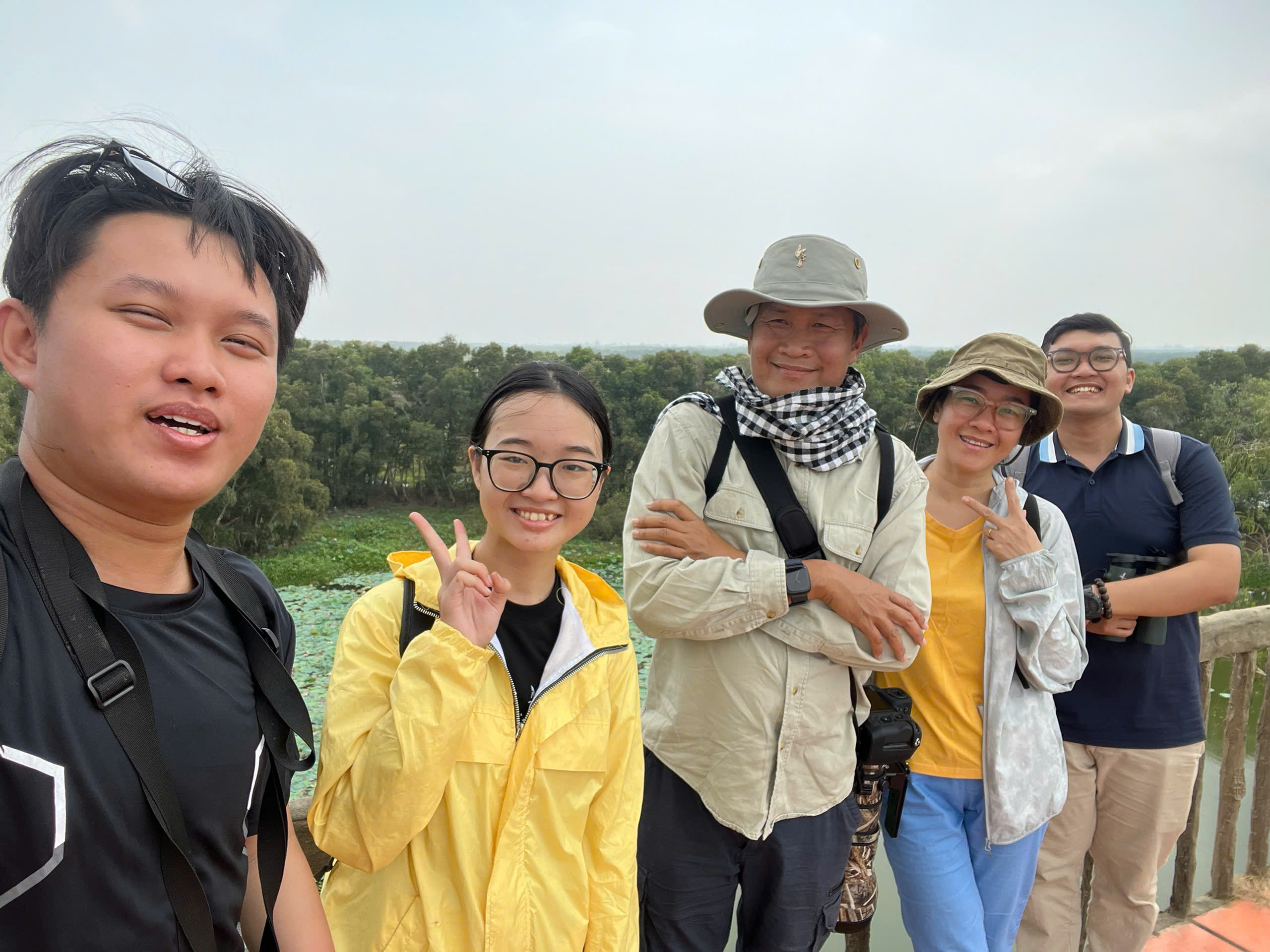
In my first semester, I chose to major in Ecology, partly because seniors said it involved a lot of travel. Upon graduating and staying at the university to join research projects, I witnessed the scientific spirit of my lecturers. I realised this path not only satisfied my passion but offered a chance to contribute—however modestly—to restoring the natural world. Field trips to Lo Go – Xa Mat National Park, Tram Chim, and the Can Gio mangroves, along with my first study trip to Bremen (Germany), truly bound me to the path of ecological research and conservation.
* Looking back at your student years, which lecturers had the most profound influence on your path?
I have been fortunate to meet many mentors who shaped who I am today. There was lecturer Dương Ngọc Dũng—a devoted, meticulous, and gentle teacher who treated students like his own children; he passed on the research direction of zooplankton and zoobenthos that I follow to this day. Lecturer Lê Bạch Mai, though not my direct supervisor, was someone who always listened and allowed me to speak my mind without worry. Lecturer Đồng Thị Bích Thủy left a deep impression with her seriousness, precision, and a scientific mindset geared toward community service.
Notably, Dr Trần Triết served as my Master’s and PhD supervisor and provided numerous opportunities for practical experience through domestic and international projects. His total commitment to science and the trust he placed in me became the motivation for me to pursue this long road.
* Was there a professional turning point that changed how you view your field?
It was my trip to the ZMT Leibniz Centre for Tropical Marine Research in Bremen, Germany. It was my first time abroad, participating in an international collaboration between Viet Nam and Germany on the Can Gio mangrove ecosystem. The trip helped me realise the value of multidisciplinary and multinational cooperation in solving urgent environmental issues. I learned a disciplined scientific working style and effective time management from international colleagues.
Moreover, I saw the true value of tropical ecosystems—things often overlooked during economic development but which other countries strive to restore. From there, we continued basic research but on a modern technological foundation, aiming not just for identification but for exploiting the application of ecosystems in restoration. Conservation results are measured in decades, not days. The most important value isn’t a thick report, but the fact that local people still remember your face and name. Seeing the community’s recognition in Can Gio after many years gave me a true sense of purpose.
* What has been the most difficult stage on your scientific journey?
Scientific research is inherently hard, and for women in ecology and conservation, it is even more so. Challenges come from long field trips, sample analysis, seeking projects so students have opportunities, international publication requirements, and family responsibilities. I am lucky to have family support in childcare, mentors who quietly encourage me, and students ready to assist in everything. These hardships taught me vital lessons: time management, setting priorities, patience, and how to balance life.
* How did you feel when you were recognised as an Associate Professor, and what message do you have for young people starting their research journey?
When I received the news, I was truly happy and moved. My first thoughts were of those who believed in me: my family, teachers, friends, and students. It made me look back at the long journey—the hours hunched over a microscope, wading waist-deep in mangrove mud, and the constant learning. To me, this title is a responsibility to improve research quality, train students, and contribute to Vietnamese science.
To young researchers, I want to say: studying nature is a beautiful but challenging path. Nature is not in a hurry, and neither is science. Be patient, keep your passion, and do not fear slow initial steps. If you do science with honesty and respect for the environment, you will not only become good researchers but also people who create positive changes for the future.
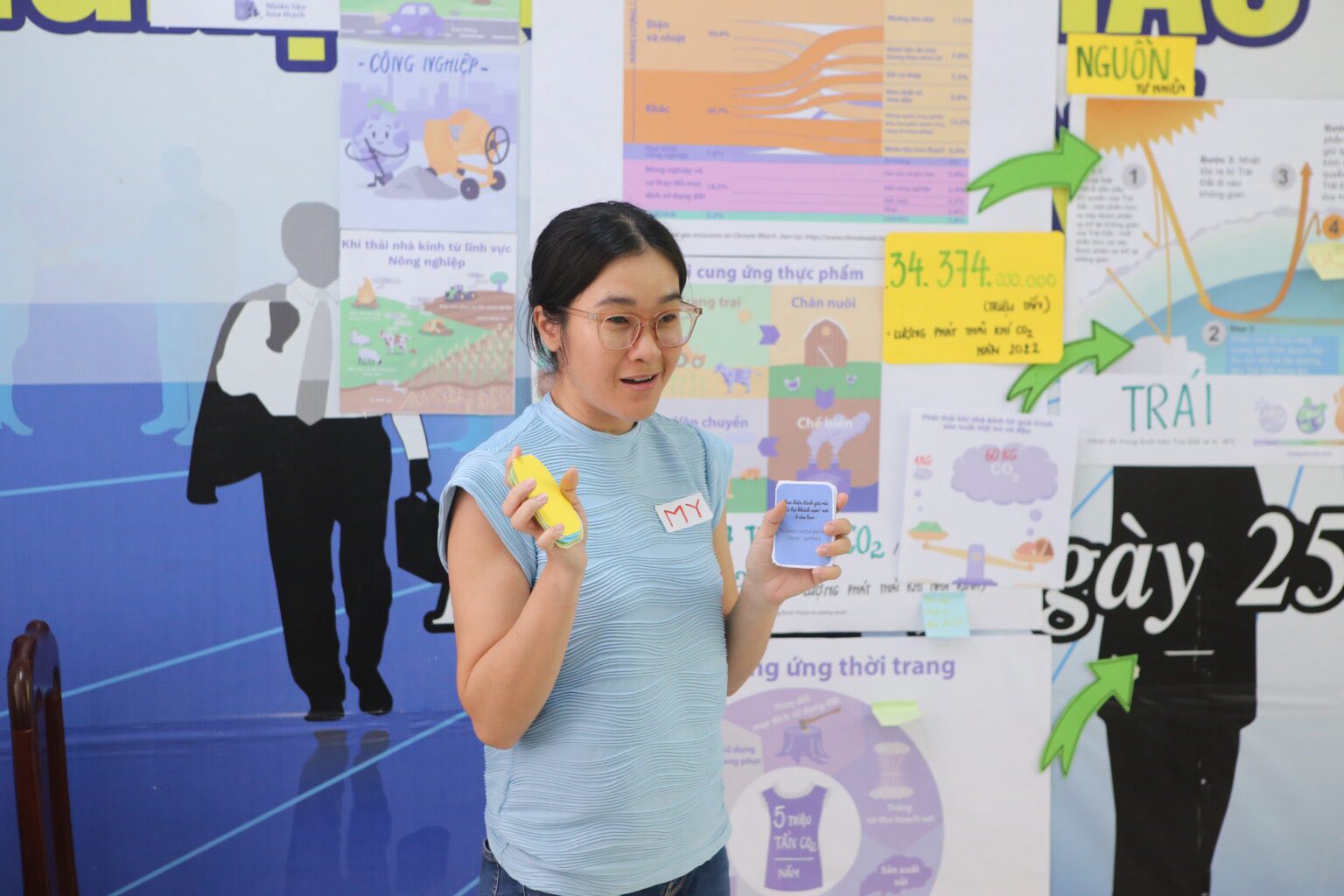
Assoc. Prof. Trần Ngọc Diễm My (born 1981) is a prominent female scientist in Ecology, currently a Senior Lecturer at the Department of Ecology and Evolutionary Biology, Faculty of Biology and Biotechnology, HCMUS. With over 20 years of dedication, her research focuses on zooplankton and zoobenthos biodiversity, environmental bio-indicators, and ecosystem health assessment. She has led or participated in over 20 research projects, including high-impact studies on industrial wastewater quality and the recovery of the Can Gio mangrove ecosystem. Her scientific ‘estate’ includes 31 published papers and 3 monographs/textbooks. Beyond research, she is a dedicated educator, successfully supervising 15 Master’s students and over 20 undergraduates. She has been awarded the Certificate of Merit from the Minister of Education and Training and prestigious awards such as the Young Leaders Fellowship from the Nippon Foundation (Japan).
Leave a Reply