

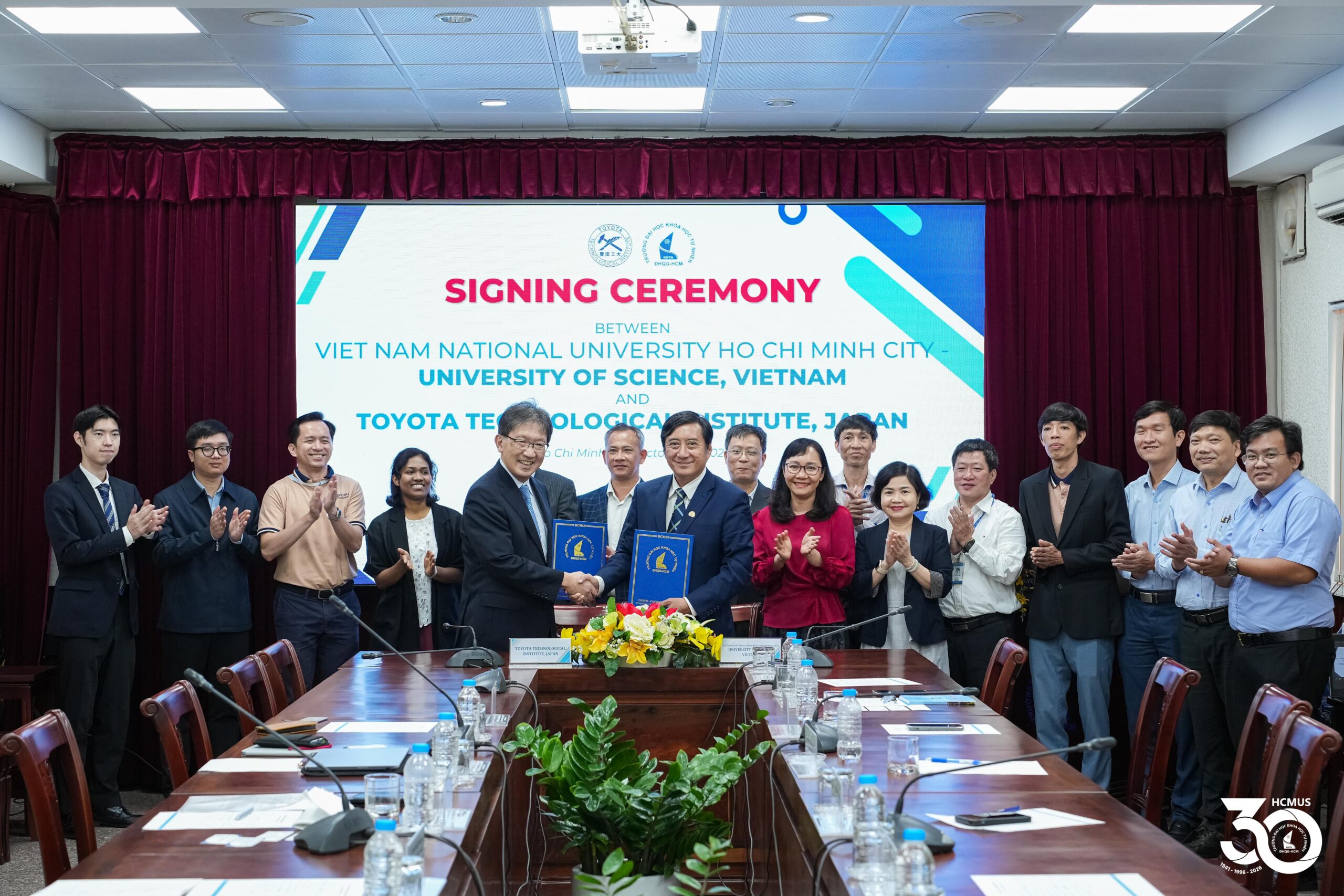
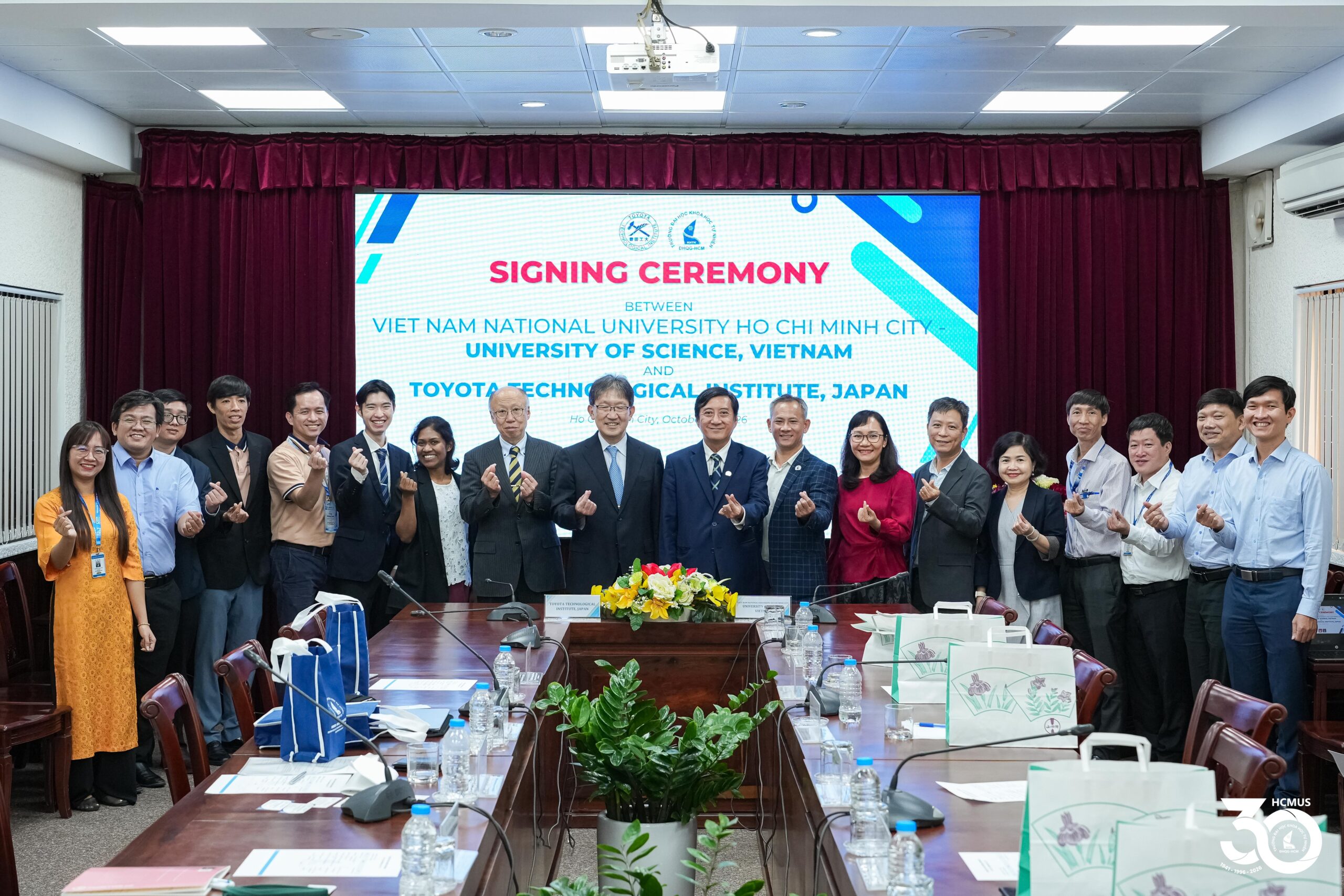
On 13 October 2026, VNUHCM–University of Science (HCMUS) and Toyota Technological Institute (TTI), Japan, signed a five-year extension of their Memorandum of Agreement (MoA), continuing to promote cooperation in education, academic exchange and scientific research. The renewed agreement builds on a partnership between the two institutions established in late 2006.
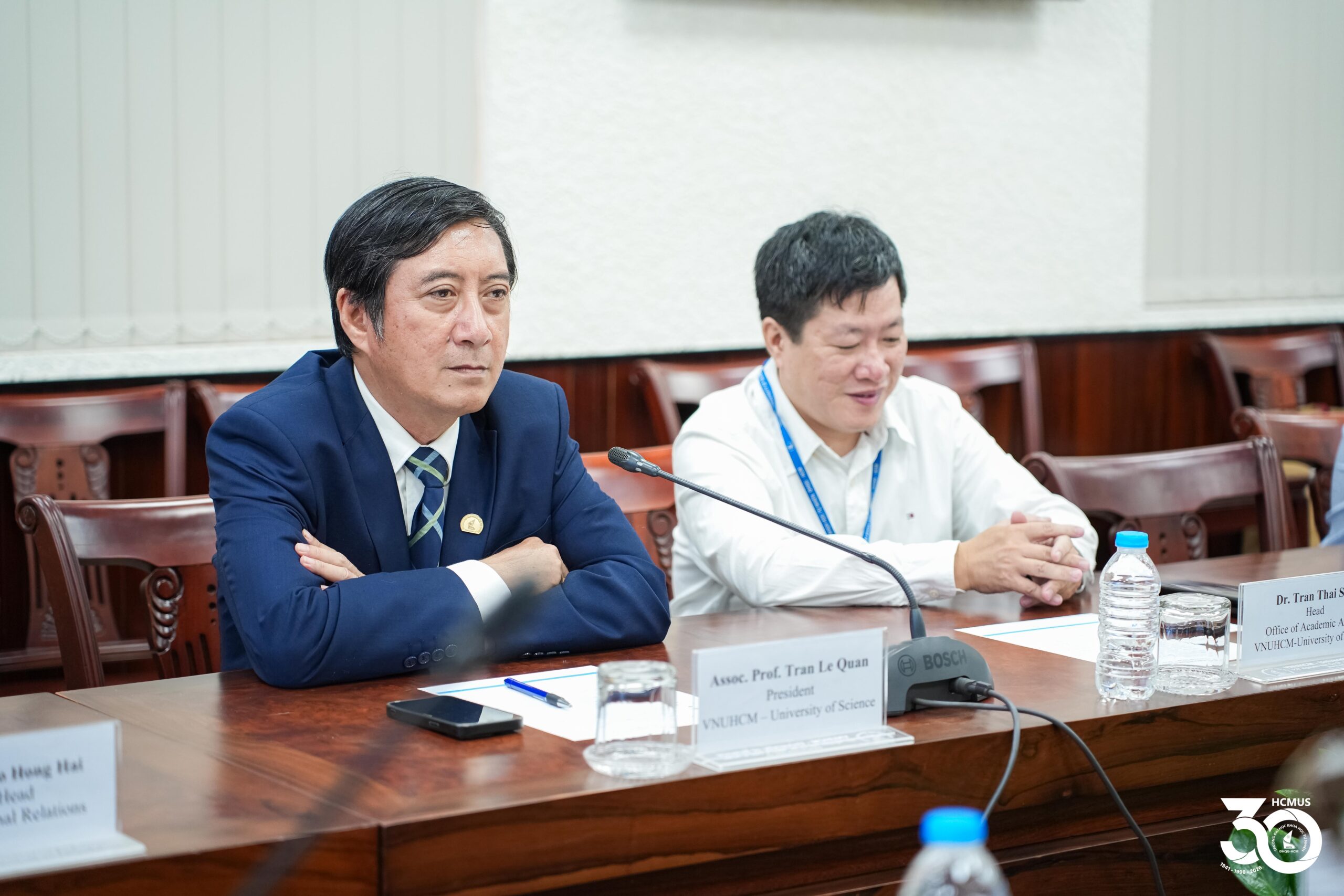
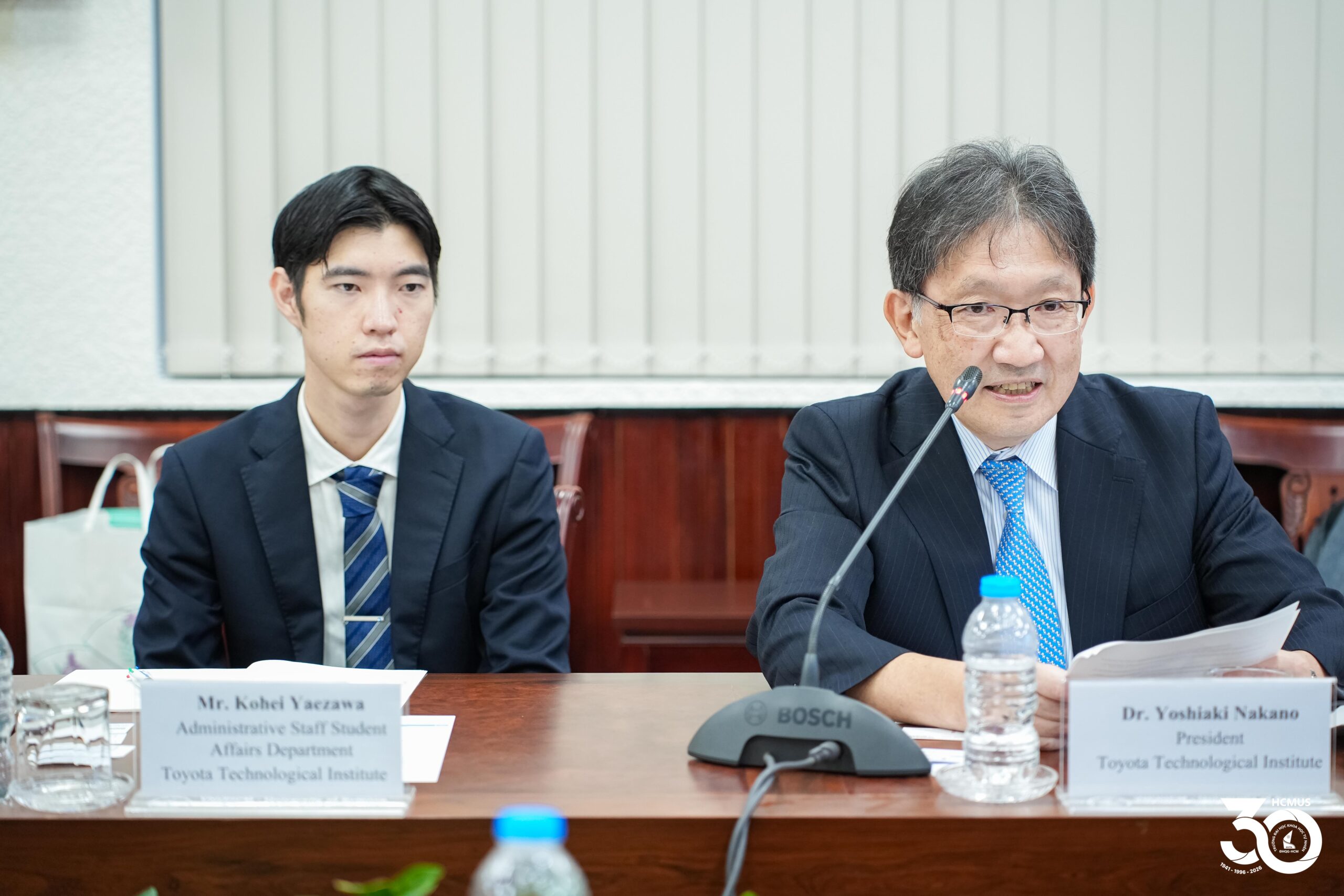
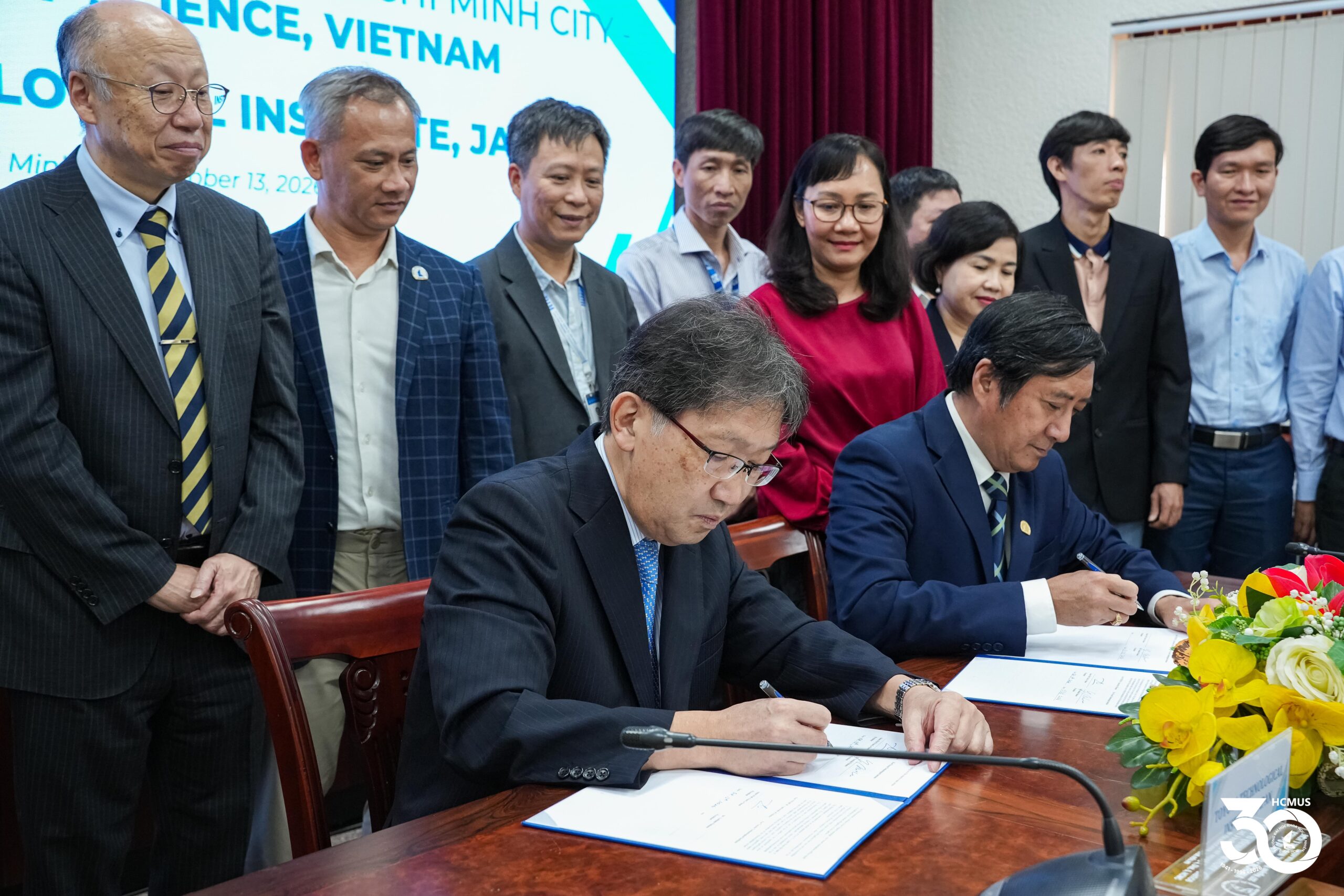
The extension was signed by Assoc. Prof. Trần Lê Quan, President of VNUHCM–University of Science, and Dr Yoshiaki Nakano, President of Toyota Technological Institute. The agreement focuses on strengthening academic cooperation through exchanges of academic staff, research specialists and technical personnel; the development of joint research projects; and the establishment of student exchange programmes, subject to the availability of suitable funding.
In scientific research, both institutions aim to strengthen exchanges of academic staff and specialists through short- or long-term visits, depending on the circumstances and resources available to each institution. Collaborative activities include designing joint research projects, preparing research funding proposals, exchanging scientific publications and information, and sharing information on technologies relevant to research and professional collaboration.
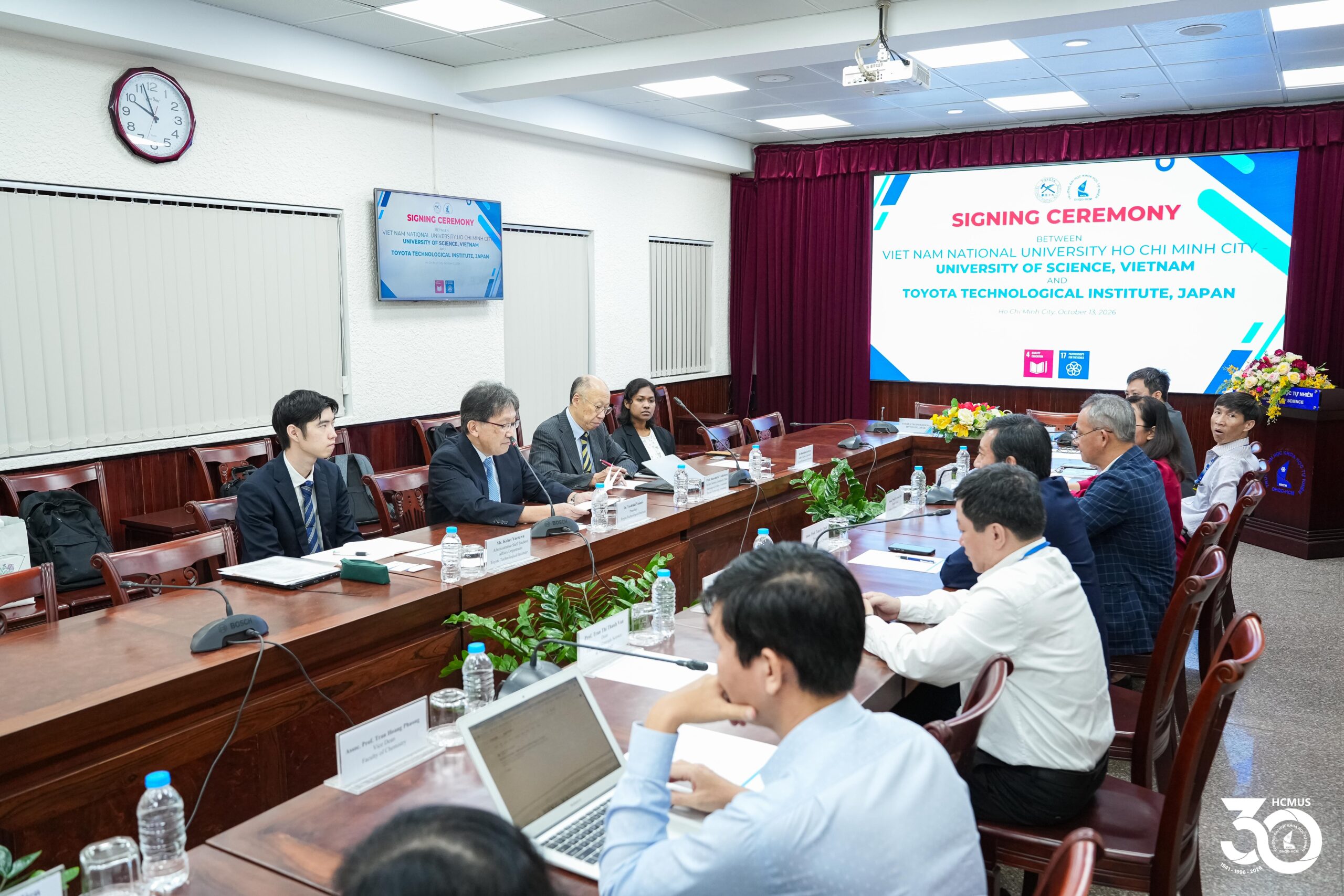
Under the agreement, travel and living expenses for participating academic staff and specialists will be covered using the funding available to the two institutions. Where sufficient funding is unavailable, the sending institution will assume full responsibility for the costs incurred by the participant. The two parties have also agreed to communicate through designated representatives to address any intellectual property issues arising from collaborative research, with a view to reaching mutually fair and equitable arrangements.
Alongside scientific research, student exchange is another key area covered by the agreement. The programme is open to undergraduate and postgraduate students for a period of one academic year or an equivalent duration. Implementation will depend on the ability to secure funding to cover part or all of the exchange costs.
Under the MoA, students participating in the programme may enrol as full-time students at the host institution without paying tuition fees or the statutory fees specified in the agreement. The host institution may, however, charge other fees. Travel, living and accommodation expenses, health insurance and other study-related costs will be borne by the students or the sending institution. Both parties undertake to make every effort to help students secure accommodation during the exchange period.
Academic results achieved at the host institution will be considered for recognition by the sending institution in accordance with the latter’s standards and procedures. The study plan must be discussed and agreed upon by both parties before the student begins the exchange period. The host institution will also appoint a member of staff with a thorough understanding of the relevant degree programme and credit equivalencies to advise and support the student throughout the period of study.
At VNUHCM–University of Science, the units designated to participate in implementing the agreement are the Faculty of Information Technology, Faculty of Electronics and Telecommunications, Faculty of Chemistry, and Faculty of Materials Science. The University’s Office of External Relations and TTI’s International Affairs Committee will serve as the coordinating bodies responsible for developing, coordinating and implementing collaborative activities.
The renewed agreement provides a framework for VNUHCM–University of Science and Toyota Technological Institute to further develop academic exchanges, connect research resources and expand international learning opportunities for students. Through this partnership, both institutions aim to strengthen professional collaboration, advance scientific research and foster a long-term academic relationship.
Leave a Reply