

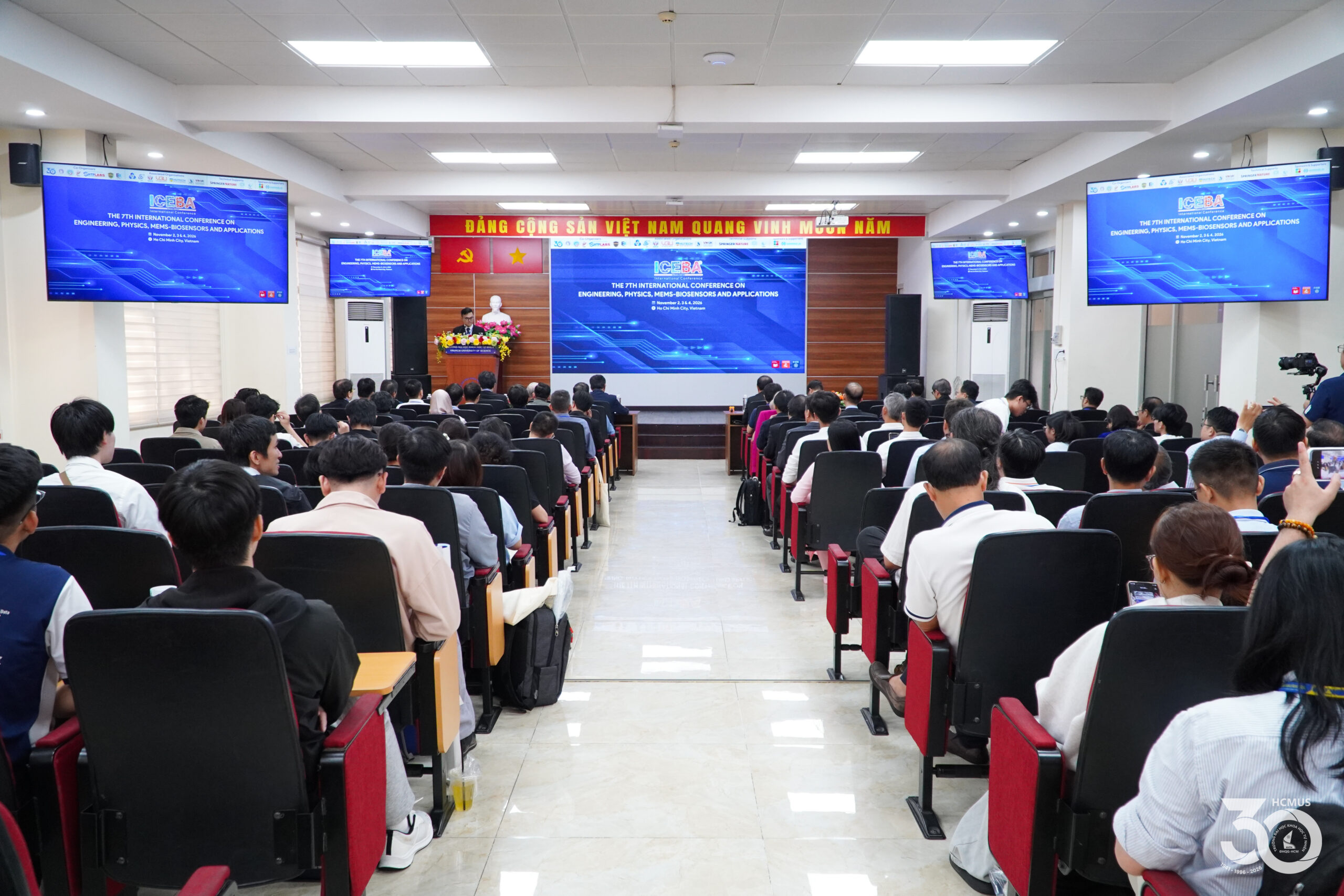
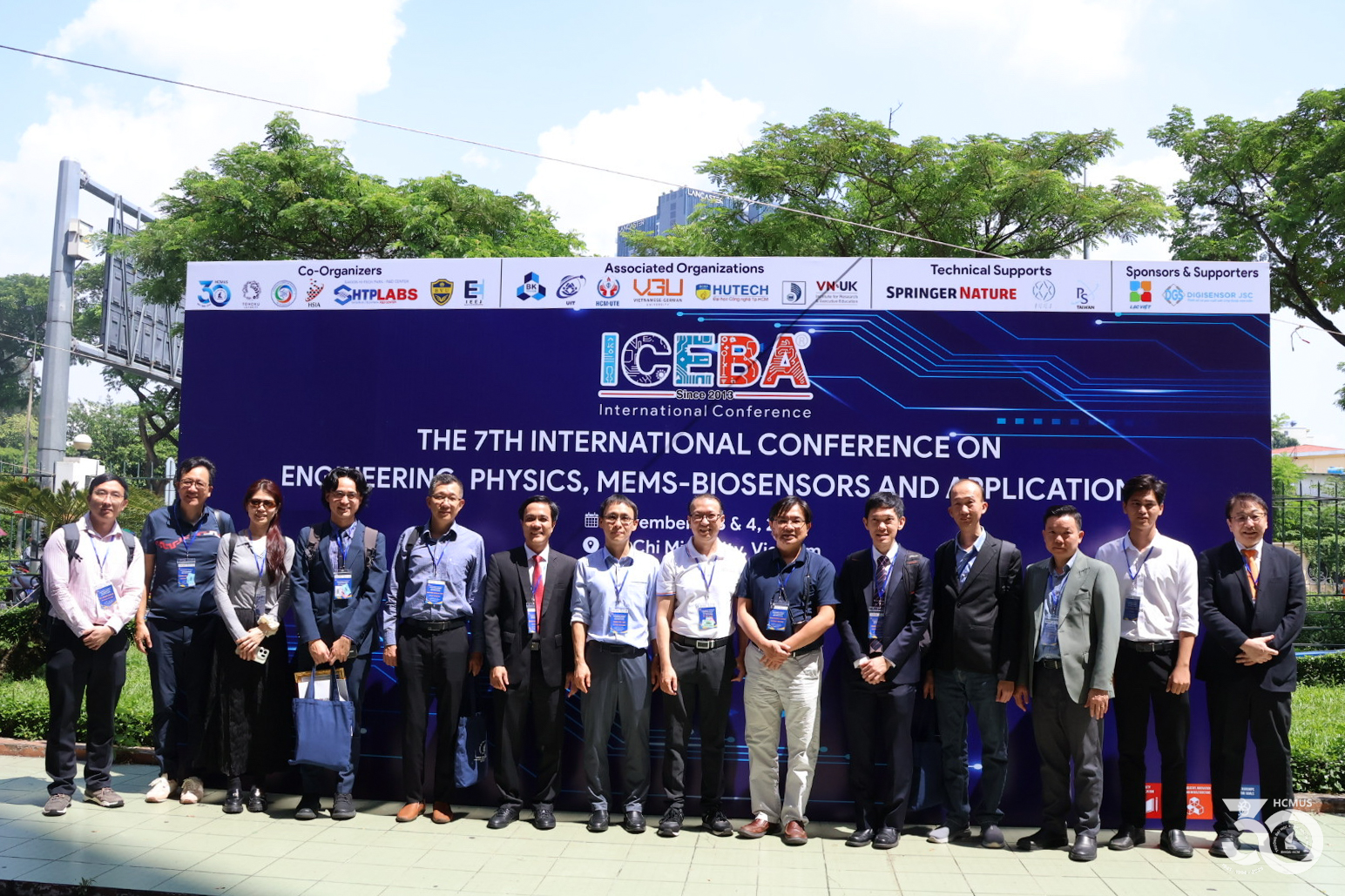
On 2 November, the 7th International Conference on Engineering, Physics, MEMS-Biosensors and Applications (ICEBA 2026) officially opened at VNUHCM–University of Science (HCMUS). The conference brought together scientists, experts, industry representatives and students from Viet Nam and abroad to share research findings, discuss technical challenges and explore opportunities for collaboration across related fields of science and technology.
ICEBA 2026 was organised by the Faculty of Physics and Engineering Physics at HCMUS, in collaboration with Tohoku University (Japan), Ho Chi Minh City Department of Science and Technology, Ho Chi Minh City Semiconductor Industry Association, Ho Chi Minh City High-Tech Park Research and Development Center (Sai Gon Hi-Tech Park), and Ba Ria – Vung Tau University. The conference takes place from 2 to 4 November at HCMUS and Ba Ria – Vung Tau University, featuring scientific presentations, academic discussions and opportunities for international collaboration.
A platform for academic exchange and international collaboration
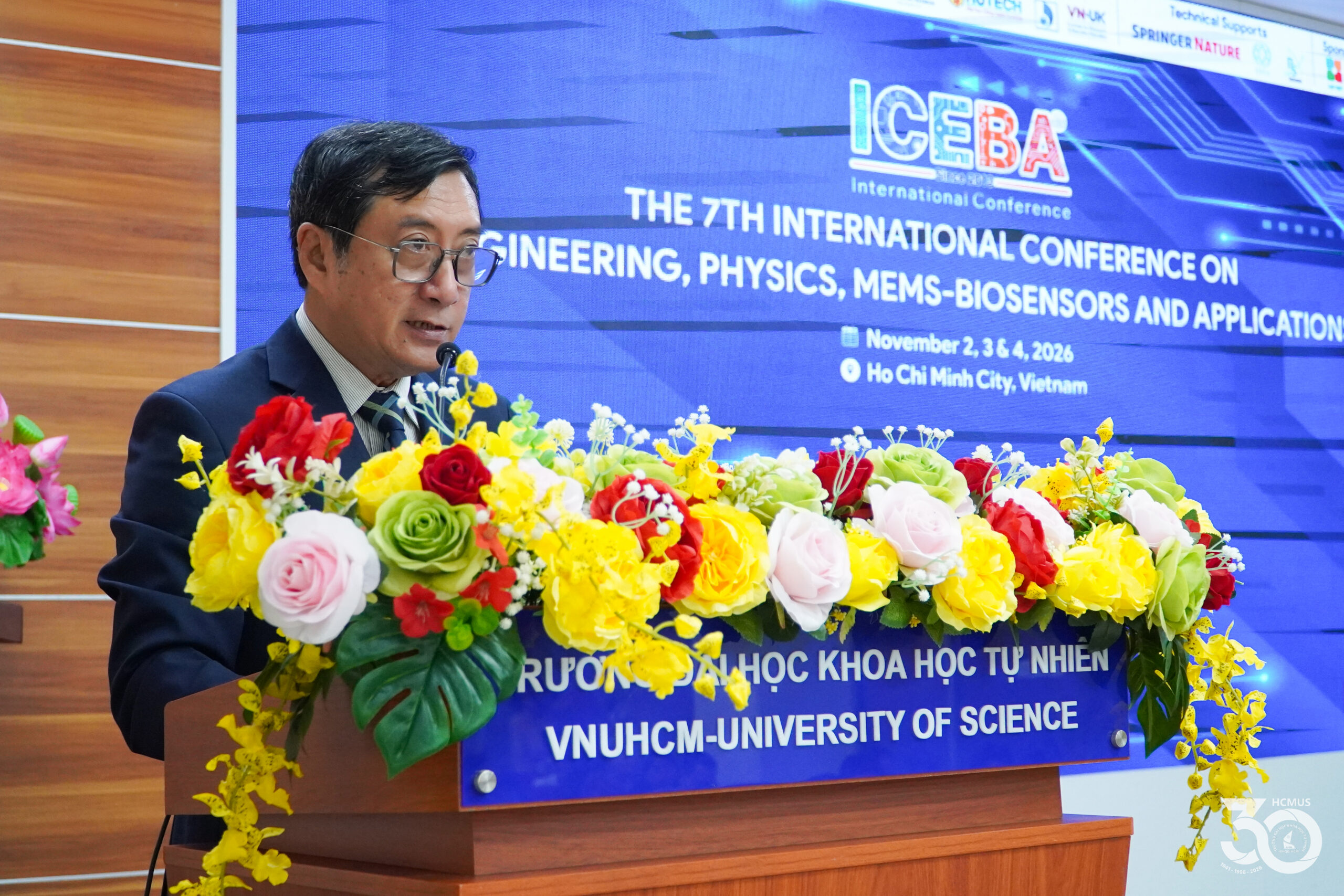
In his opening remarks, Assoc. Prof. Trần Lê Quan, President of HCMUS, emphasised that, as scientific and technological challenges increasingly call for interdisciplinary approaches, advances in physics and engineering play a vital role in the development of sensors, electronic devices and measurement technologies. Strengthening collaboration among universities, research institutes and industry will help bring research outcomes closer to practical applications.
According to Assoc. Prof. Trần Lê Quan, ICEBA provides a forum for scientists to share research findings, exchange views on technical challenges and identify common research interests. Discussions at the conference may pave the way for joint research projects, academic exchange activities and long-term partnerships. These objectives are also aligned with HCMUS’s commitment to integrating education, scientific research and international collaboration.
The President also encouraged students and early-career researchers to ask questions, share ideas and make the most of opportunities to learn from participating experts. Beyond the academic value, enabling young researchers to engage with the international scientific community is important for education and the development of scientific talent.
Sharing research findings and expanding scientific publication opportunities
ICEBA 2026 features an academic programme comprising six plenary presentations and 22 invited talks, alongside oral and poster presentations. The programme is organised into a range of technical sessions, providing researchers with opportunities to present findings, exchange methodologies and discuss issues in engineering, physics, MEMS and biosensor technologies.
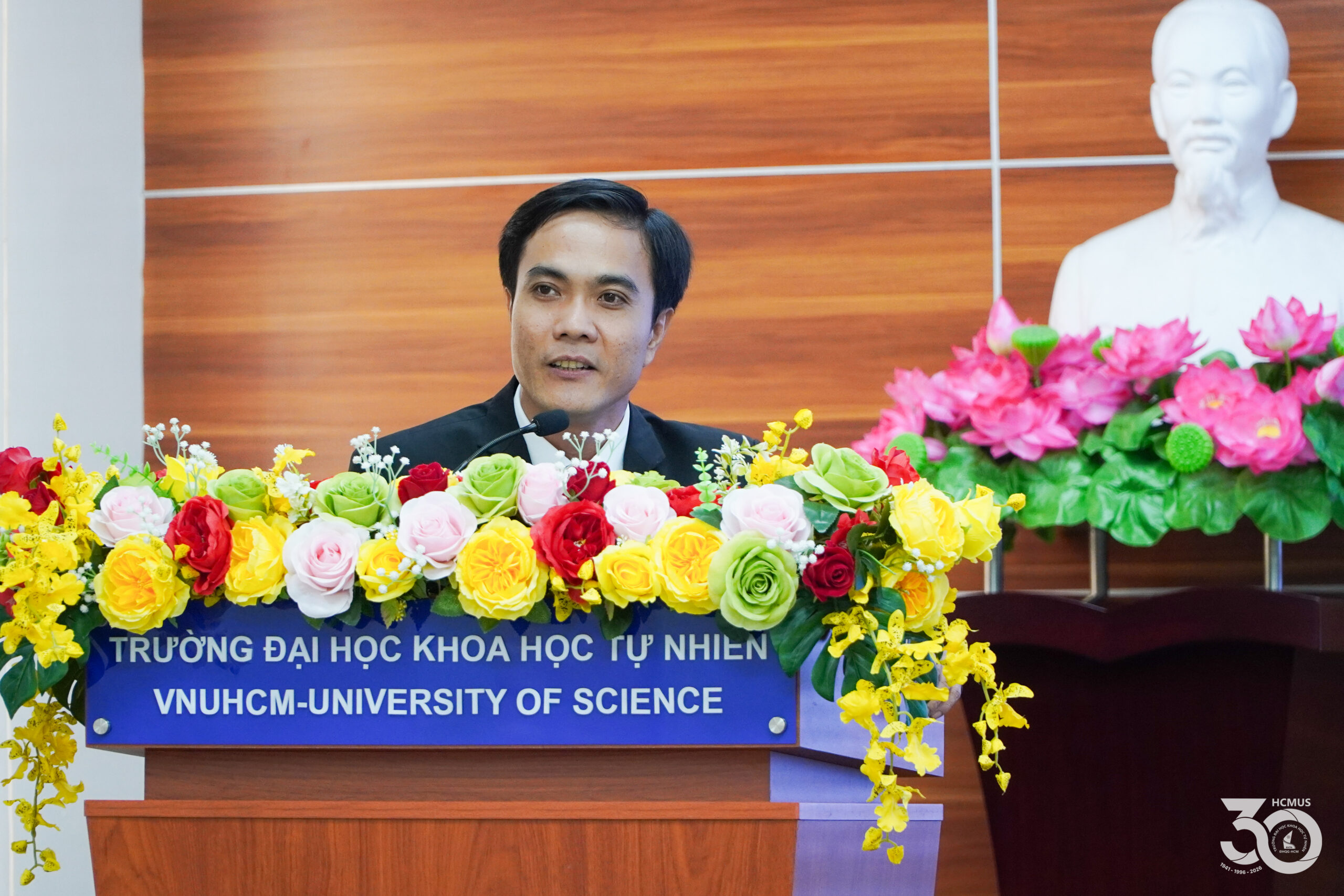
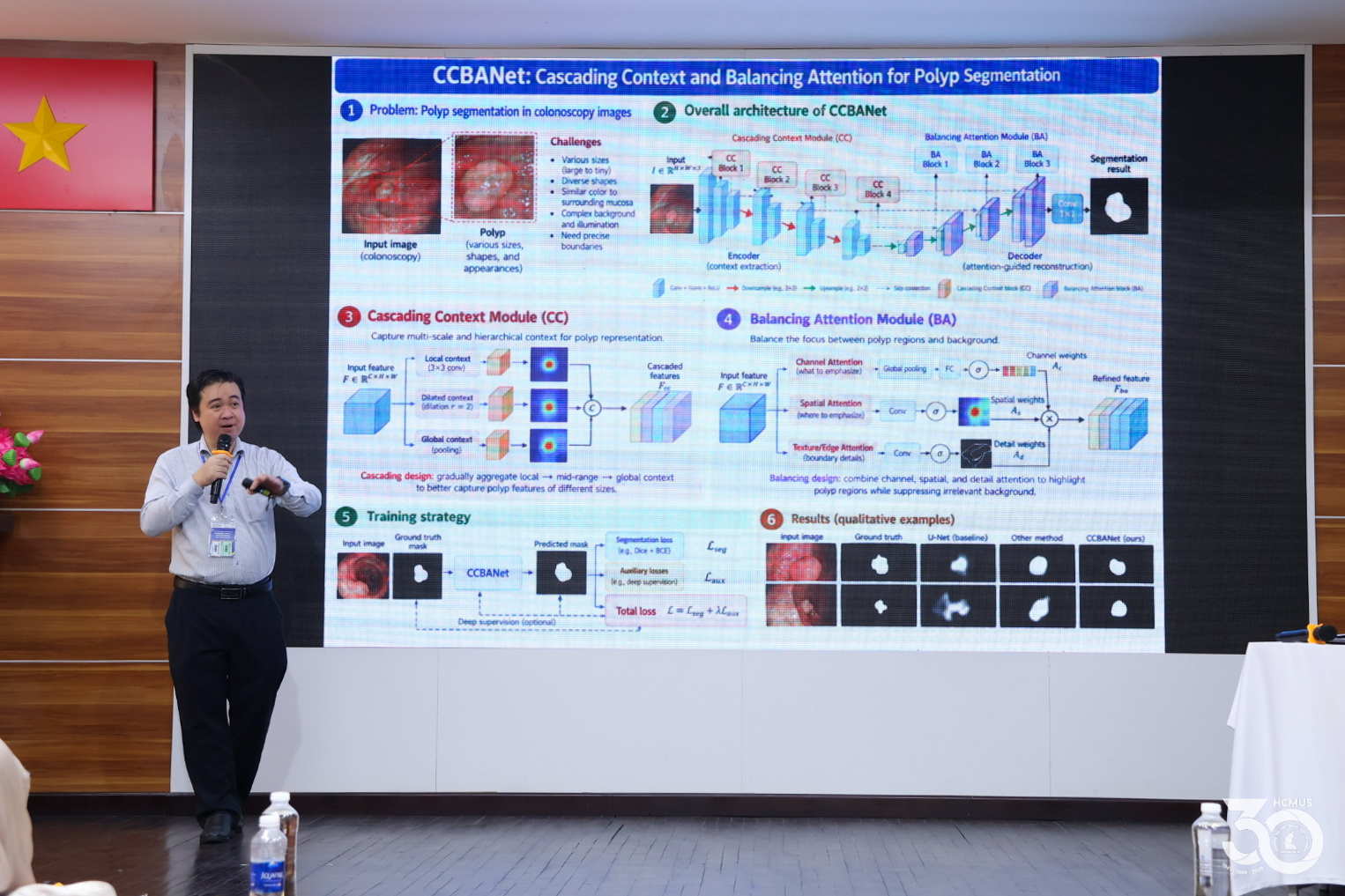
At the plenary session on the opening day, speakers from Viet Nam, Japan, South Korea and Australia shared research findings and specialist perspectives across related fields. The programme featured Prof. Huỳnh Thành Đạt, former Minister of Science and Technology; Prof. Takahito Ono of Tohoku University (Japan); Ms Lã Thị Thu Hằng, DG Sensors, Sai Gon Hi-Tech Park; and speakers from Kookmin University (South Korea), Osaka University (Japan), Faraday Technology Viet Nam and Griffith University (Australia).
Alongside presentations and direct academic exchange, research contributions from the conference will have opportunities to reach the international scientific community through established publication channels. The conference proceedings are expected to be published in Springer Nature’s Lecture Notes in Electrical Engineering (LNEE), comprising 115 papers. In addition, 18 papers have been selected for a special issue of IEEJ Transactions on Electrical and Electronic Engineering (IEEJ-TEEE), while three papers will appear in the Chinese Journal of Physics (CJP).
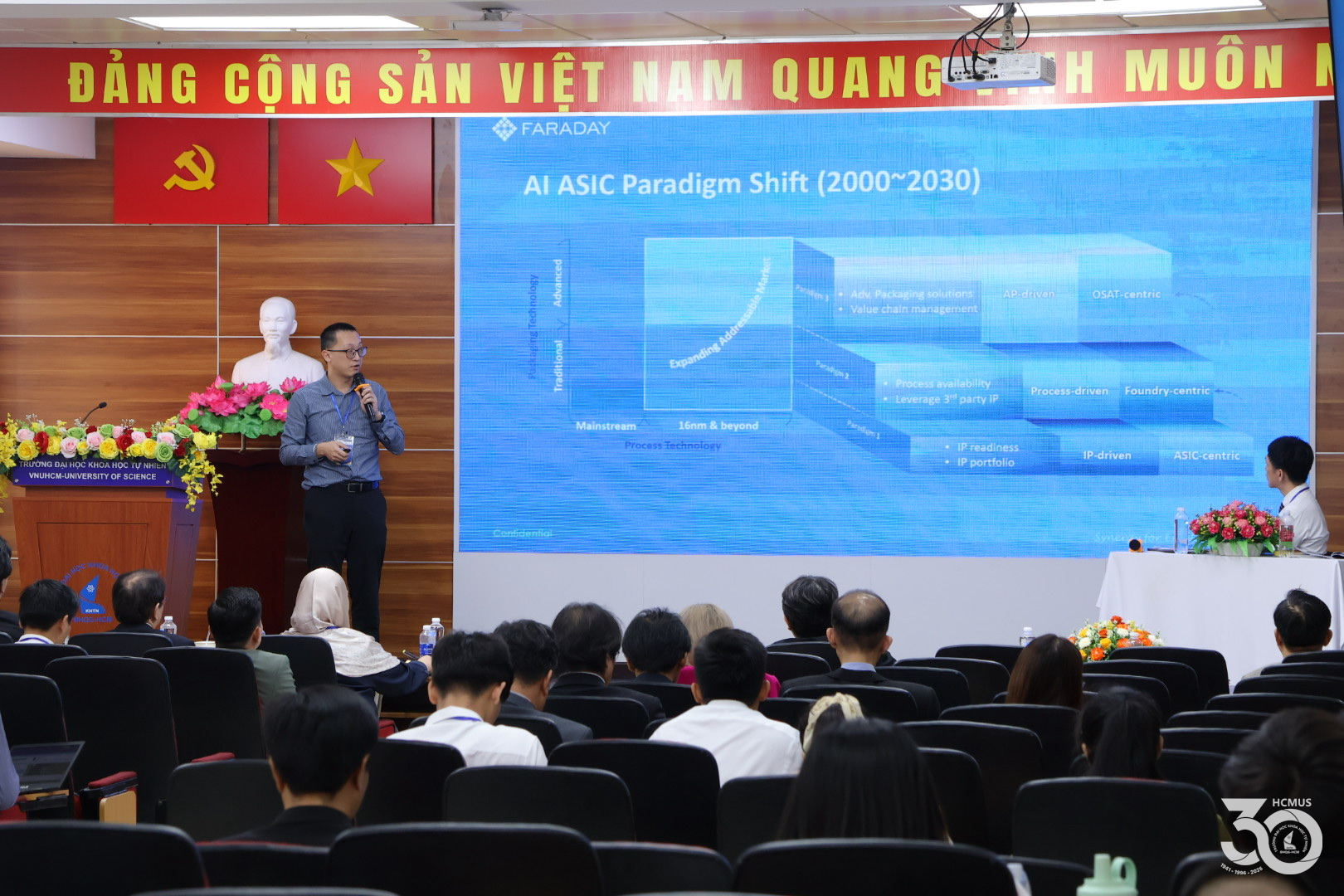
Scientists and experts presenting and discussing research findings at the ICEBA 2026 plenary session.
Strengthening research networks and international collaboration
Alongside the scientific sessions, ICEBA 2026 provides opportunities for scientists, educational institutions and industry representatives to meet, exchange ideas and explore potential partnerships. As part of the conference, international delegates will visit Sai Gon Hi-Tech Park to gain insights into the research, development and technology application ecosystem in Ho Chi Minh City.
According to the programme, academic activities will continue in Vung Tau on 3 November, featuring poster presentations, parallel oral sessions and plenary talks. The conference is expected to conclude that day with a closing ceremony and the presentation of Outstanding Awards for exceptional oral and poster presentations.
On 4 November, Ba Ria – Vung Tau University will host a programme of International Lectures featuring speakers from Malaysia, Singapore and South Korea. The F&F International Cooperation Meeting will follow, bringing together partners from Viet Nam, Japan, South Korea, Australia, Singapore, Malaysia, Thailand and other countries to discuss future directions for international collaboration.
Leave a Reply