

![[DOCTORAL THESIS DEFENCE] RESEARCHER NGUYỄN PHÚC HIẾU SUCCESSFULLY DEFENDS DOCTORAL THESIS AT INSTITUTIONAL LEVEL IN RESOURCE AND ENVIRONMENTAL MANAGEMENT](https://en.hcmus.edu.vn/wp-content/uploads/2025/09/554466351_1200575615436899_4750536406358033559_n.jpg "554466351_1200575615436899_4750536406358033559_n")
On 26 September, Researcher Nguyễn Phúc Hiếu successfully defended his doctoral thesis in Resource and Environmental Management at the VNUHCM-University of Science, was titled: “Research on the Application of Machine Learning and Deep Learning Methods for Forecasting Ambient Air PM2.5 Concentration – A Case Study for Ho Chi Minh City,” supervised by Assoc. Prof. Đào Nguyên Khôi and Dr. Nguyễn Lý Sỹ Phú.
The core subject, PM2.5 fine dust, consists of ultrafine particles (≤2.5 micrometres in diameter) capable of penetrating deep into the lungs and circulatory system, posing severe health risks that include respiratory, cardiovascular diseases, and even cancer. Studies have highlighted that high PM2.5 concentrations also reduce visibility and negatively impact the wider environment.
In large urban areas such as HCMC, fine dust levels are a growing concern, often spiking during transitional seasons or periods of heavy industrial and traffic activity. Consequently, the ability to accurately forecast and issue early warnings for PM2.5 concentration is considered vital, empowering both citizens and city authorities to implement protective measures for health and the environment.
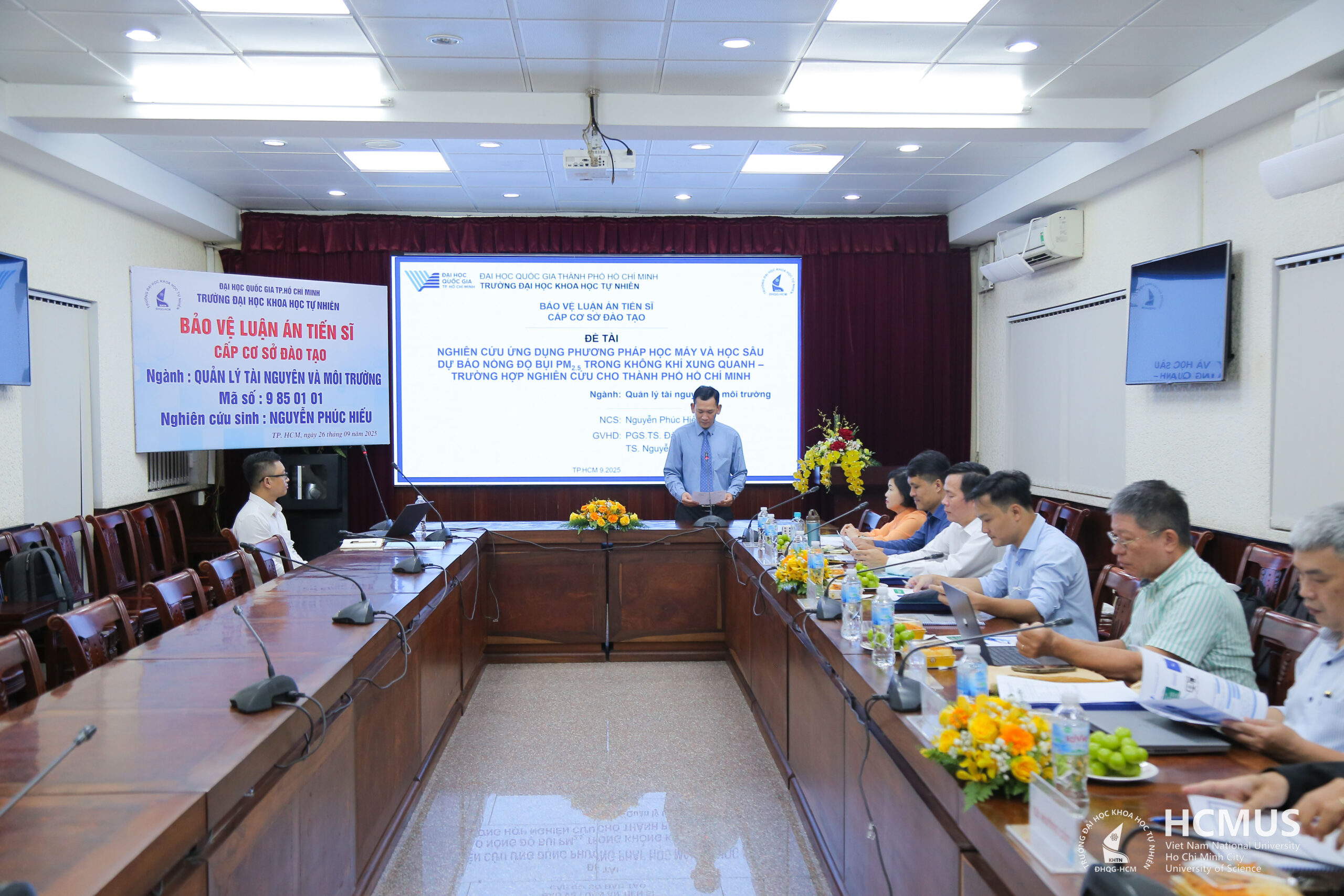
The study focused on applying a combination of machine learning and deep learning algorithms to simulate and predict PM2.5 concentration specifically within the central area of HCMC. The analysis revealed that several of the tested Artificial Intelligence (AI) models demonstrated superior forecasting efficacy compared to traditional methods. This superiority was observed in both simulating current conditions and generating short-term forecasts (1, 3, 5, and 7 days).
Based on these successful trials, the Research Student proceeded to develop a practical PM2.5 forecasting application featuring an intuitive, user-friendly interface. The application provides projected data for various time points, converts the dust concentration into the national Vietnam Air Quality Index (VN_AQI), and offers actionable health recommendations to the public.
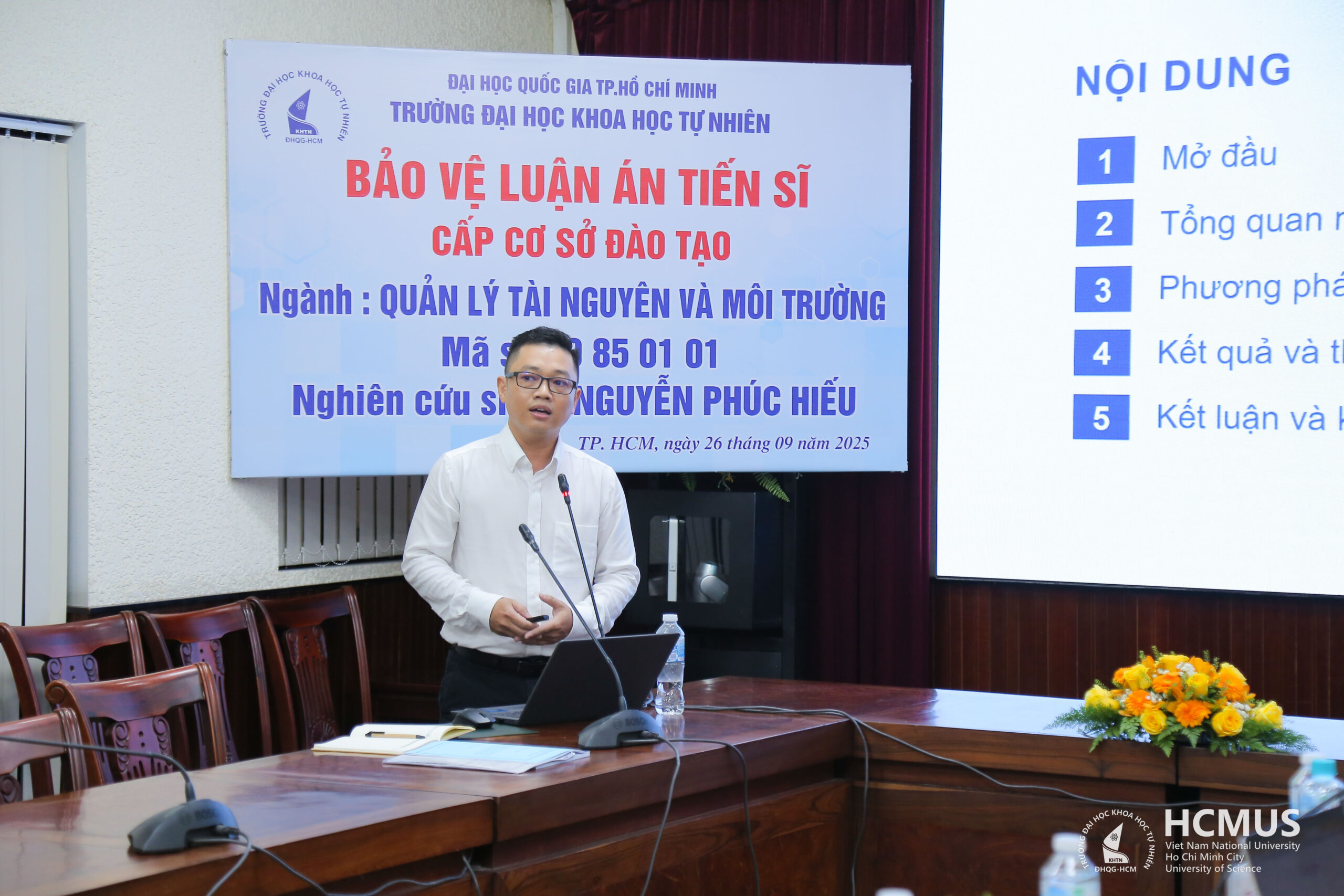
This research contributes significantly by establishing and comparatively testing various forecasting models, thereby identifying the high-accuracy algorithms best suited to the urban context of HCMC. The findings suggest that AI models, particularly artificial neural networks, show substantial potential as supportive tools for air quality monitoring, especially in environments where observational data remains constrained.
Future work on this project will focus on two key areas: (i) expanding the monitoring network to encompass a greater number of locations across HCMC and adjacent regions to improve spatial coverage and better map PM2.5 distribution; and (ii) integrating further data streams, such as those related to traffic, population density, industrial emissions, and seasonality, to enhance the robustness of long-term forecasts, especially during severe pollution episodes.
Leave a Reply