

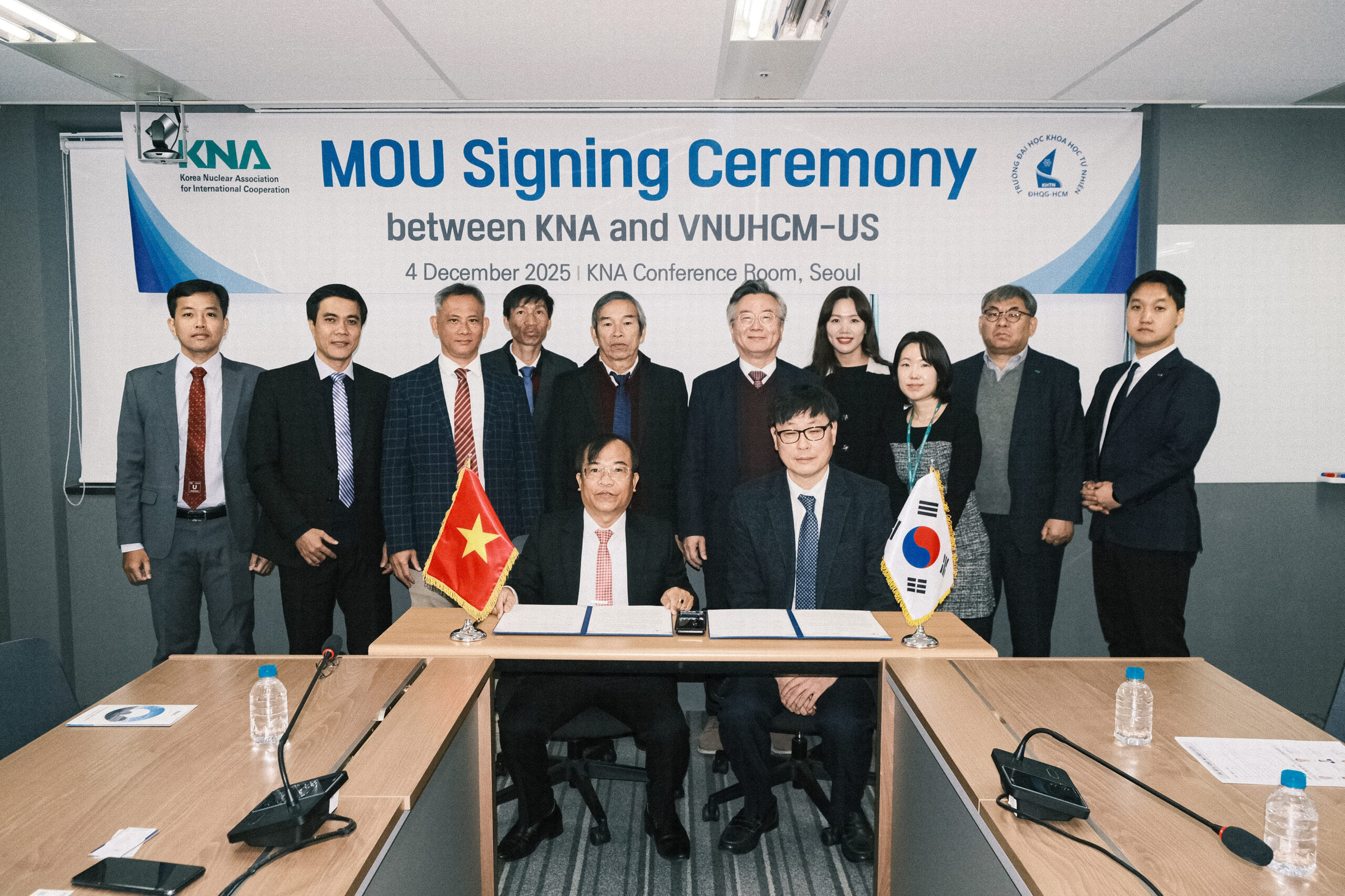
Between the 1st and the 5th of December 2025, a delegation from VNUHCM-University of Science (HCMUS) undertook an official visitation to prominent nuclear industrial facilities in the Republic of Korea. Concurrently, the group executed a Memorandum of Understanding (MoU) with the Korea Nuclear Association (KNA). Such engagement served to strengthen academic-industrial linkages whilst opening strategic avenues for cooperation in education, research, and the development of nuclear human resources.
Prof. Nguyễn Trung Nhân, Vice President of the University, led the mission. The party also included Prof. Châu Văn Tạo—former Vice President, Vice President of the Viet Nam Nuclear Society, and member of the Council for Science and Education at the Viet Nam Atomic Energy Institute—alongside leadership from the Faculty of Physics – Engineering Physics and the Office of External Relations.
The itinerary commenced at the Doosan Enerbility plant in Changwon, a premier heavy industry and energy conglomerate possessing the capacity to autonomously manufacture nearly the entire equipment supply chain for nuclear power plants. There, delegates observed large-scale production lines firsthand, ranging from the processing of steel ingots to the completion of super-heavy components such as reactor pressure vessels, pressurizers, and steam generators. The high degree of localisation demonstrated by Doosan Enerbility elicited a profound impression, underscoring the exceptional development of the South Korean nuclear industry.

Subsequently, the delegation visited the KEPCO International Nuclear Graduate School (KINGS), an establishment dedicated to technical human resources and nuclear policy. During the session, the two parties exchanged views on academic-corporate cooperation models, strategies for training personnel for new nuclear power projects, and the potential admission of Vietnamese students into postgraduate programmes. A consensus was reached regarding the expedition of specific cooperation agreements in the near future.

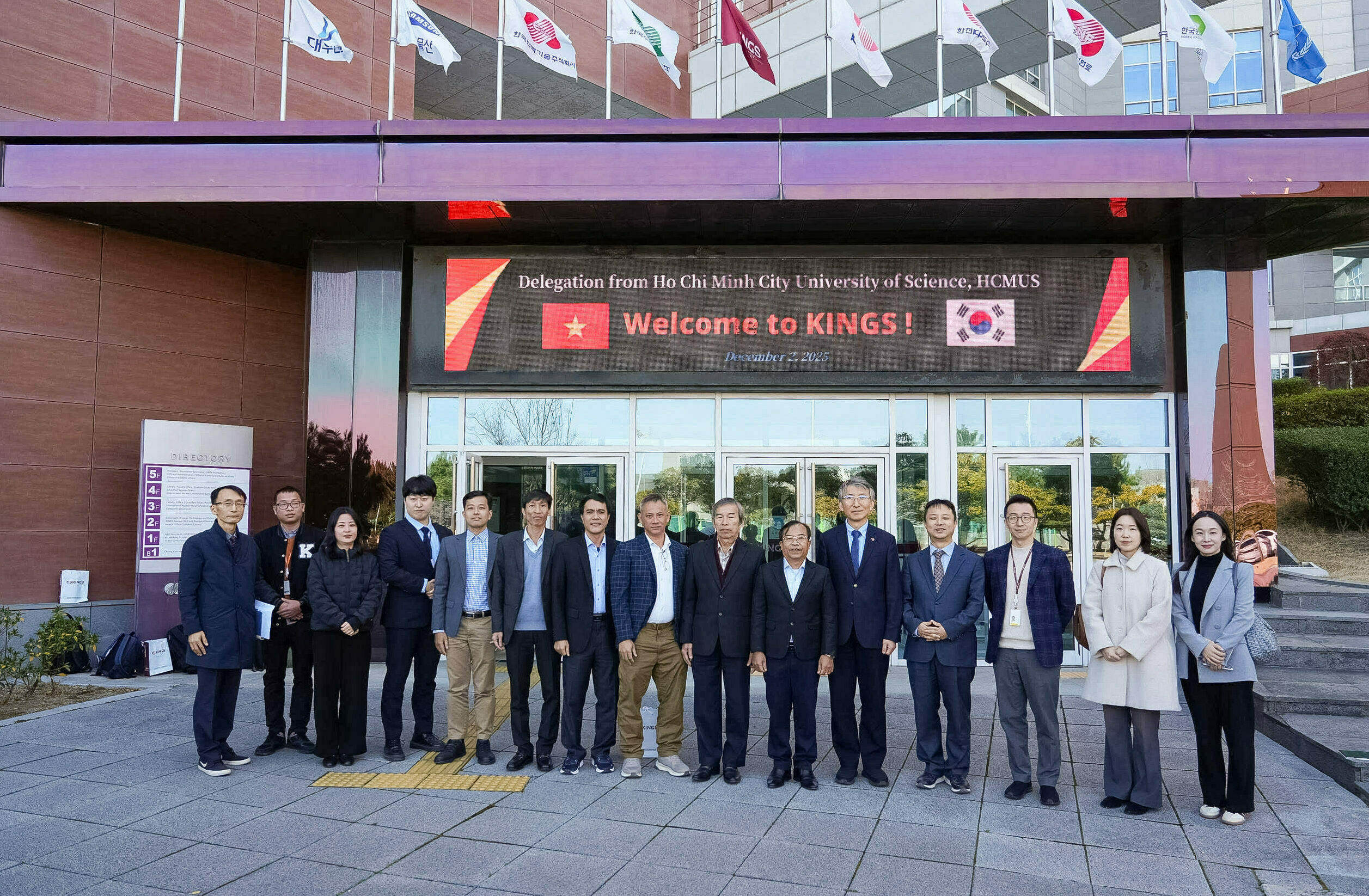
The delegation at the KEPCO International Nuclear Graduate School (KINGS).
A significant milestone of the journey was the tour of the Saeul Nuclear Power Plant, operator of the APR-1400 reactor, a technology indigenous to the Republic of Korea. Representatives surveyed four units in total—comprising two operational units and two under construction—whilst visiting critical areas such as the spent fuel storage pool, the turbine building, and the main control room. The management model at Saeul, characterised by safety and complete autonomy, constitutes clear evidence of South Korean prowess in modern nuclear technology.
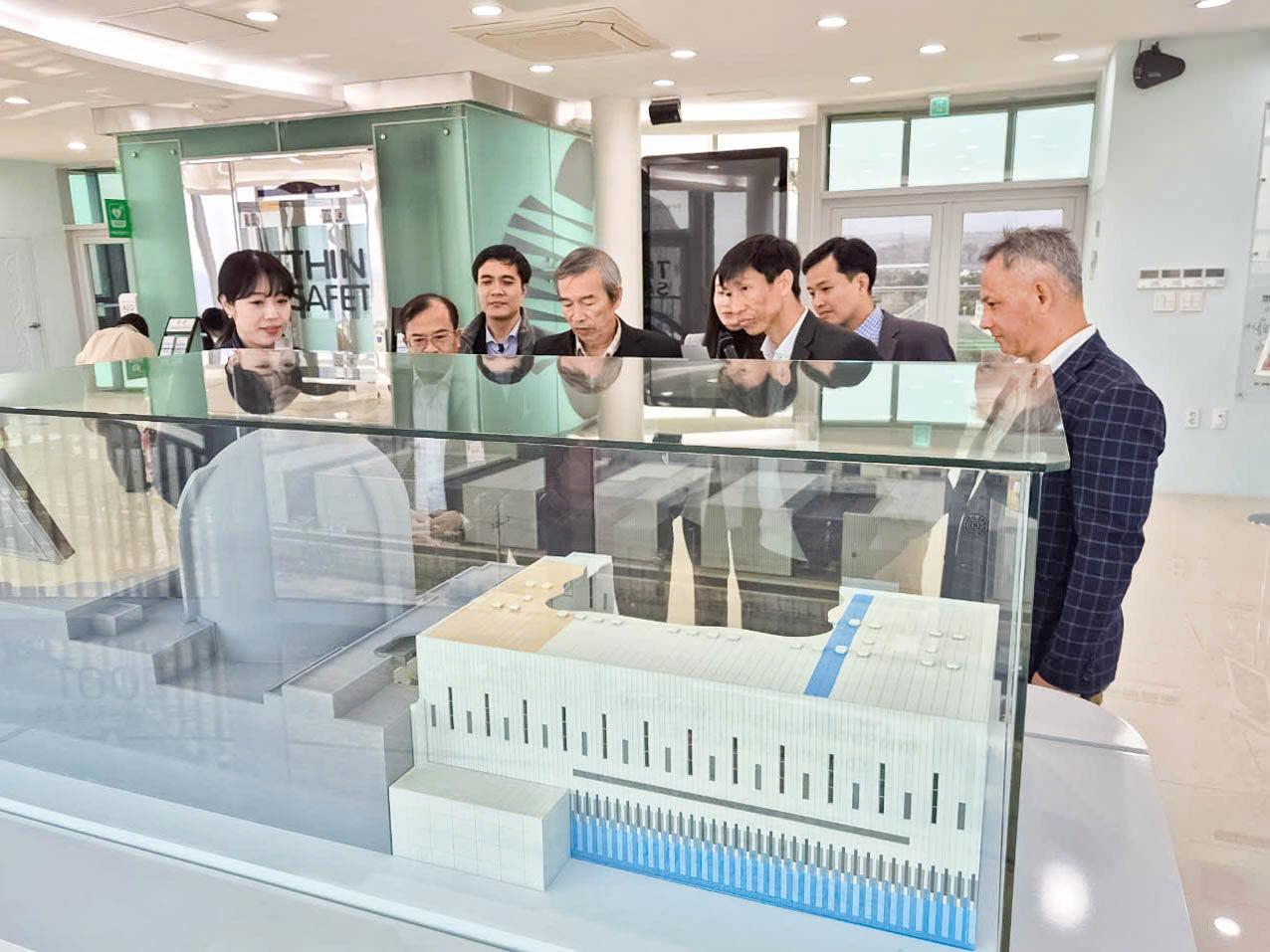

The delegation receiving an overview presentation prior to the field tour of the nuclear power plant (site photography was restricted for security reasons).
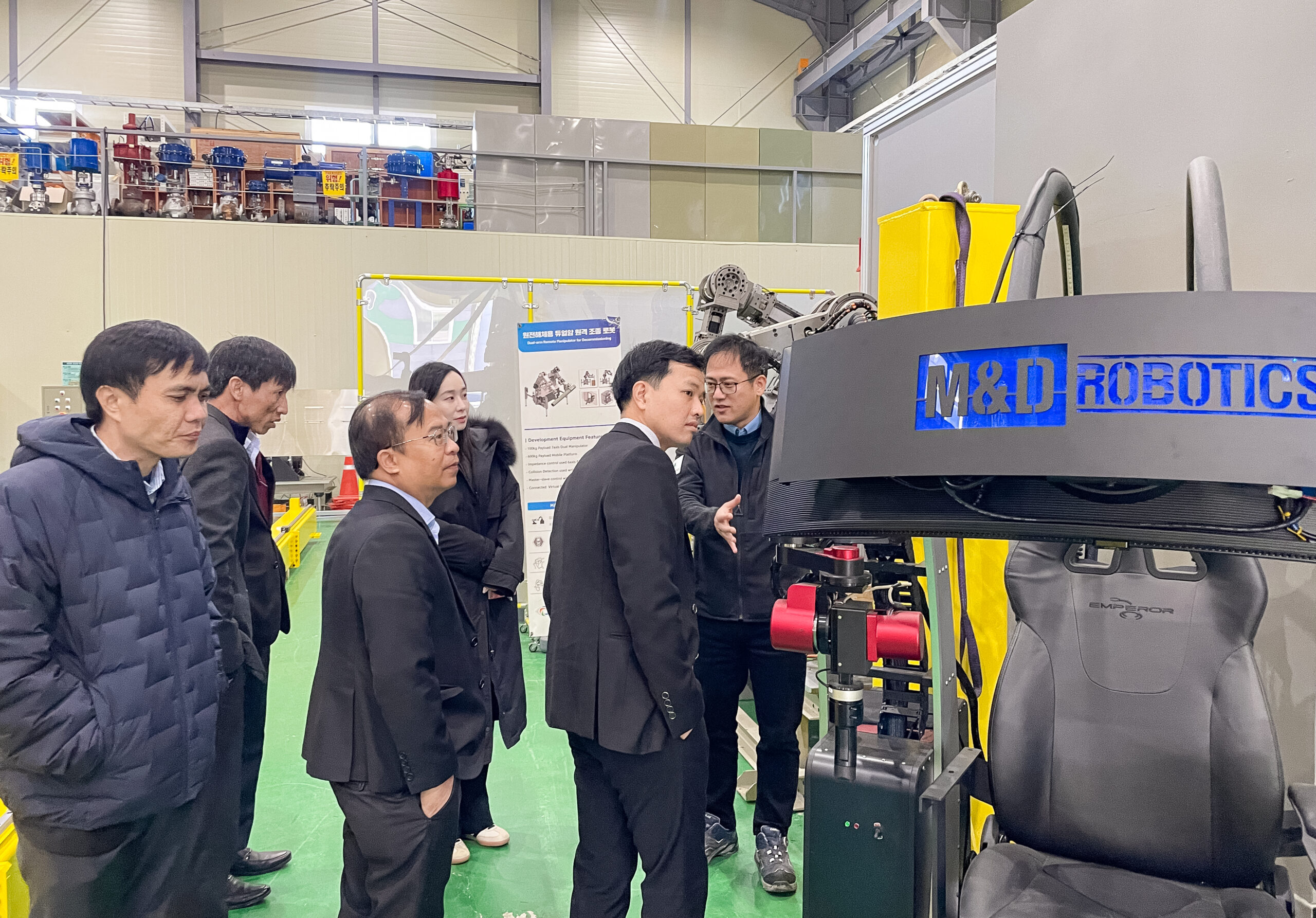
Upon departing Saeul, the delegation proceeded to examine the role of robotics in industrial maintenance at Core Robotics, a provider of advanced robotic systems for the inspection, repair, and operation of nuclear infrastructure. Observation of direct testing procedures elucidated the extensive application of automation in enhancing the efficiency and safety of nuclear power plants.
For the purpose of obtaining a comprehensive perspective on the fuel cycle, the team also held a working session with the Korea Radioactive Waste Agency (KORAD). KORAD holds responsibility for the safe management of all national radioactive waste, operating both surface and deep geological repository systems in accordance with international standard procedures.

To conclude the official proceedings, HCMUS and the Korea Nuclear Association (KNA) formally signed a Memorandum of Understanding (MoU). Under the auspices of this accord, the signatories pledged to promote academic and expert exchanges; coordinate high-quality human resource training; organise scientific seminars and professional development programmes; and facilitate access to modern nuclear industrial environments for students and lecturers alike.


The signing ceremony of the cooperation agreement between VNUHCM-University of Science and the Korea Nuclear Association (KNA).
The official visitation signifies a major advancement in the international integration strategy of VNUHCM-University of Science, whilst simultaneously contributing to the strengthening of connections between Vietnamese academic institutions and the global nuclear industrial ecosystem.
Leave a Reply