

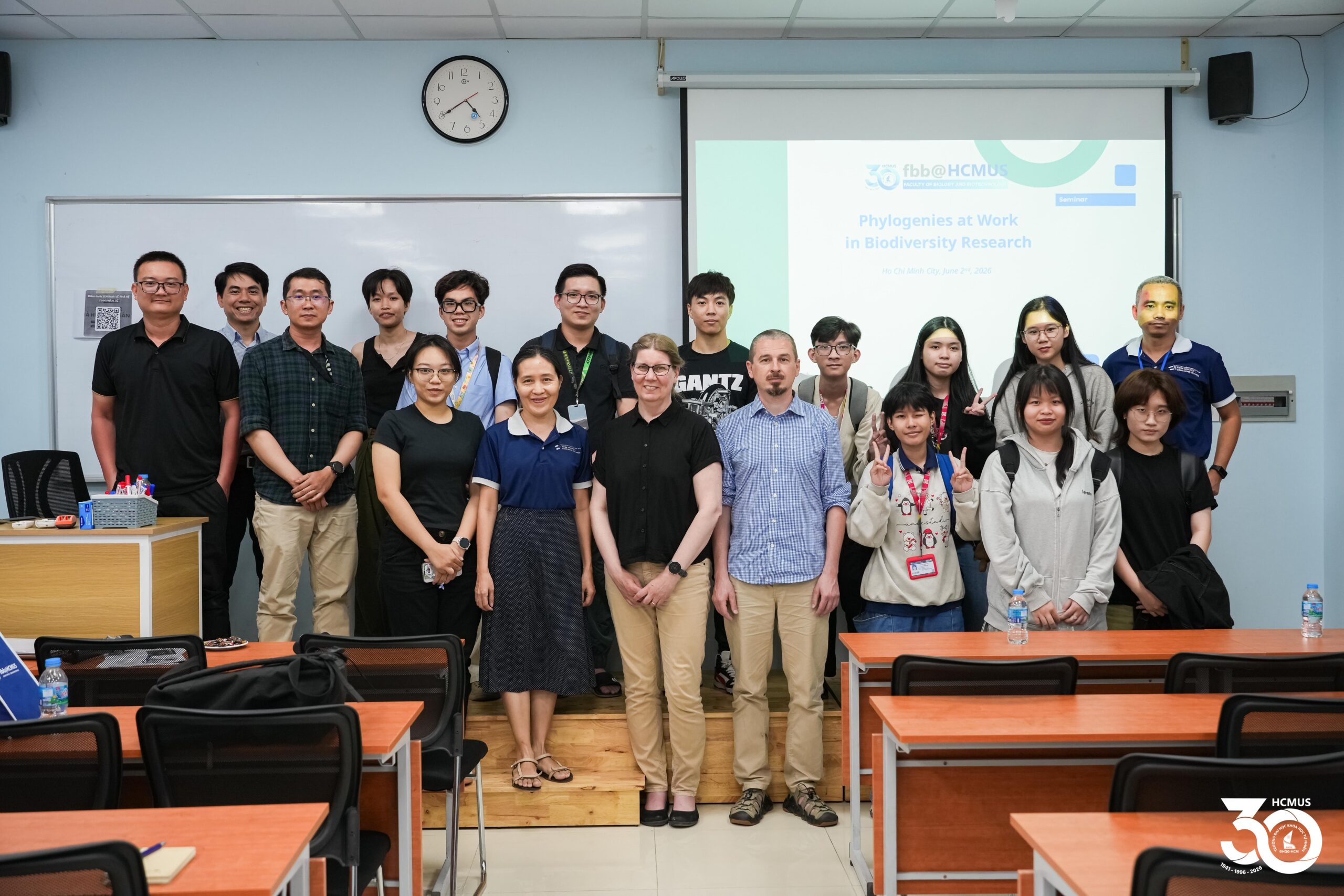
On 2 June 2026, the Faculty of Biology and Biotechnology at the VNUHCM–University of Science (HCMUS) hosted An International Seminar on Molecular Phylogenetics. The event featured presentations by Associate Professor Sanna Huttunen and Associate Professor Samuli Lehtonen from the University of Turku (Finland), alongside Dr Phạm Mạnh Hùng, a lecturer within the Faculty of Biology and Biotechnology at HCMUS.
The seminar provided an opportunity for lecturers, researchers, and learners to engage with new research findings in the field of molecular phylogenetics, whilst strengthening academic exchange between HCMUS and the University of Turku (Finland).
Within the framework of the programme, the speakers shared research findings and novel approaches regarding the application of molecular data to evolutionary studies, biodiversity, and ecology.
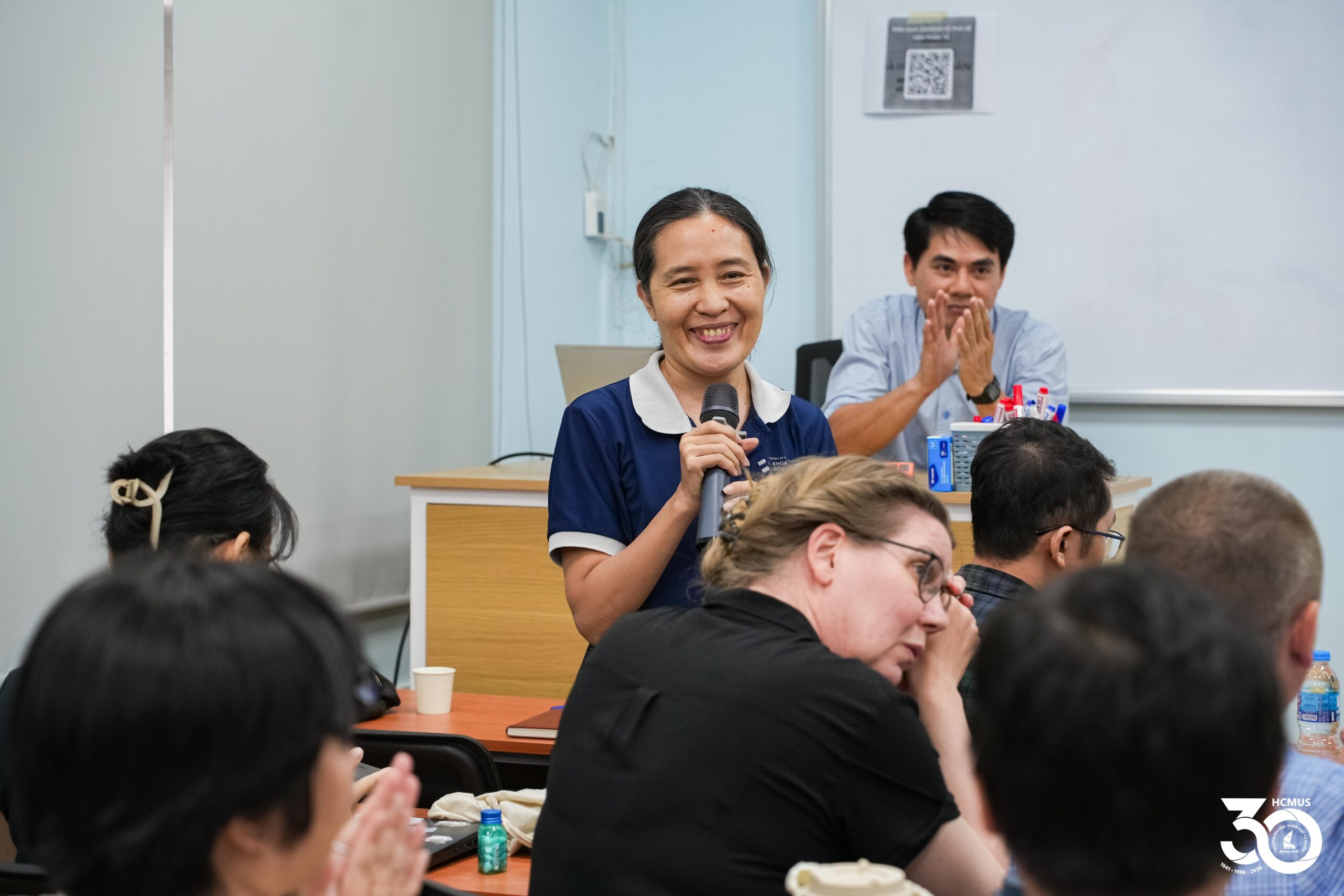
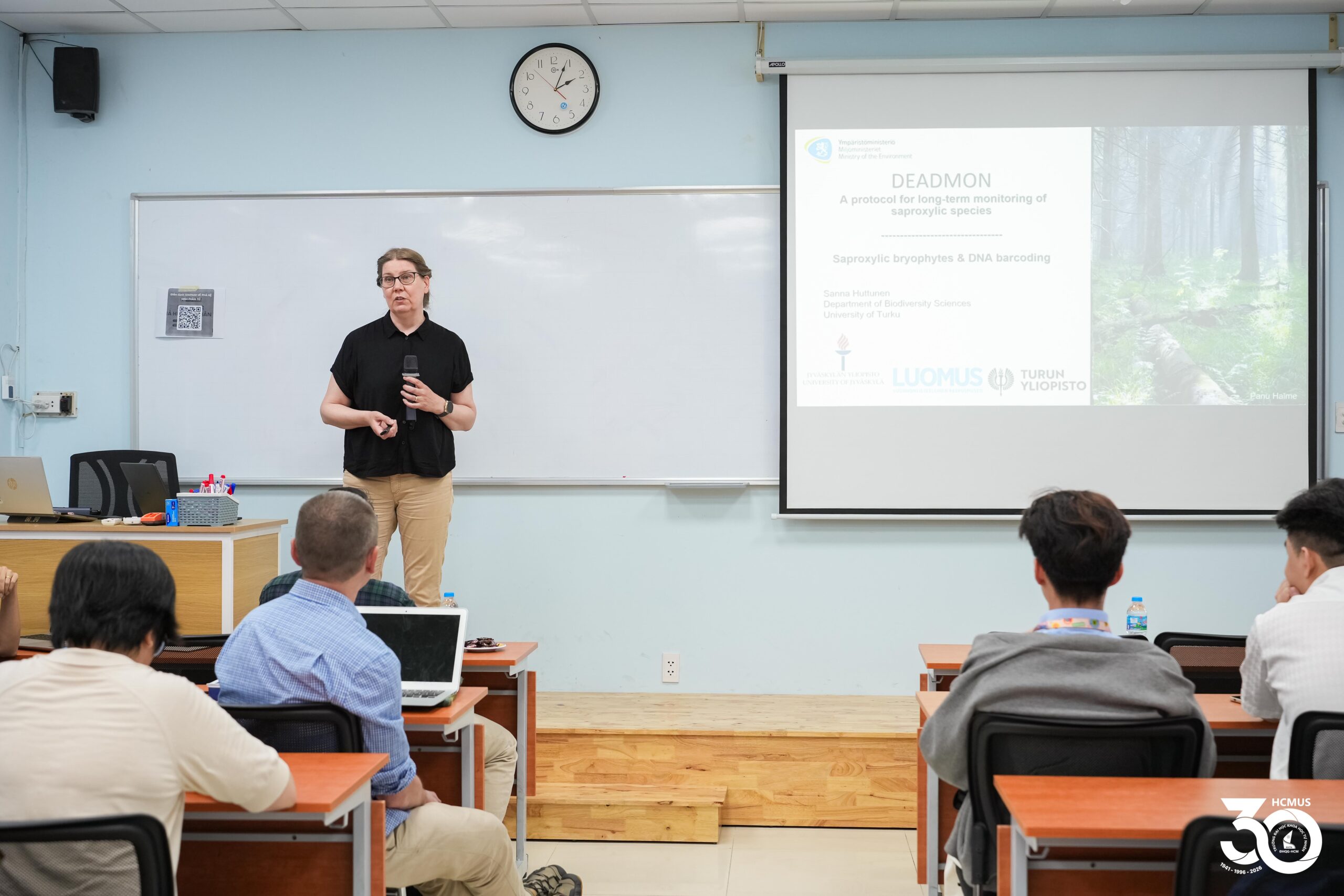
Opening the academic session, Associate Professor Sanna Huttunen presented a lecture entitled ‘Utility of DNA barcoding in long-term monitoring of saproxylic bryophyte species’. The report demonstrated that DNA data and metabarcoding methods hold significant potential to support phylogenetic research in bryophytes, particularly in identifying cryptic groups that are challenging to classify using morphological traits, and in discovering hidden biodiversity. Alongside the opportunities presented by molecular methods, the presentation also addressed certain current limitations related to molecular markers and reference databases. The findings presented have contributed to opening new avenues of research into the biodiversity and evolutionary relationships within non-vascular plants.
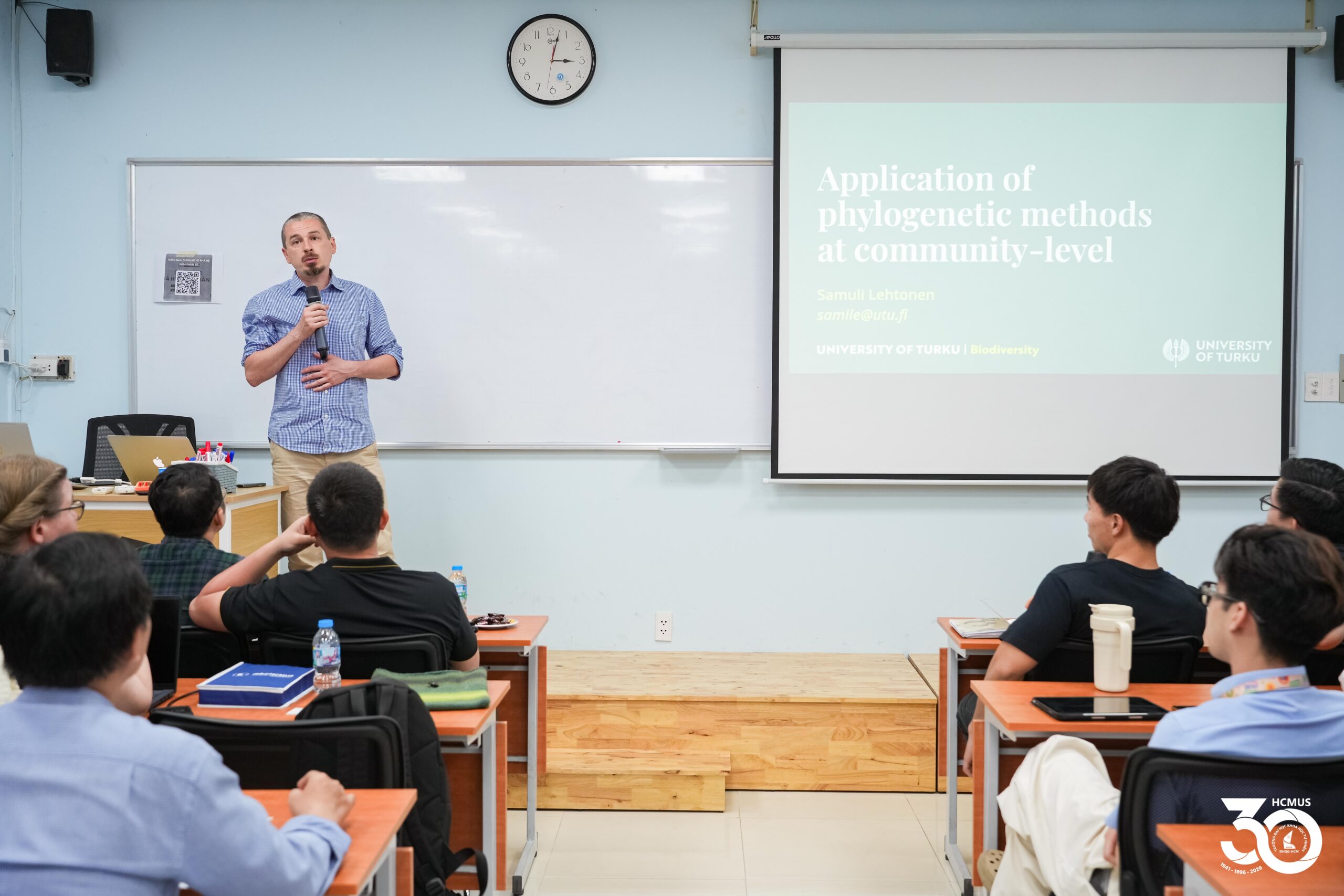
Continuing the programme, Associate Professor Samuli Lehtonen delivered a presentation entitled ‘Application of phylogenetic methods at community-level’. The lecture introduced the application of phylogenetic methods not only to the study of the evolutionary history of individual taxa, but also to the analysis of the structure and evolutionary history of entire biological communities. Drawing upon research conducted on Amazonian fern communities, the report elucidated the connection between the phylogenetic structure of a community and soil fertility, thereby providing new insights into the evolutionary and ecological processes that have shaped contemporary communities.
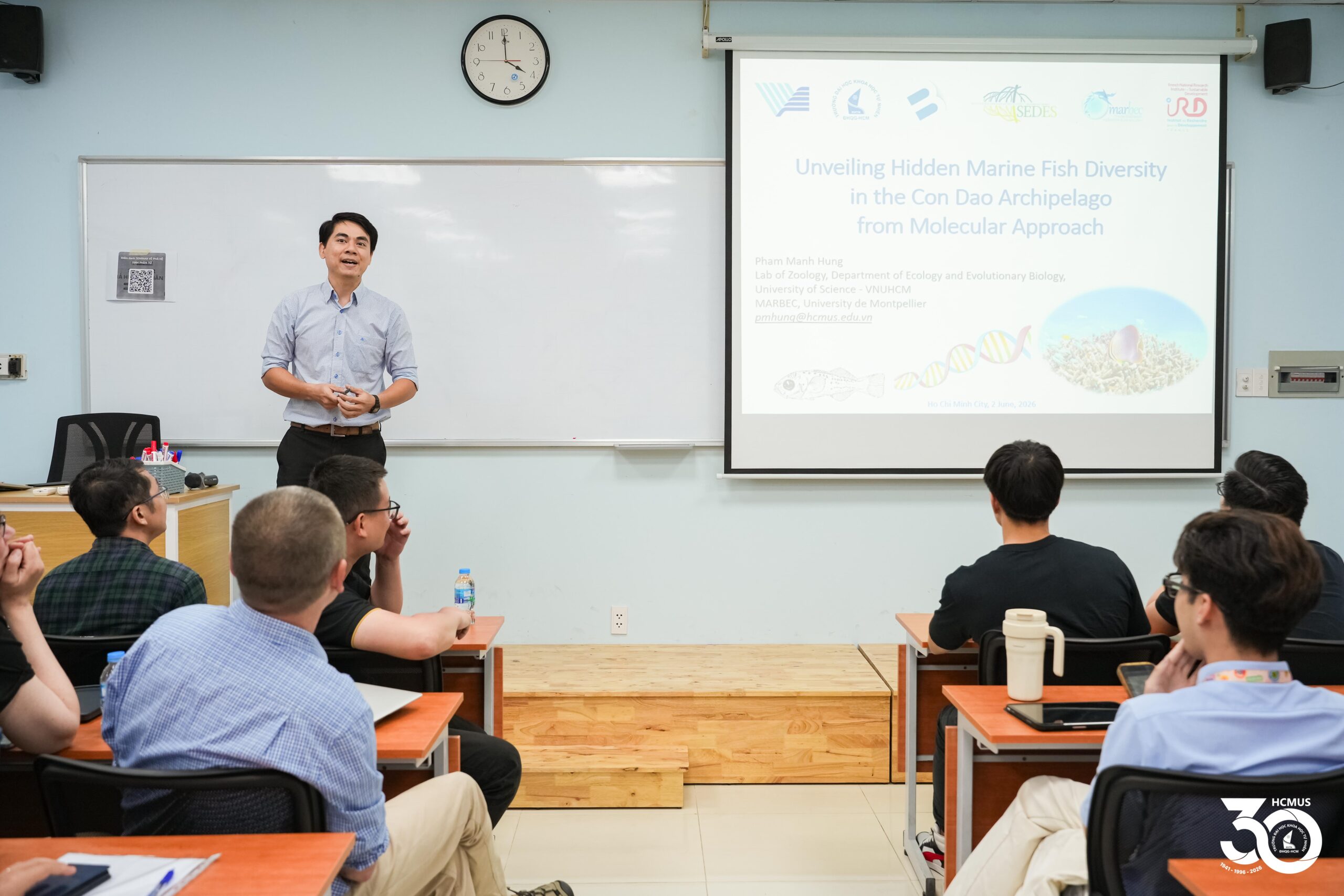
Concluding the seminar session, Dr Phạm Mạnh Hùng presented a paper entitled ‘Unveiling Hidden Marine Fish Diversity in the Con Dao Archipelago from Molecular Approach’. The presentation introduced recent research findings on marine fish diversity in the Con Đao archipelago achieved through the application of DNA barcoding and environmental DNA (eDNA) techniques. The molecular data demonstrated the capacity to detect numerous cryptic species and provided new records of species composition. Furthermore, this data source establishes a foundation for phylogenetic analyses, contributing to the clarification of evolutionary relationships and community structures across diverse habitats. The report also emphasised the role of molecular phylogenetics in biodiversity research, ecology, and the conservation of marine ecosystems.
Both international speakers participating in the programme are scientists with significant contributions to biodiversity and evolutionary research. Associate Professor Sanna Huttunen currently serves as Vice-Head of the Department of Biodiversity Sciences at the University of Turku, with many years of research experience in the taxonomy and evolution of bryophytes (Bryophyta), as well as in the application of molecular systematic methods in plant biodiversity research. Associate Professor Samuli Lehtonen is affiliated with the Department of Biodiversity Sciences at the University of Turku and has extensive research experience in plant systematics, evolution, and biogeography, particularly in ferns and aquatic plants.
Through the in-depth presentations and academic discussions between the speakers and attendees, the seminar succeeded in updating contemporary research approaches within molecular phylogenetics. The event also created networking opportunities and professional exchanges for scientists, lecturers, and students interested in evolutionary biology, ecology, and biodiversity conservation. Consequently, participants gained further perspectives on the role of molecular tools in uncovering evolutionary history and evaluating biodiversity within the context of current research.
Leave a Reply