

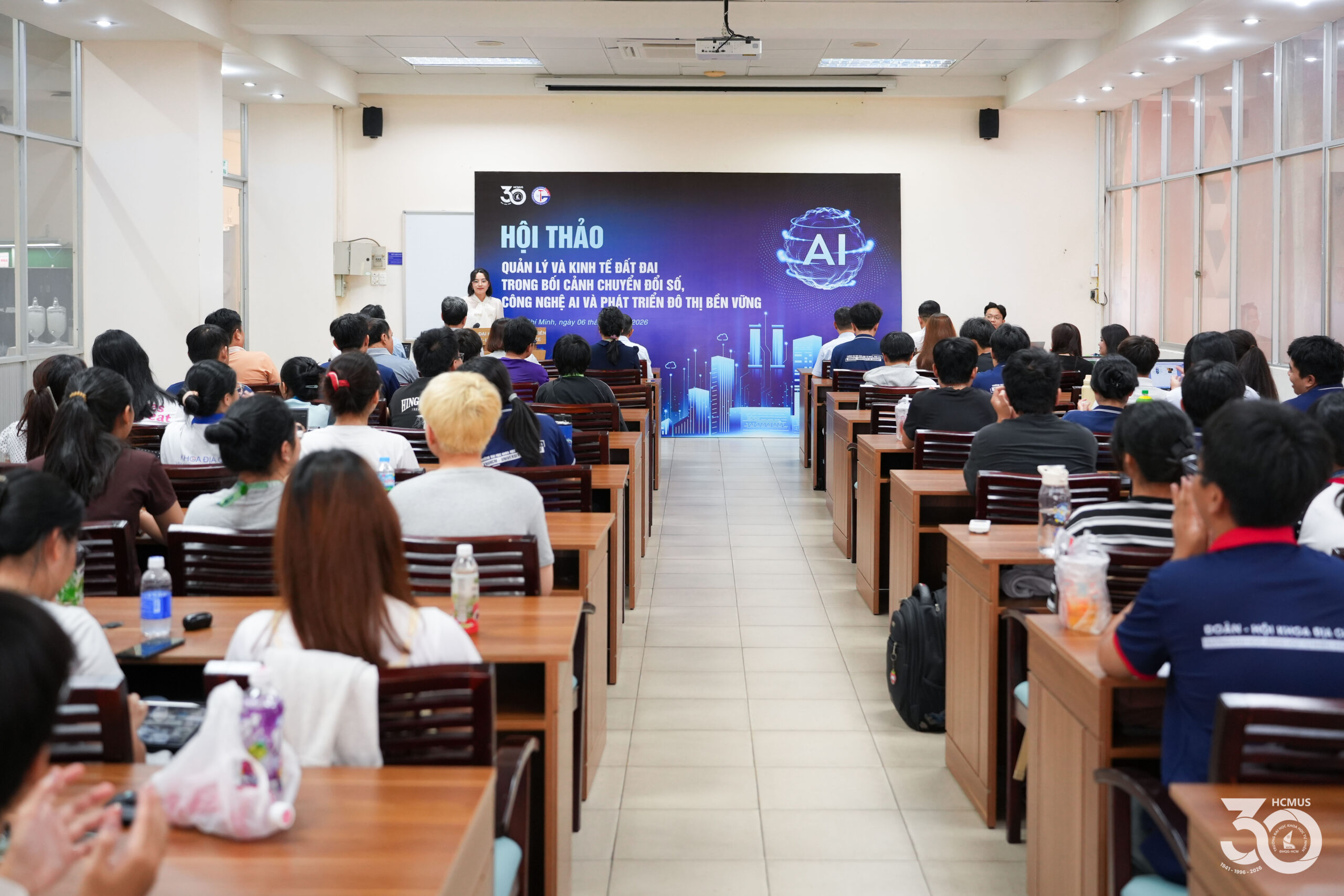
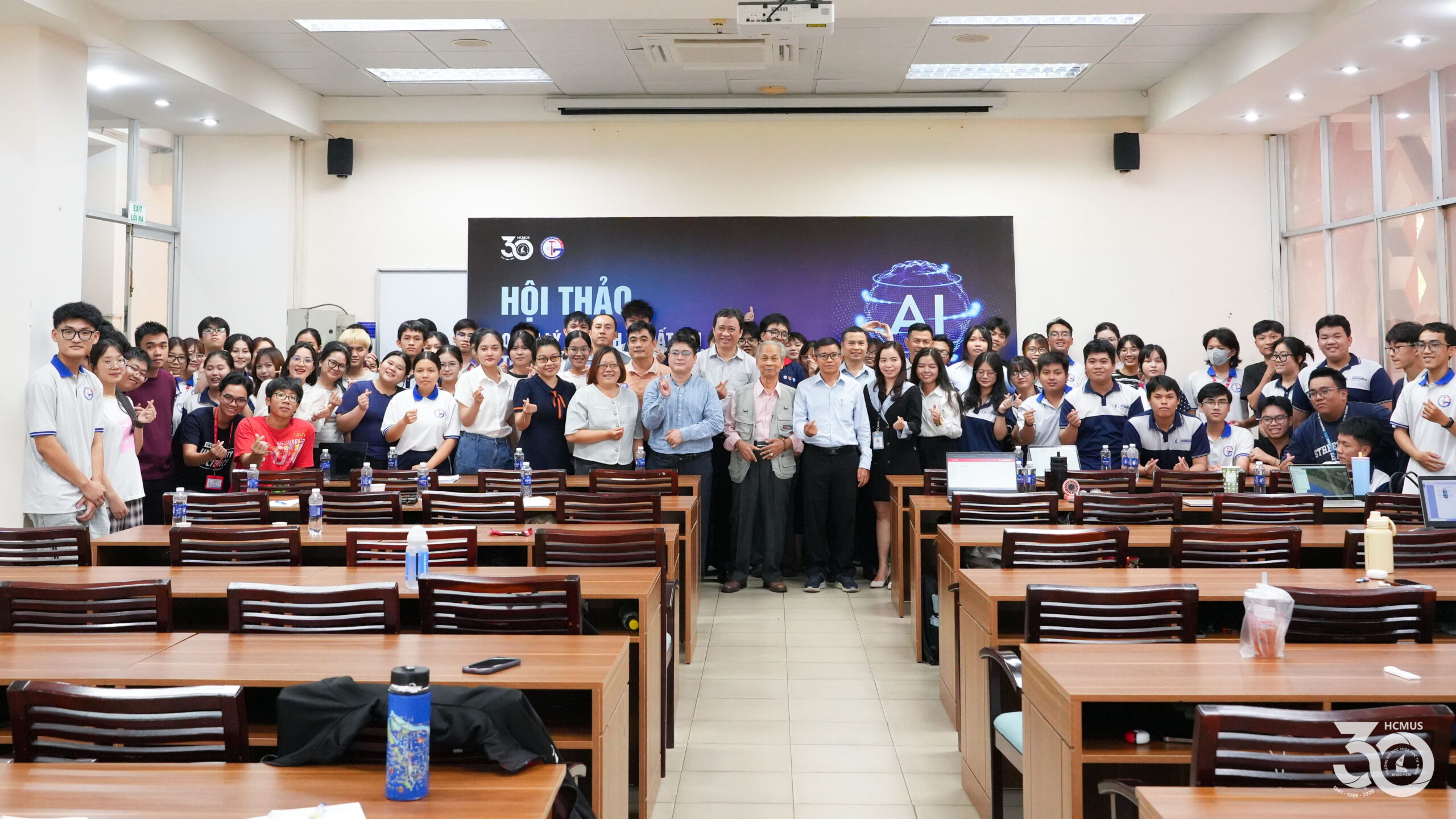
On 6 June, the Faculty of Geology at the VNUHCM–University of Science (HCMUS) hosted a symposium entitled ‘Land Management and Land Economics in the Context of Digital Transformation, AI Technology and Sustainable Urban Development’. The event brought together the participation of policymakers, experts, scientists, lecturers and students from the fields of geology, geoinformatics, land management, and urban planning and development.
As Ho Chi Minh City enters a new phase of development with increasingly stringent requirements for urban governance, digital transformation and sustainable growth, the symposium served as an academic forum to connect perspectives from state management, science and technology, and urban development practices. In doing so, the seminar helped clarify the role of geospatial data, digital technology and geological science in supporting policy formulation, land resource management and urban spatial organisation.
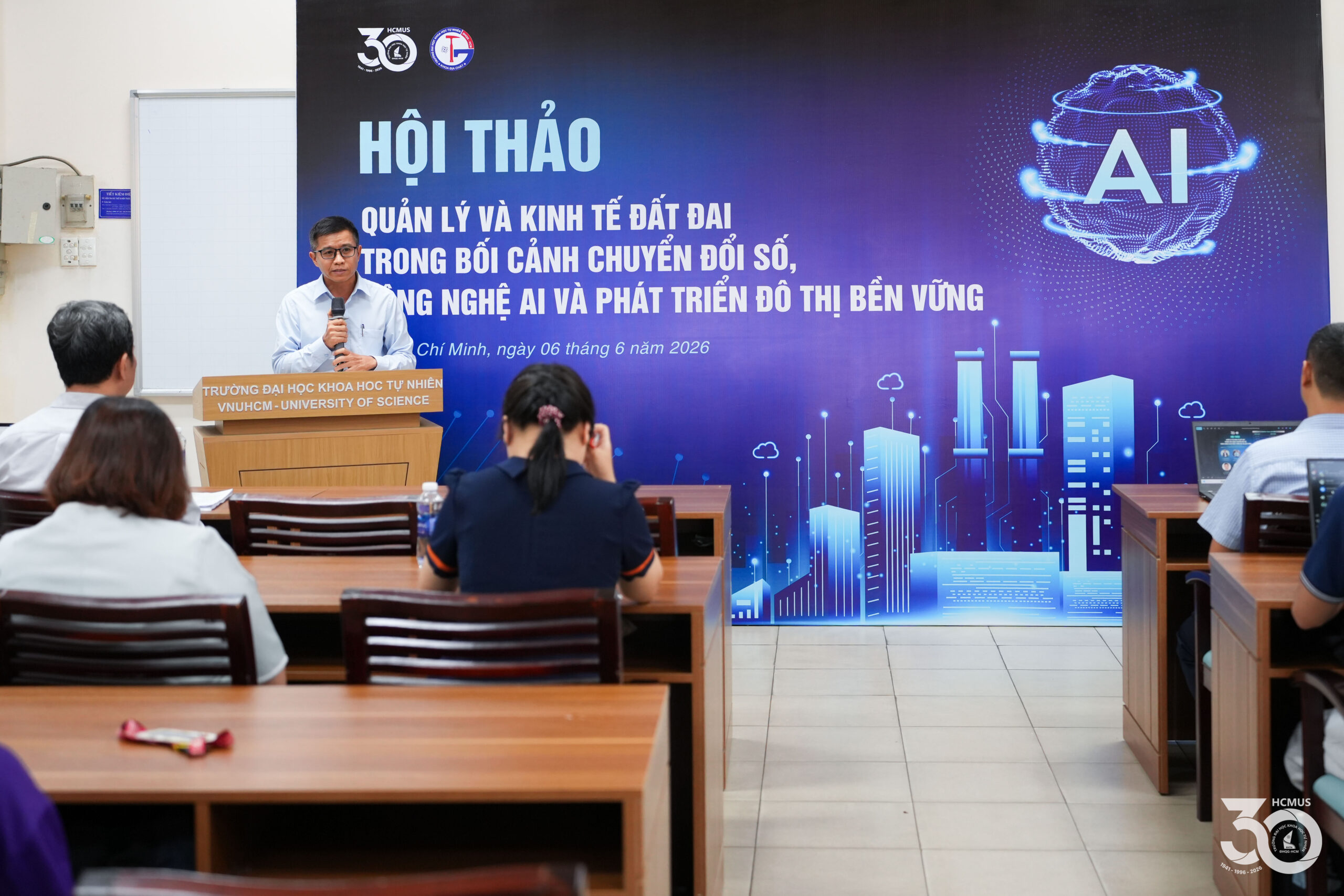
In the opening remarks, Associate Professor Phạm Trung Hiếu, Dean of the Faculty of Geology at HCMUS, noted that the profound shifts driven by digital transformation impose new demands on resource management and urban development. According to the Dean of Faculty, technologies such as GIS, UAVs, artificial intelligence and geospatial data systems no longer function merely as technical tools; instead, these advancements are becoming fundamental platforms supporting decision-making processes in planning, land management and sustainable urban development.
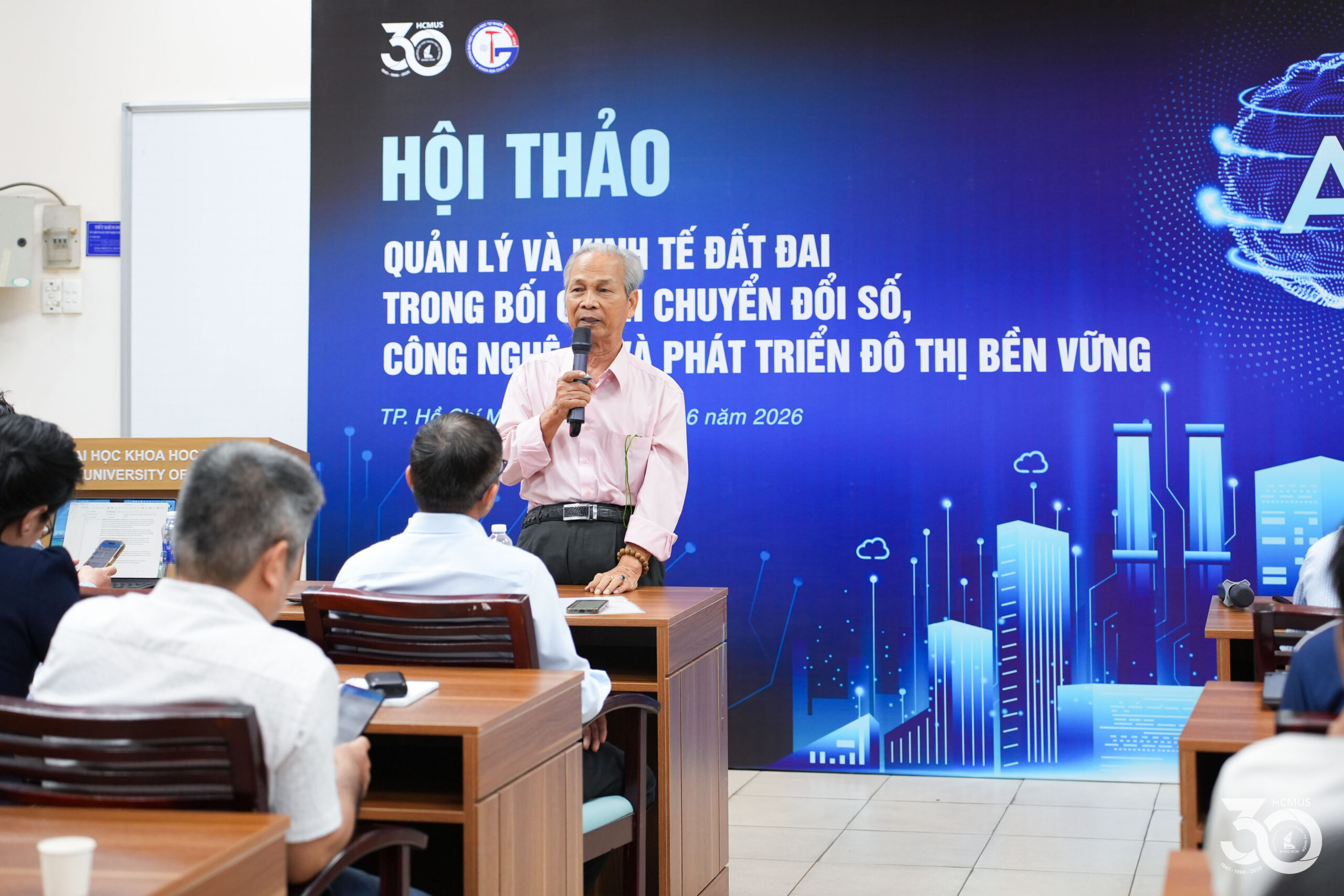
A key highlight of the symposium was the interdisciplinary approach applied to land management and land economics. Presentations extended beyond state management to encompass geospatial data, urban economics, digital technology, environmental geology and developmental governance.
Numerous topics were debated by experts, including:
- ‘State Management of Land in Ho Chi Minh City within the Context of Digital Transformation’ – Mr Huỳnh Thái Ngọc, MA, Head of the Investment, Exploitation and Land Fund Development Department at the Ho Chi Minh City Land Fund Development Centre;
- ‘Application of the GITC Platform and GIS Technology in State Management’ – Mr Phạm Đức Thịnh, Deputy Director of the Ho Chi Minh City Information Technology and Geospatial Centre;
- ‘The “Compact City” Model and Land Economics in the Post-Merger HCMC Mega-Region: Governance Speed, Financialisation of Space and the Challenge of Sustainable Development’ – Dr Nguyễn Bảo Thành, Van Lang University;
- ‘Application of Digital Transformation in Land and Urban Management: From Parcel Standardisation to the control of unauthorised construction using UAVs and DEMs’ – Dr Trần Anh Tú, VNUHCM–University of Technology;
- ‘Research into the Evaluation of Current Status and Strategies for Urban Planning and Green Cover in HCMC under the Smart City Model’ – Dr Trần Thị Kim, HCMUS;
- ‘The Necessity of Establishing Urban Environmental Geological Maps for the Sustainable Management and Development of Post-Merger Ho Chi Minh City’ – Associate Professor Phạm Trung Hiếu, HCMUS, and Mr Đỗ Công Dự, Engineer, Ho Chi Minh City Geological Association.
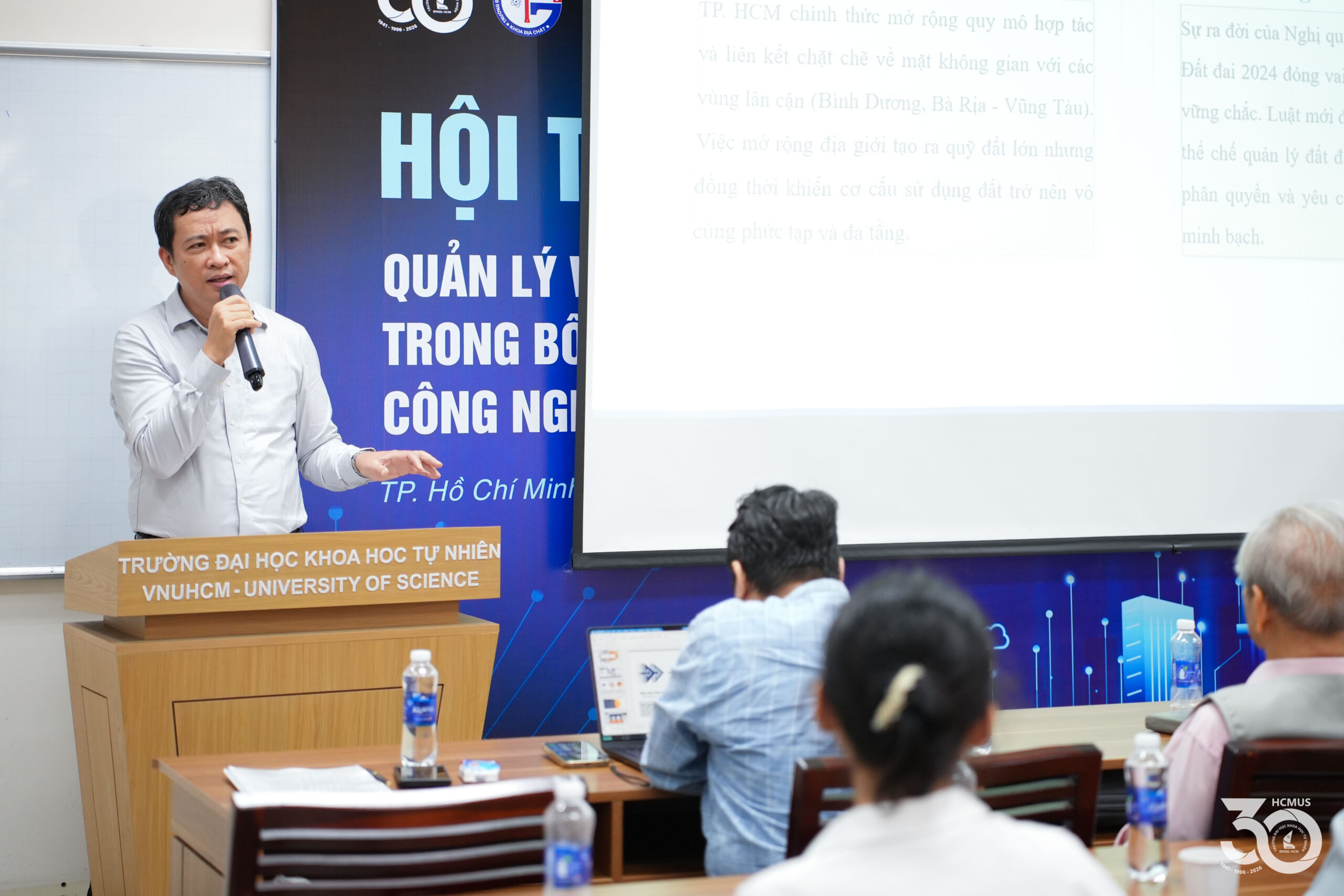
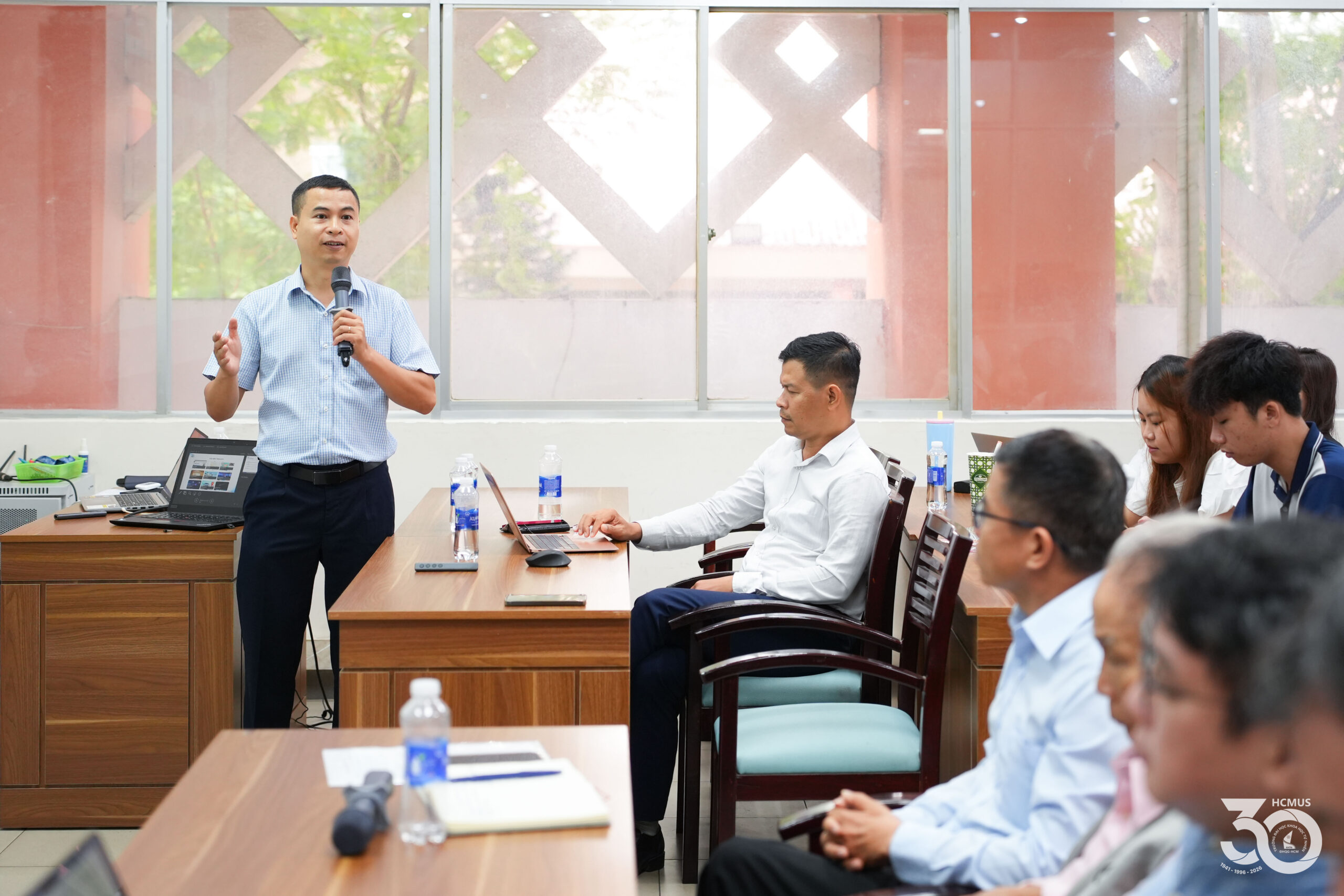
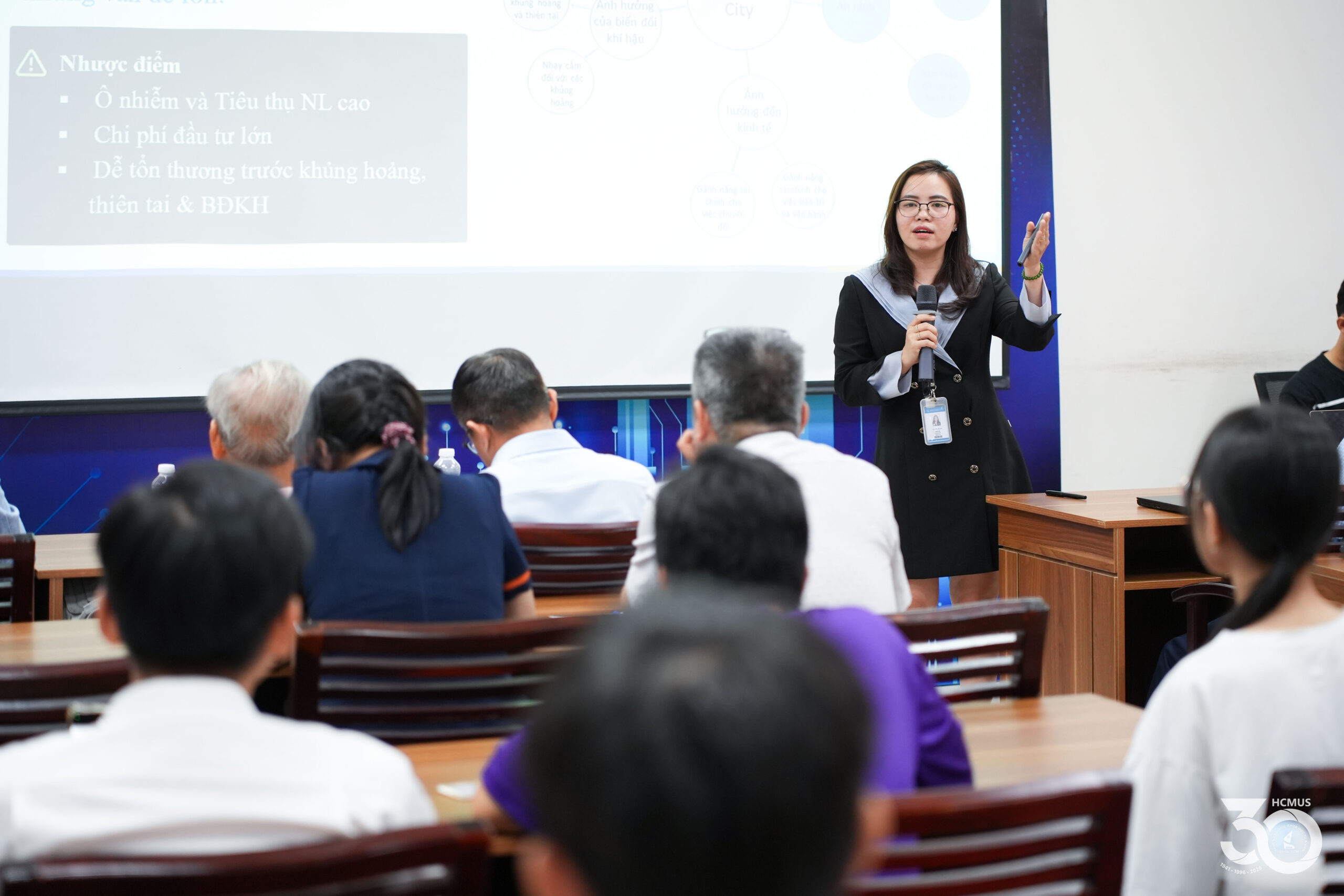
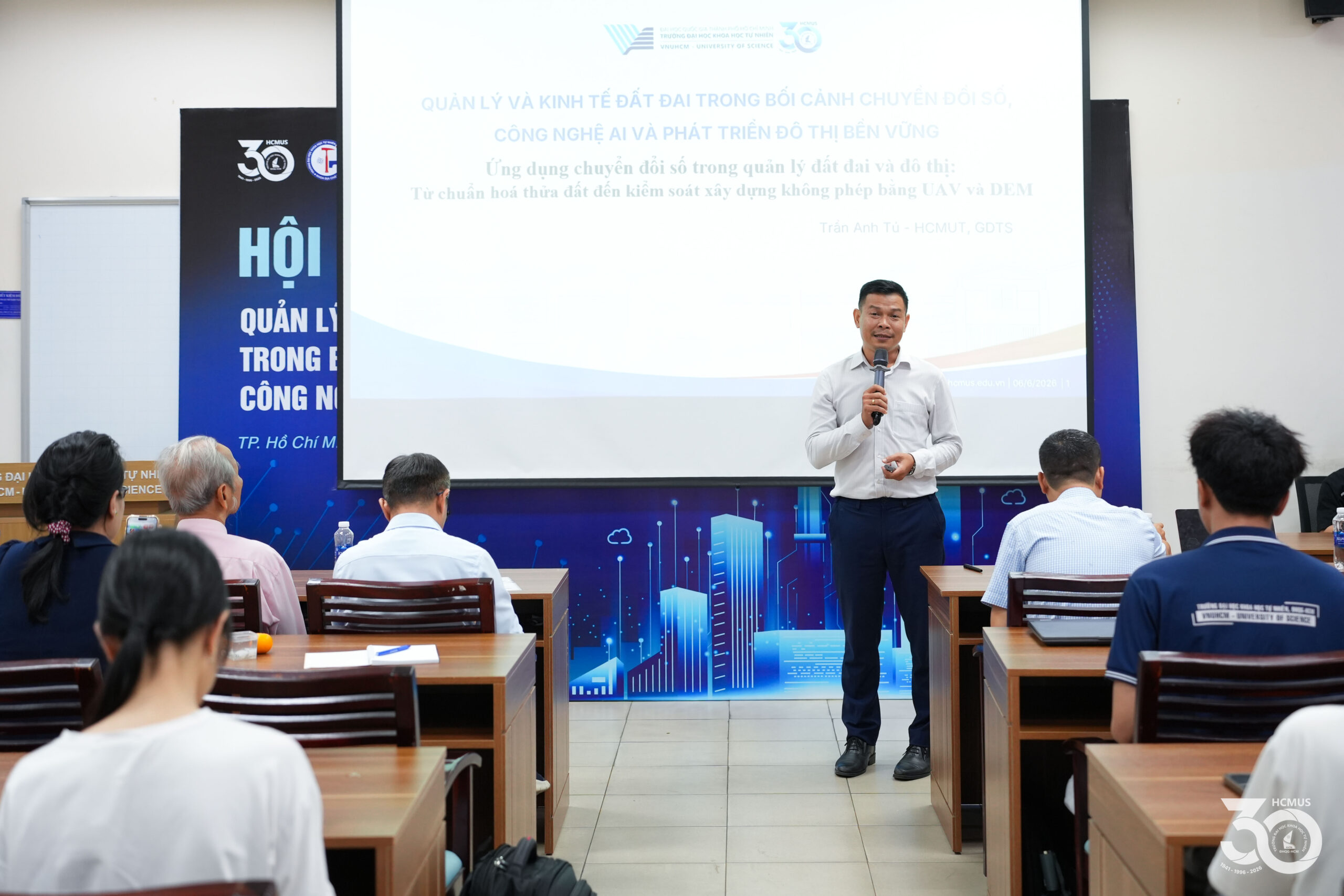
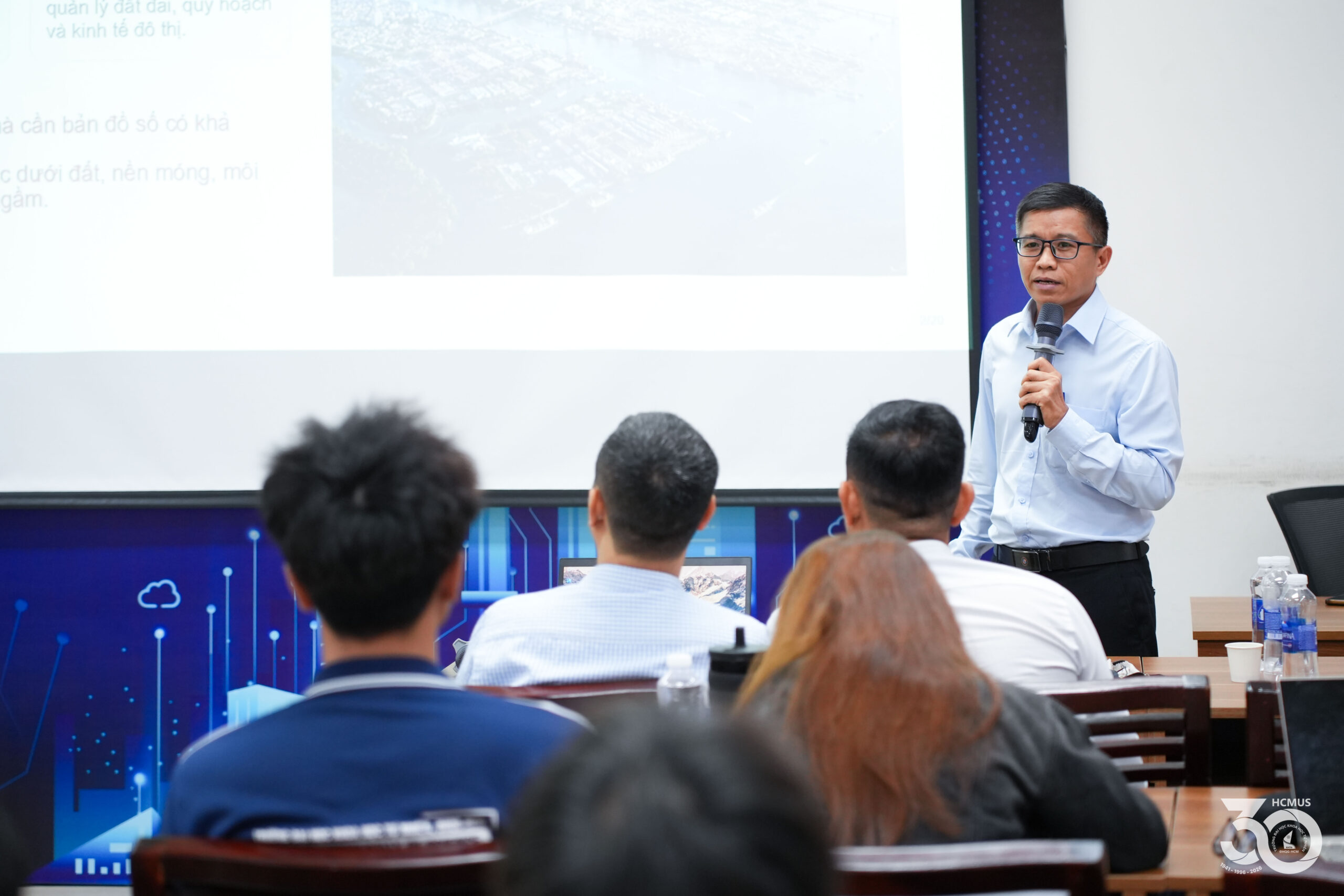
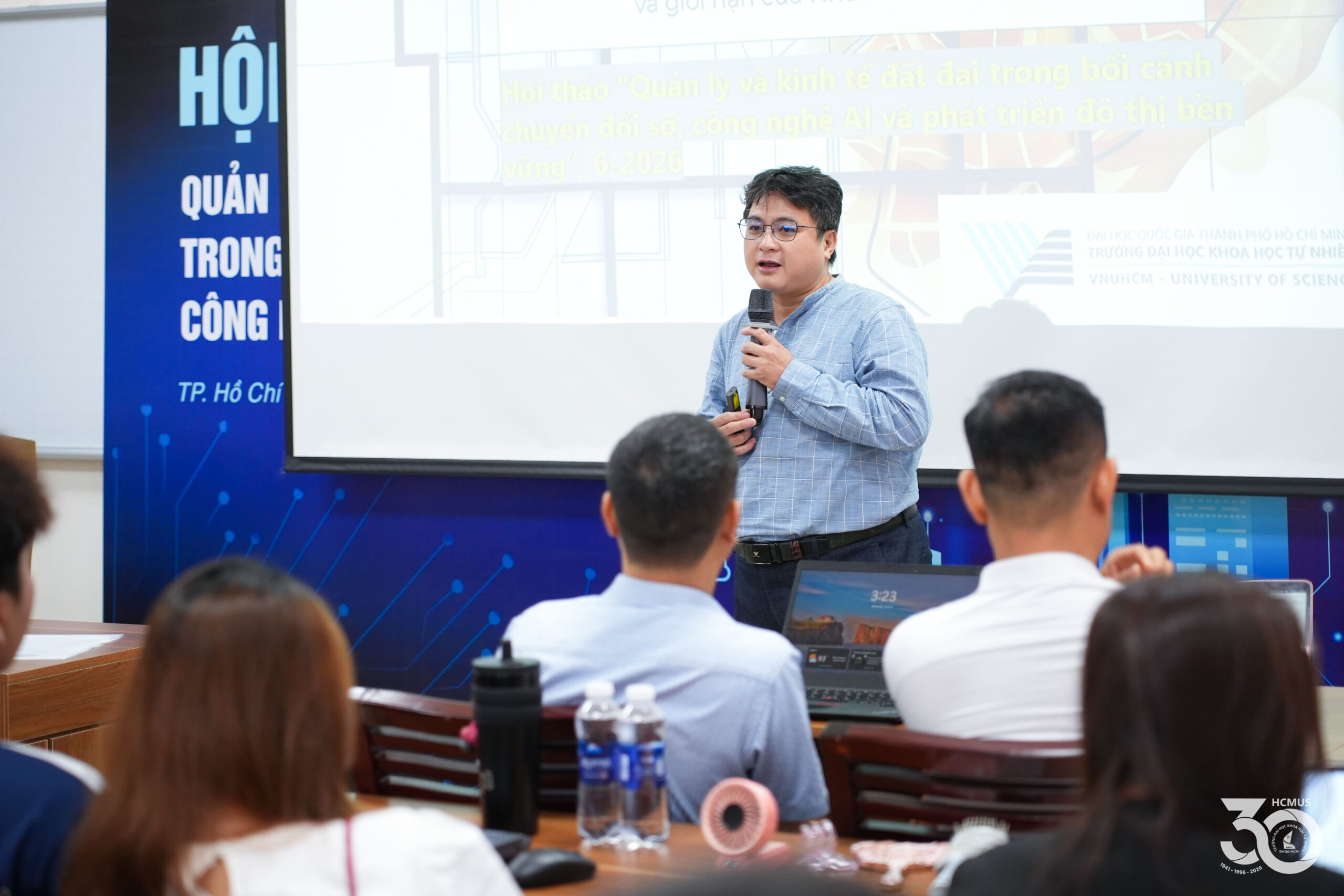
The presentations demonstrated that contemporary urban development depends intrinsically on the effective exploitation of data. When data layers regarding topography, geology, land use status, green spaces, water surfaces, groundwater and subsidence risks are integrated and synchronised, management authorities gain a more robust scientific foundation to assess current conditions, forecast development trends and formulate appropriate management solutions.
In particular, the application of artificial intelligence, big data and geospatial platforms opens up new methods of governance, enhancing the capacity to monitor, analyse and support decision-making in land resource management and urban development. This shift is regarded as an inevitable trend as major cities transition towards smart and sustainable urban models.
Beyond technical considerations, numerous contributors at the symposium emphasised the need to view land as a strategic development resource. The efficient management of land resources must be positioned within an overarching relationship with spatial planning, infrastructure development, environmental protection and the improvement of citizens’ quality of life.
The discussions at the symposium indicated that modern land management requires an interdisciplinary approach, whereby geological science, digital technology, urban economics and public governance collectively inform policy formulation and implementation. This approach aligns closely with the developmental demands of Ho Chi Minh City in the era of digital transformation, contributing to the scientific foundation for the creation of smart, resilient and sustainable urban environments for the future.
Leave a Reply