

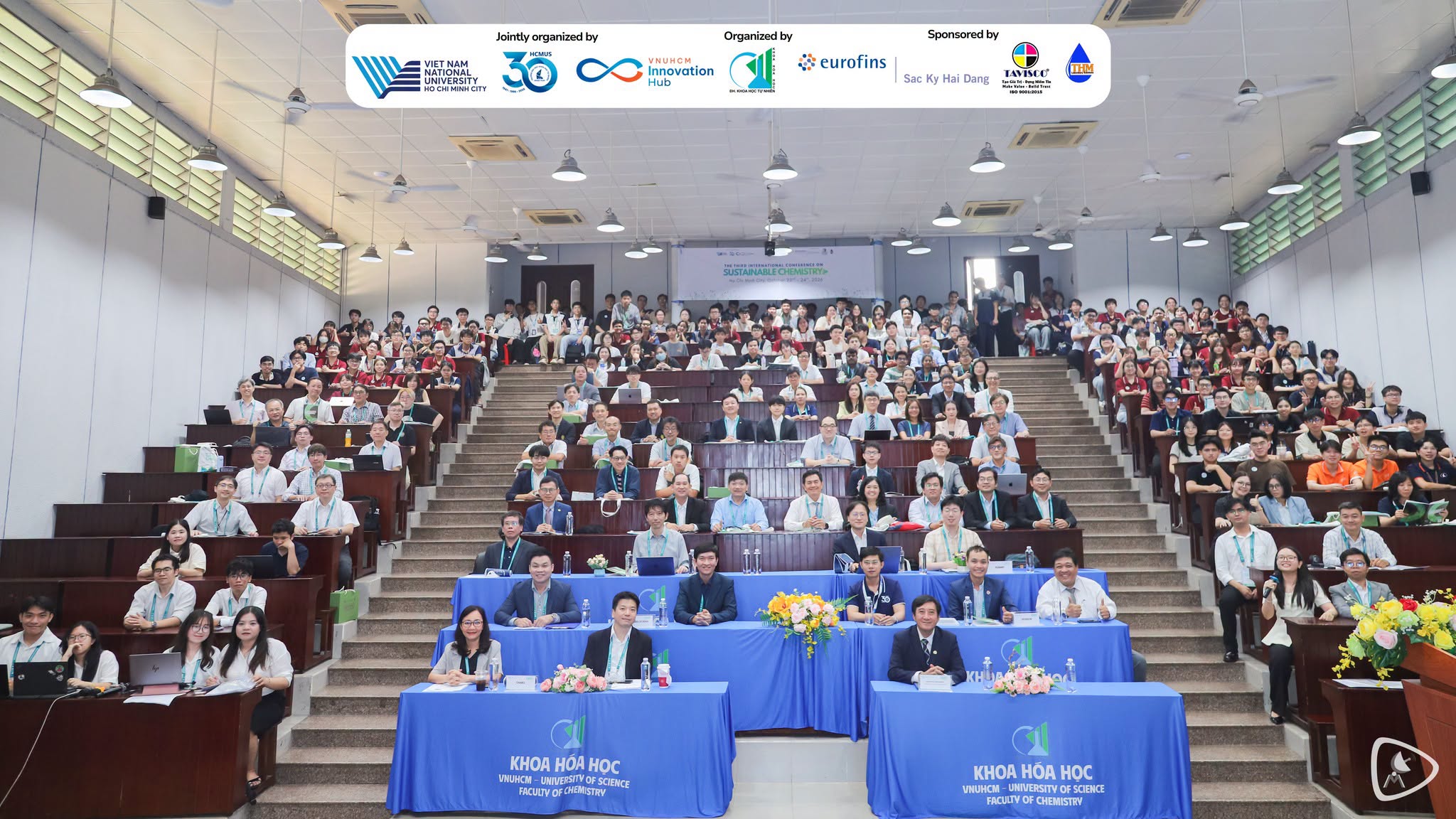
The 3rd International Conference on Sustainable Chemistry (ICSC2026) opened on 22 October 2026 at VNUHCM–University of Science (HCMUS). Taking place from 22 to 24 October 2026, the conference provides an international academic forum for exchanging research and ideas, with a focus on chemical research that can contribute to the energy transition, resource efficiency and environmental protection.
Chemistry in the Context of Sustainable Development
Under the theme “Chemistry for a Sustainable Future”, ICSC2026 explores the direct contribution of chemical research to the challenges of sustainable development. The demand for clean energy, environmentally friendly materials, approaches to utilising biomass and agricultural by-products, and solutions for pollution control highlights the need for new technologies that combine efficiency with reduced environmental impact.
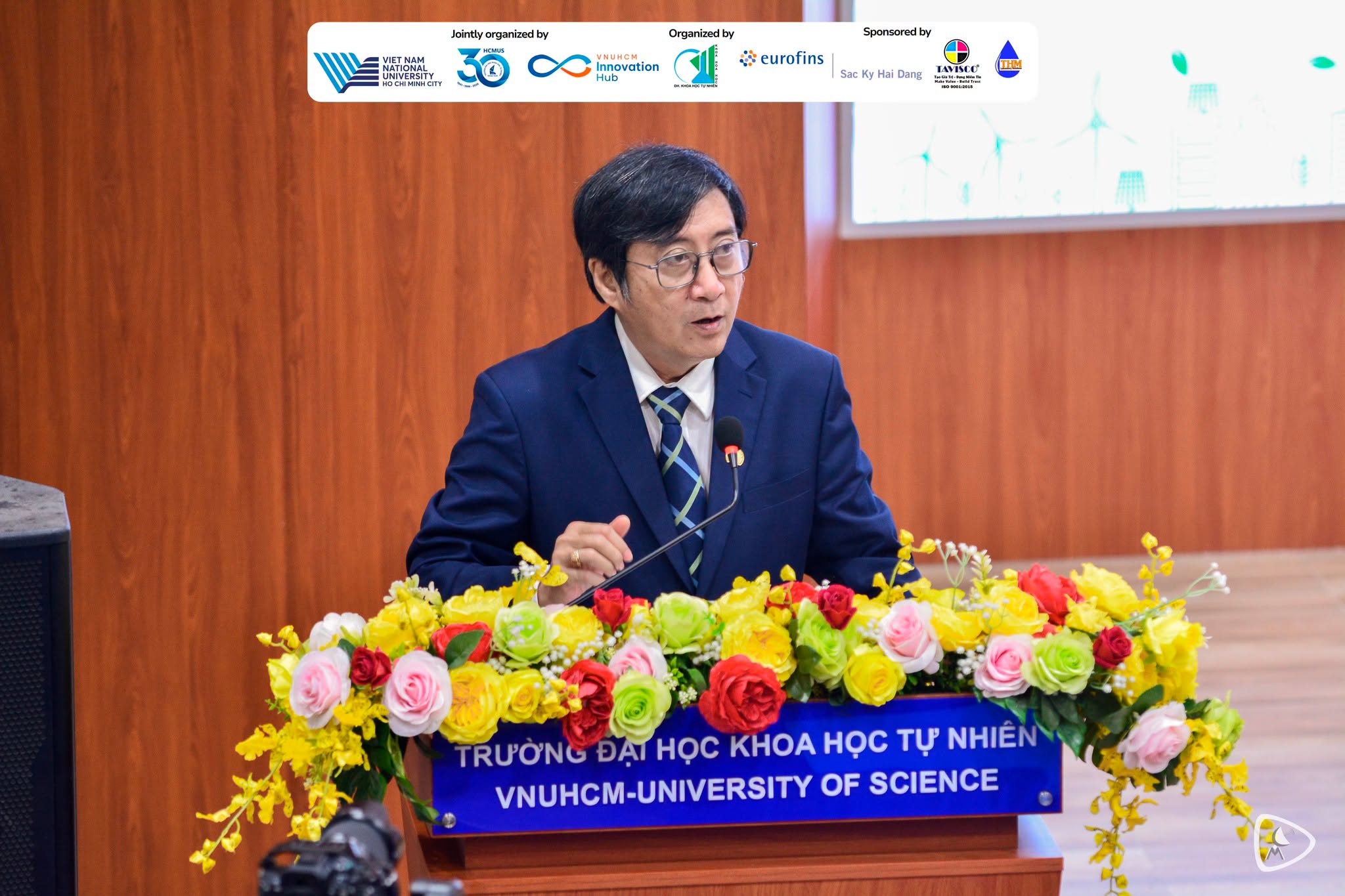
In his opening address, Associate Professor Trần Lê Quan, President of HCMUS, emphasised that the world faces a range of pressing challenges, including climate change, energy security, resource scarcity and public health concerns. Sustainable development, he noted, is no longer an option but a shared responsibility.
“Chemistry plays a central role in this endeavour. Chemists research and develop clean energy technologies, design new materials and green catalysts, convert biomass and waste into value-added products, and create solutions to protect people and the environment. This is precisely the theme of our conference: Chemistry for a Sustainable Future,” said Associate Professor Trần Lê Quan.
ICSC2026 features six plenary presentations, 75 invited presentations and parallel technical sessions. The conference brings together nearly 60 scientists from Taiwan, South Korea, Japan, China, Thailand and the United States, alongside researchers from Viet Nam. The academic programme is organised into three divisions and seven thematic sessions, covering sustainable organic synthesis and medicinal chemistry; advanced materials, polymers and energy applications; and analytical chemistry, physical chemistry and computational chemistry for sustainable applications.
Connecting Research in Biomass, Energy and Advanced Materials
During the plenary session, Professor Jason Lam from City University of Hong Kong presented his research, “Electrocatalytic Upgrading of Biomass-derived Substrates to Value-added Products”. The work explores the use of electrocatalytic processes to convert biomass-derived compounds into higher-value products, opening up opportunities to utilise renewable feedstocks in chemical processes.
In a related presentation, Professor Seung Han Shin from the Korea Institute of Industrial Technology (KITECH) introduced an integrated approach to developing platform chemicals, bioplastics and functional materials from biomass. The research examines how biological feedstocks can be transformed into products for industrial use, linking chemical research with the development of sustainable materials and manufacturing processes.
From Viet Nam, Associate Professor Trần Hoàng Phương of HCMUS presented “From Biomass to Energy and Value-Added Chemicals: Advancing a Sustainable Future”. The presentation highlighted the potential of converting biomass into energy and value-added chemical products, while underscoring the need for suitable processes to improve the efficiency of biomass utilisation.
Alongside biomass, materials for energy conversion emerged as another prominent research area. Professor Tzu Chien Wei from National Tsing Hua University and Academia Sinica, Taiwan, presented research on perovskite solar cell technology. The conference programme also addressed hydrogen, water-splitting technologies and sodium-ion batteries. These research directions extend discussions from energy-conversion materials to technologies for energy production and storage, helping establish a scientific foundation for the development of sustainable energy systems.
From Rubber Materials to Technologies for Health and the Environment
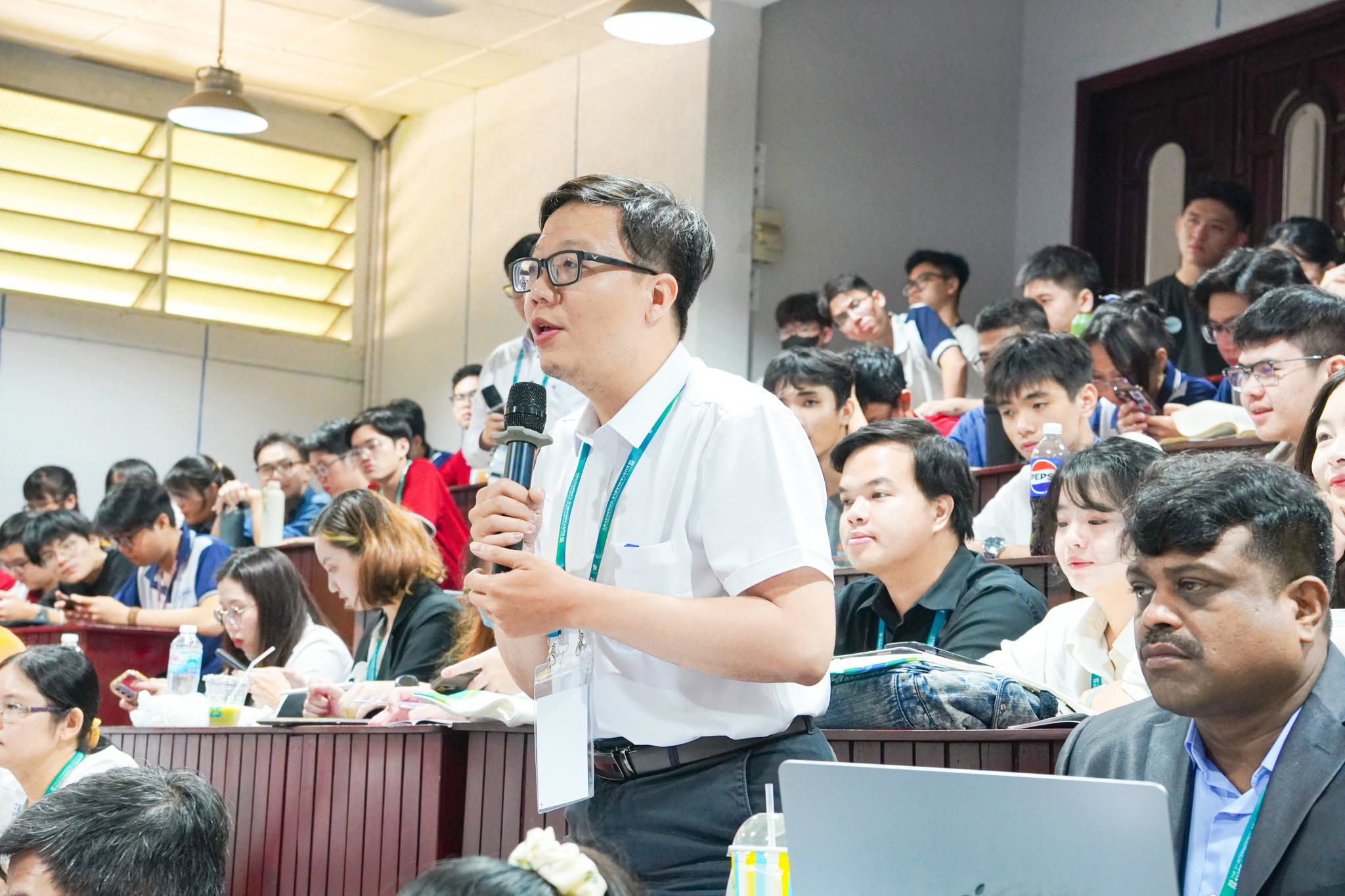
Beyond energy and biomass, research into polymers, porous materials, medicinal chemistry, sensors and analytical chemistry further demonstrates the breadth of sustainable chemistry applications. Professor Kenji Urayama from Kyoto University, Japan, presented research on strain-induced crystallisation in natural rubber and the potential to improve material performance through additives. The study examines the relationship between crystallisation under stretching and rubber properties, seeking ways to enhance material performance through a deeper understanding of structure and behaviour.
In health-related chemistry, Professor Hsing-Wen Sung from National Tsing Hua University, Taiwan, presented “Noninvasive Gut-to-Brain Oral Delivery Systems”. The research aims to develop oral drug delivery systems capable of transporting active compounds from the gut to the brain. This interdisciplinary field combines chemistry, materials science and drug delivery technologies to explore potentially useful approaches to healthcare.
In analytical chemistry and sensor technology, conference presentations addressed specific challenges, including methylmercury analysis, the detection of Auramine O dye in food, the screening of contaminated recycled plastics and the detection of Dengue virus NS1 antigen. These studies seek to strengthen the capacity to detect and monitor substances and agents that may pose risks to the environment and human health.
Research into water treatment, adsorbent materials and the use of agricultural by-products also demonstrates how sustainable chemistry can address practical needs. According to the conference programme, notable approaches include using biochar derived from agricultural residues for water treatment and CO₂ capture, synthesising furfural from corn bran, producing carbon aerogels from sugarcane bagasse and recovering useful materials from coconut fibres.
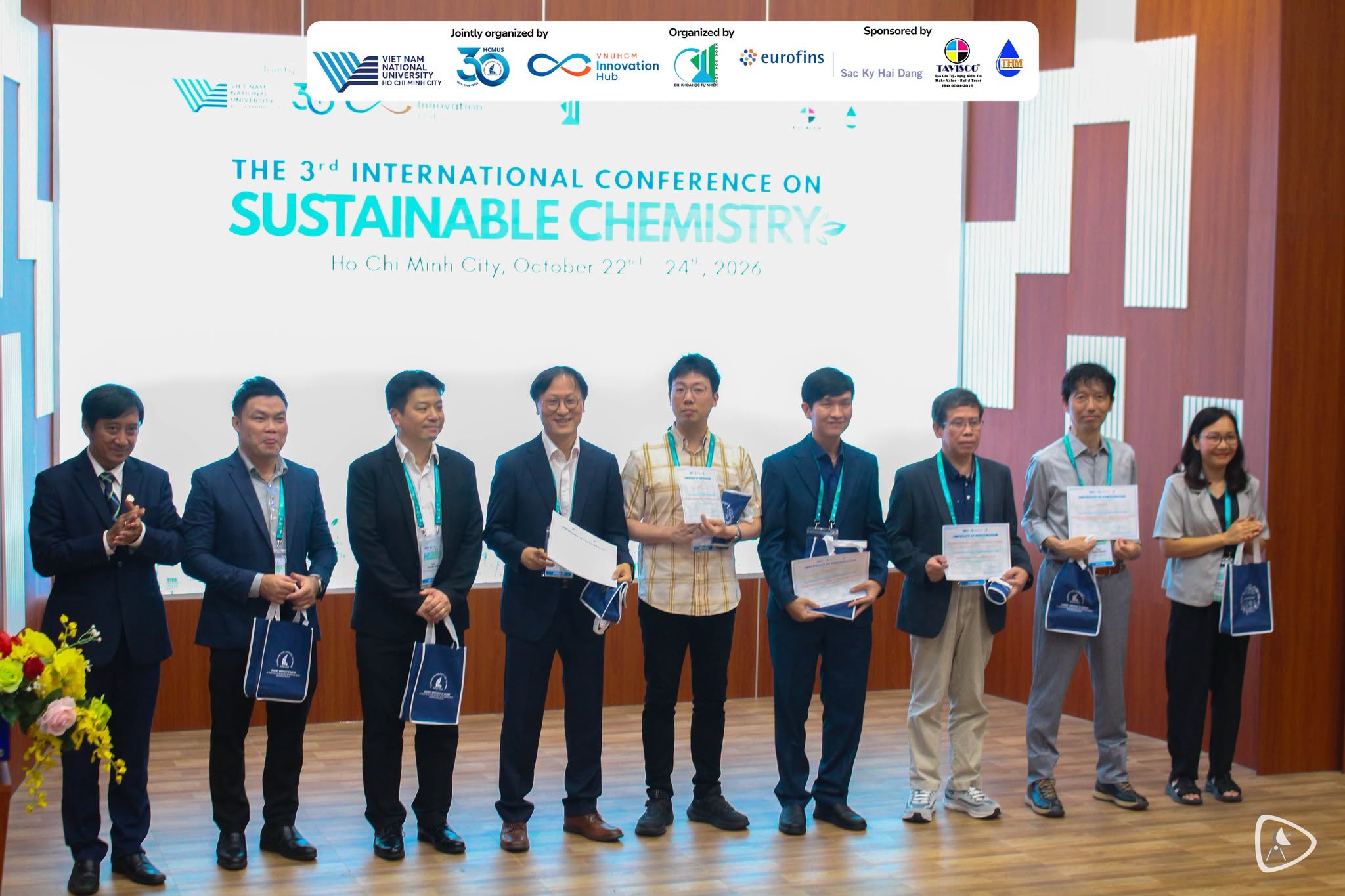
At a time when sustainable development increasingly demands scientifically grounded and practically applicable solutions, ICSC2026 highlights the role of chemistry in connecting knowledge with real-world challenges. By bringing together scientists, educational institutions and industry partners, the conference also creates further opportunities to exchange research findings, develop new ideas and explore pathways towards practical application. These efforts contribute to strengthening the international research profile of VNUHCM–University of Science (HCMUS).
Leave a Reply