

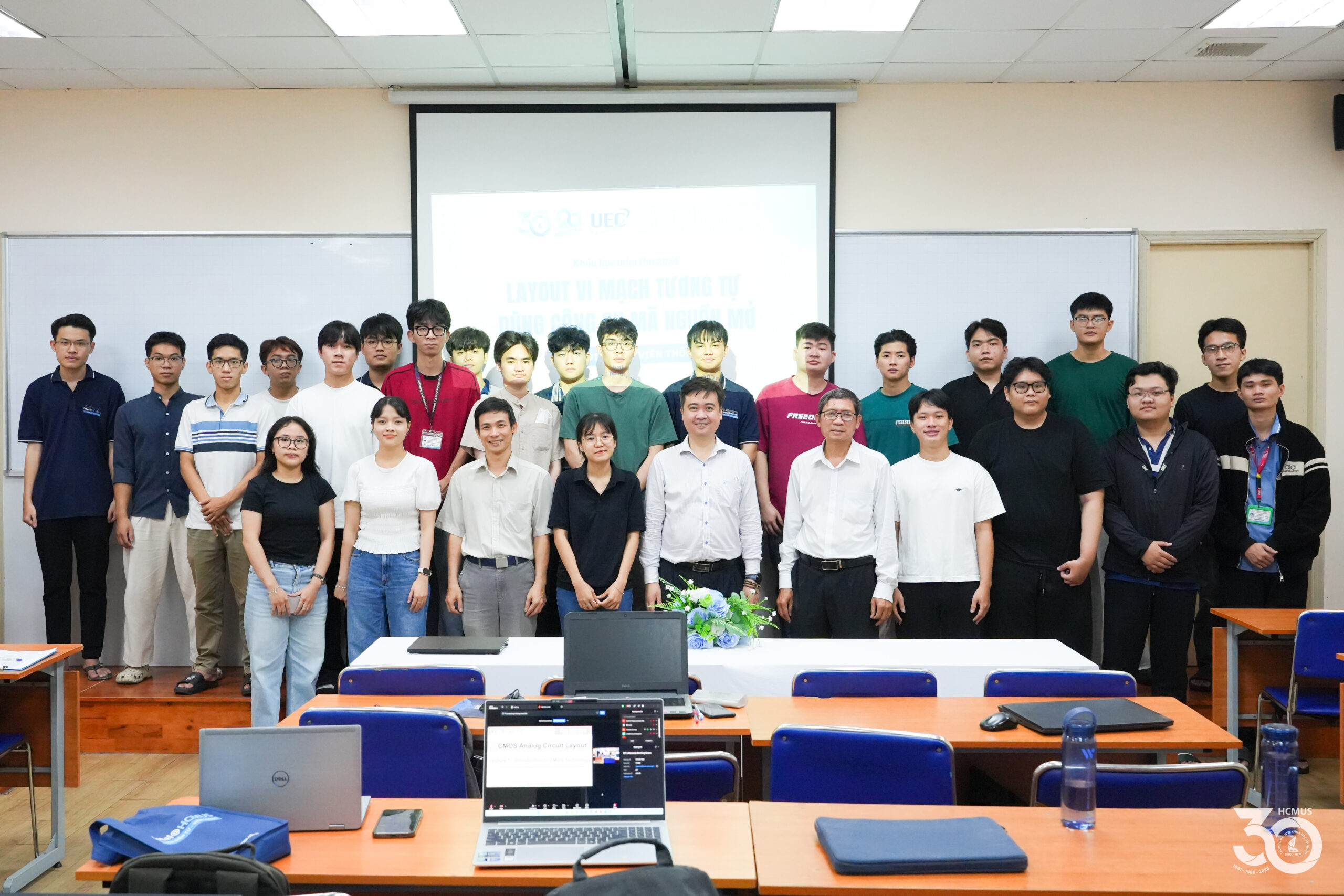
As part of the Viet Nam–Japan cooperation programme for semiconductor workforce development, the Faculty of Electronics and Telecommunications, VNUHCM–University of Science (HCMUS), held the opening ceremony for the specialised course ‘Analogue IC Layout Using Open-Source Tools’ on the evening of 8 September.
The programme was designed to equip students with advanced practical skills in integrated circuit (IC) design, enabling them to develop proficiency in technological processes and engage with international research standards. Running from 8 to 17 September, the course was designed for third- and fourth-year students from the Faculty of Electronics and Telecommunications. Across nine sessions, the programme guided participants through a comprehensive practical pathway, from the fundamentals of CMOS technology and passive components to advanced design techniques including matching, bias circuits, and amplifier stages, before progressing to floorplanning, noise management, packaging, and design verification. Working with open-source tools alongside international experts enabled students to strengthen practical capabilities and prepare for the growing demand for highly skilled professionals in the semiconductor industry.
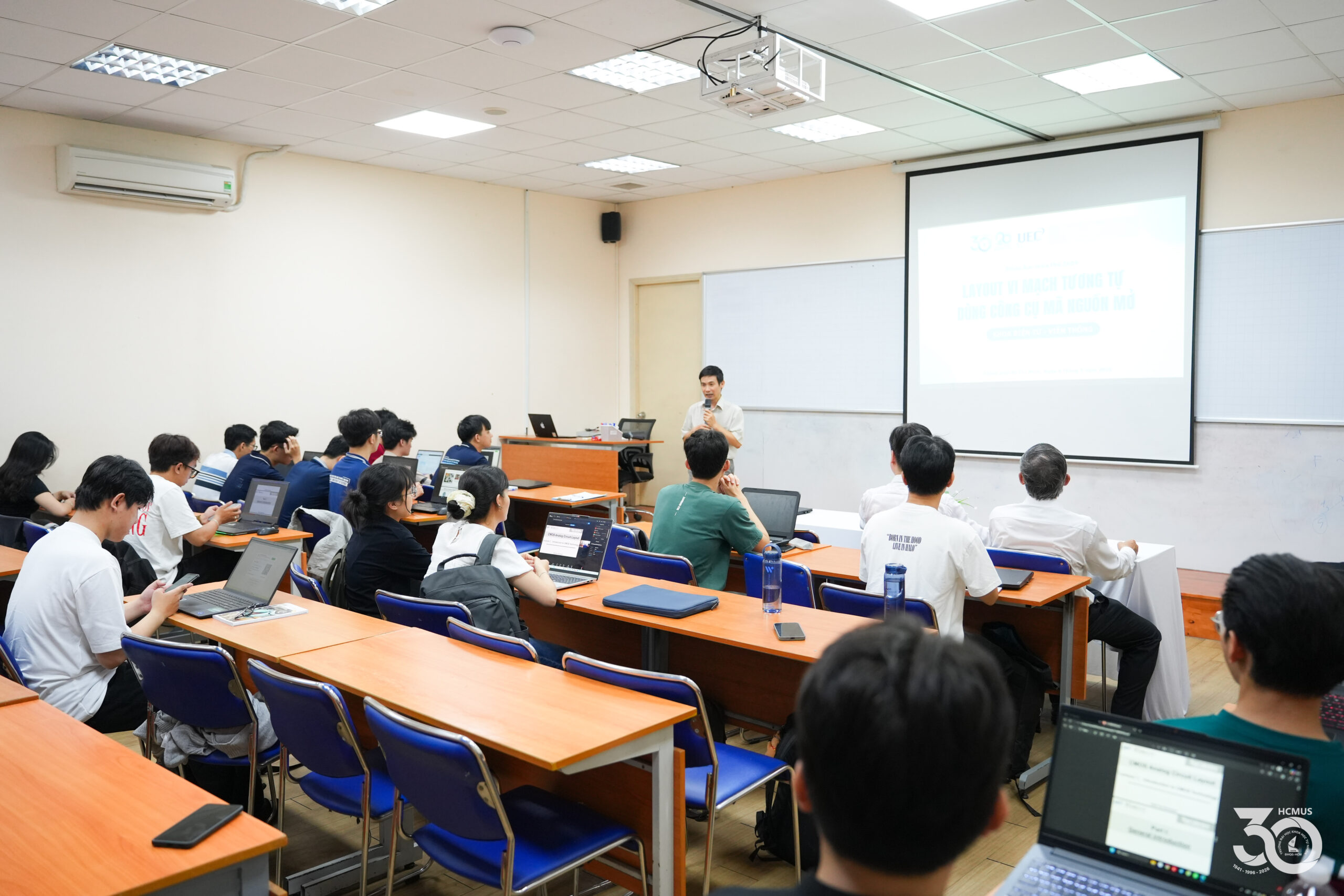
As semiconductor technology becomes a strategic priority in national technological development, preparing engineers with practical expertise and the ability to work with advanced technology platforms has become increasingly important. Building on the success of the extended analogue IC design course held in March 2026, the latest course focused specifically on analogue IC layout using open-source tools, enabling students to develop proficiency across the technical workflow, make effective use of learning resources, and take a more independent approach to applied research.
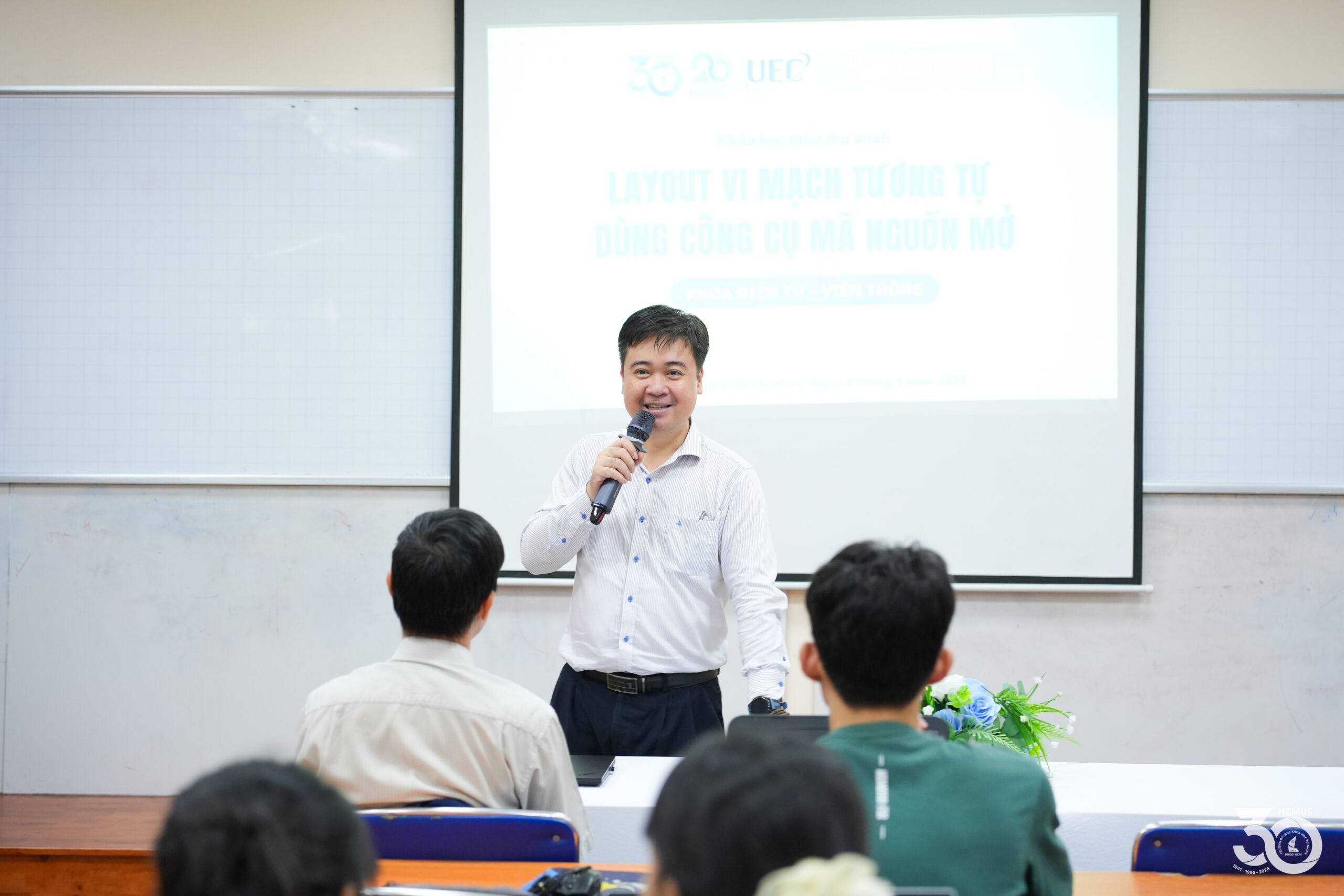
Speaking at the opening ceremony, Assoc. Prof. Trần Minh Triết – Vice President of VNUHCM–University of Science (HCMUS) – emphasised the programme’s contribution to student development: ‘The course provides practical experience that enables students to develop the knowledge and skills required in a field attracting significant demand from society, while also strengthening their capacity for international engagement in science and technology.’
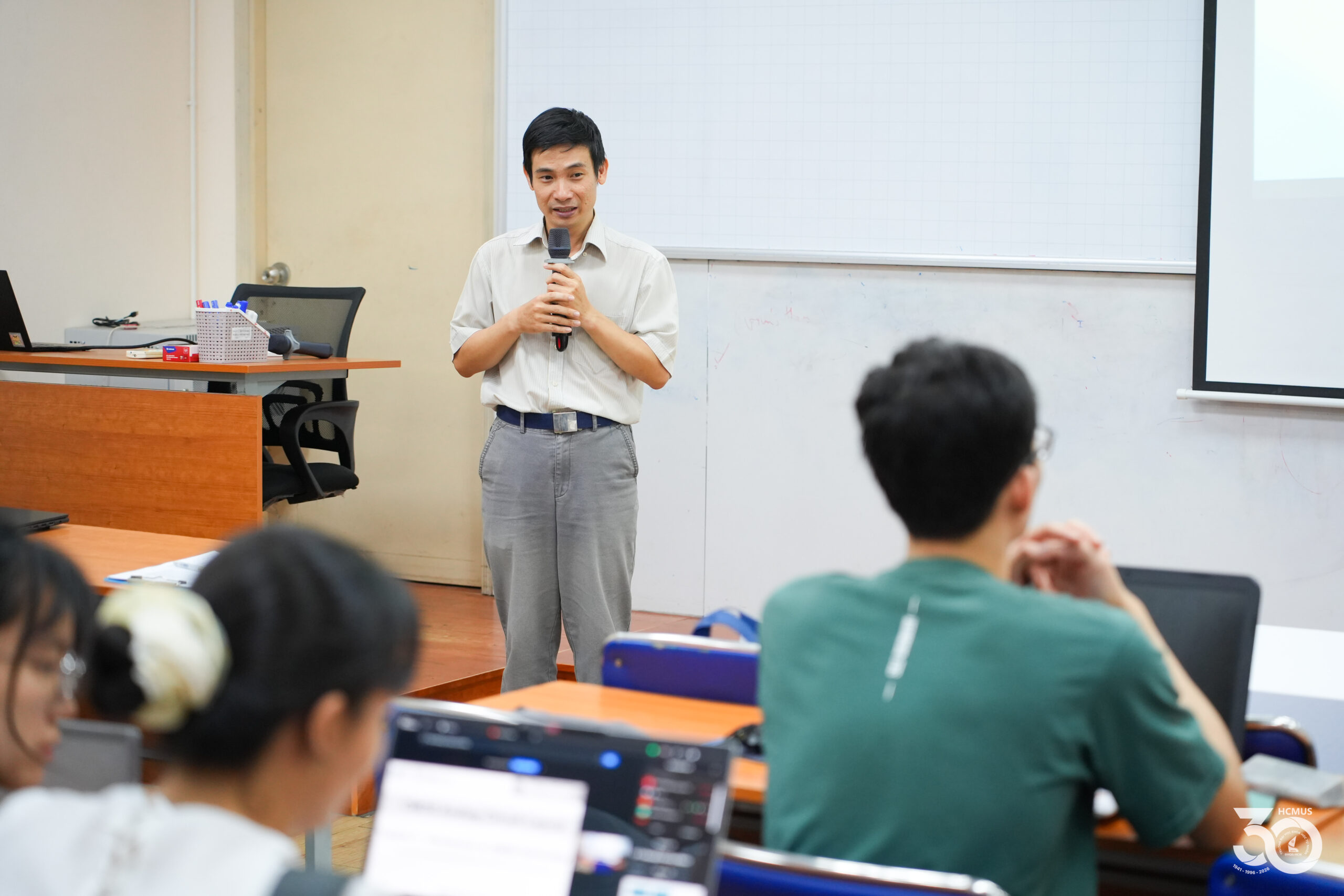
Building on the University leadership’s strategic direction, Assoc. Prof. Lê Đức Hùng – Head of the Department of Electronics, Head of DESLAB, and Deputy Head of the Organising Committee – outlined the course’s academic focus and the scope of international collaboration. He explained that, unlike previous content with a stronger emphasis on theoretical foundations, the latest programme was designed to maximise opportunities for advanced practical training. ‘This course forms part of the Viet Nam–Japan cooperation programme in semiconductors, with VNUHCM–University of Science representing Viet Nam in collaboration with the University of Electro-Communications (UEC), Japan, and with Prof. Phạm Công Kha (Pham Laboratory) serving as co-chair. The programme’s core objective is to build and develop a highly skilled workforce in integrated circuit design,’ Assoc. Prof. Lê Đức Hùng emphasised.
The combination of academic expertise, open-source tools, and experience from international experts not only strengthens students’ specialist capabilities but also creates further opportunities to participate in advanced research projects, directly addressing demand for highly skilled professionals from industry and research institutes in the next stage of development.
Leave a Reply