

![[DOCTORAL THESIS DEFENCE] DOCTORAL RESEARCHER PHẠM THỊ LỢI SUCCESSFULLY DEFENDS THESIS ON THE IMPACTS OF CLIMATE CHANGE ON COFFEE YIELDS IN THE CENTRAL HIGHLANDS](https://en.hcmus.edu.vn/wp-content/uploads/2026/09/P4T00559-scaled-1.jpg "P4T00559-scaled")
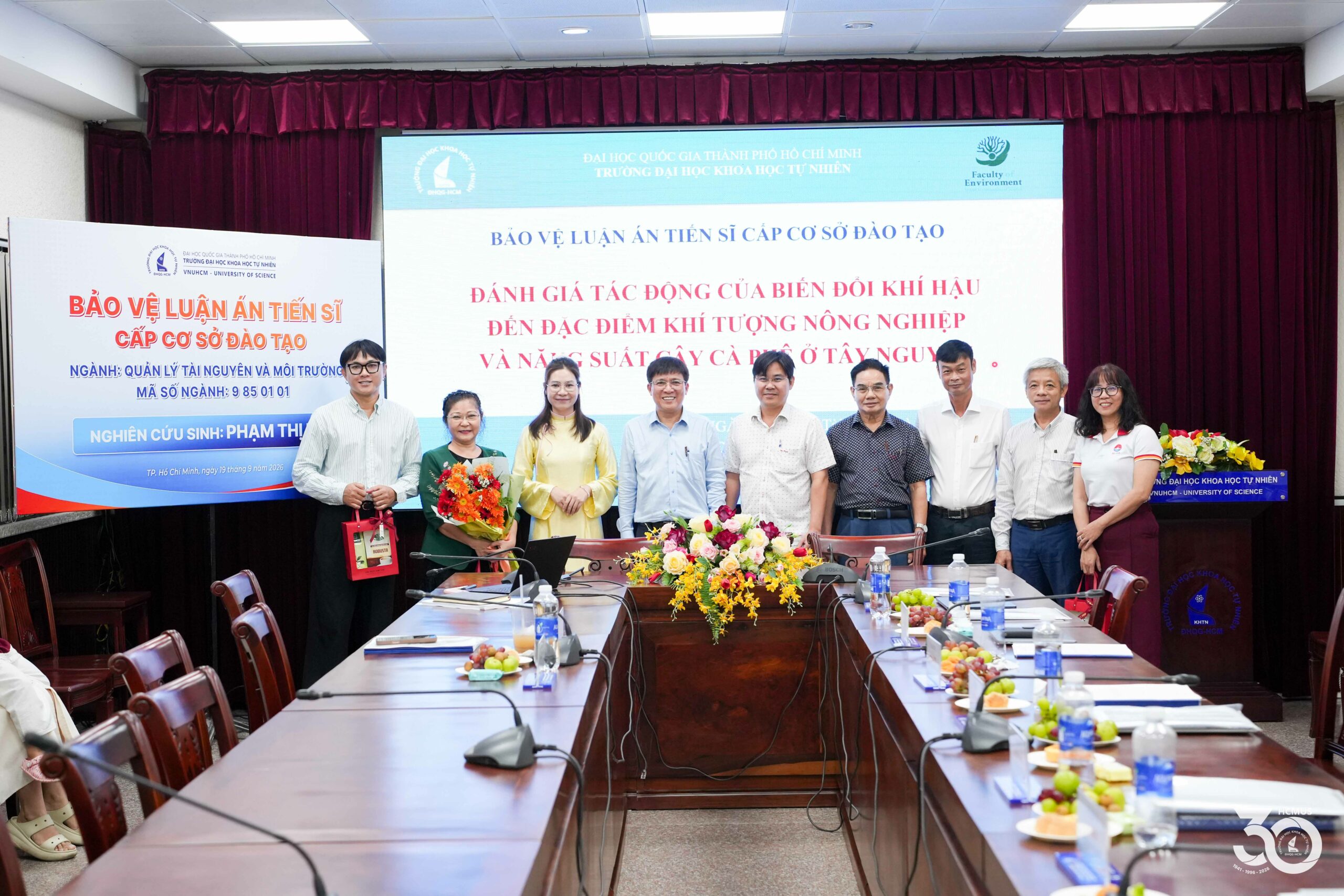
On the morning of 19 September, at VNUHCM–University of Science (HCMUS), doctoral researcher Phạm Thị Lợi successfully defended her doctoral thesis in Natural Resources and Environmental Management, entitled ‘Assessing the Impacts of Climate Change on Agrometeorological Characteristics and Coffee Yields in the Central Highlands’. The thesis was conducted under the supervision of the late Assoc. Prof. Đào Nguyên Khôi and Assoc. Prof. Nguyễn Thị Bảy.
Phạm Thị Lợi’s research demonstrates strong academic expertise through five international publications indexed in WoS/ISI, including a paper published in a leading Q1 journal. The thesis successfully developed and applied an integrated research framework combining analysis of current climate trends, downscaling of future climate scenarios, water-balance simulation, and modelling of Robusta coffee yields across the Srêpôk River Basin – a major coffee-growing region in the Central Highlands.
According to the findings, analysis of data from 1981 to 2020, combined with statistical downscaling using the Statistical DownScaling Model (SDSM) and three CMIP6 global climate models (CanESM5, NorESM2-MM, and MPI-ESM1-2-HR), indicated substantial increases in temperature and the water-deficit index (DEF) over future periods from 2026 to 2100. Climatic suitability for Robusta coffee is projected to decline markedly. Under the impacts of climate change, the proportion of areas with unsuitable agrometeorological conditions could increase from approximately 19% under the low-emissions SSP1-1.9 scenario to as much as 99% under the high-emissions SSP5-8.5 scenario by the end of the 21st century, with the greatest concentration in the central basin, including Buon Ma Thuot City and surrounding areas.
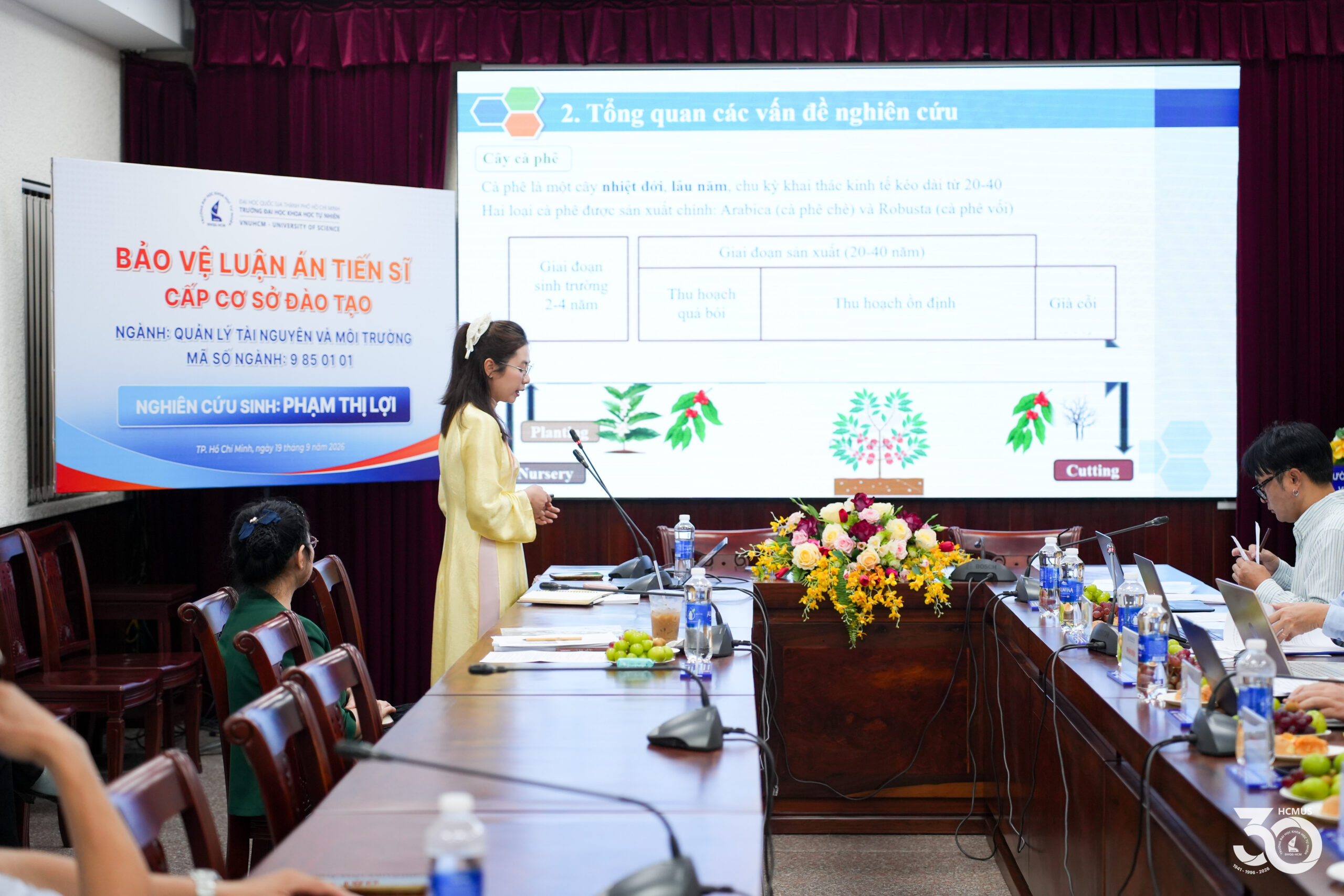
The application of machine-learning models (ANN, SVR, RF, and XGBoost), combined with LASSO regression, helped identify the meteorological factors directly influencing coffee yields at different stages of growth. The research also identified the spatial distribution of climate risks, with Dak Mil emerging as the area most strongly affected and facing the greatest risk of future yield reductions.
The research provides a set of spatial zoning maps and practical projection scenarios. These findings offer an important scientific basis for supporting government agencies, local authorities, and communities in planning coffee-growing areas, managing water resources, and proactively implementing climate change adaptation measures in the Central Highlands.
Leave a Reply