

![[DOCTORAL THESIS DEFENCE] DOCTORAL RESEARCHER TRƯƠNG CHÍ CƯỜNG SUCCESSFULLY DEFENDS DOCTORAL THESIS ON POTENTIAL APPLICATIONS OF KON TUM PEGMATITE IN CERAMICS MANUFACTURING](https://en.hcmus.edu.vn/wp-content/uploads/2026/09/DC-2-scaled.jpg "DC (2)")
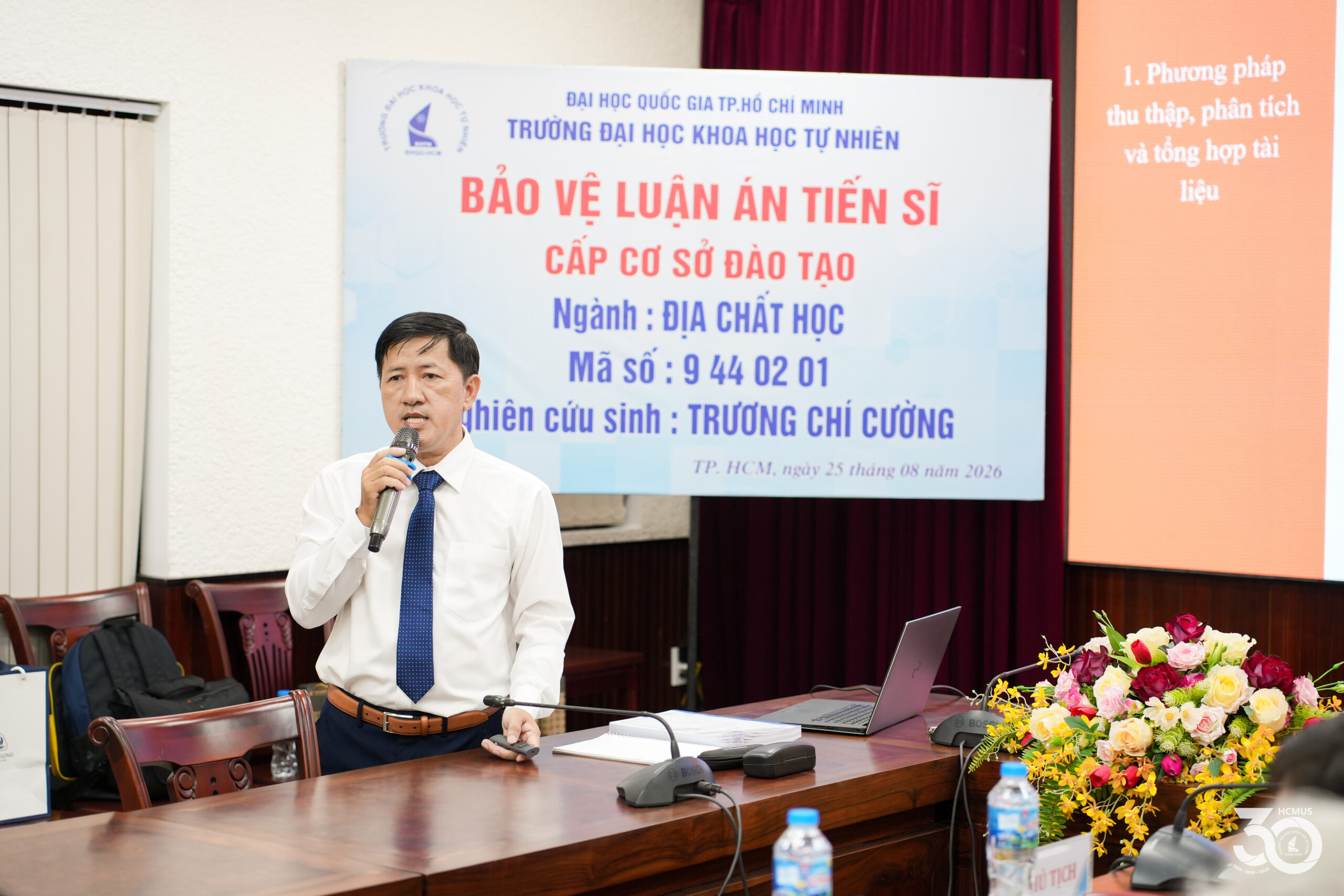
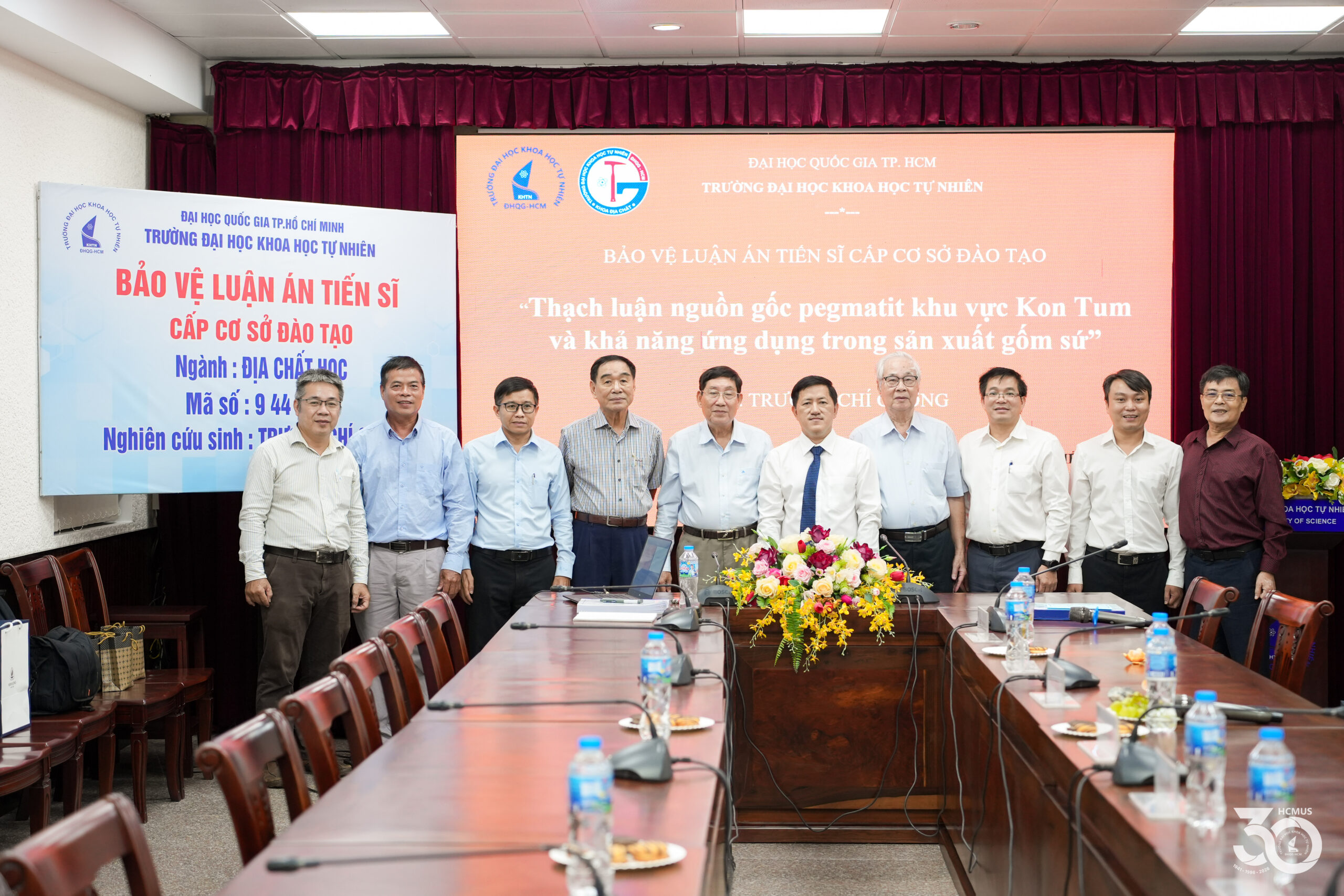
On 25 August, at VNUHCM–University of Science (HCMUS), doctoral researcher Trương Chí Cường successfully defended a doctoral thesis in Geology entitled ‘Petrogenesis of Kon Tum pegmatites and potential applications in ceramics manufacturing’. The research was conducted under the scientific guidance of Associate Professor Phạm Trung Hiếu.
The thesis focused on clarifying the geological, mineralogical, petrological, and petrogeochemical characteristics, formation ages, and origins of pegmatite bodies distributed across the Kon Tum region, whilst evaluating the feasibility of using this pegmatite resource as a raw material for the ceramics industry. Research results provided additional scientific evidence regarding the origin and petrological characteristics of Kon Tum pegmatites, while highlighting the practical value of this resource.
According to research findings, the pegmatite bodies are distributed along an uplift zone extending from the lower reaches of the Đak Bra River to the Mang Den Pass, predominantly oriented North East–South West. The ore bodies form veins cutting across rocks belonging to the Kham Duc, Ben Giang – Que Son, and Hai Van complexes. They measure from several metres to tens of metres in width and from 50 metres to 1 kilometre in length, characterized by milky white to pale pink coloration and large mineral crystals.
In terms of mineralogical and geochemical composition, Kon Tum pegmatite belongs to a feldspar-rich category, accounting for approximately 60–80%, with quartz making up around 20%; potassium feldspar predominates over plagioclase. The average SiO₂ content reaches 72.46%, Al₂O₃ reaches 14.58%, and total alkali content (Na₂O + K₂O) reaches 9.74%. An average K₂O/Na₂O ratio of 3.36 indicates potassium-rich characteristics, while total iron oxide content remains low at an average of 0.33%. With an average A/CNK ratio of 1.19, the pegmatite is classified as peraluminous and exhibits geochemical traits of S-type granite, indicating that the parental magma originated primarily from the crust or crustal remelting processes.
A key highlight of the thesis was the identification of three main stages of pegmatite formation in the Kon Tum area based on zircon U-Pb age analysis using LA-ICP-MS, corresponding to 448 Ma, 269 Ma, and 248 Ma. Among these, the 248 Ma stage represents the primary formation phase and displays a close relationship with granites of the Hai Van complex. The pegmatites were formed within a collisional tectonic setting; specifically, the Permian–Triassic phases were directly linked to Indosinian tectonics associated with the amalgamation between the South China and Indochina blocks.
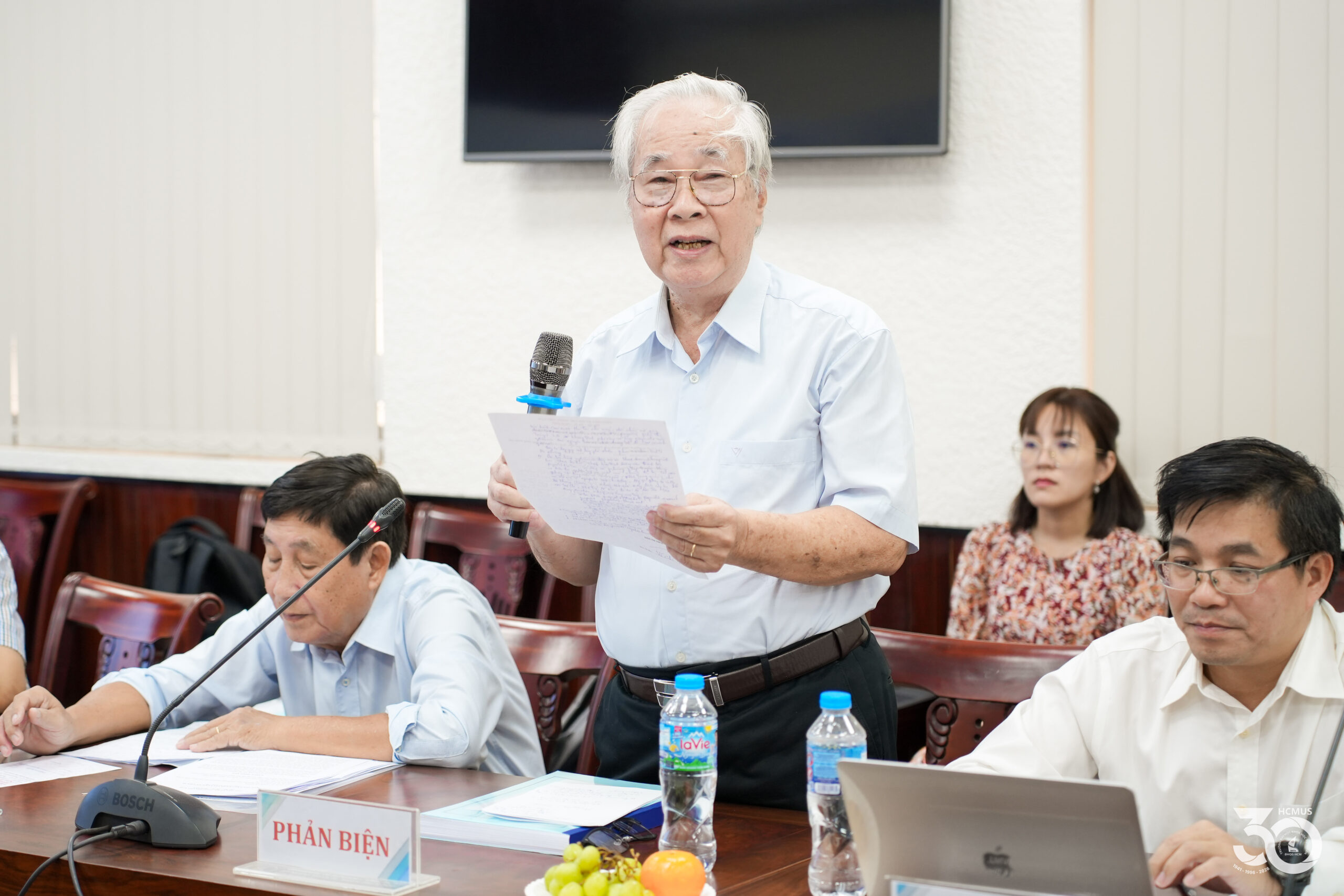
Beyond geological and petrological significance, the thesis demonstrated that Kon Tum pegmatite holds potential for ceramics manufacturing, meeting the TCVN 6598-2000 standard for ceramic body raw materials. High total alkali content serves as a fluxing agent; the potassium feldspar-rich composition provides a broad melting range, aiding in firing control and preventing sudden shrinkage. Low iron content and minimal secondary minerals such as kaolinite and sericite also contribute to enhancing the whiteness of post-fired products.
Technological testing conducted at a ceramic tile factory showed that formulations incorporating Kon Tum pegmatite yielded product quality equivalent to, and on certain indicators superior to, Phu Tho pegmatite and other raw material sources currently in use. Test samples demonstrated a high degree of vitrification, a dense body structure, and low porosity, highlighting the potential of Kon Tum pegmatite as a raw material for high-quality ceramics manufacturing.
Findings from the thesis establish a scientific foundation for planning, prospecting, exploration, and assessment of feldspar potential from pegmatite in the Kon Tum area. This raw material source could supplement or partially replace feldspar currently used in ceramic factories, particularly in southern Viet Nam, thereby contributing to supply stabilization and reduced transportation costs. Furthermore, data regarding morphology, structure, scale, and spatial distribution of the pegmatite bodies can support the evaluation of feldspar resource potential in Kon Tum specifically and across Viet Nam as a whole.
Leave a Reply