

![[OUTSTANDING ROLE MODELS] DR LÊ THỊ MỸ LINH: VIETNAMESE SCHOLAR SPEARHEADS CONFIDENTIAL BATTERY INITIATIVES WITH US DEPARTMENT OF ENERGY](https://en.hcmus.edu.vn/wp-content/uploads/2026/01/z7331328833843-7e9207c2f64f521-3831-8781-1765853515.webp "z7331328833843-7e9207c2f64f521-3831-8781-1765853515")
Dr Lê Thị Mỹ Linh (Linh Lê), a 29-year-old postdoctoral research fellow at Stanford University, has participated in classified initiatives under the US Department of Energy. These endeavours aim to engineer ultra-fast charging energy storage units, specifically designed for electric vehicles and mobile telephones.
In mid-December, Dr Linh received the “L’Oréal–UNESCO For Women in Science 2025” accolade. The scholar’s research regarding advanced materials for lithium-sulphur (Li-S) cells garnered praise for promising a breakthrough in next-generation energy storage technology. At Stanford University—an institution ranked third globally according to the QS World University Rankings—Dr Linh concentrates on developing novel materials for rechargeable lithium-metal and sodium-ion batteries. Experiments span various prototypes, ranging from coin cells to pouch cells. The primary objective involves creating durable, safe energy stores capable of more rapid charging cycles.
For Dr Linh, the pursuit of Chemistry appeared to be serendipity. During secondary education, Chemistry represented the scholar’s weakest subject within the mathematics-physics-chemistry combination; yet, this discipline produced the highest score during university entrance examinations (9.8). In 2014, she gained admission to the University of Medicine and Pharmacy at Ho Chi Minh City while simultaneously achieving co-salutatorian status upon entering the University of Science, Viet Nam National University Ho Chi Minh City.
Recognising the high practical applicability of Chemistry in daily life, Dr Linh selected the Talented Bachelor programme in Chemistry at the University of Science. By the third year, she specialised in Physical Chemistry and commenced direct work in a professor’s battery laboratory at the university. While completing a graduation thesis on electrolytes, a desire to access advanced research environments compelled the young scientist to seek international internship opportunities. Consequently, Dr Linh spent time working in the laboratory of Professor Shigeto Okada at Kyushu University, Japan. Three scientific papers published during this period served as the prerequisite for securing a doctoral scholarship at Pennsylvania State University in 2020.
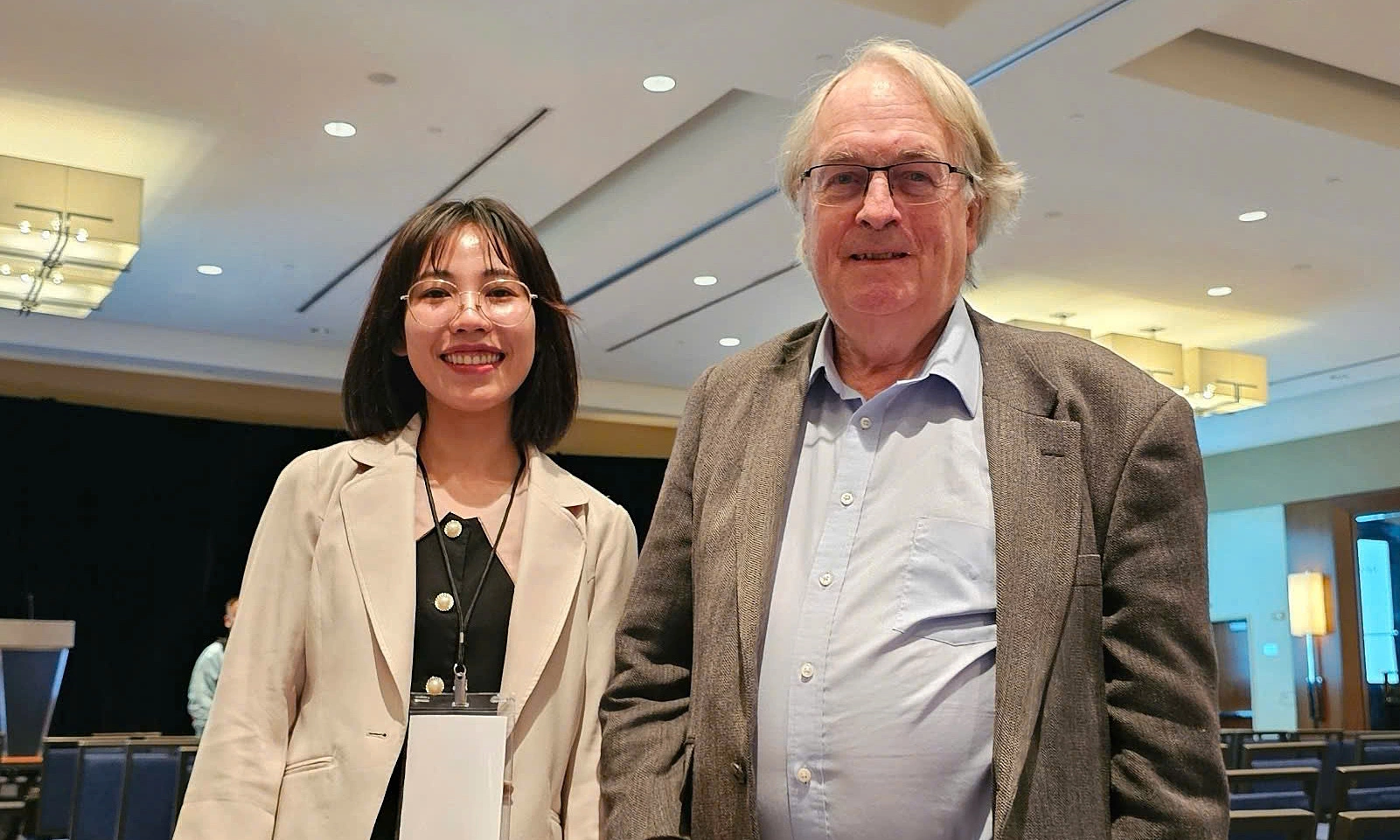
At that institution, the researcher worked within a laboratory collaborating directly with the US Department of Energy (DOE). Projects involving Dr Linh focused on practical applications for energy storage devices, particularly electric vehicles, electronics such as mobile phones, and large-scale energy storage systems. The academic also undertook internships at organisations such as EC Power and the Pacific Northwest National Laboratory to understand the process of transferring technology into manufacturing.
Notwithstanding prior overseas work experience, adapting to the new environment required more than a year. Beyond linguistic barriers, cultural differences, and the living environment, the scientist faced immense professional pressure regarding data quality and scheduling progress. The Research Fellow recalls sleepless nights due to stress: “There were occasions where testing 20 samples resulted in only one meeting requirements. Pressure concerning progress and the accuracy of data reported to the professor sometimes rendered eating impossible.” To overcome such challenges, the researcher learned to “slow down,” dedicating time to regenerate energy and proactively discussing issues with colleagues to discover new approaches.
The greatest motivation preventing resignation remained the effort expended to reach the US, alongside expectations and encouragement from family, friends, and colleagues. When the laboratory became a core facility for numerous projects, Dr Linh managed two or three high-security projects simultaneously. Throughout the tenure, strict compliance with rigorous requirements was mandatory: declaring personal records dating back to age 18, using specific government-controlled devices, and refraining from private discussions with colleagues not assigned to the same project.
In the preceding year, Dr Linh successfully defended the doctoral dissertation regarding electrolytes and protective layers for high-capacity, fast-charging lithium-metal anodes, aiming to limit lifespan degradation and energy loss. Notably, the researcher held the privilege of collaborating on major projects with Professor Stanley Whittingham—a 2019 Nobel Laureate in Chemistry. “One feels very small, yet also incredibly fortunate to possess such opportunities,” Dr Linh shares.

Regarding the subject of the L’Oréal-UNESCO award, Dr Linh’s research direction concerns lithium-sulphur batteries. Such technology represents a new generation of cells possessing high energy density, low cost, and more abundant raw material sources than the increasingly scarce lithium-ion equivalents. These batteries open great potential for next-generation devices: lighter, with extended operational duration, safer, and suitable for mobile phones and micro-devices.
Currently, new Li–S technology faces two major challenges: the durability of the anode and the ‘polysulphide shuttle’ phenomenon, causing capacity to decline over usage cycles. Following the aforementioned project, at Stanford, the scientist shifted focus to sodium batteries—the next generation of low-cost cells. However, this field remains quite new, lacking standard systems for electrolytes and electrodes, as well as reference materials. This situation compelled Dr Linh to construct the research foundation from scratch. The expert asserts that battery technology will constitute a spearhead industry over the next 30 to 50 years as the world shifts towards electric vehicles to protect the environment. Opportunities for both employment and research remain vast.
Reflecting upon the journey, Dr Linh Lê considers solid foundational knowledge and logical thinking the most crucial keys. The scholar advises students to proactively seek assistance within international environments and expand relationships to gain advantages and adapt. “One must always learn, accept opinions, and remain ready to change. In science, one should not rely solely on personal ability,” Dr Linh states.
Khánh Linh – VnExpress
Leave a Reply