

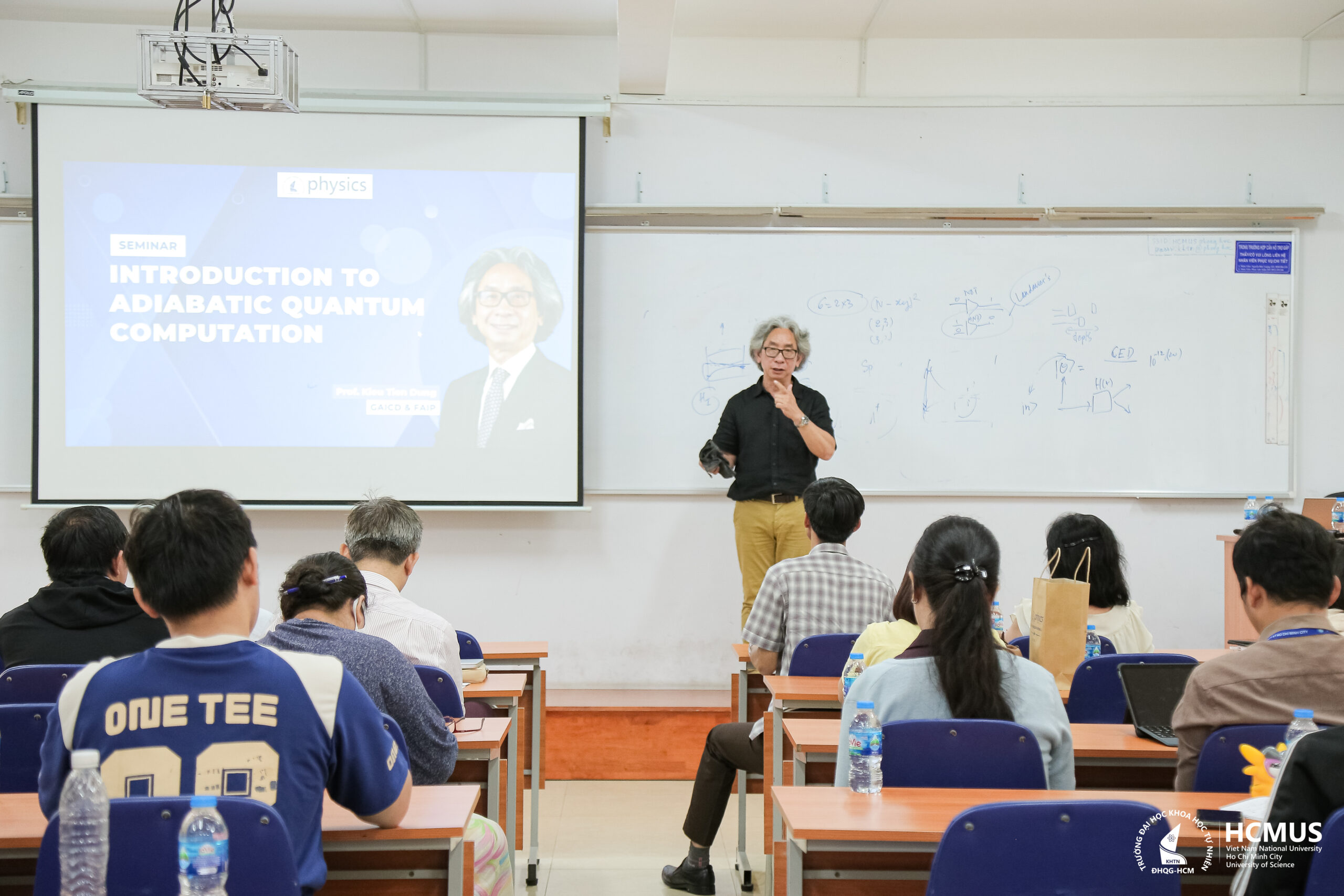
On 26 August, the Faculty of Physics – Engineering Physics, VNUHCM-University of Science, hosted a scientific seminar on “Introduction to Adiabatic Quantum Computation” delivered by Professor Dũng T. Kiều.
Professor Dũng T. Kiều currently serves as Adjunct Professor at Swinburne University of Technology (Australia), Member of the University Council, and Fellow of the Australian Institute of Physics. He completed a Bachelor’s degree in Applied Mathematics and Physics at the University of Queensland (Australia), where he received the University Medal, the highest academic award granted to the most outstanding graduate of the year. He later earned a PhD in Theoretical Physics from the University of Edinburgh (United Kingdom).
During his academic career, Professor Kiều has worked and lectured at leading scientific institutions worldwide, including the University of Oxford (United Kingdom), the University of Melbourne (Australia), the Commonwealth Scientific and Industrial Research Organisation – CSIRO (Australia), Columbia University (United States), the Massachusetts Institute of Technology – MIT (United States), and the Institute for Advanced Study, Princeton (United States). Alongside academic contributions, he has gained extensive experience in industry and finance, particularly in data analytics and artificial intelligence.
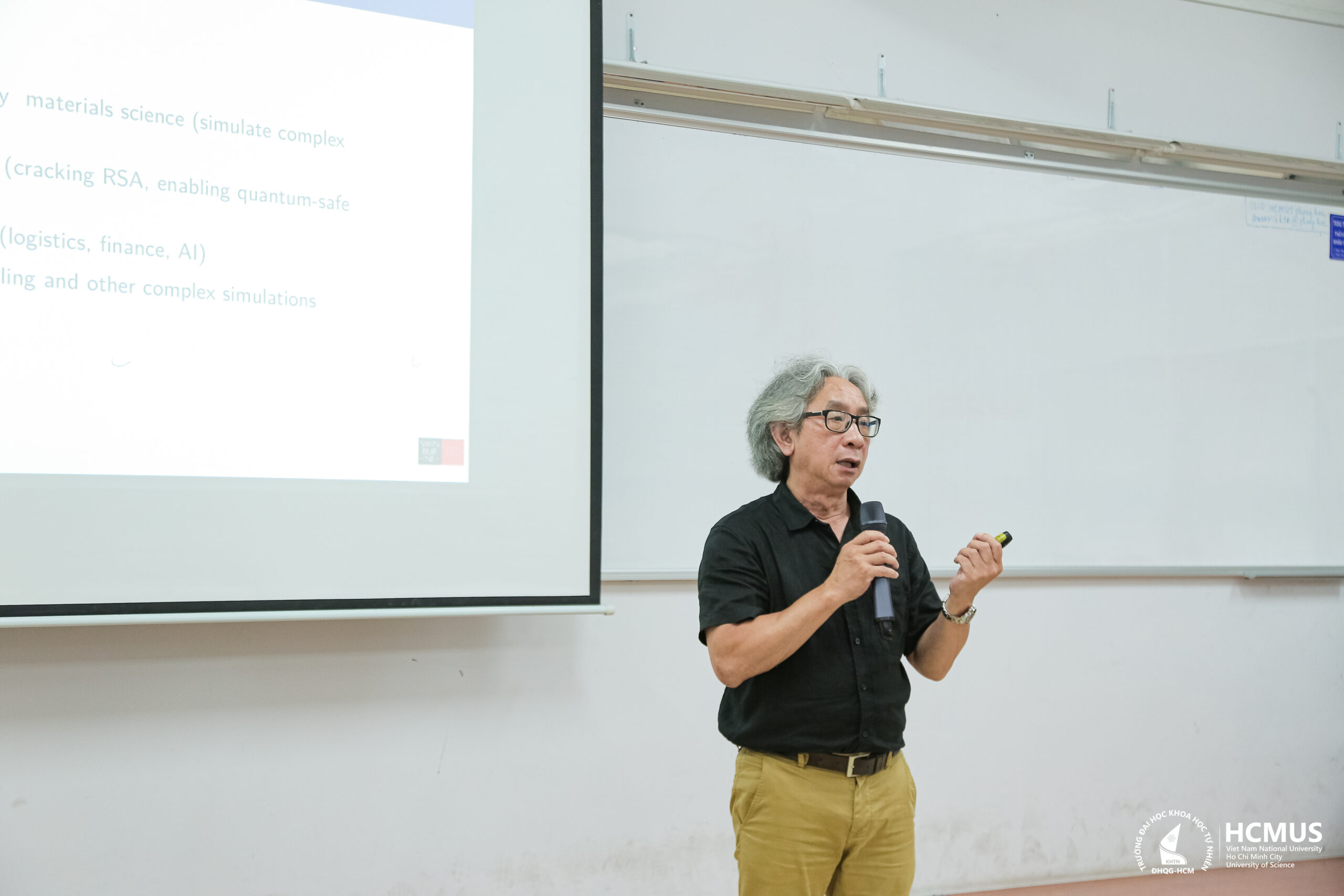
In his lecture, Professor Kiều introduced a quantum computing model distinct from traditional approaches: Adiabatic Quantum Computation (AQC) – quantum computation in the continuous evolution regime based on the quantum adiabatic theorem. This model allows a system to evolve from a simple initial state to a ground state encoding the solution to a problem. The lecture also emphasised the relationship between AQC and gate-based quantum computation, illustrated through accessible examples, including integer factorisation – a fundamental challenge for modern cryptography.
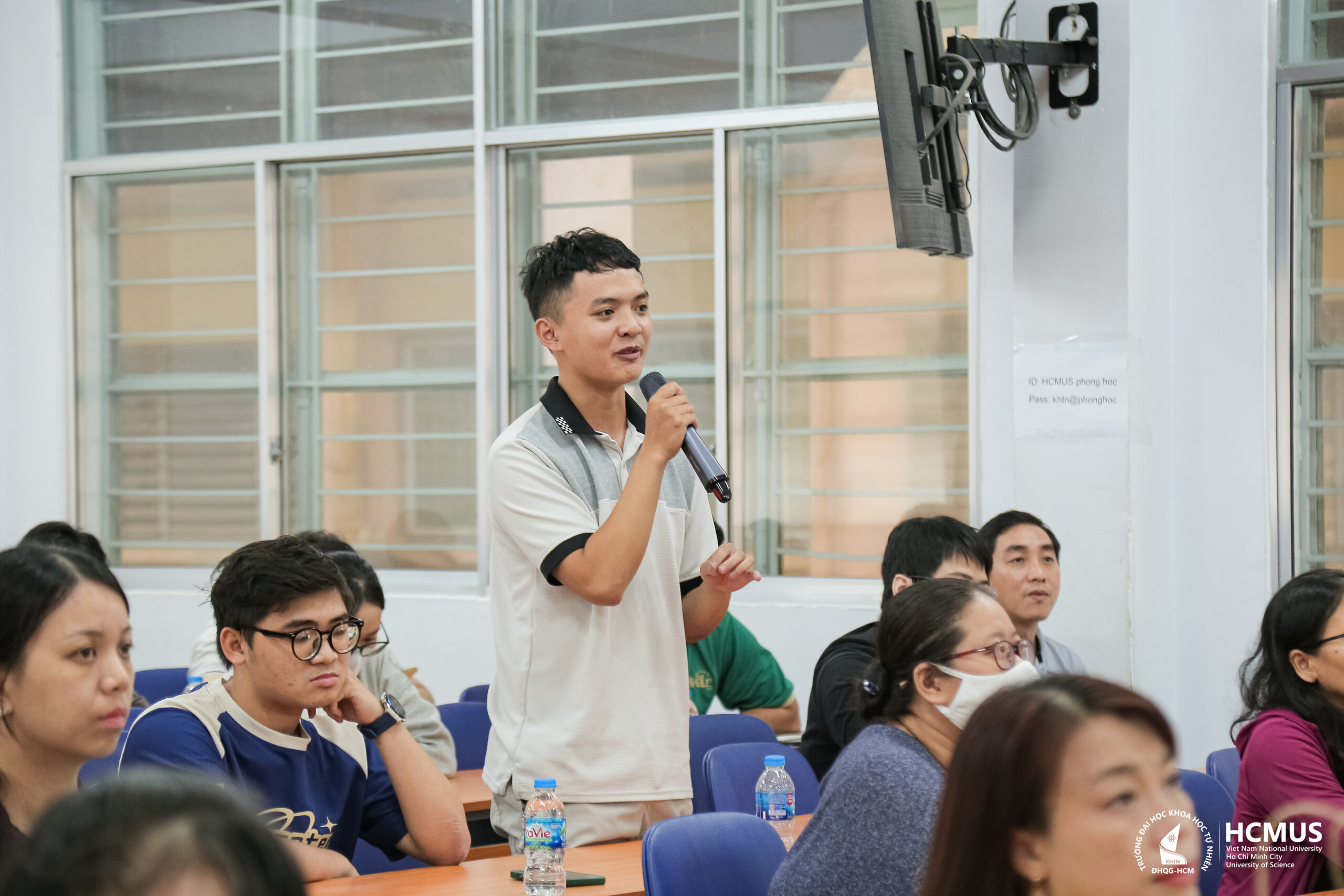
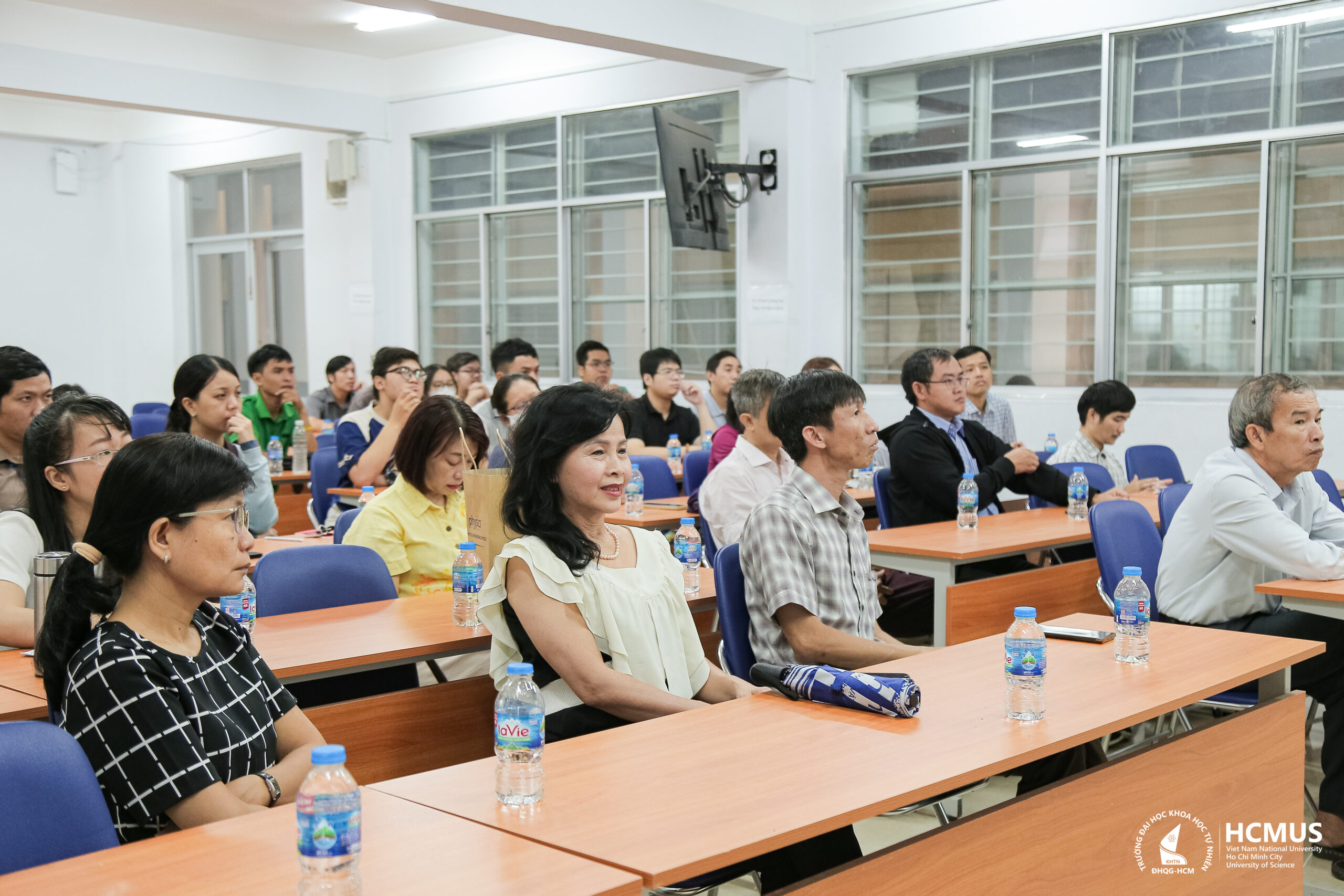
The seminar attracted significant interest from lecturers, researchers, postgraduates, and undergraduate students of the Faculty of Physics – Engineering Physics (HCMUS). Through erudition and clarity of presentation, Professor Kiều provided profound insights into the potential of AQC in the post-classical computing era and outlined promising interdisciplinary research directions bridging physics, mathematics, computer science, and information security.
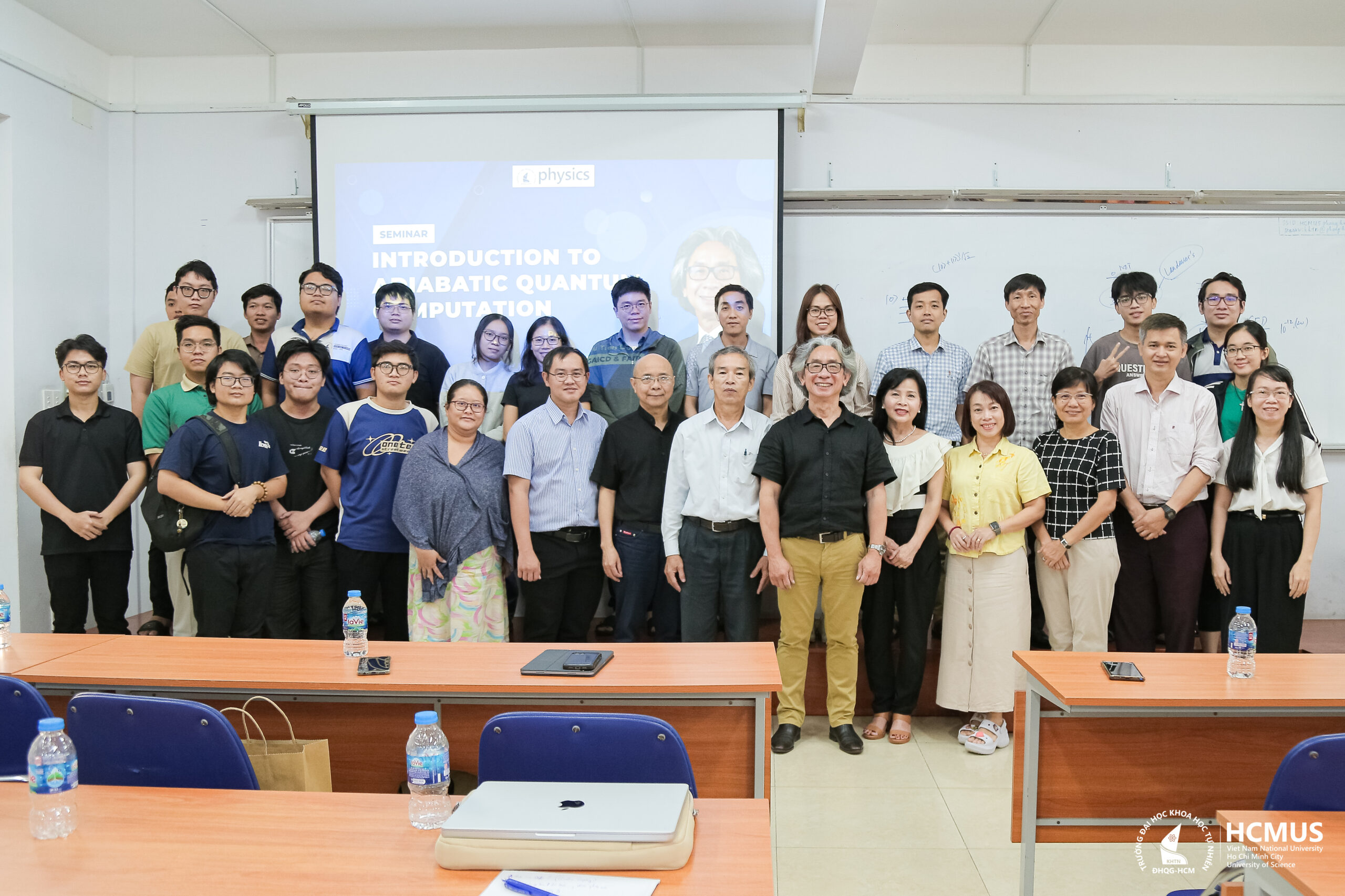
The seminar not only delivered pioneering insights in physics and computer science but also reaffirmed VNUHCM-University of Science’s commitment to international integration in education and scientific research. Participants gained access to advanced knowledge in quantum physics and quantum computation, underscoring the university’s drive to strengthen international collaboration in teaching and research.
PMN
Leave a Reply