

![[VNUHCM S&T PROJECT EVALUATION] COLLECTION AND INVESTIGATION INTO THE CULTIVATION OF STABLE PLANT SOURCES FOR THE PRODUCTION OF MEDICINAL REMEDIES AGAINST ACUTE HEPATOPANCREATIC NECROSIS SYNDROME (AHPNS) AND WHITE FECES DISEASE (WFD) IN SHRIMP](https://en.hcmus.edu.vn/wp-content/uploads/2026/02/Untitled-design-1.png "Untitled design (1)")
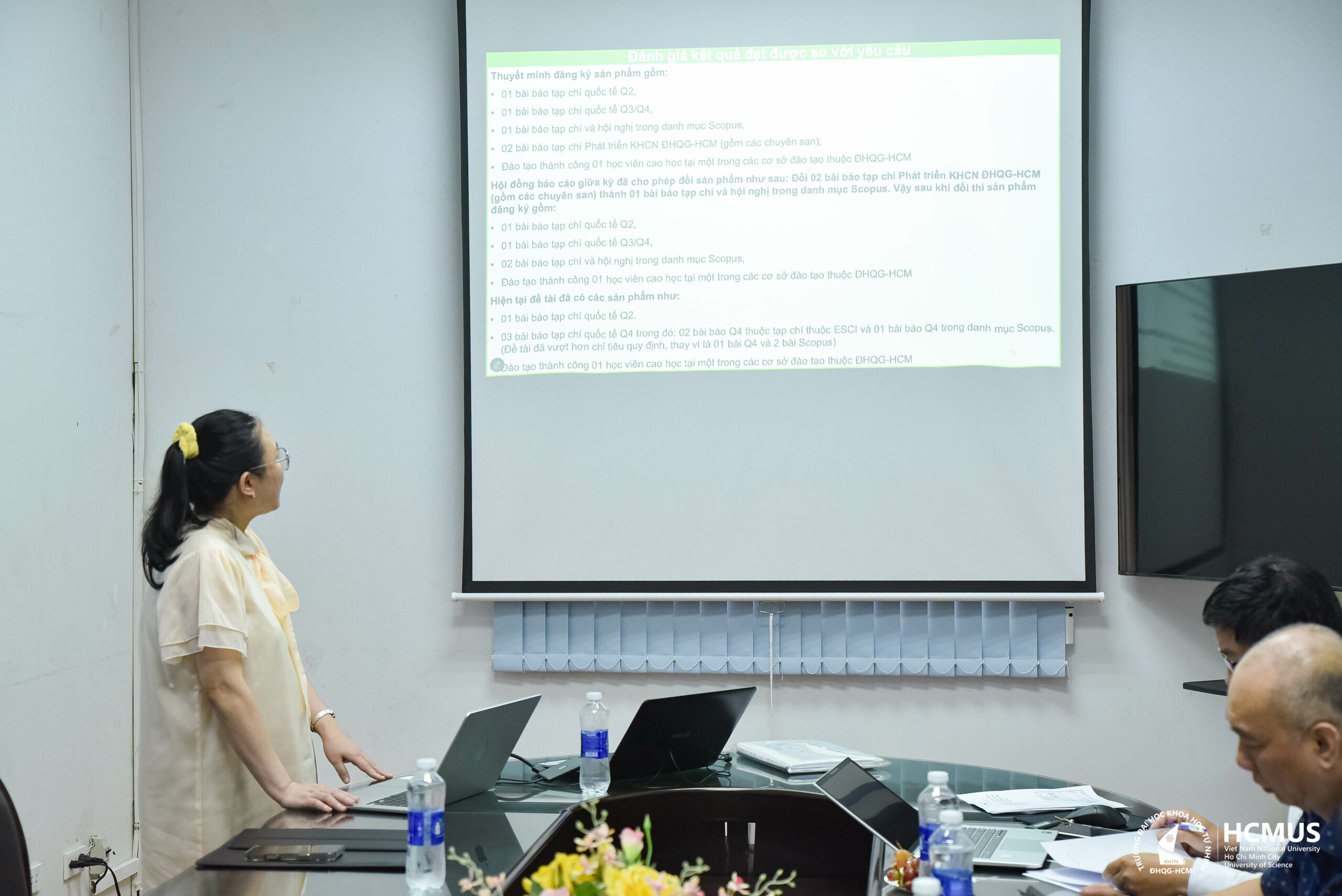
On 14 January, VNUHCM–University of Science (HCMUS) hosted the evaluation session for a Category B VNUHCM-level scientific research project entitled: “Collection and investigation into the cultivation of stable plant sources for the production of medicinal remedies against Acute Hepatopancreatic Necrosis Syndrome (AHPNS) and White Feces Disease (WFD) in shrimp”, led by Dr Vũ Thị Bạch Phượng.
This research addresses a pressing challenge within the contemporary aquaculture industry: the search for medicinal sources to treat Acute Hepatopancreatic Necrosis Syndrome (AHPNS) and White Feces Disease (WFD) in shrimp—devastating conditions caused by Vibrio bacteria strains. The study focused on screening the antibacterial activities of potential plant extracts, including eucalyptus, betel, bitter bush, Siamese sakura, red palm, rambutan peel, and garlic. Experimental results demonstrated that every extract sample exhibited the capacity to inhibit V. cholerae, V. parahaemolyticus, and V. vulnificus; among these, garlic (Allium sativum) was selected for intensive study to establish a production process for medicinal biomass via hairy root culture technology.
A scientific highlight of the project is the successful application of hairy root induction techniques in garlic (Allium sativum L.). Although garlic is a monocotyledonous plant—which typically presents greater difficulties in hairy root formation compared to dicotyledonous species—the study successfully established a gene transfer protocol using the Agrobacterium rhizogenes ATCC 15834 strain. Optimal parameters included: 10-day-old in vitro plantlets (with intact root systems) treated with 100 μM acetosyringone for 10 minutes, an infection period of 5 minutes, 48 hours of co-cultivation, and subsequent growth on B5 medium to form hairy roots after 3 weeks. Assessment of biological activity revealed that the resulting garlic hairy root lines possess potent bactericidal activity, with an MBC/MIC ratio of ≤ 2 against all three tested bacterial strains, achieving efficacy comparable to natural garlic bulbs and the antibiotic tetracycline.
Experimental data indicated that in vitro garlic hairy roots possess robust antibacterial properties, effectively eliminating V. cholerae and V. parahaemolyticus strains with ideal MBC/MIC ratios. Notably, this activity matches the performance of garlic grown in natural conditions as well as the antibiotic tetracycline, whilst demonstrating high effectiveness during disease prevention trials on whiteleg shrimp.
These findings not only provide a ‘green’ medicinal solution for the aquaculture sector but also contribute a vital foundation for future research regarding hairy root biomass proliferation in other monocotyledonous plant species.
Leave a Reply