

![[DOCTORAL THESIS DEFENCE] DOCTORAL RESEARCHER LÊ QUỲNH LOAN SUCCESSFULLY DEFENDS DOCTORAL THESIS ON GENE FUNCTIONS IN RICE BLAST DISEASE](https://en.hcmus.edu.vn/wp-content/uploads/2025/03/P4T0969-scaled.jpg "_P4T0969")
On 14 November, at the Nguyen Van Cu campus of VNUHCM-University of Science, doctoral researcher Lê Quỳnh Loan successfully defended her doctoral thesis in the field of Microbiology. The thesis, titled “Research on the Function and Role of Gene MGG_00245 in the Magnaporthe oryzae Strain Isolated from Rice Plants Infected with Rice Blast Disease,” was conducted under the supervision of Dr Nguyễn Hoàng Dũng and Dr Vũ Văn Vân.
The thesis focused on the fungus Magnaporthe oryzae, the primary pathogen responsible for rice blast, one of the most serious diseases threatening global food security. The MGG_00245 gene, which codes for an as-yet-undetermined protein, was studied in depth. The results indicated that this gene is upregulated during the invasion of M. oryzae into rice plants.
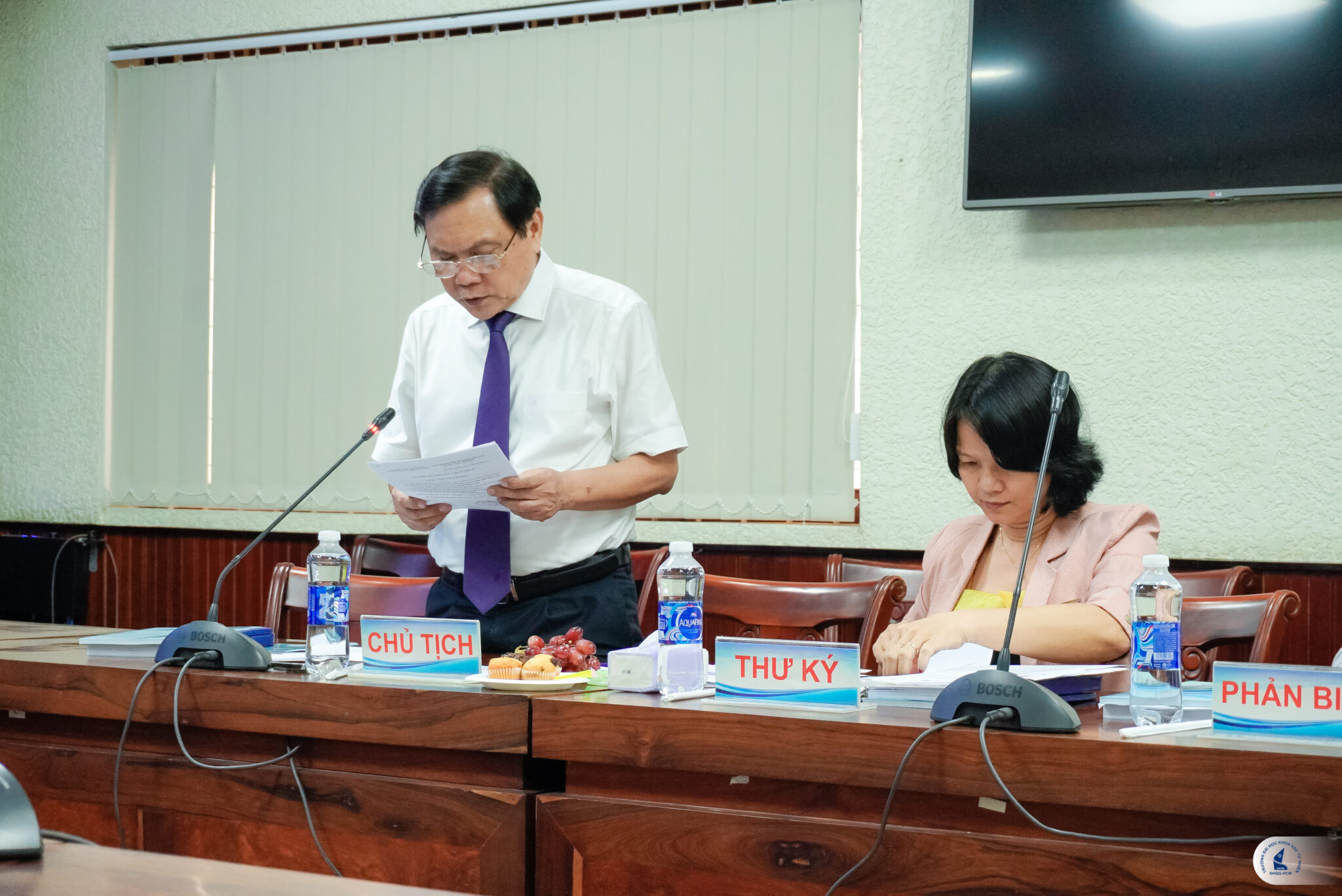
The research involved: in silico analysis to explore the relationship between the MGG_00245 gene and the polysaccharide monooxygenase (PMO) enzyme family in the infection process of M. oryzae; gene recombination of MGG_00245 and protein production through the Pichia pastoris yeast expression system; as well as the enzyme activity assessment of the MGG_00245 protein and the investigation of its role by creating mutant fungal strains.
The thesis reported several significant findings. In silico analysis revealed a link between PMO-coding genes and the ability to cause rice blast. The expression system and recombinant protein production process for MGG_00245 were successfully carried out, achieving a protein recovery rate of 66.67 mg/L. Notably, MGG_00245 was shown to have PMO activity within the AA16 family, catalysing the redox reaction at the C1 position of the glycosidic bond, demonstrating its potential application in the biomass processing industry.
Another significant result was the creation of gene knockout fungal strains using the CRISPR/Cas9 method to disrupt the PMO-coding gene. The results showed that the MGG_06069 gene was related to the rice blast disease process, while MGG_00245 did not exhibit the expected role. This has opened up new research directions for experts in microbiology and genetic resources.
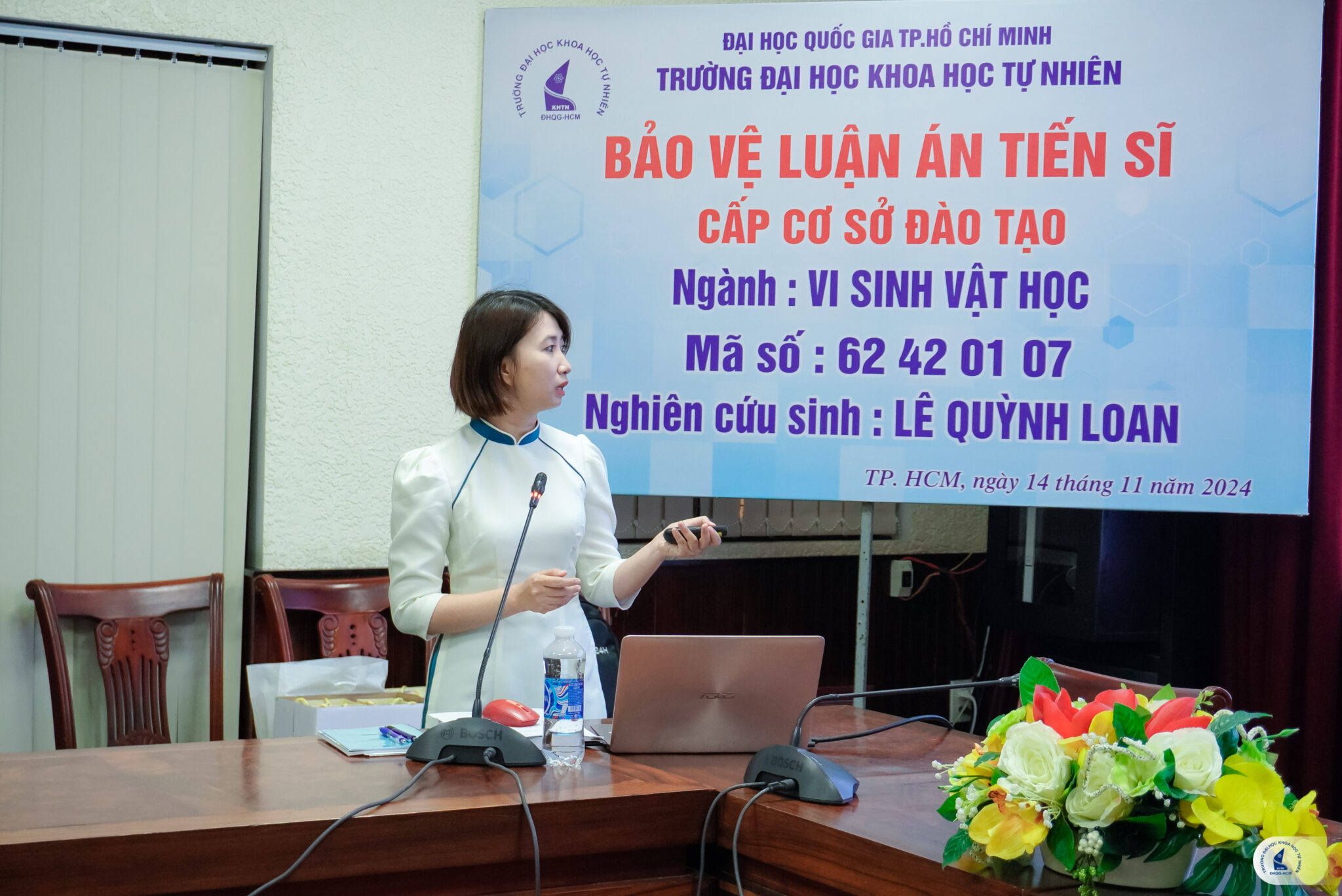
The thesis of doctoral researcher Lê Quỳnh Loan not only provides valuable insights into the function of the MGG_00245 gene in M. oryzae but also identifies potential directions for future study. These include the development of inhibitors to prevent and control rice blast disease, addressing unresolved issues in the field. The mutation creation processes, the evaluation of the role of carbohydrate-degrading enzymes in the disease, and the study of the phenotypes of other genes in M. oryzae were proposed as future research directions.
The findings and new methods from the thesis will contribute significantly to the development of rice blast control measures, thereby improving rice productivity and enhancing food security for the community. The defence demonstrated doctoral researcher Lê Quỳnh Loan’s commitment to scientific research and its practical applications for society.
ℙ𝕄ℕ
Leave a Reply