

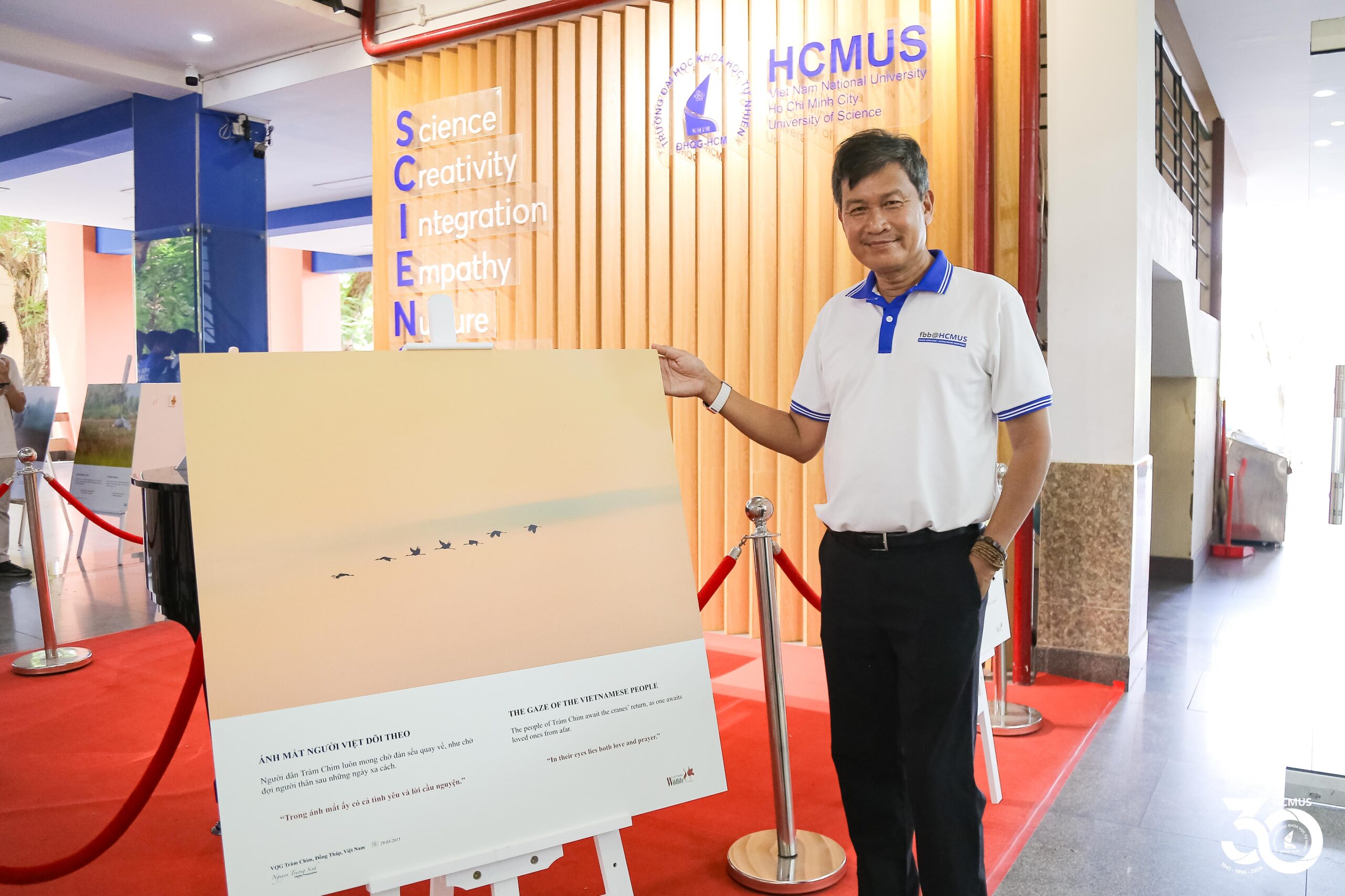
Dr Trần Triết stands beside the exhibited work ‘The Gaze of the Vietnamese people’, one of featured photographs in the programme. The piece captures a flock of Sarus Cranes soaring over the Tram Chim skies, evoking the local community’s profound yearning for the return of this rare species after years of absence.
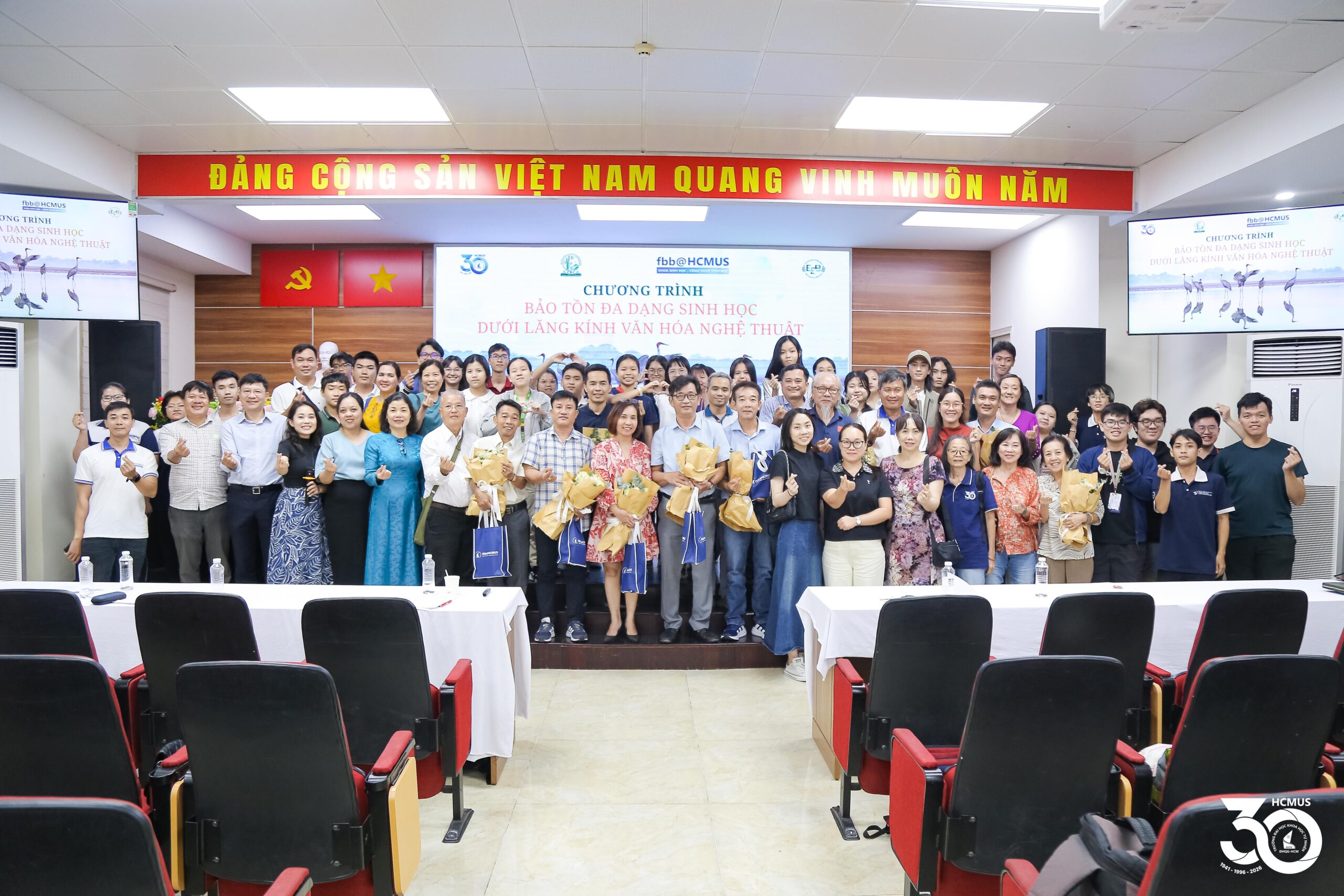
On 17 May 2026, the Centre for Conservation of Natural Resources, in collaboration with the Department of Ecology and Evolutionary Biology within the Faculty of Biology and Biotechnology at VNUHCM-University of Science (HCMUS), hosted the programme ‘Biodiversity Conservation through the Lens of Culture and Art’. Held at the Nguyen Van Cu campus, the event drew a diverse audience of scientists, artists, academics, students, and members of the public dedicated to nature preservation.
Against a global backdrop where environmental crises, climate change, and biodiversity loss present increasingly formidable challenges, the programme sought to broaden perspectives on nature conservation. Moving beyond traditional research papers and empirical data, the narrative of conservation was conveyed through photography, cinema, and poignant experiences. Such an approach renders the natural world more accessible to the public, particularly the younger generation.
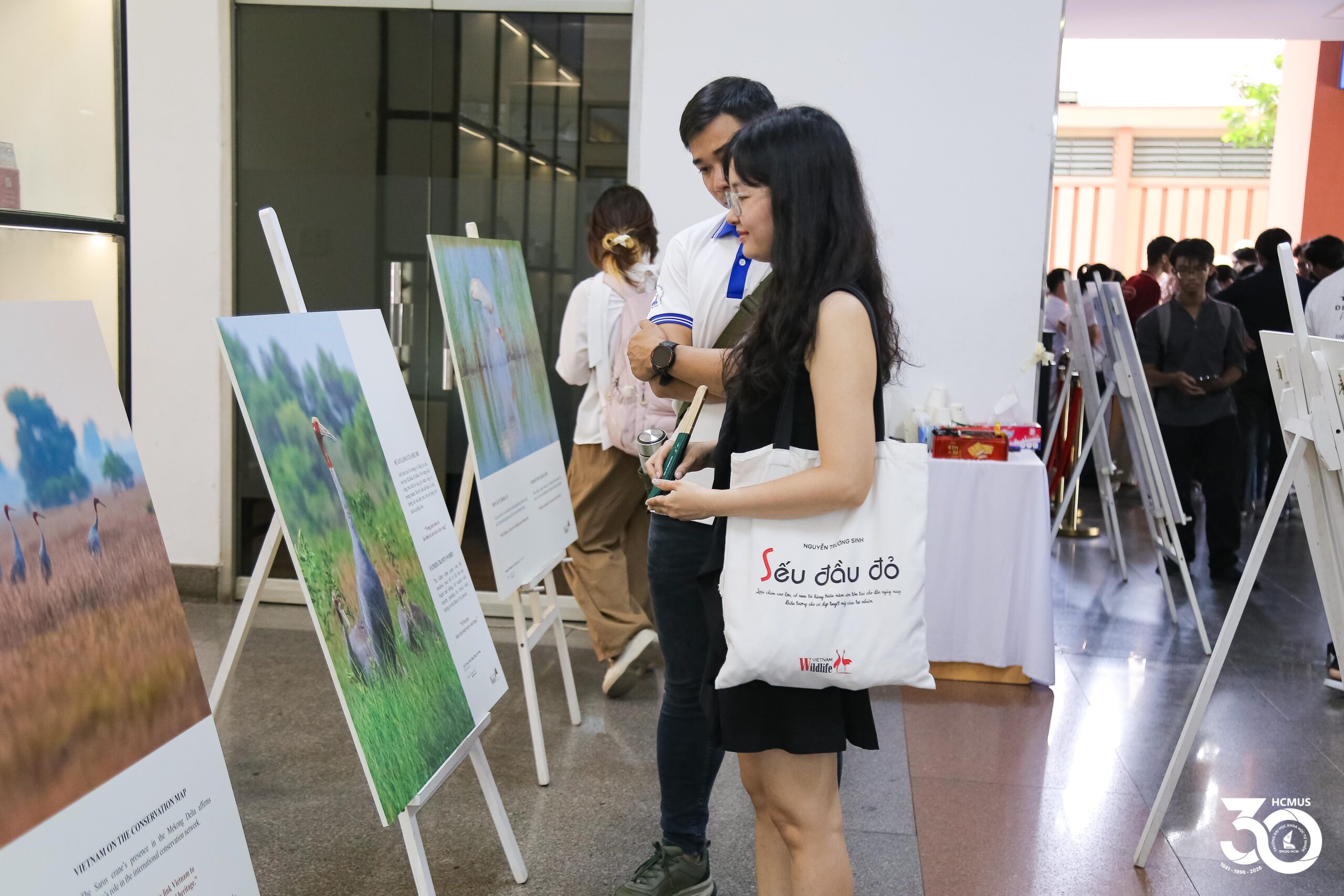
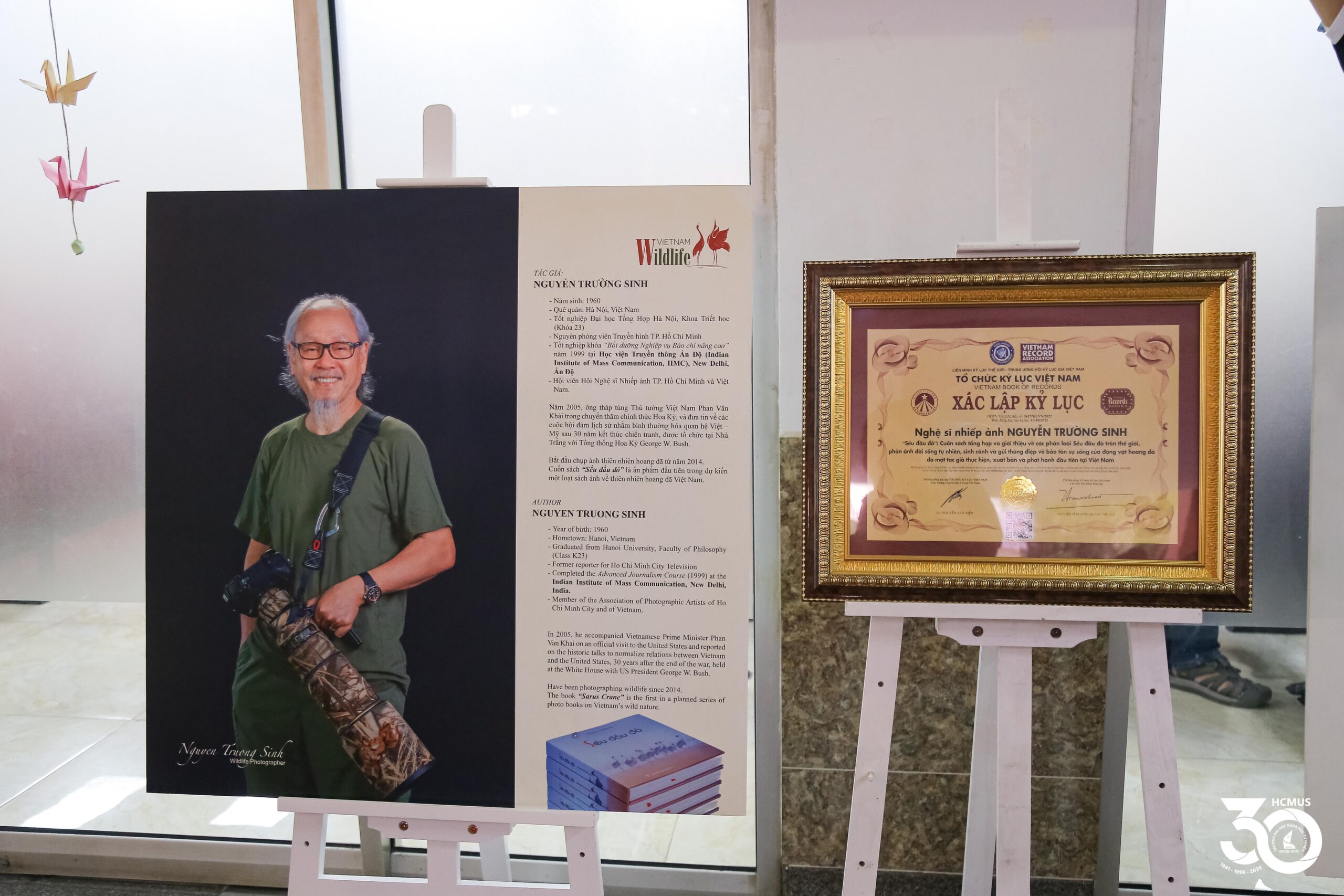
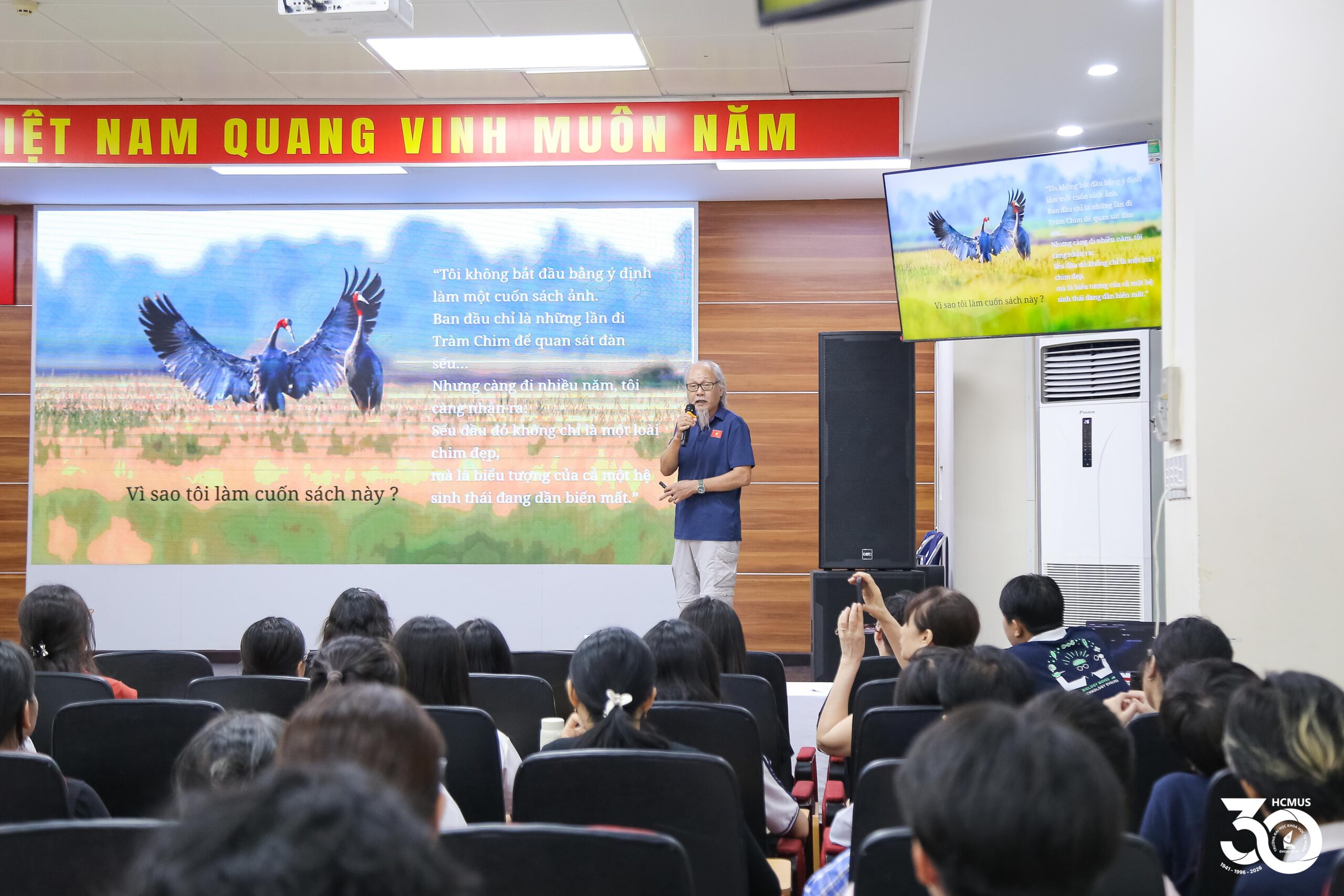
A focal point of the event was the ‘Following the Crane’s Footsteps’ exhibition, featuring 20 works curated from a vast collection of over 100,000 photographs taken by photographer Nguyễn Trường Sinh. These images represent over a decade of documenting the Sarus Crane. Each frame meticulously recreates the natural life of this rare bird and the shifting landscapes of wetland habitats, employing a photographic language that serves as both vital documentation and a prompt for reflection on the relationship between humanity and the environment.
On this occasion, the photobook Sarus Crane was also introduced. This 372-page volume, the result of more than ten years of fieldwork, was previously recognised by the Viet Nam Records Organisation as the first book by a single author to document Sarus Crane subspecies globally.
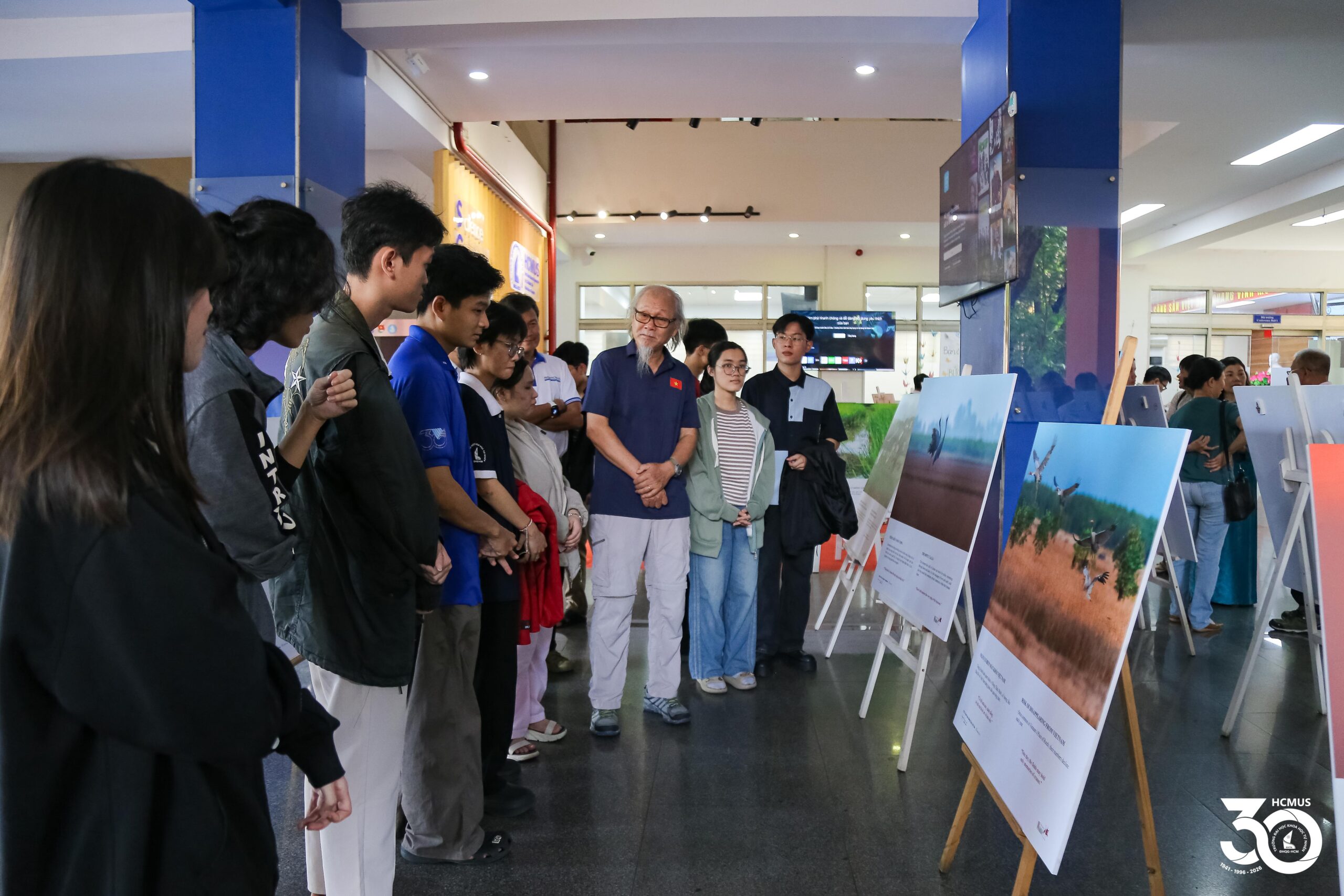
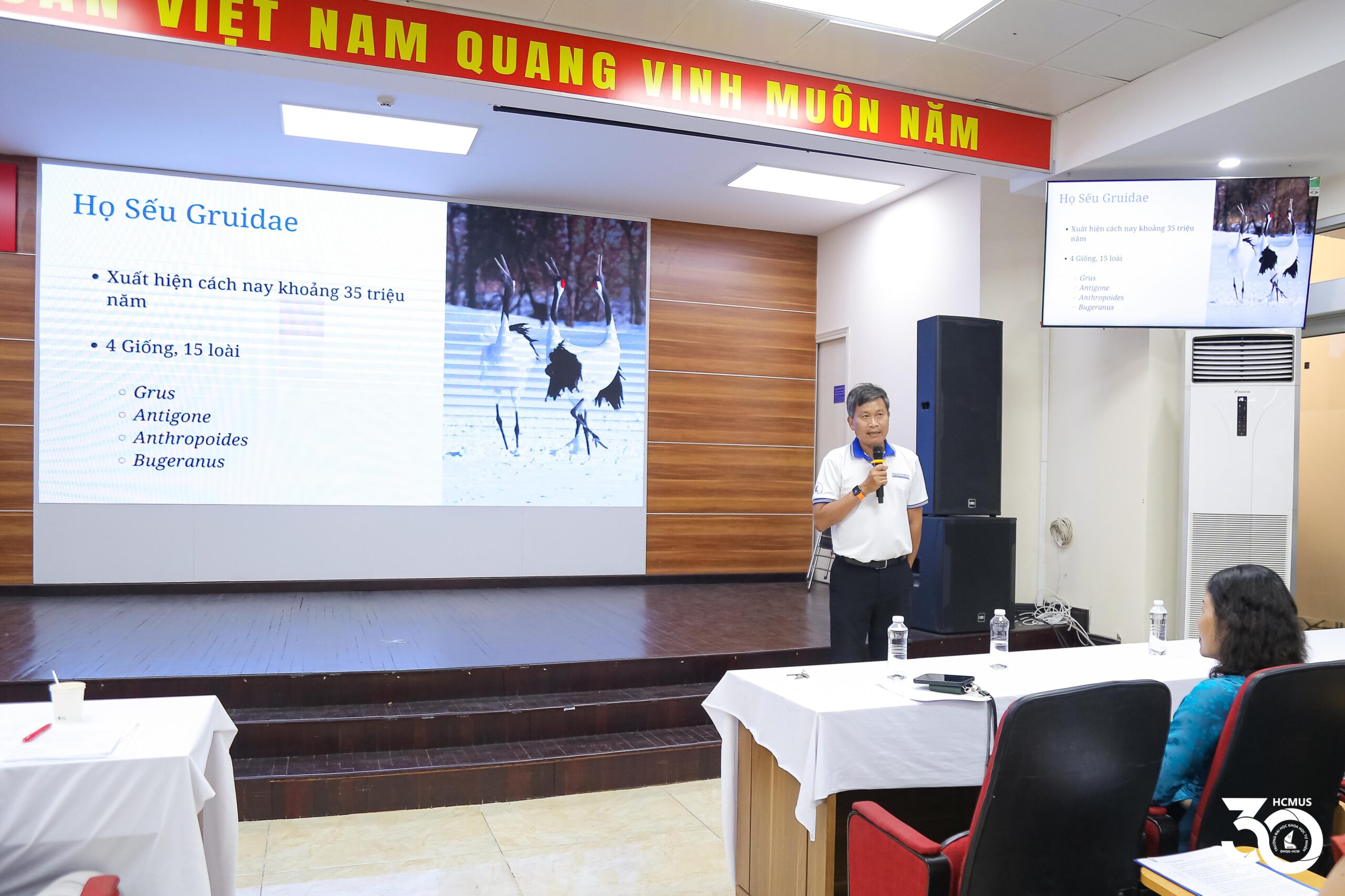
From a scientific perspective, Dr Trần Triết—a lecturer at the HCMUS Faculty of Biology and Biotechnology and the Indo-Pacific Programme Director for the International Crane Foundation—shared insights into the global status of crane species, the decline of wetland habitats, and ongoing efforts to restore the Sarus Crane in Viet Nam. Specialist analysis demonstrated that species conservation remains inseparable from ecosystem preservation, whilst highlighting the urgent need to maintain natural spaces amidst the pressures of modern development.
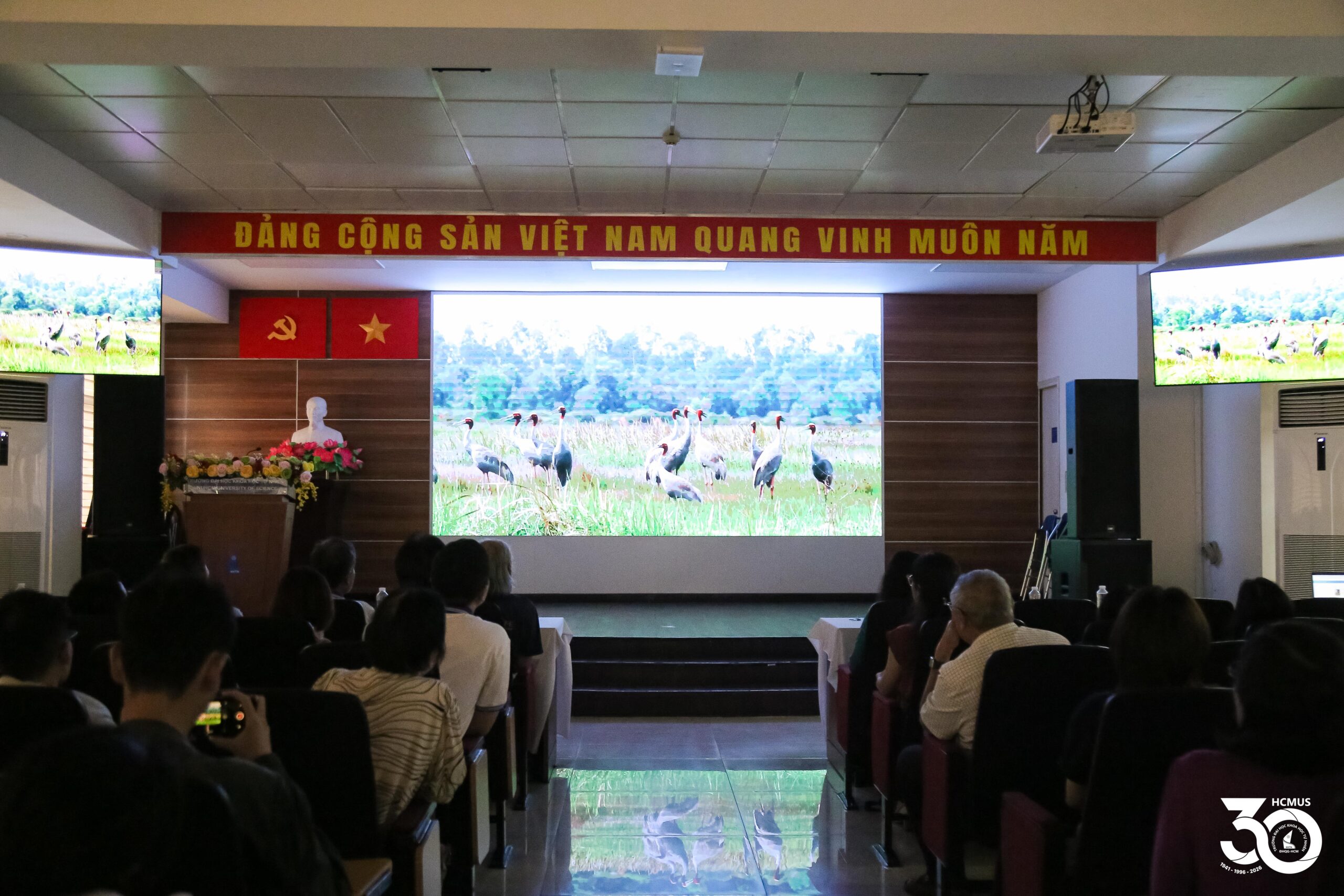
Whilst science provides the intellectual foundation and identifies core issues, cinema deepens the emotional resonance of the conservation narrative. The scientific film “Will the Cranes Return to the South?” by Director Đỗ Tín (Giải Phóng Film Studio) offered a reflective and profoundly humanistic space. The work garnered the Golden Kite Award in 2025, the Silver Lotus for Scientific Film at the 2025 Viet Nam Film Festival, and the Best Director Award at the 24th Viet Nam Film Festival.
Through a cinematic language that is both poetic and documentary in nature, the film portrays the journey of the Sarus Crane alongside the environmental shifts within the Mekong Delta. These frames reflect the fragility of nature and provoke thought regarding the responsibility to safeguard the environment for future generations.
Following the screening, the production team engaged in a dialogue with the audience, sharing the intricacies of creating a scientific-artistic work. Discussions covered the acquisition of archival material, field filming, and the method of translating academic ecological issues into stories capable of connecting with the public.
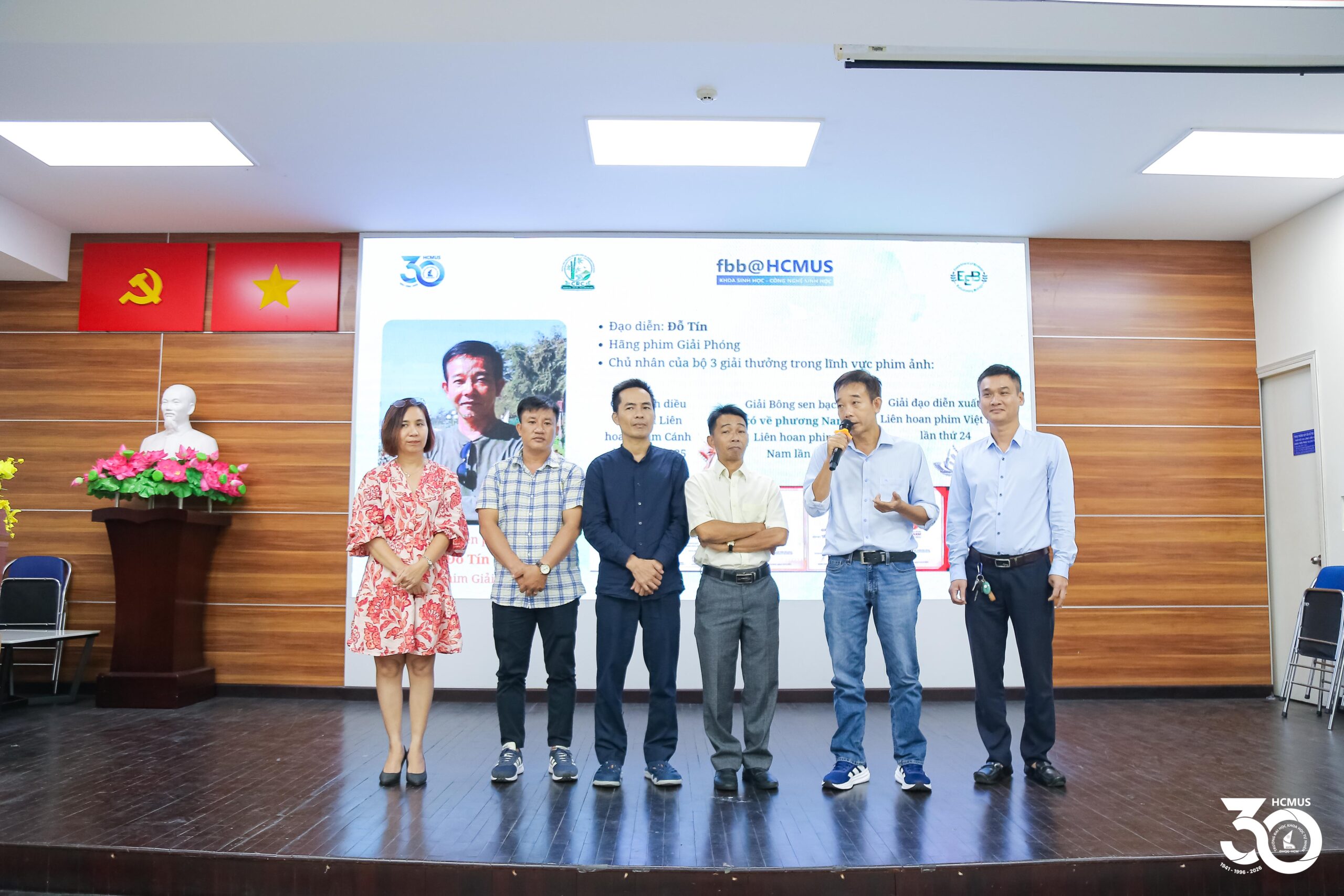
During the seminar, Dr Trần Triết, Director Đỗ Tín, and photographer Nguyễn Trường Sinh discussed the roles of science, art, and communication in nature conservation with attendees. Key topics included professional ethics in wildlife photography, the application of artificial intelligence in conservation communication, community participation in ecosystem preservation, and the contemporary challenges facing wildlife.
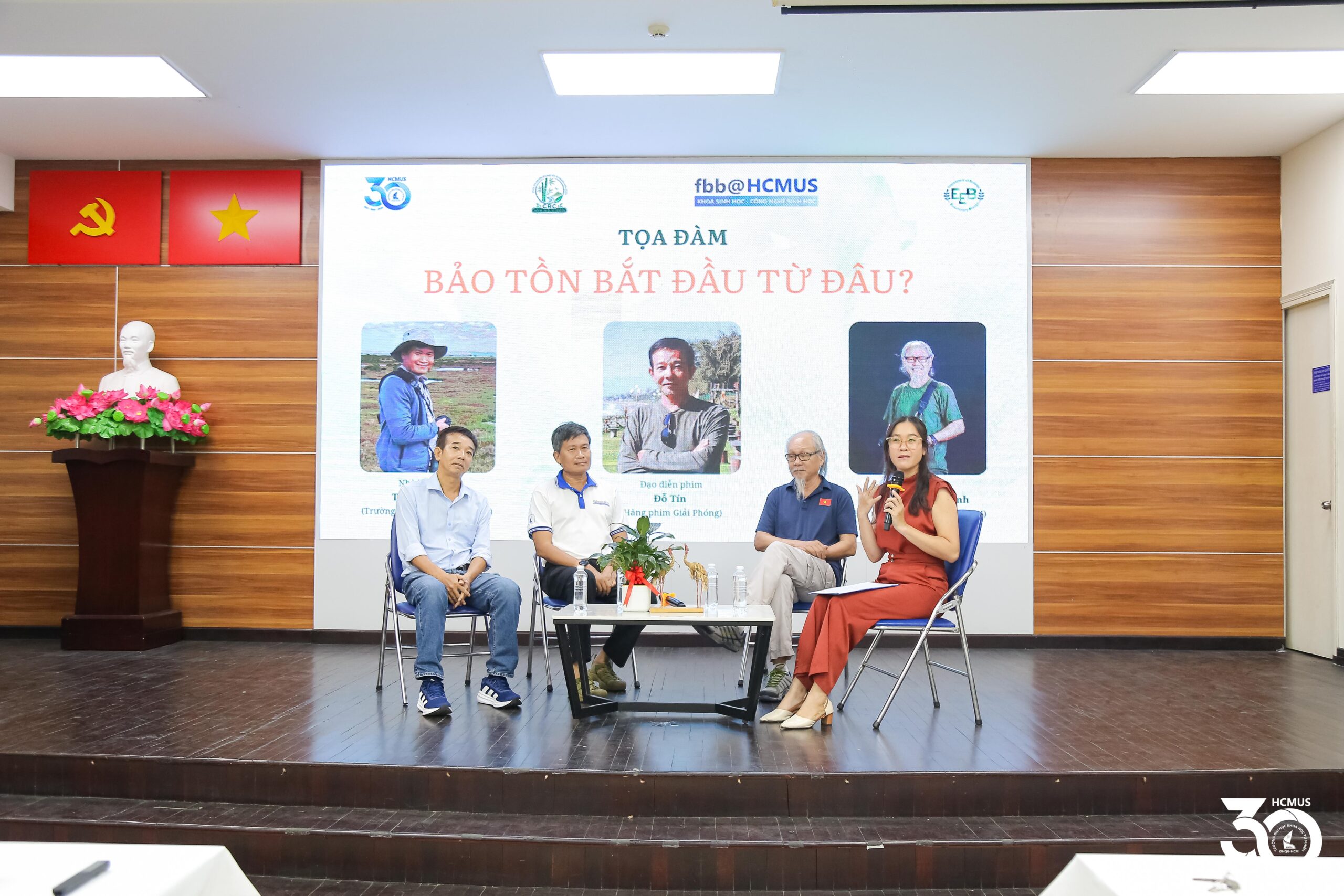
Far from being a purely academic or artistic gathering, the programme illustrated that biodiversity conservation requires a collaborative effort across multiple disciplines and communities. When science intersects with art and education, environmental issues transcend abstract concepts to become experiences that touch emotion, awareness, and social responsibility.
In the fast-paced flow of modern life, a single frame, a film, or a story about nature can serve as the catalyst for concern and action. From these quiet stirrings of the heart, environmental consciousness and the duty to preserve biodiversity are nurtured, spreading and growing steadily within the community.
Leave a Reply