

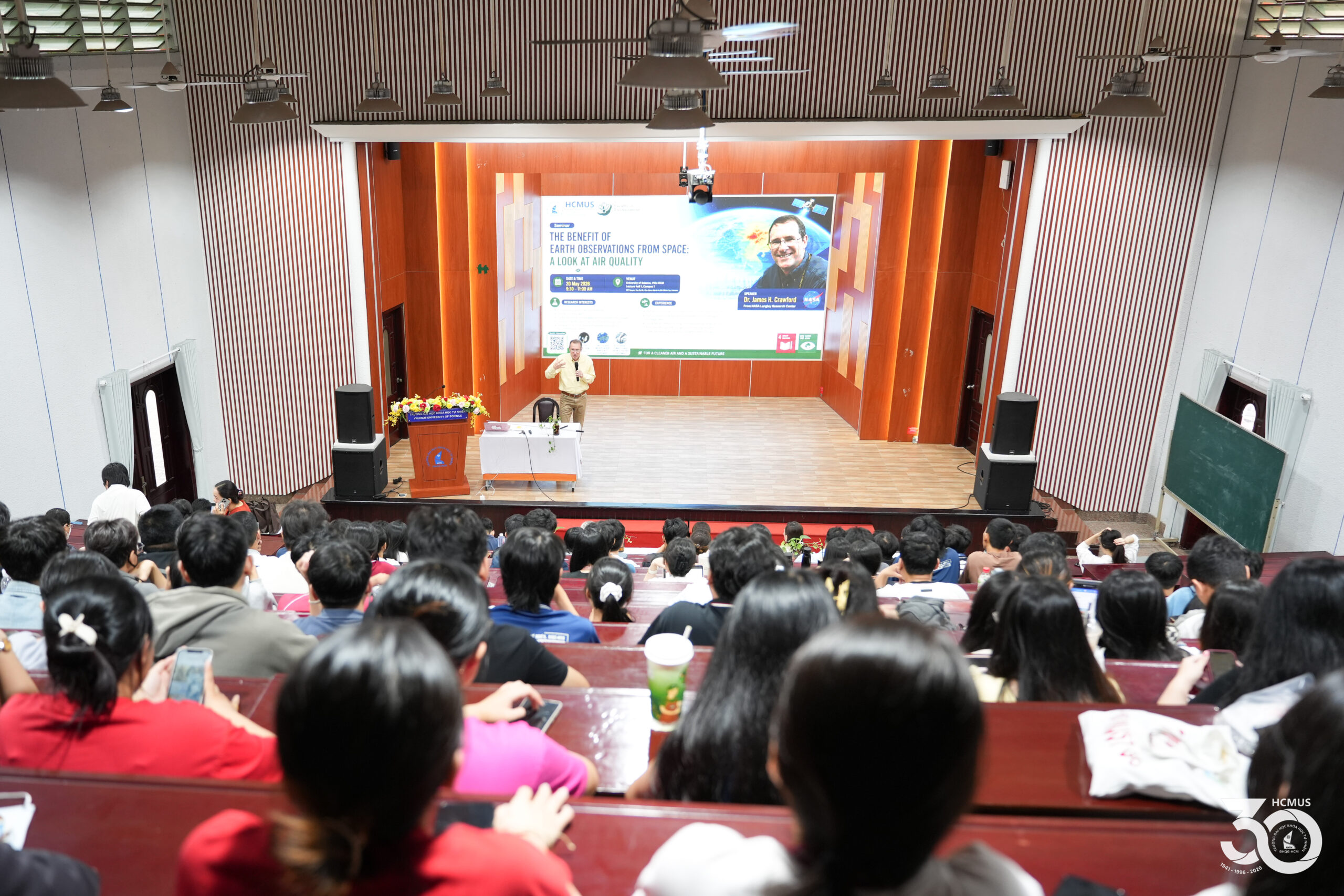
On 20 May, the Faculty of Environment at VNUHCM–University of Science (HCMUS) hosted an international scientific seminar entitled ‘The Benefit of Earth Observations from Space: A Look at Air Quality’. The event featured a keynote presentation by Dr James H. Crawford from the NASA Langley Research Center (USA), attracting a significant audience of lecturers, researchers, and students interested in environmental and atmospheric sciences.
Against a global backdrop of escalating air pollution and climate change, the application of Earth observation technology from space is pioneering new approaches to environmental research and air quality management. This seminar served as an academic forum to exchange knowledge, update modern research trends, and connect students and researchers with scientific advancements currently being implemented worldwide.
During the event, Dr James H. Crawford presented findings regarding the role of space-based Earth observations in studying and assessing air quality. The report focused on contemporary approaches in atmospheric research, such as tropospheric photochemical modelling, studies of ozone and atmospheric trace gases, and the integration of field measurements with satellite data to enhance the precision of air quality models.
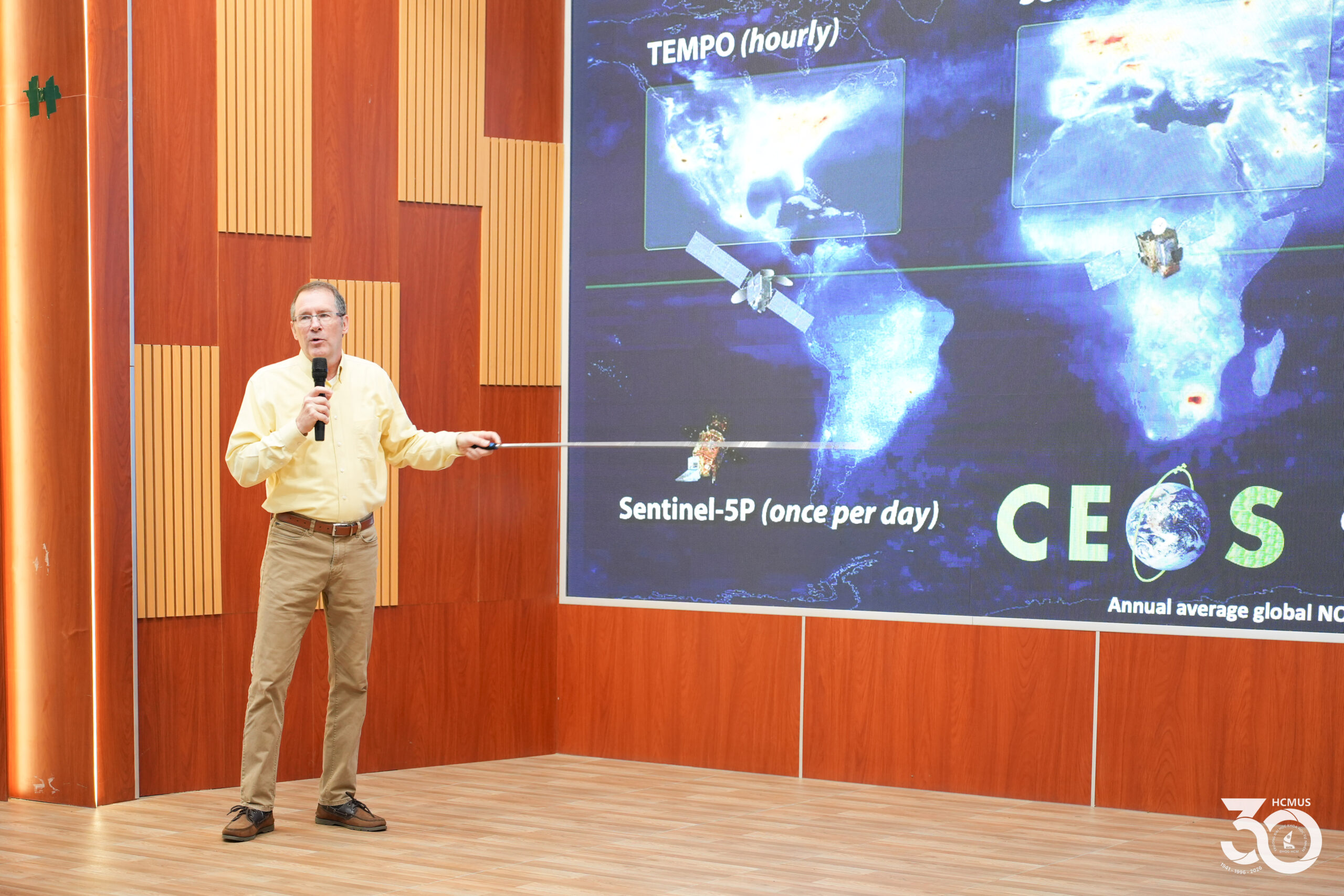
In addition to technical content, Dr Crawford introduced various applications of satellite data within environmental and atmospheric sciences. The discussions provided further insight into utilizing satellite observations for monitoring and evaluating the atmospheric environment, while enabling participants to explore current research trajectories in the field of atmospheric science.
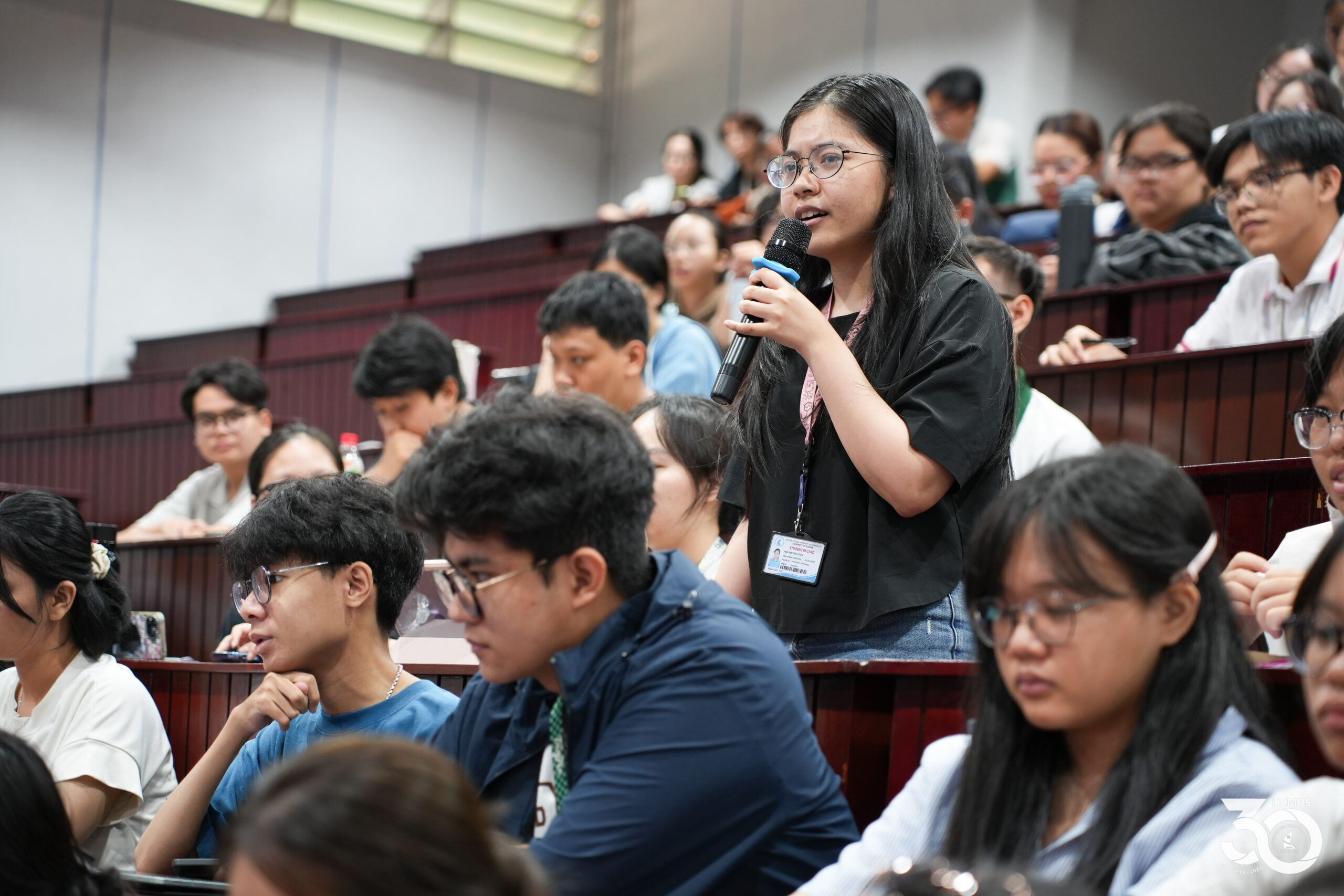
The discussion session saw lecturers, researchers, and students engage with the speaker regarding the potential for applying satellite data to environmental research in Viet Nam, air quality assessment methodologies, and the evolving trends of Earth observation technology in atmospheric research. These vibrant academic exchanges reflect a growing interest in interdisciplinary research spanning environment, space technology, and data science.
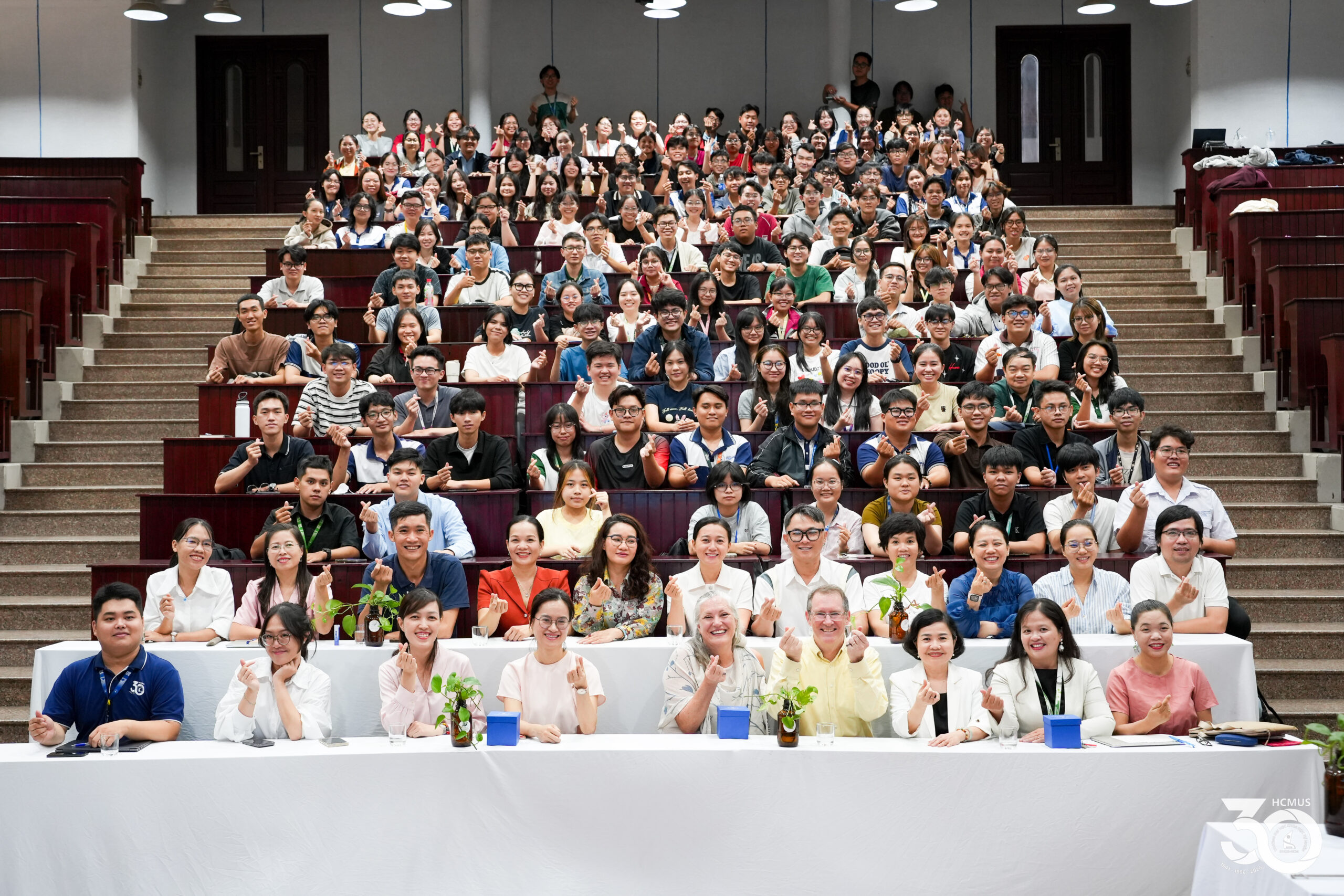
Through the seminar, attendees gained access to modern research trends in atmospheric science and developed a deeper understanding of how to combine space observation data with field data in environmental studies. The programme also facilitated broader international academic connections, allowing HCMUS staff and students to access cutting-edge technologies employed in global environmental research.
In the current of modern science, data retrieved from space are no longer distant figures; such information is increasingly becoming a vital tool for understanding the atmosphere and the living environment. Through these academic connections, science not only expands knowledge but also fosters a sense of responsibility towards environmental longevity and sustainable development.
Profile: Dr James H. Crawford
Dr James H. Crawford serves as the Senior Scientist for Atmospheric Chemistry at the NASA Langley Research Center in the United States. In this capacity, this distinguished researcher acts as the agency lead on tropospheric chemistry and air quality, providing strategic leadership for national and international airborne field studies. These initiatives collect comprehensive measurements of atmospheric composition to discern human and natural impacts associated with gaseous and particulate pollution.
With a career spanning more than 25 years in atmospheric chemistry and environmental science, Dr James H. Crawford has participated in 18 airborne field research campaigns globally, ranging from remote atmospheric regions to major urban centres. Throughout the past 15 years, this expert has spearheaded numerous NASA research activities focused on multi-dimensional satellite observations. Such work aims to enhance the interpretation of space-based data and refine atmospheric models by integrating these findings with surface monitoring and aircraft observations.
The primary research interests of Dr James H. Crawford encompass tropospheric photochemical modelling, the study of ozone and atmospheric trace gases, and tropospheric HOx. Furthermore, research efforts extend to radiative transfer and the influence of clouds on photolysis rates. A central objective remains the integration of in-situ measurements with satellite observations to advance the scientific understanding of air quality and improve the predictive capabilities of atmospheric models.
Leave a Reply