

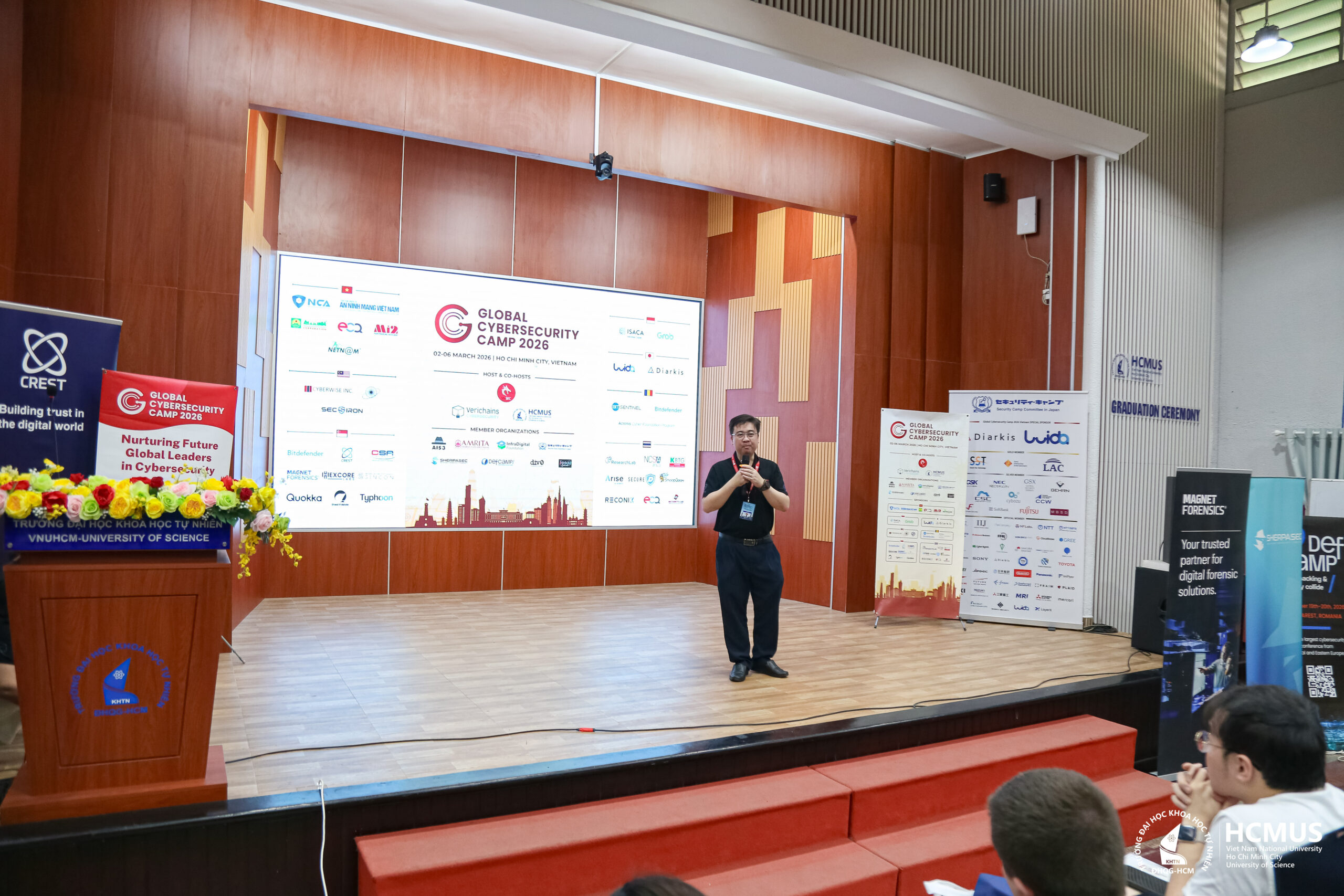
Between 1 and 6 March 2026, VNUHCM–University of Science (HCMUS) hosted the Global Cybersecurity Camp 2026 at the Nguyen Van Cu campus, convening 50 scholars from nine countries and territories for an intensive technical residency. Co-organised with Verichains, the rotational programme integrated advanced modules on IoT/ICS security, kernel protection, and AI-driven penetration testing, strengthening international collaborative networks and the development of high-quality human resources for the global cybersecurity sector.
Following a week of continuous professional training and academic exchange within the cybersecurity sector, the Global Cybersecurity Camp 2026 (GCC 2026) reached a conclusion on 6 March 2026 at VNUHCM–University of Science (HCMUS). The event provided an advanced environment for international scholars to engage in rigorous technical workshops led by world-renowned cybersecurity practitioners.
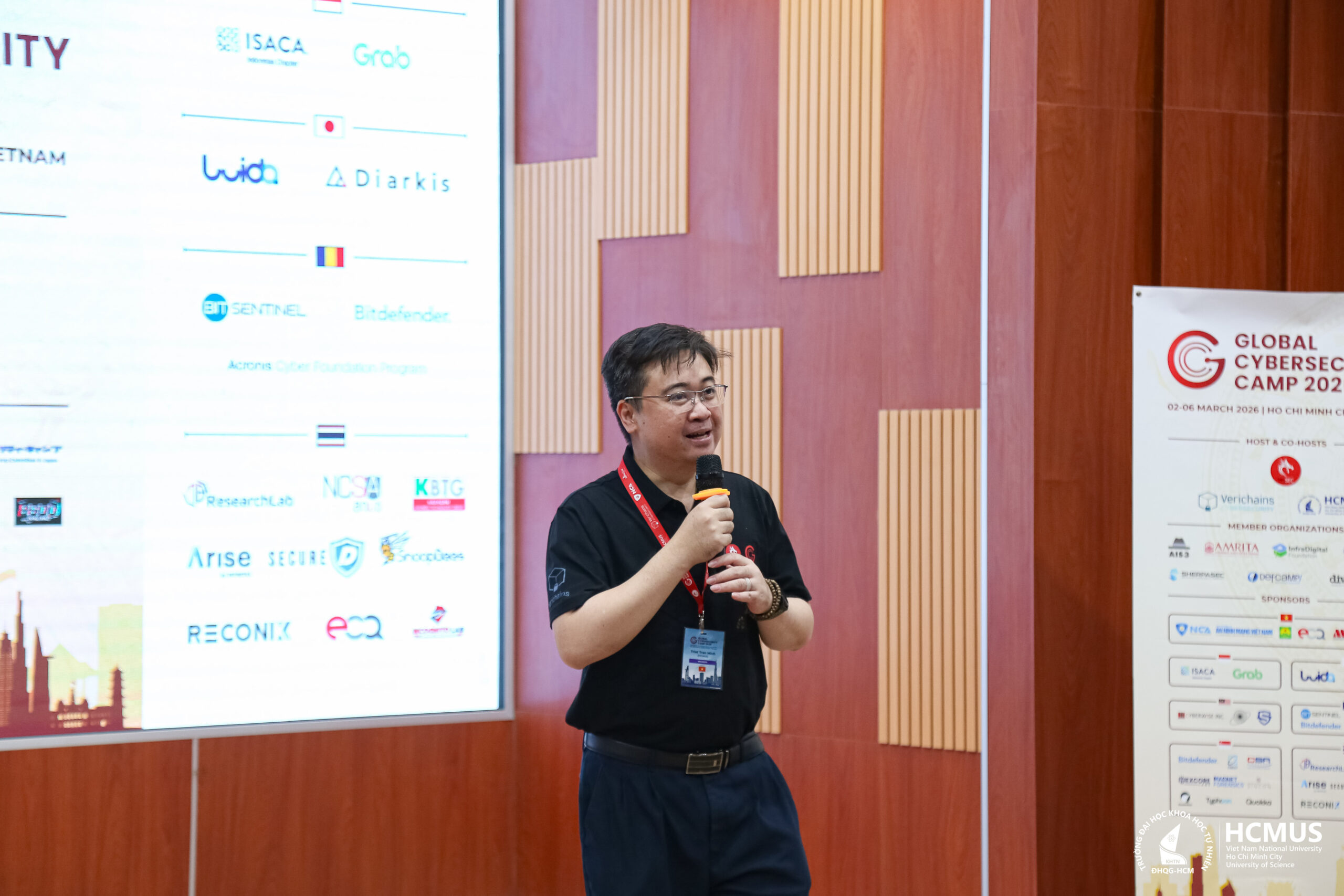
The programme convened diverse cohorts of undergraduate students, postgraduate researchers, and technology entrepreneurs from 9 nations and territories, including India, Indonesia, Japan, Malaysia, Romania, Singapore, Taiwan, Thailand, and Viet Nam. Throughout the duration of the summit, participants attended specialised modules focused on the pillars of modern cybersecurity, including infrastructure security, system integrity, firmware analysis, kernel protection, cloud security, and the integration of Artificial Intelligence in penetration testing.
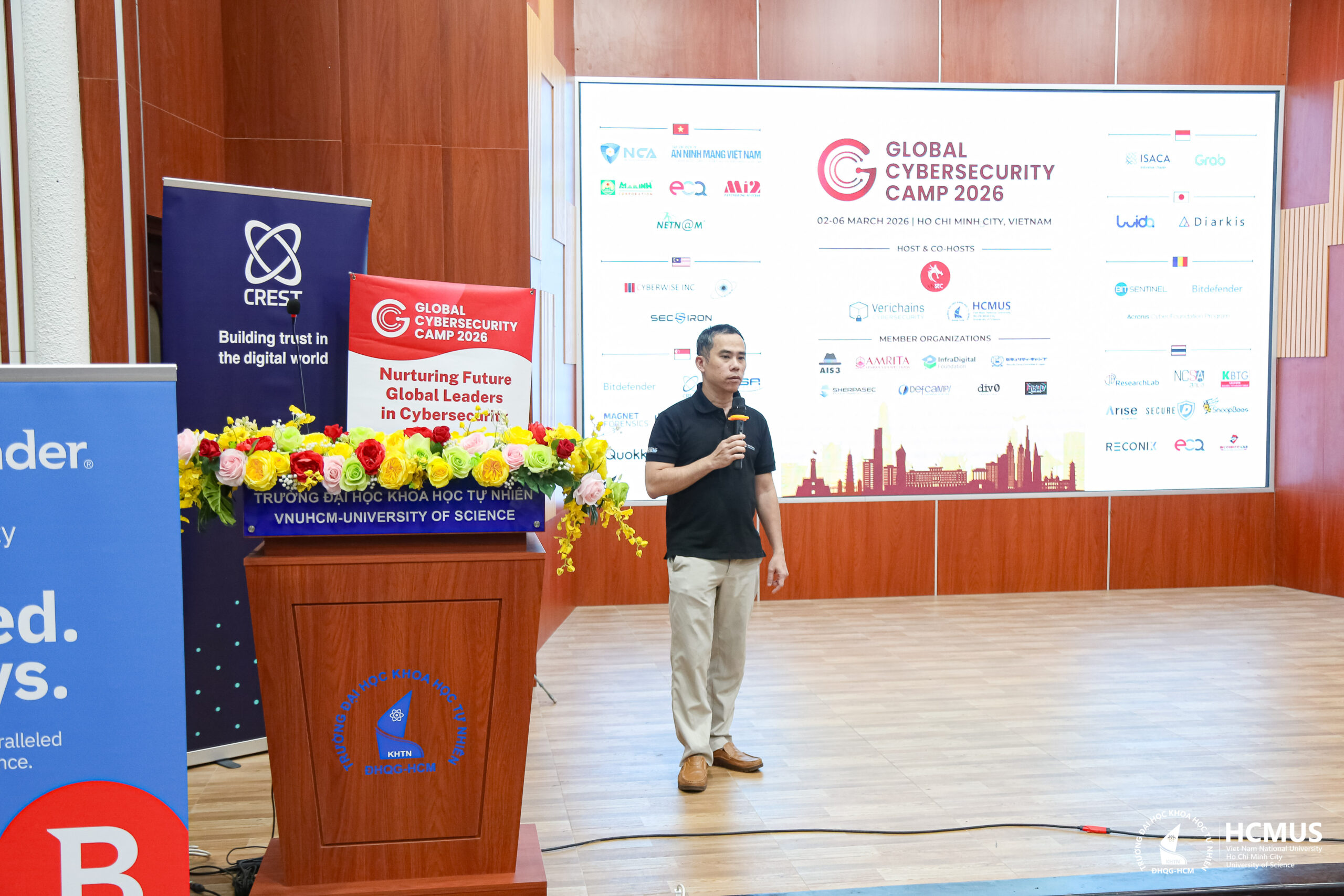
On the afternoon of 2 March, the curriculum commenced with a seminar entitled “Introduction to IoT/ICS Security and Firmware Analysis Skills”, delivered by Mars Cheng – Head of the Product Security & Threat Defence Centre, TXOne Networks Inc.; Executive Director of the Taiwan Hackers Association (HITCON). This module established a foundation in Internet of Things (IoT) and Industrial Control Systems (ICS) security, whilst introducing methodologies for firmware decomposition and the identification of prevalent attack vectors in industrial environments.
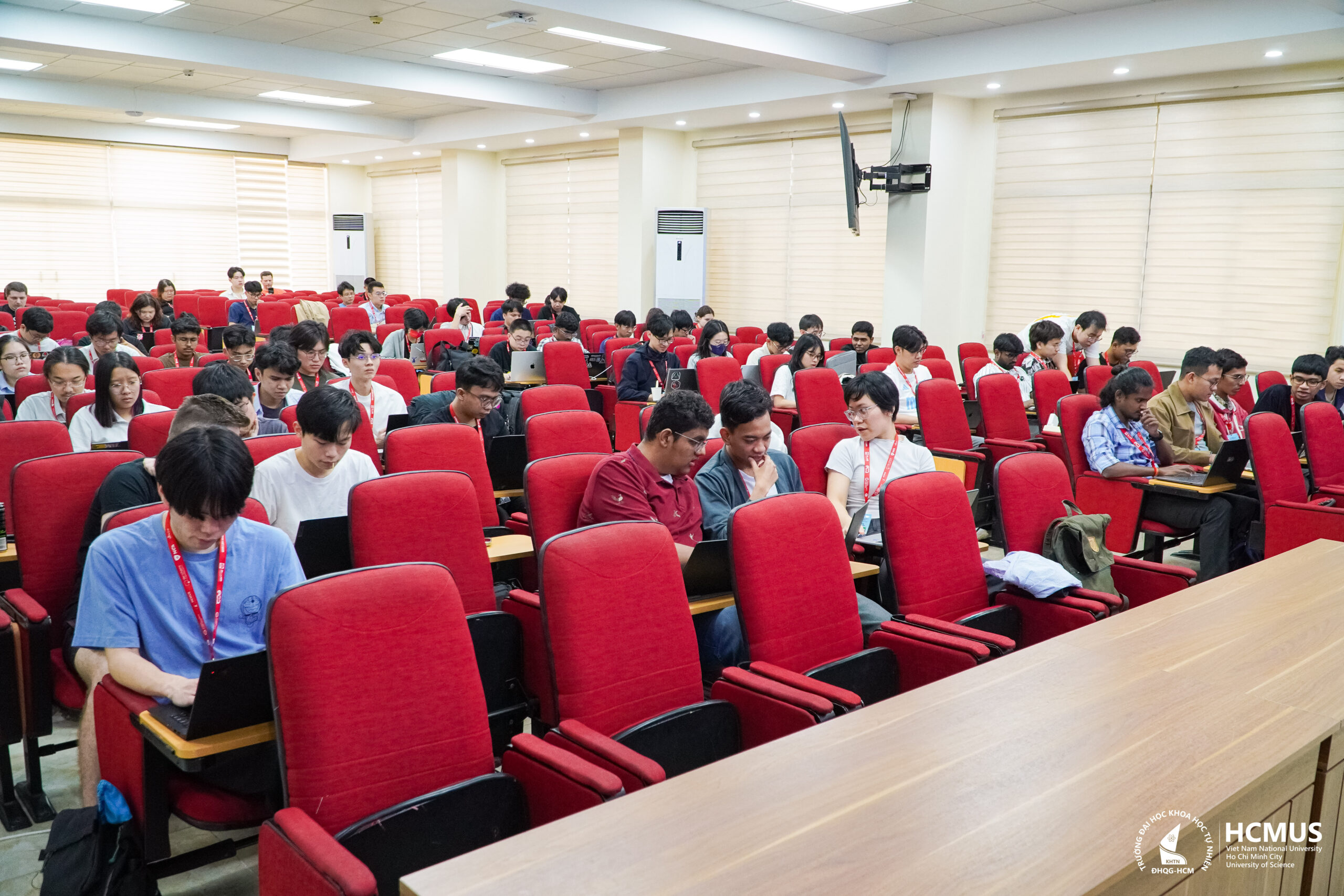
On 3 March, participants continued with the training course “Practical Binary Hardening with Control-flow Enforcement Technology (CET)”, led by Michael – Security researcher specialising in automated binary analysis and threat intelligence, Instructor at Security Camp Japan – alongside Kento Oki – Security researcher specialising in kernel exploitation and Windows kernel internals. The course focused on the analysis of CET mechanisms and the efficacy of the technology in mitigating memory corruption vulnerabilities in software.
Simultaneously, on 3 March, the seminar “Hypervisor for Hackers: Security from the Hardware Up”, taught by Satoshi Tanda – System software engineer and security researcher with over 15 years of experience in virtualisation and system security – enabled scholars to explore hardware-assisted virtualisation and construct a fundamental hypervisor to operate the Windows operating system, thereby facilitating a deeper understanding of low-level system protection.
On 4 March, the programme advanced with the intensive module “Super Hat’s Kernel Tricks: Social Engineering Attacks against AV/EDR Kernel Protections”, presented by Shenghao Ma – Team Lead of the Cyber Threat & Product Defence Centre, TXOne Networks Inc.; Author of “Windows APT Warfare”. The course deconstructed the defensive architectures of modern endpoint protection systems and demonstrated how trust assumptions within security frameworks might be exploited if designed without sufficient rigour.
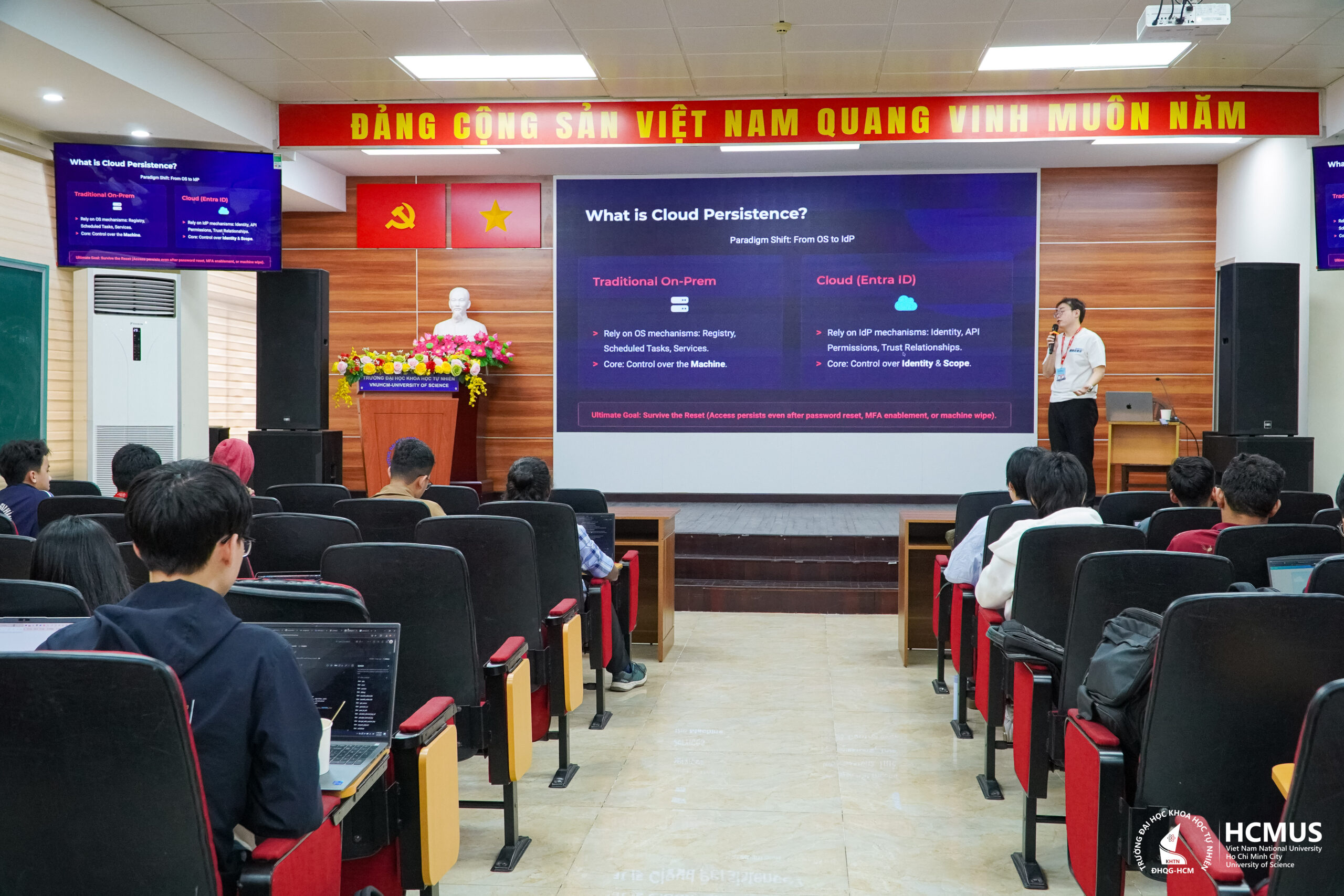
On 5 March, scholars attended the course “Born in the Cloud, Breached from On-Prem: Entra ID Attack Chains”, taught by Jimmy Su (Jiun-Ming Su) – Cyber Security Researcher at CyCraft specialising in identity security and Active Directory/Cloud attacks – and John Jiang (Shang-De Jiang) – Deputy Director of the research team at CyCraft, Expert in Incident Response and Endpoint Security. The session focused on identity-based attack scenarios within cloud environments, specifically examining token exploitation and lateral movement techniques within the Microsoft Entra ID ecosystem.
Furthermore, on 5 March, a practical symposium on Cybersecurity and Artificial Intelligence was hosted at the Verichains headquarters, focusing on the development of automated Agentic AI Pentest systems on the n8n platform. Directed by Kar Wei Loh – Founder of Hexcore Labs (Singapore), CREST and OSCP Certified Penetration Tester – the workshop introduced the integration of penetration testing tools with Large Language Models (LLMs) to automate vulnerability analysis and exploitation strategies.
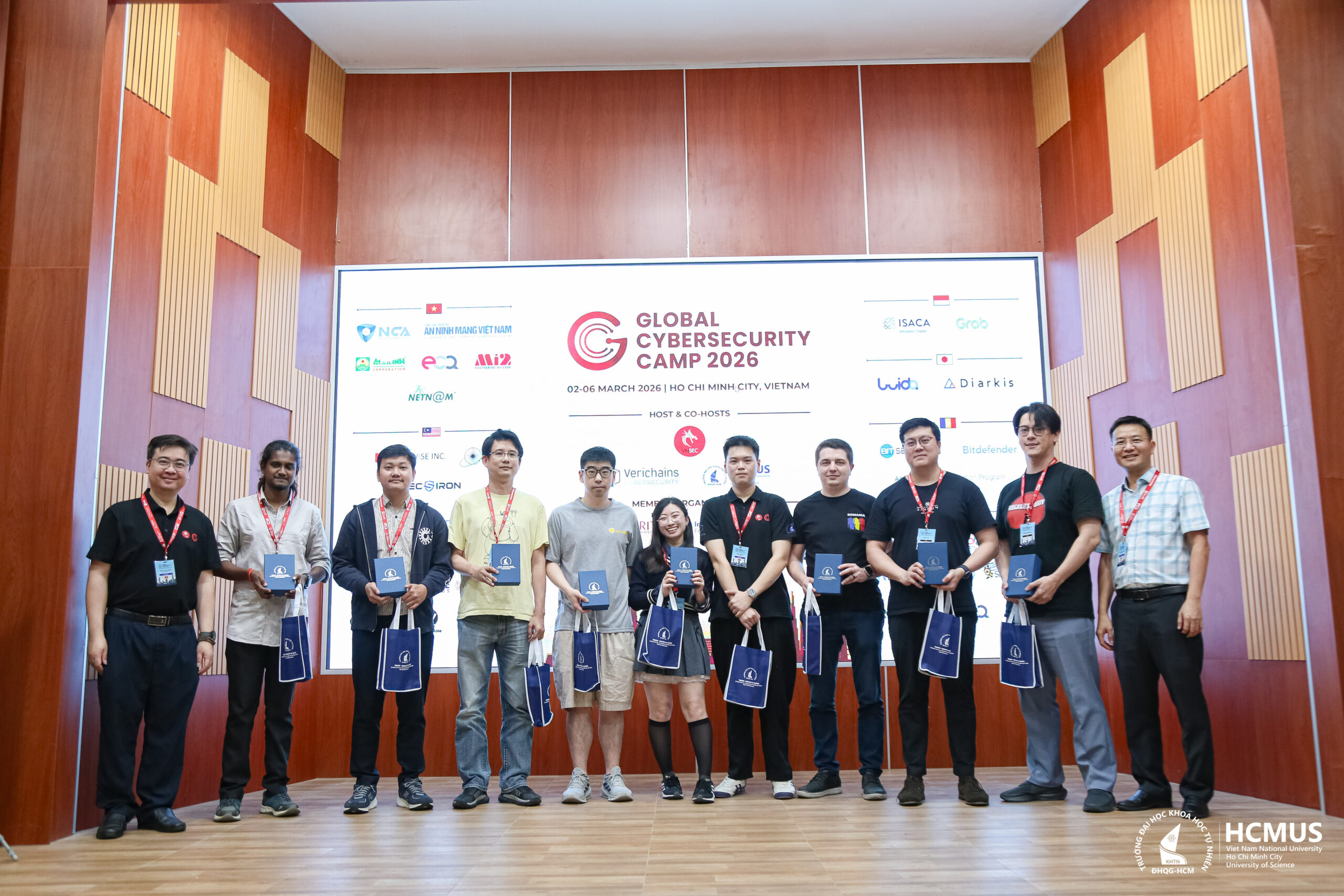
In parallel with formal instruction, participants formed international syndicates to undertake a week-long technical challenge: “Construct a Secure Mobile Application”, sponsored by Quokka. These teams collaborated to design and build a resilient mobile application, synthesising the skills acquired throughout the camp. The final projects were appraised during the plenary session on the morning of 6 March 2026.
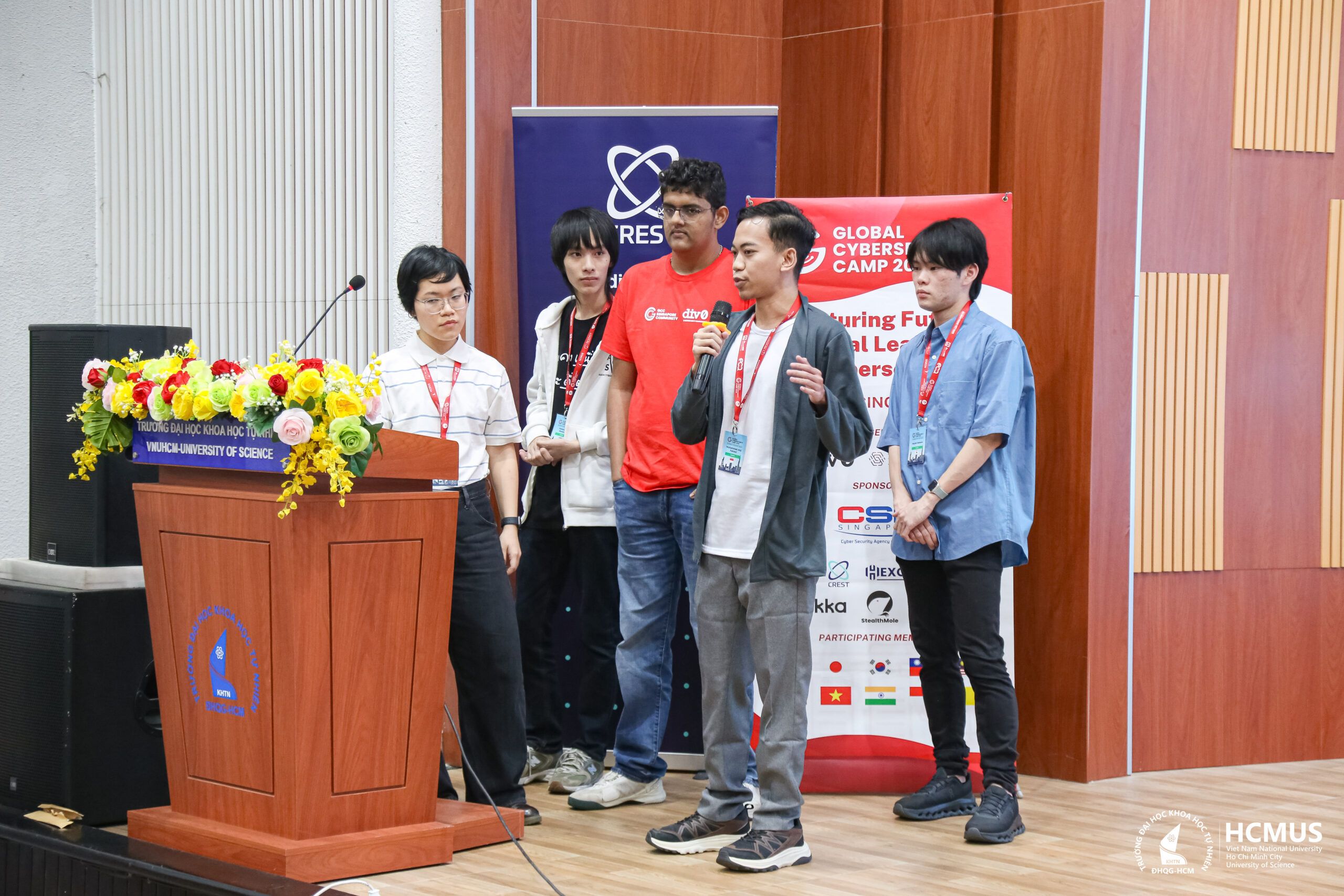
Beyond the academic curriculum, the programme featured an Industry Networking Session at Verichains. This provided a platform for scholars to engage with global cybersecurity firms, exploring emerging technological trends and the evolving requirements of the professional sector.
Through a rigorous curriculum, practical methodology, and the participation of leading experts, Global Cybersecurity Camp 2026 has significantly strengthened the networks between regional and international cybersecurity communities. Success of the initiative reaffirms the commitment of VNUHCM–University of Science to high-level technological education and the cultivation of elite cybersecurity talent for Viet Nam and the wider world.
Leave a Reply