

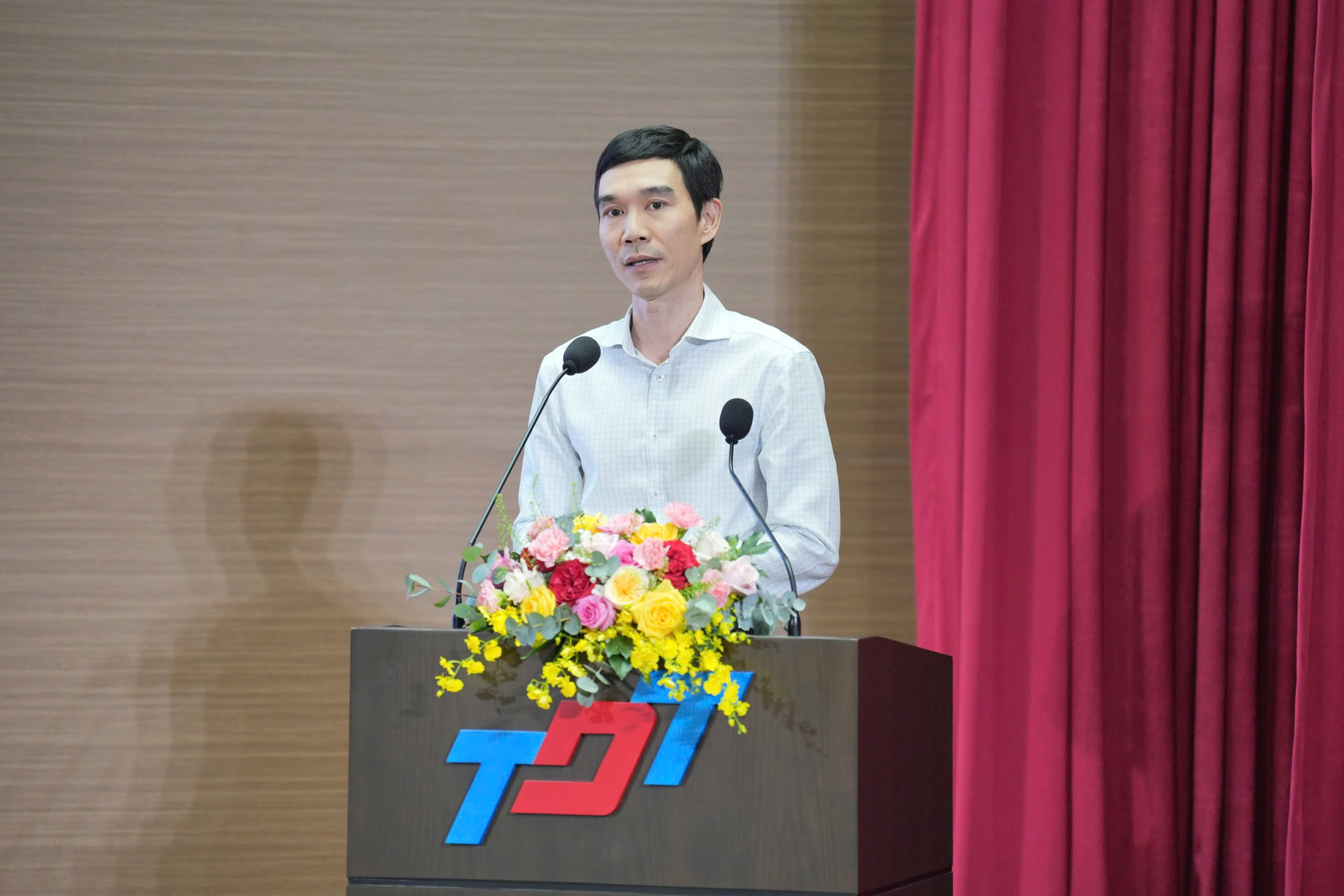
Dr. Đinh Bá Tiến (VNUHCM-University of Science) presenting at the conference. Source: TDTU
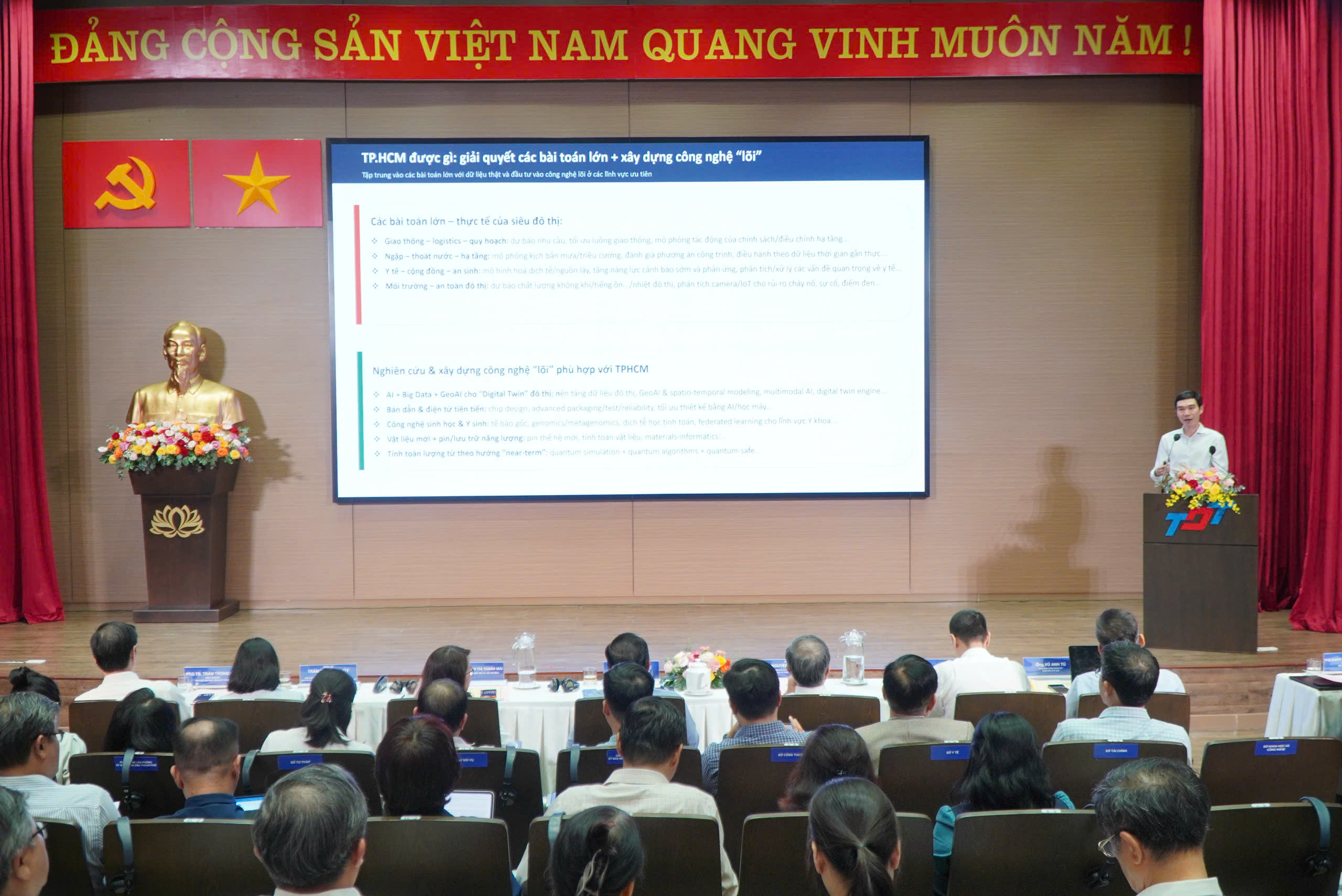
At the conference titled “Upholding the Role of the Council of University Presidents regarding the Ho Chi Minh City ‘Megacity’ Region”, Dr. Đinh Bá Tiến (VNUHCM-University of Science) presented the “Investment in High-Performance Computing (HPC/AI) Infrastructure” model. The presentation highlighted the framework as a pivotal foundation enabling Ho Chi Minh City to address major urban challenges through reliance upon empirical, trustworthy, and centrally governed data.
Dr. Đinh Bá Tiến observed that Ho Chi Minh City faces a multitude of complex, systemic, and interdisciplinary challenges, including traffic congestion, logistics, flooding, healthcare provision, environmental management, and urban safety. Such issues share a common requirement for operation at a massive scale, heavy reliance on multi-source data, and a need for advanced computational, simulation, and analytical capabilities. Consequently, investment in high-performance computing combined with artificial intelligence (HPC/AI) constitutes the core foundation for a transition from fragmented approaches towards data-driven urban management and governance.
“The proposed model operates as a shared platform between Ho Chi Minh City and VNUHCM. Under this framework, the City provides practical urban management problems alongside multi-disciplinary and multi-sectoral data sources; VNUHCM ensures in-depth research capacity, model construction, simulation, and core technology development, delivered through a contingent of interdisciplinary experts, modern laboratory systems, and research centres,” stated Dr. Đinh Bá Tiến.
The HPC/AI infrastructure design employs an on-premise and hybrid model, fulfilling requirements for security, management, and data legislation compliance, whilst simultaneously permitting flexible expansion as computational volume increases. This approach assists Ho Chi Minh City in maintaining strict control over sensitive data, mitigating risks associated with external platform dependence, and optimising investment and operational costs.
Notably, the HPC/AI model construction aligns with a three-year deployment roadmap. The initial year focuses on establishing core infrastructure, constructing a trusted data zone, and deploying selected pilot projects for the City. Upon commencement of the second year, the system will undergo scale expansion, security enhancement, and operational process standardisation, serving municipal departments and sectors directly. By the third year, the HPC/AI infrastructure will evolve into a comprehensive platform connecting enterprises and start-ups, thereby facilitating the replication of verified solutions into practical urban management and administration.
Dr. Đinh Bá Tiến emphasised that the distinguishing feature of the HPC/AI model is the tight integration between research and the practical necessities of Ho Chi Minh City. On this platform, simulation, analysis, and scientific verification of major urban challenges can occur based on real-world data, thereby shortening decision-making time, reducing repetitive testing costs, and enhancing solution reliability. Transcending mere research, the system outputs possess a design suitable for immediate application in management, administration, and policy planning duties.
Through investment in HPC/AI infrastructure, Ho Chi Minh City not only acquires an additional technical instrument supporting modern urban management but also progressively achieves mastery over core technologies in priority sectors. This initiative establishes a long-term foundation for scientific development, technology, and innovation within the ‘megacity’ region.
Leave a Reply