

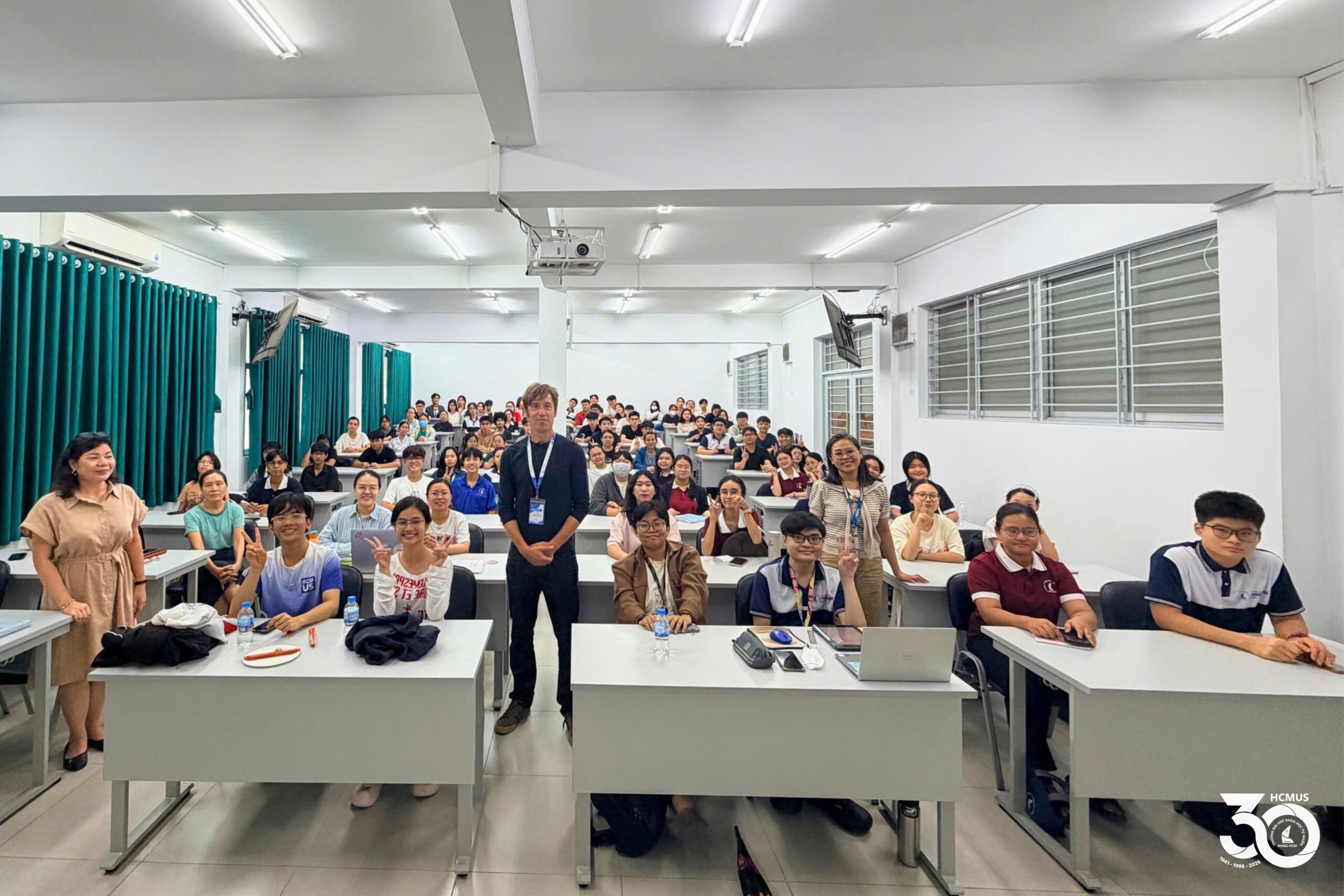
On 04 September 2026, the Faculty of Biology–Biotechnology, Department of Ecology and Evolutionary Biology, held an academic seminar entitled “Social-Ecological System Dynamics: A Stakeholder-Focused Perspective on Conservation”, presented by Associate Professor Jean Hugé, Visiting Professor at Viet Nam National University Ho Chi Minh City.
The talk focused on understanding and managing change within Social-Ecological Systems (SES), centring on stakeholder-focused approaches to research and conservation. Systems examined included mangroves, coastal areas, small islands, lakes, and protected areas and biosphere reserves.
Associate Professor Jean Hugé currently holds teaching and research positions at a number of international institutes and universities. In studying social-ecological systems, he draws on stakeholder-focused methods, including Q methodology, Social Network Analysis (SNA), the Delphi technique and ethnobiological surveys.
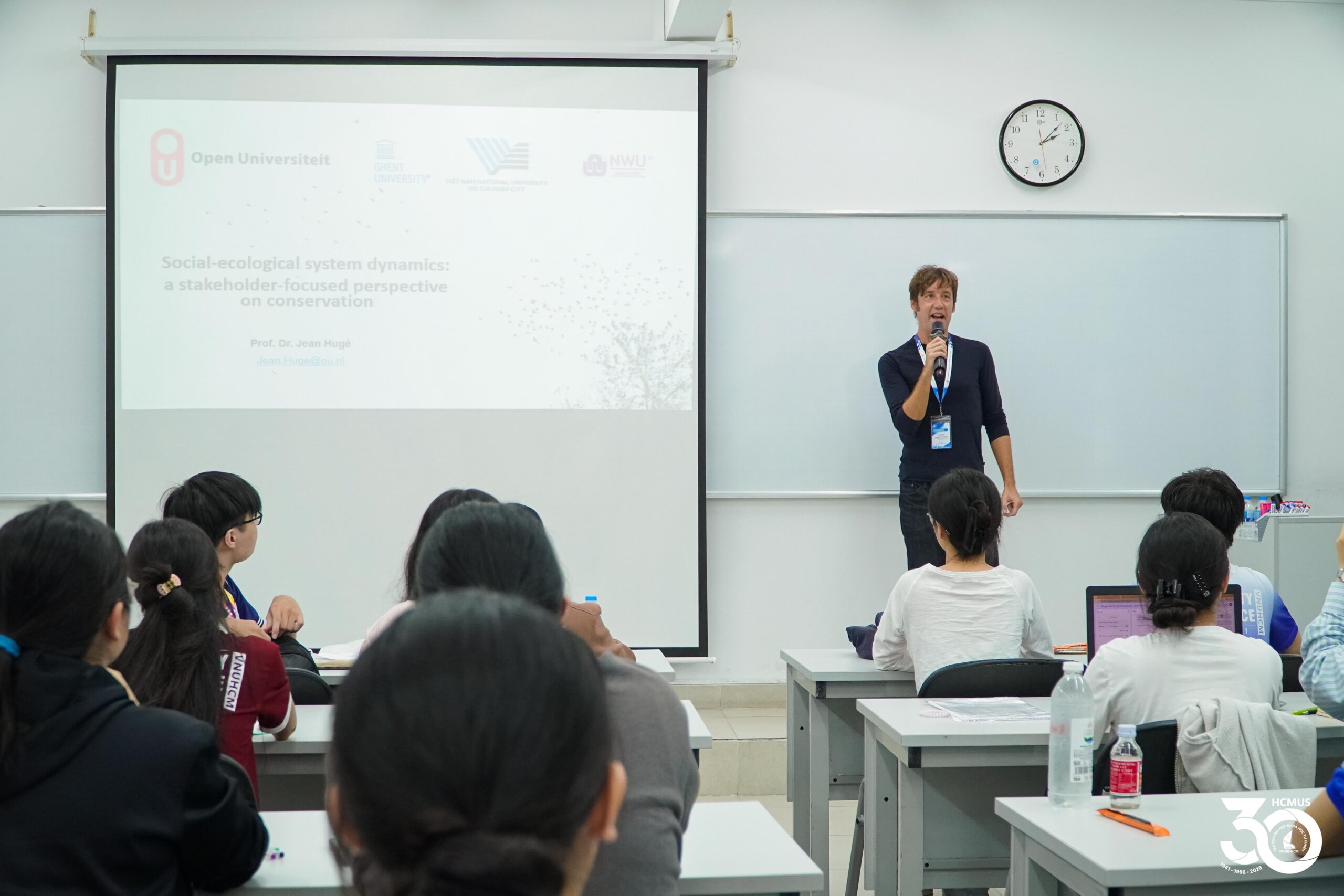
One research direction presented concerned the mangrove social-ecological system in Sri Lanka, focusing on the assessment of ecosystem services, community perspectives and stakeholder cooperation networks in mangrove management and conservation. In addition, research on ecosystem services in Africa has contributed to the development of guidance tools for UNESCO, used for the rapid assessment of ecosystem services across African biosphere reserves. This body of research has also promoted a diversity of approaches to valuing nature, encompassing anthropocentric, ecocentric and pluricentric perspectives.
Within the fields of biodiversity policy and Environmental Impact Assessment (EIA), the research examined the integration of biodiversity conservation into environmental impact assessments for international development projects, drawing on cases from the Democratic Republic of the Congo and Madagascar.
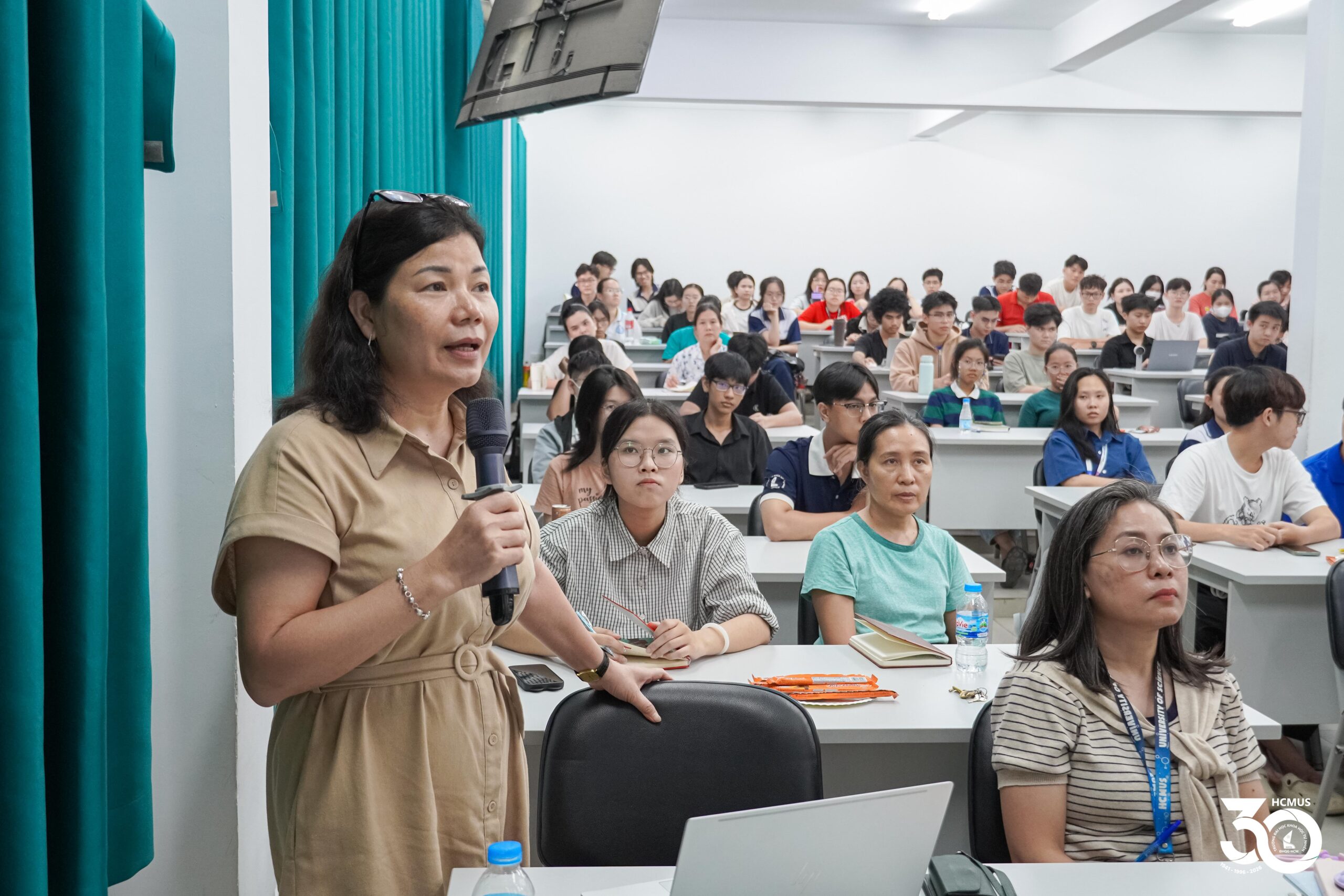
A further research direction concerned conservation conflicts, focusing on human–wildlife conflict in the Galápagos Islands (Ecuador), as well as shifts in the management framework at Pendjari National Park (Benin). These studies approach conservation through the relationship between people, ecosystems and governance mechanisms. Alongside these existing research directions, the talk also addressed potential research collaboration between Associate Professor Jean Hugé and HCMUS, together with partners in Viet Nam. Prospective areas of cooperation include drawing on bilateral funding sources such as VLIR-UOS, BELSPO, FWO-NAFOSTED and NUFFIC, as well as advancing the RECOVMAN proposal on strengthening the resilience of Viet Nam’s coastal ecosystems.
In training, potential cooperation includes the co-supervision of postgraduate students at HCMUS and connecting students with international Master’s programmes such as Tropimundo and Oceans & Lakes. Academic exchange could also be strengthened through the VNU350 programme, Global Minds scholarships, staff exchange, and the co-organisation of international specialist workshops. The seminar contributed to sharing approaches and research findings on social-ecological system dynamics, while opening up opportunities for cooperation in research, training and academic exchange between HCMUS and international partners.
Leave a Reply