

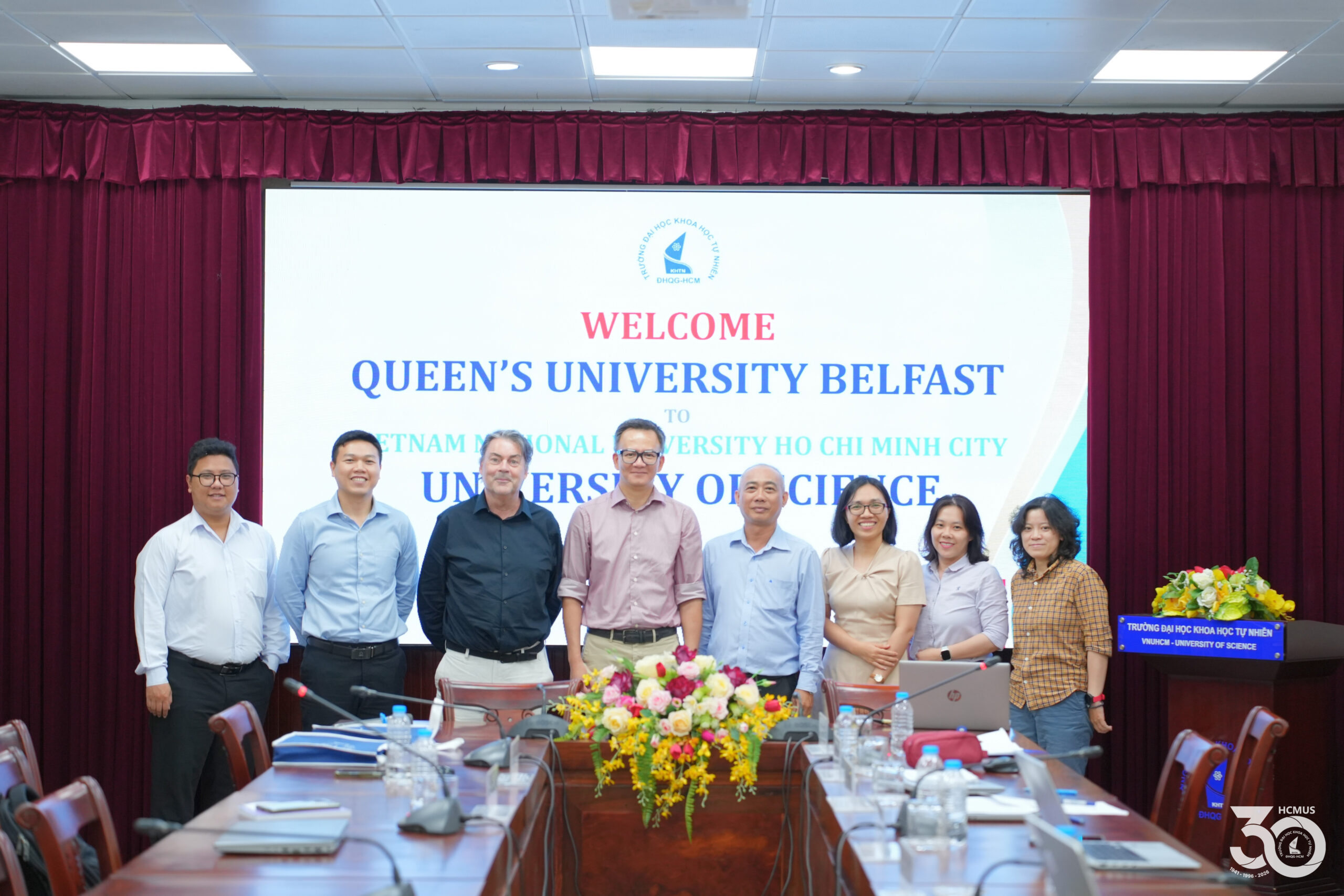
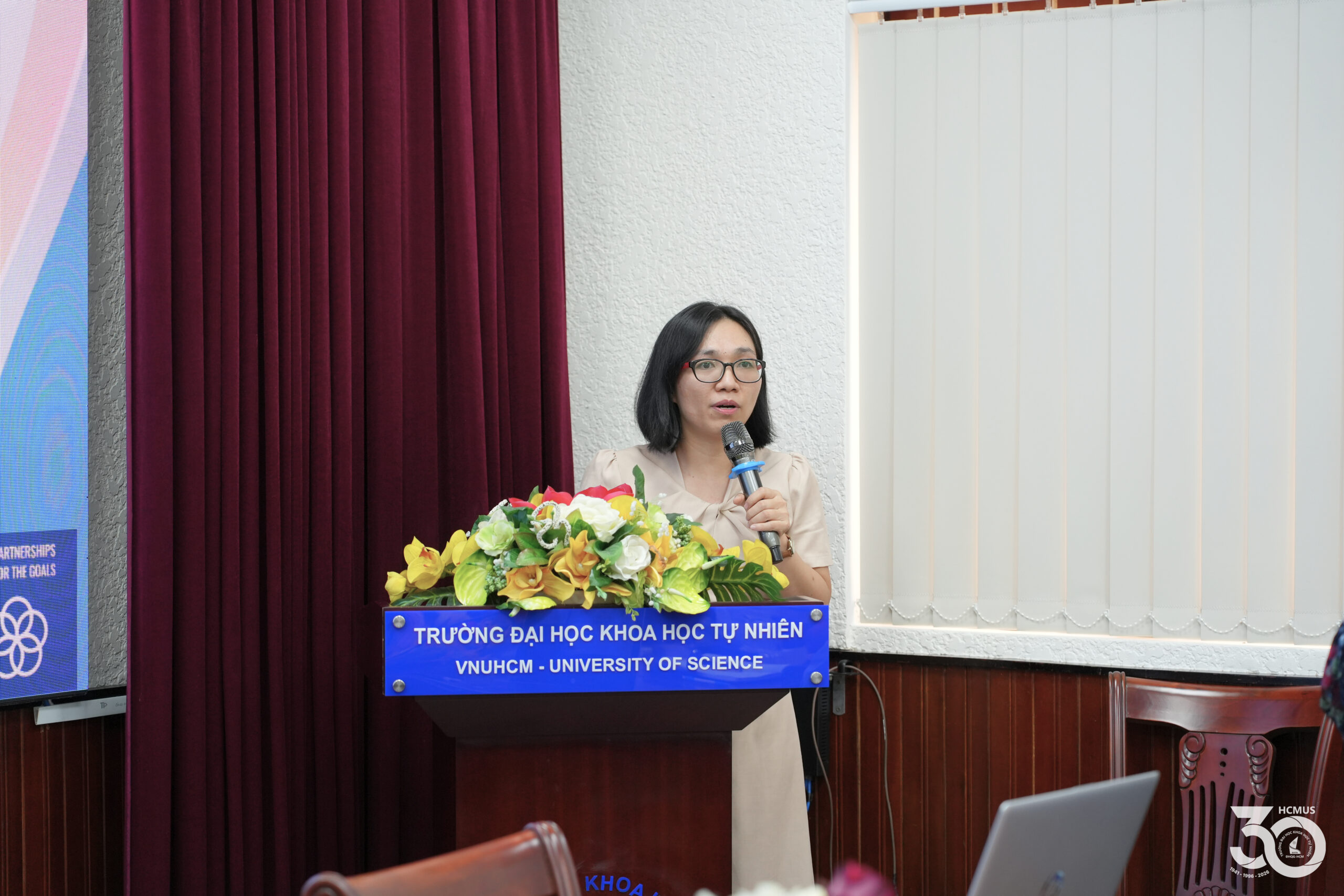
On 20 July, VNUHCM–University of Science (HCMUS) welcomed a delegation from the School of Biological Sciences, Queen’s University Belfast (United Kingdom) for a working session to explore opportunities for collaboration in education, research, and academic exchange between the two institutions.
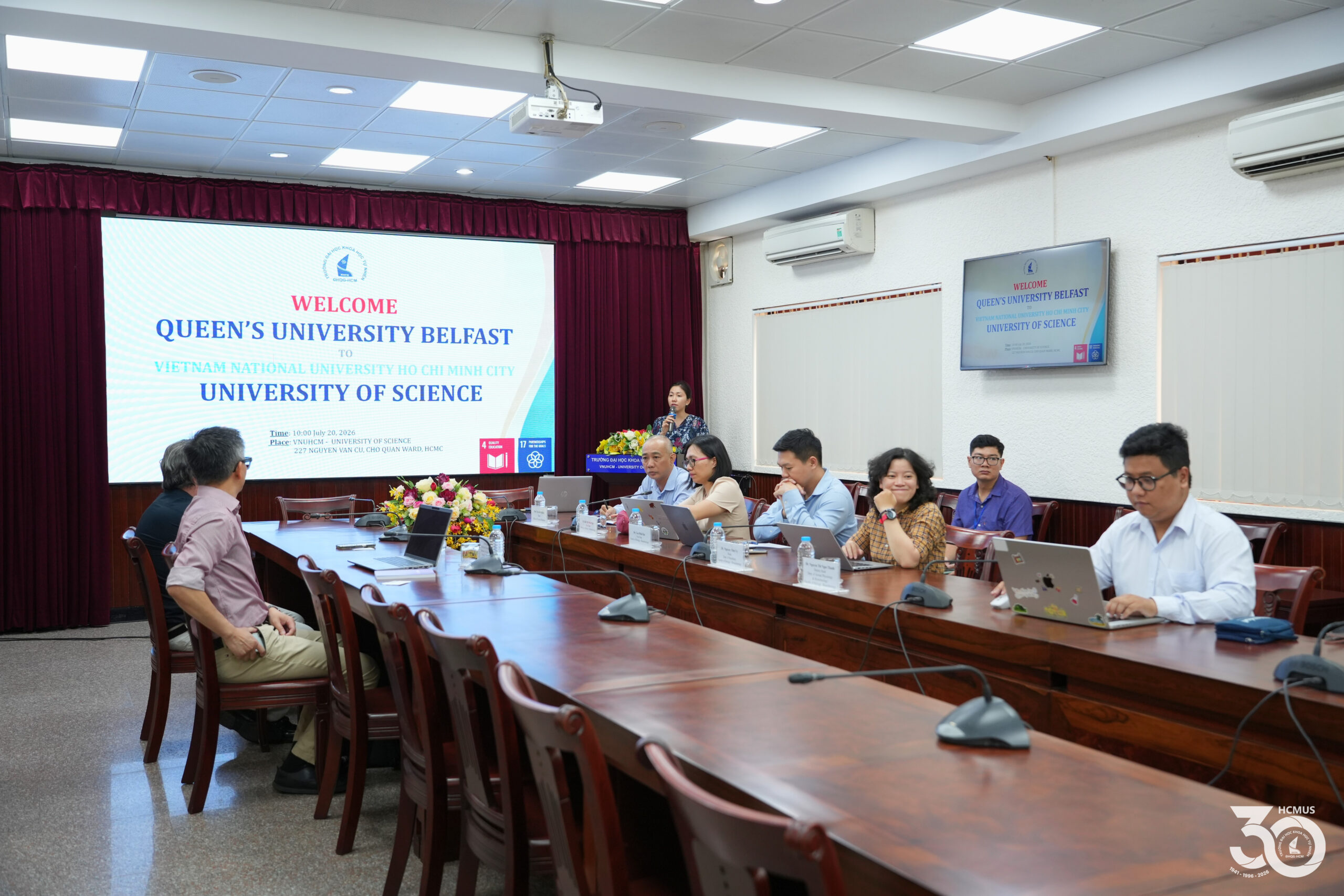
Representing the School of Biological Sciences, Queen’s University Belfast were Professor Gary Hardiman, Director of Research, School of Biological Sciences, and Dr Cuong Cao, Reader, Director of Internationalisation, Laboratory of Applied Micro- and Nanotechnology (AMINO), Institute for Global Food Security.
Representing HCMUS were Professor Ngô Đại Nghiệp, Head of the Office of External Relations; Dr Bùi Thị Như Ngọc and MSc Cao Minh Đại, Vice Deans of the Faculty of Biology and Biotechnology; together with Dr Nguyễn Thúy Vy, Head of the Department of Genetics, and Dr Nguyễn Thị Ngọc Thanh, Deputy Head of the Department of Animal Physiology & Biotechnology.
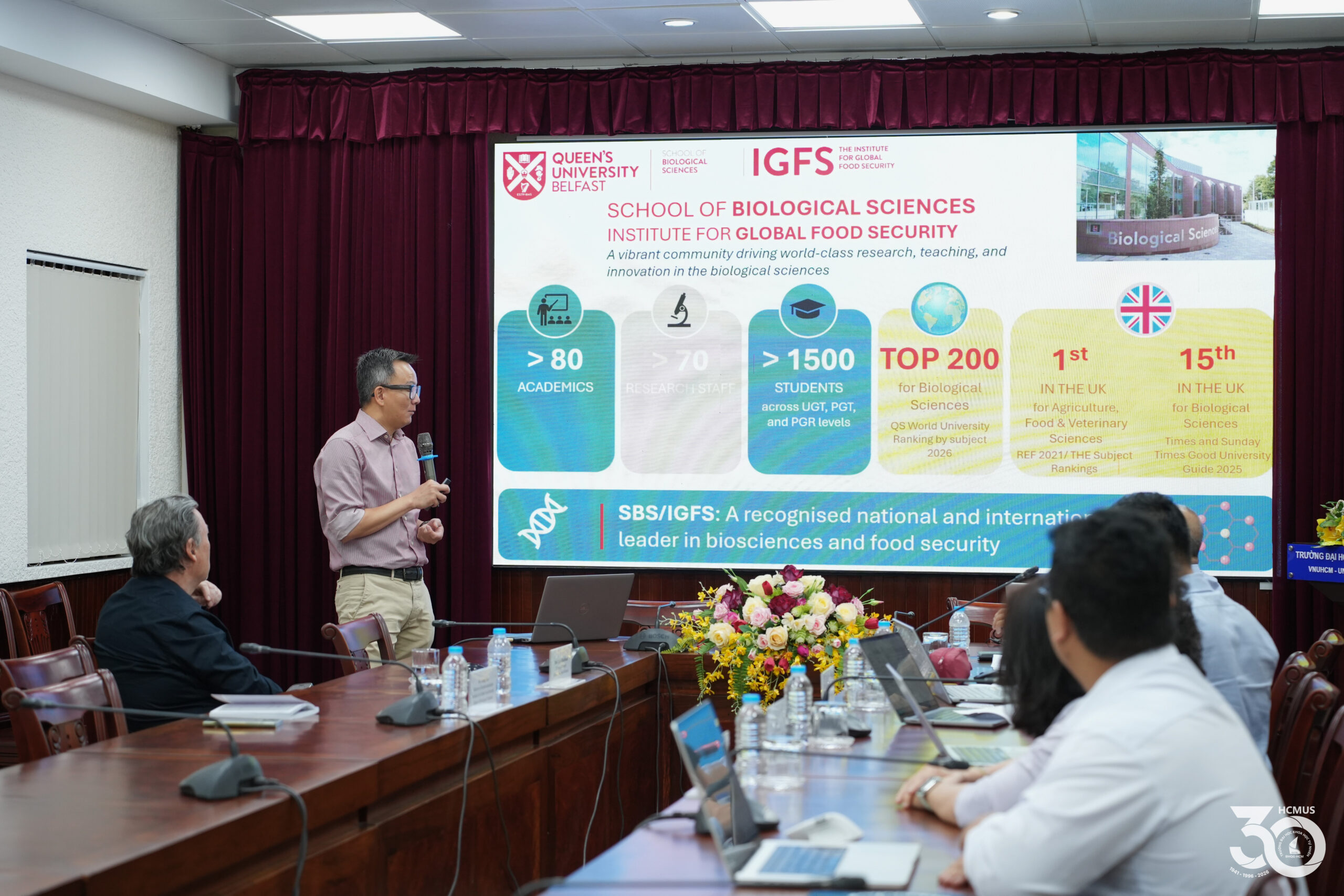
Queen’s University Belfast is one of the United Kingdom’s leading research-intensive universities and a member of the Russell Group. The School of Biological Sciences is among the university’s principal teaching and research units, with recognised strengths in biology, biotechnology, food science, food security, and public health.
During the meeting, representatives of both institutions introduced their respective academic strengths, research capabilities, and strategic priorities. The delegation from the School of Biological Sciences also shared an overview of undergraduate and postgraduate programmes offered by Queen’s University Belfast.
Representatives of the School of Biological Sciences further presented the school’s key research areas, academic programmes, and potential avenues for collaboration with HCMUS.
Discussions focused on the possibility of developing a 4+M progression pathway, enabling HCMUS students to continue from undergraduate study to a master’s degree at Queen’s University Belfast.
The two institutions also explored opportunities to support doctoral training and academic staff development through Project 89 of the Government of Viet Nam, which aims to enhance the qualifications of university lecturers. In addition, discussions covered collaborative research in biology and biotechnology, alongside expanded academic exchange opportunities for academic staff and students.
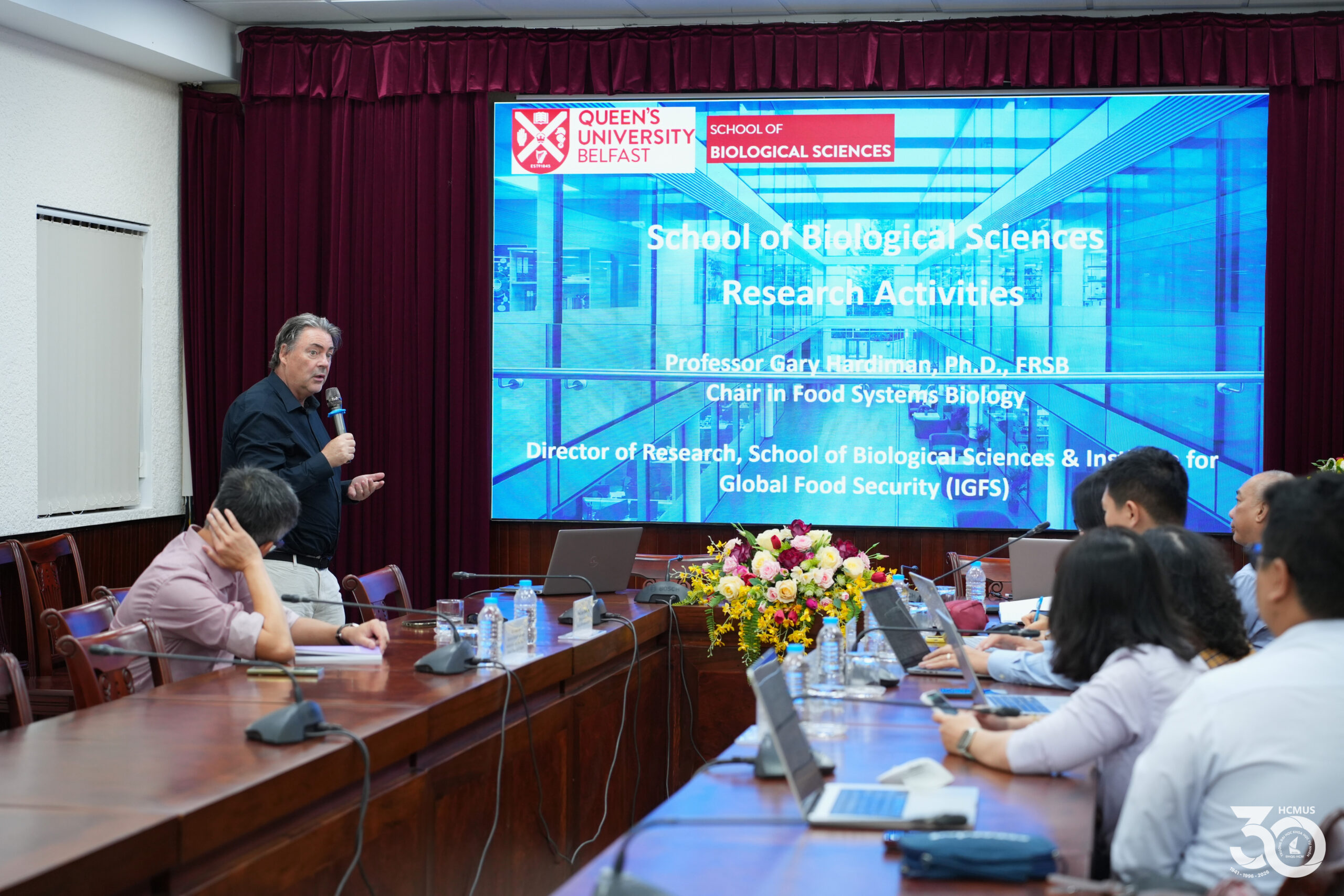
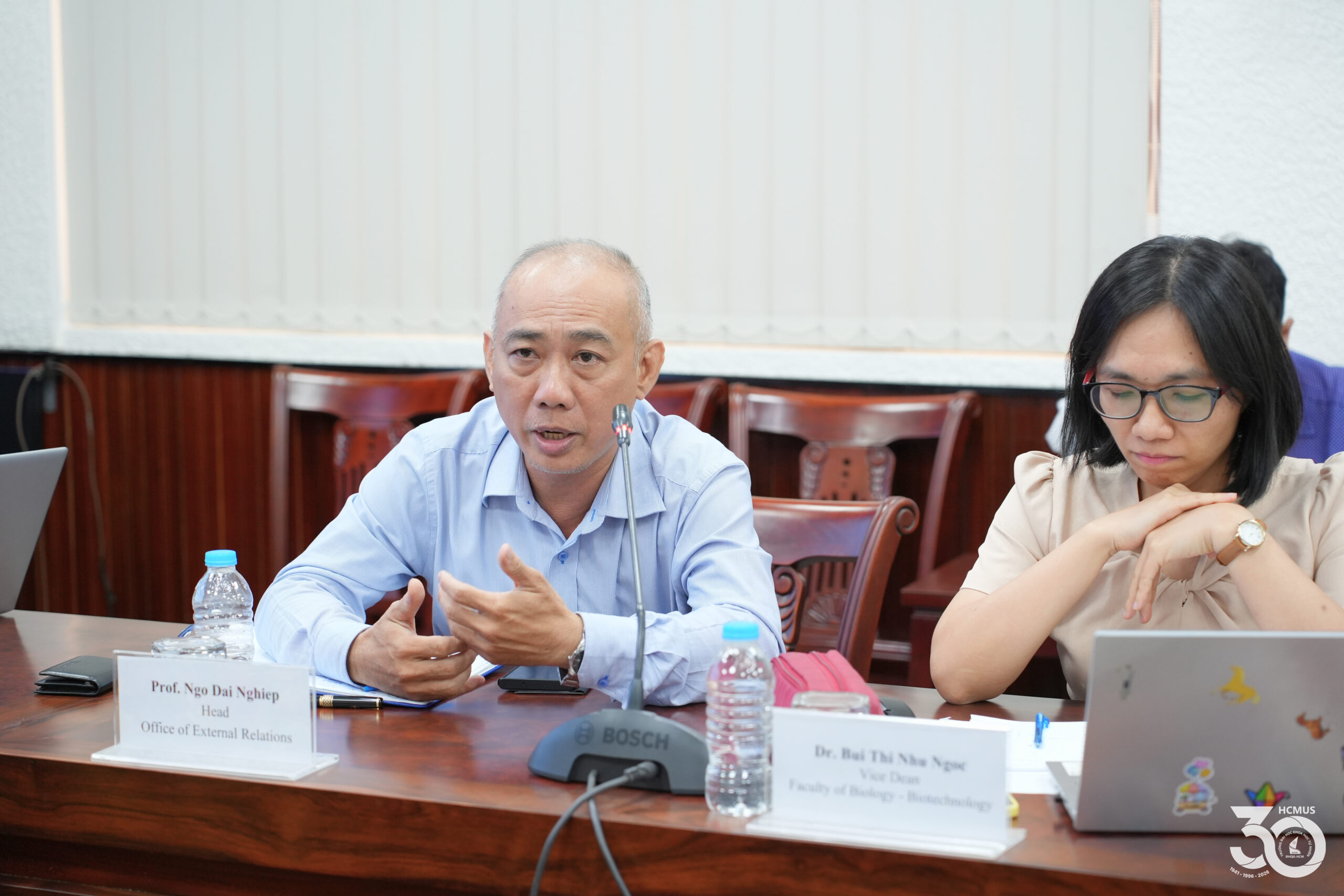
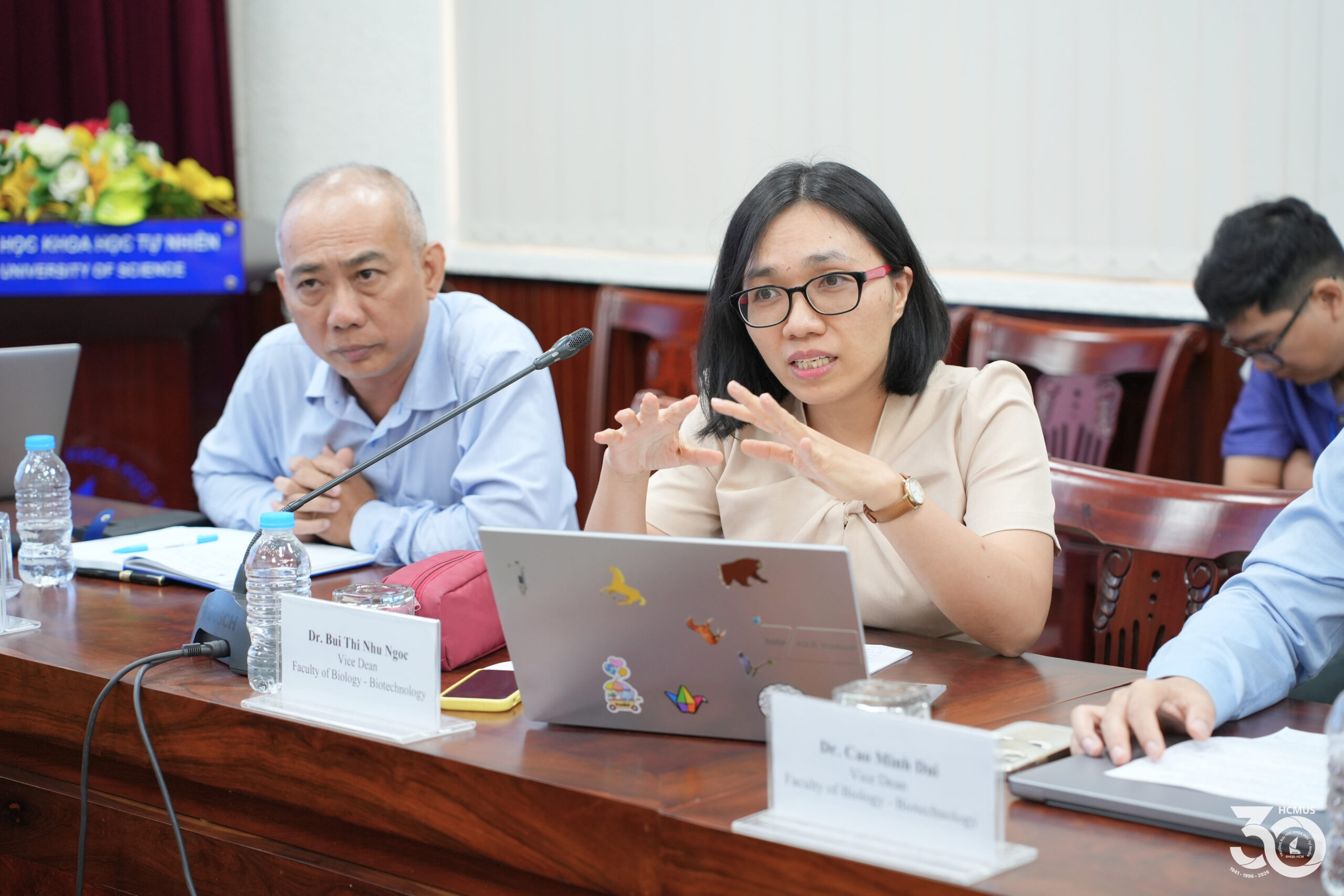
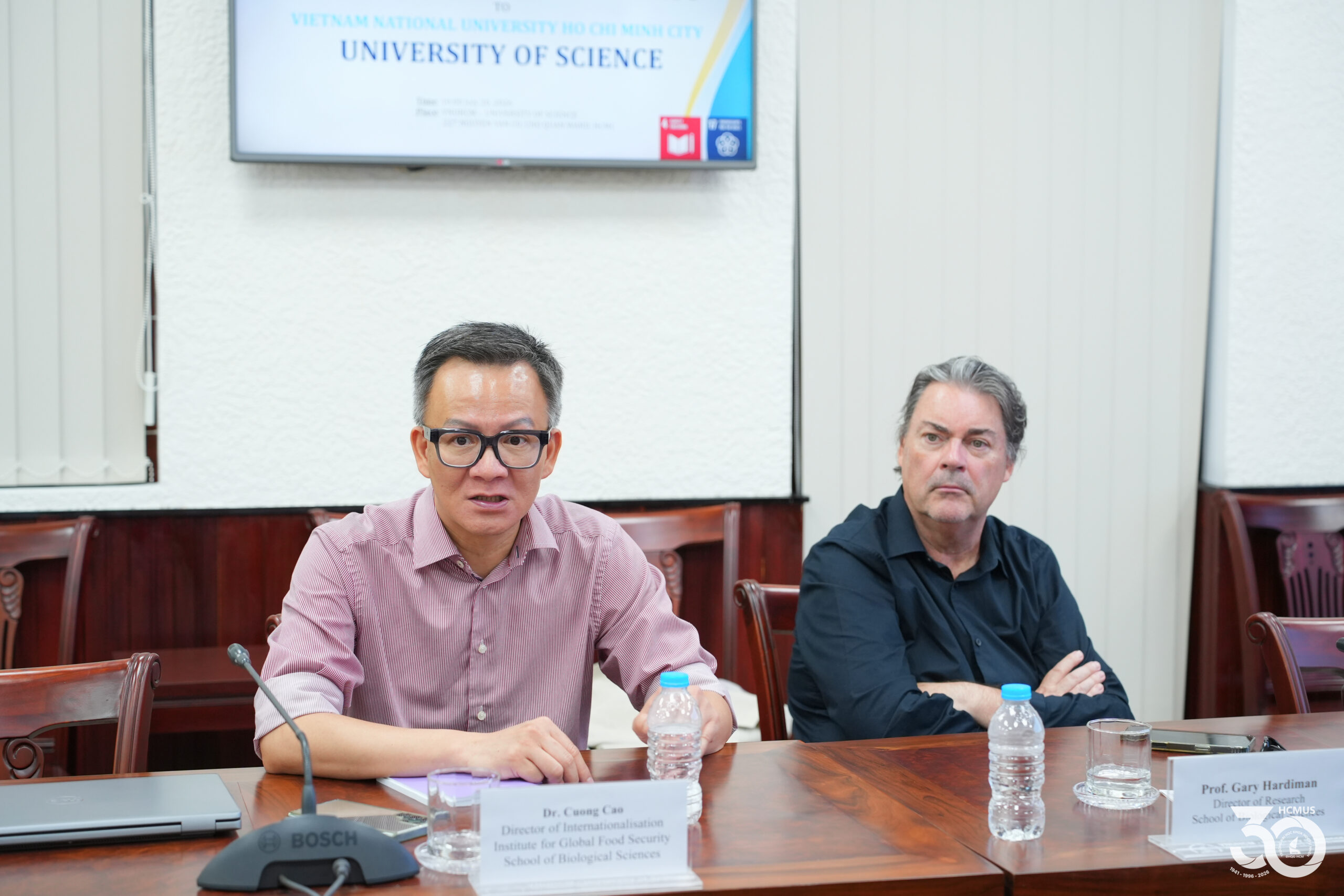
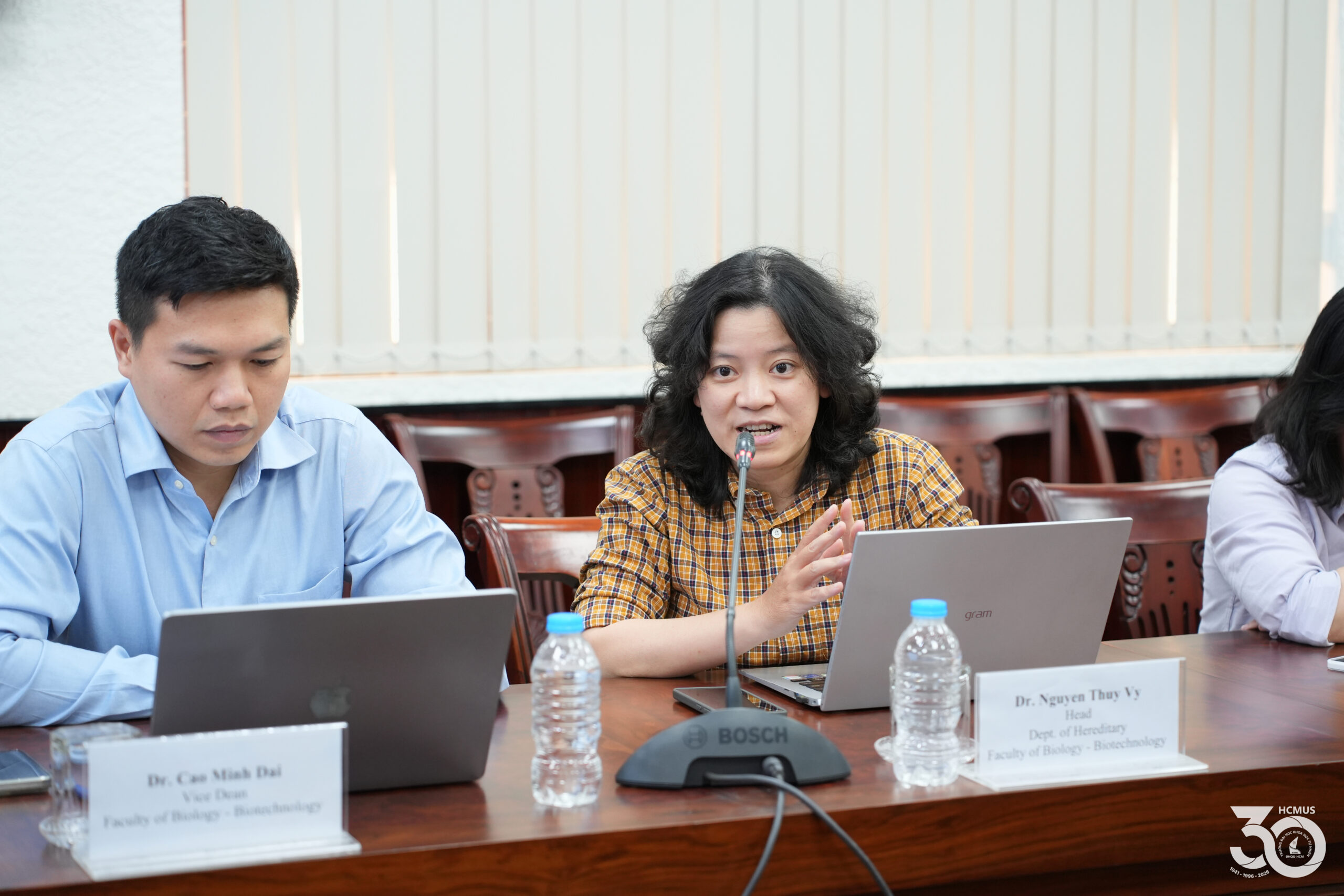
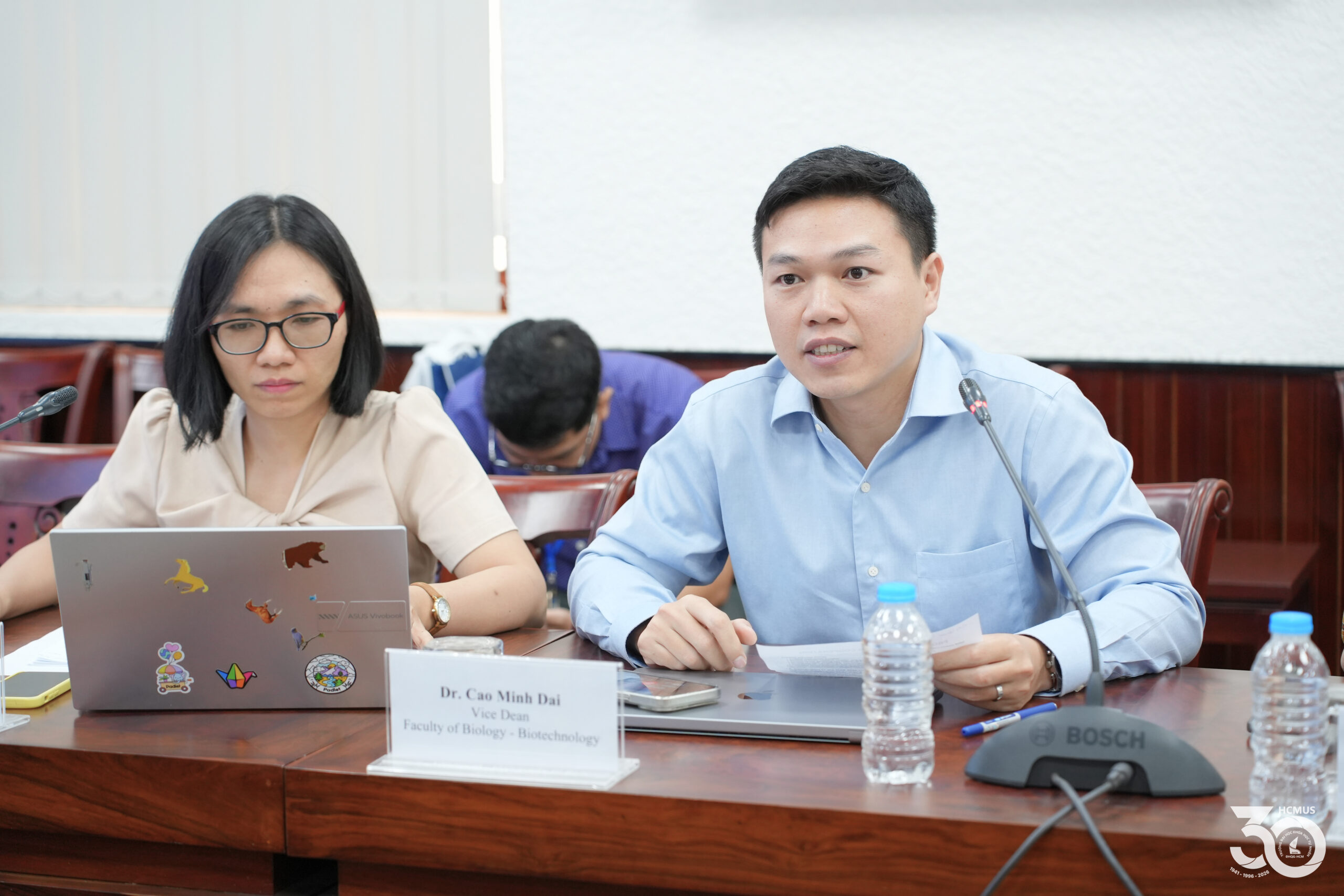
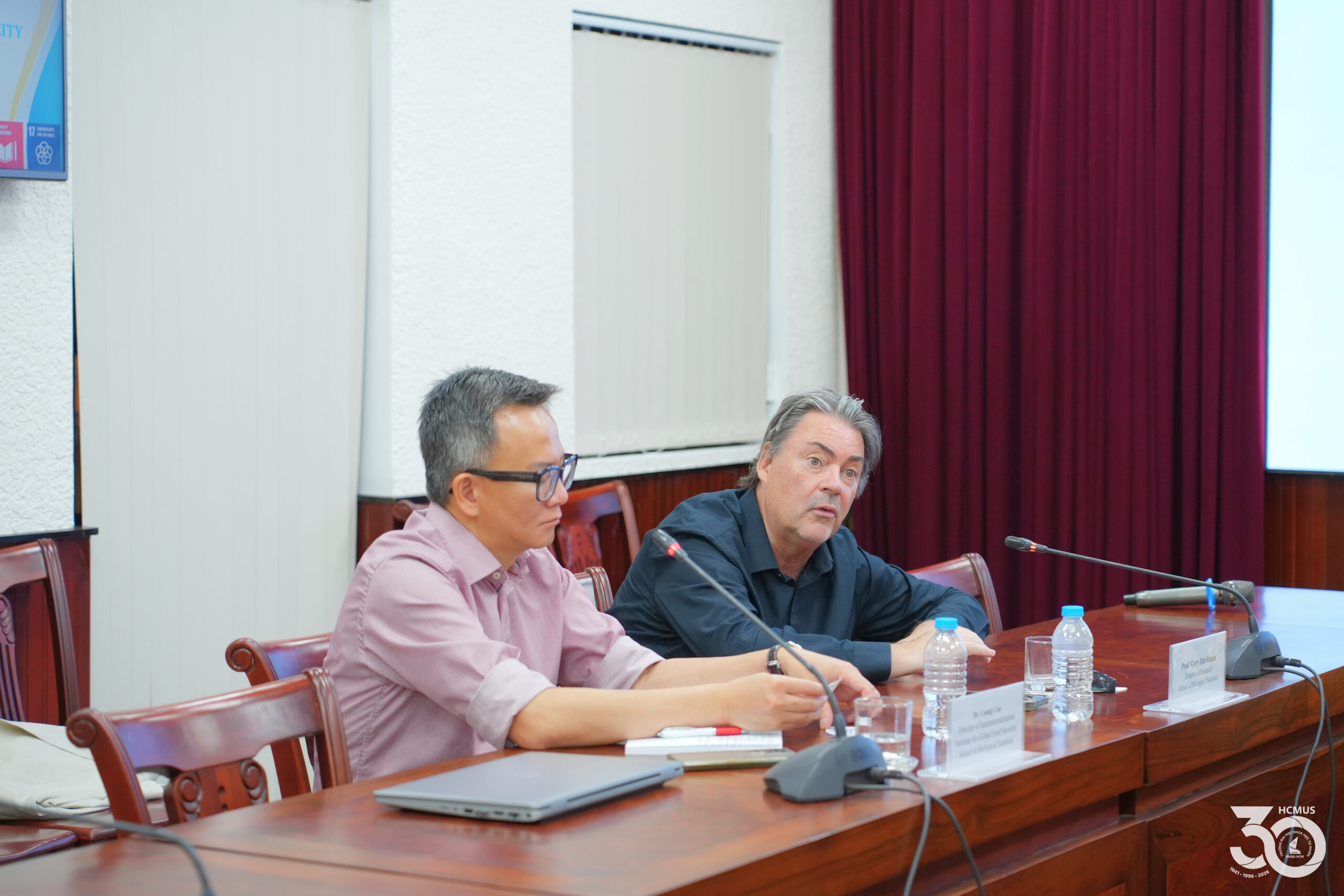
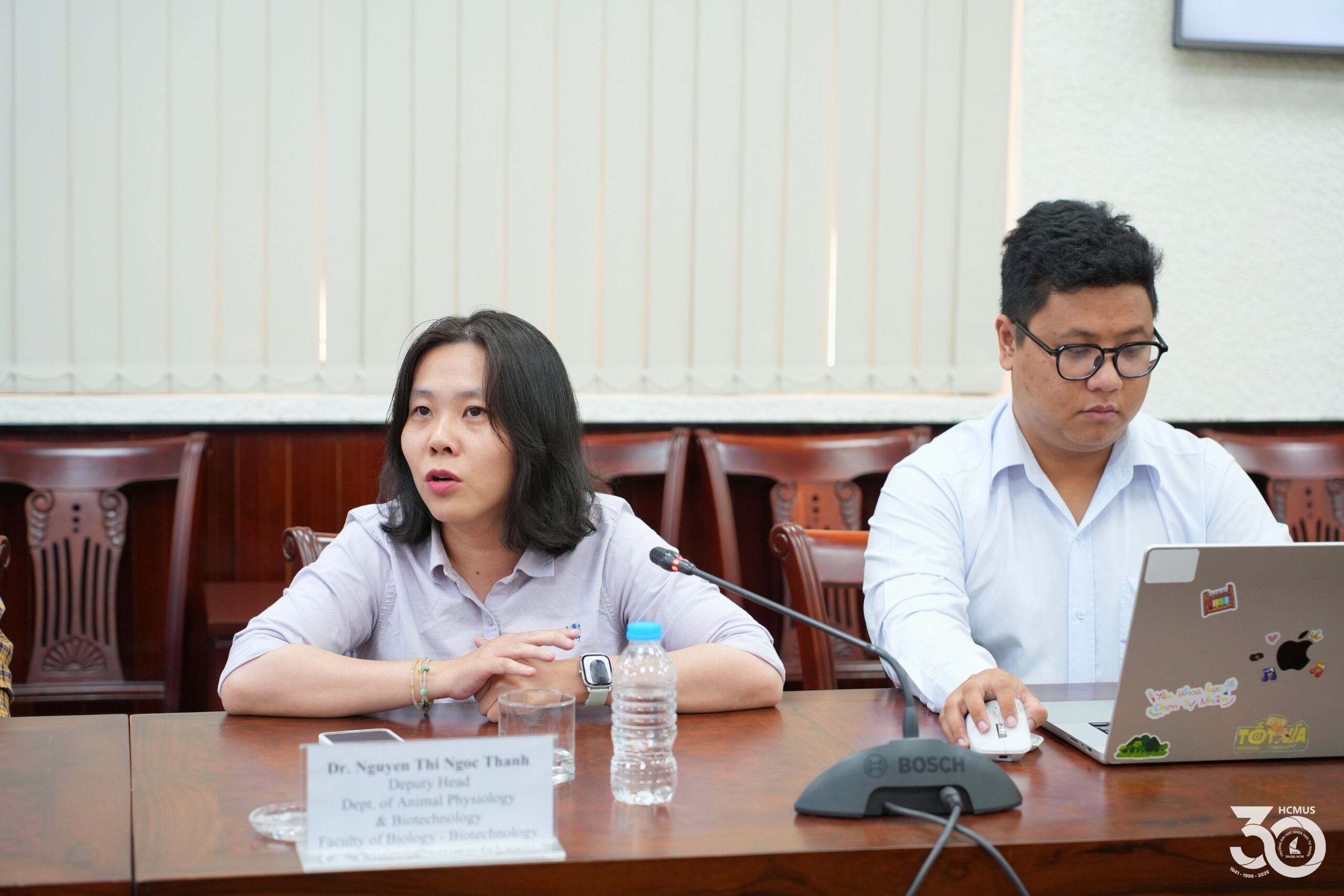
Representatives of the two institutions discuss opportunities for collaboration in education, research, and academic exchange.
The working session marks an important first step towards strengthening collaboration between HCMUS and the School of Biological Sciences, Queen’s University Belfast. Future initiatives are expected to enhance educational quality, advance research activities, and further expand HCMUS’s international partnership network.
Leave a Reply