

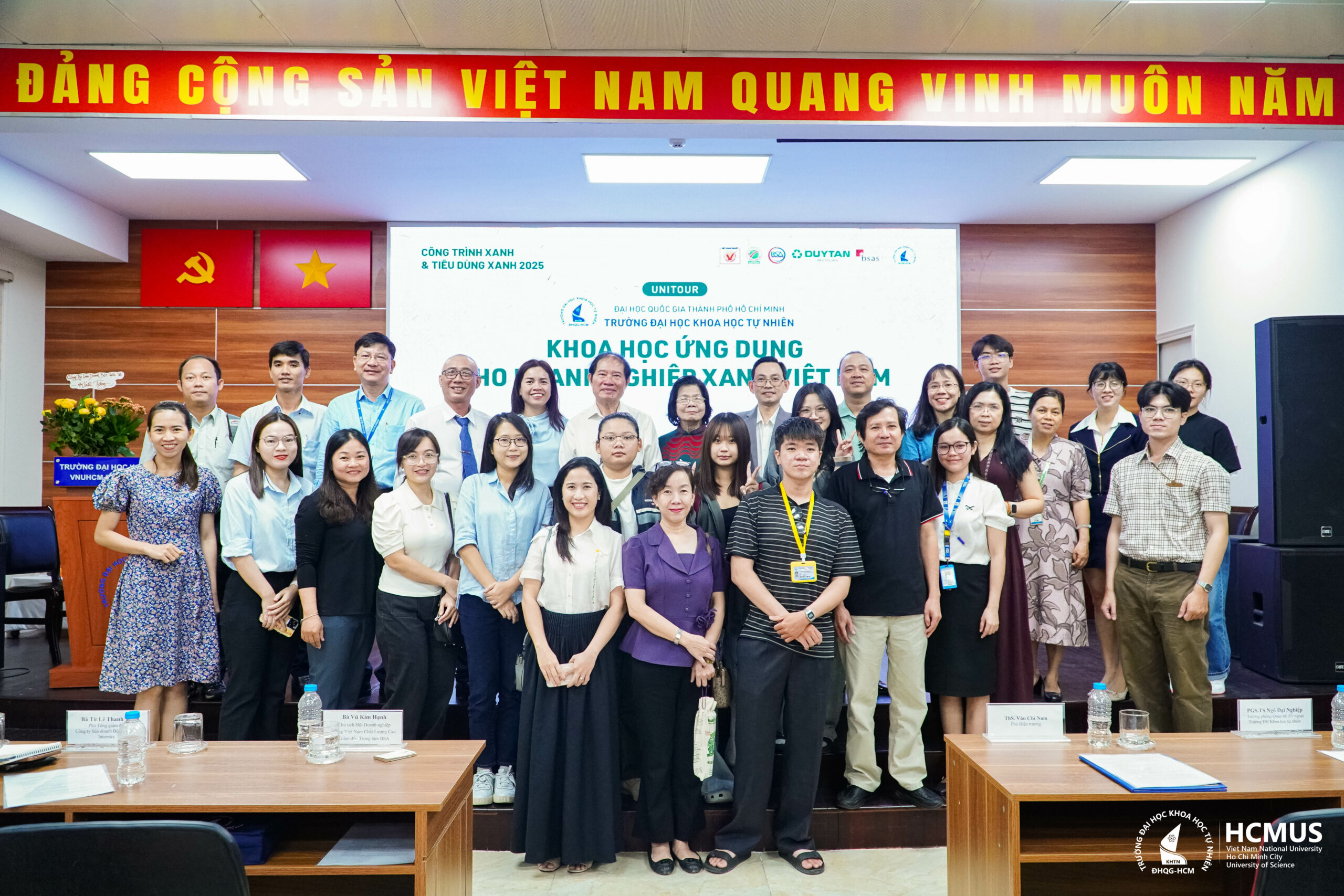
On 21 November, the High-Quality Vietnamese Goods Business Association (HQVGBA), in collaboration with VNUHCM-University of Science (HCMUS), organised a Unitour as part of the Green Building – Green Consumption Programme 2025–2026. The Unitour’s theme was ‘Applied Science for Green Enterprises in Viet Nam.’ The event aimed to promote the ‘triple helix’ cooperation model—university, enterprise, and governing agency—to integrate applied science into the process of green innovation, and simultaneously connect businesses with the future scientific and technological human resource pool.
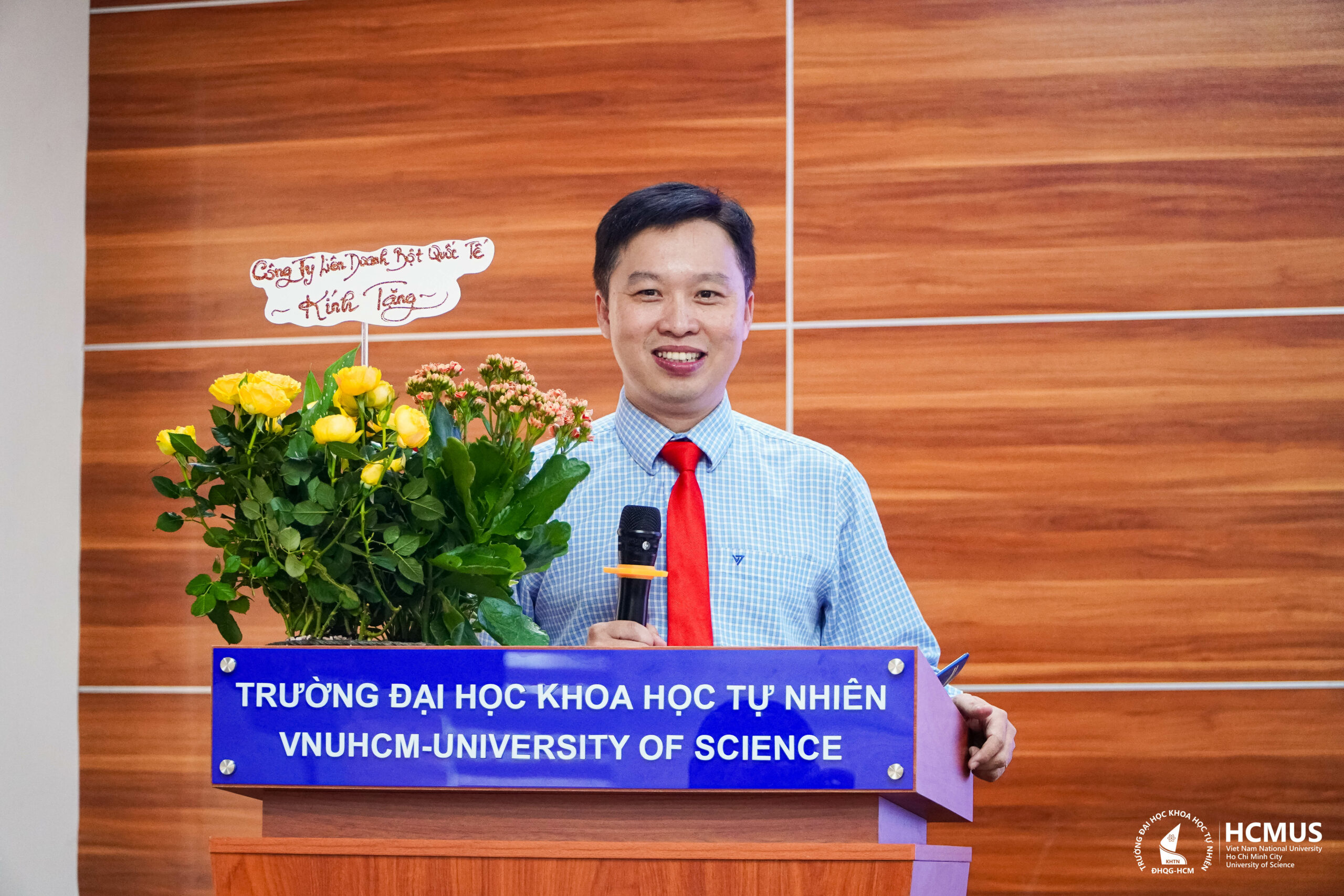
Speaking at the event, MSc. Văn Chí Nam—Vice President of the University—affirmed that the requirement to strengthen links between the government, academia, and enterprise is being emphasised in numerous national development strategies. According to the Vice President, the Unitour provided an opportunity for the parties to identify common ground, thereby fostering substantive cooperative projects. The Vice President stressed: “To meet the requirements of green transformation, the University’s research and training must also undergo a strong shift. We are preparing resources concerning infrastructure and staff, and stand ready to accompany enterprises in sustainable production, as well as solving technical problems arising from the green standards set by the market.”
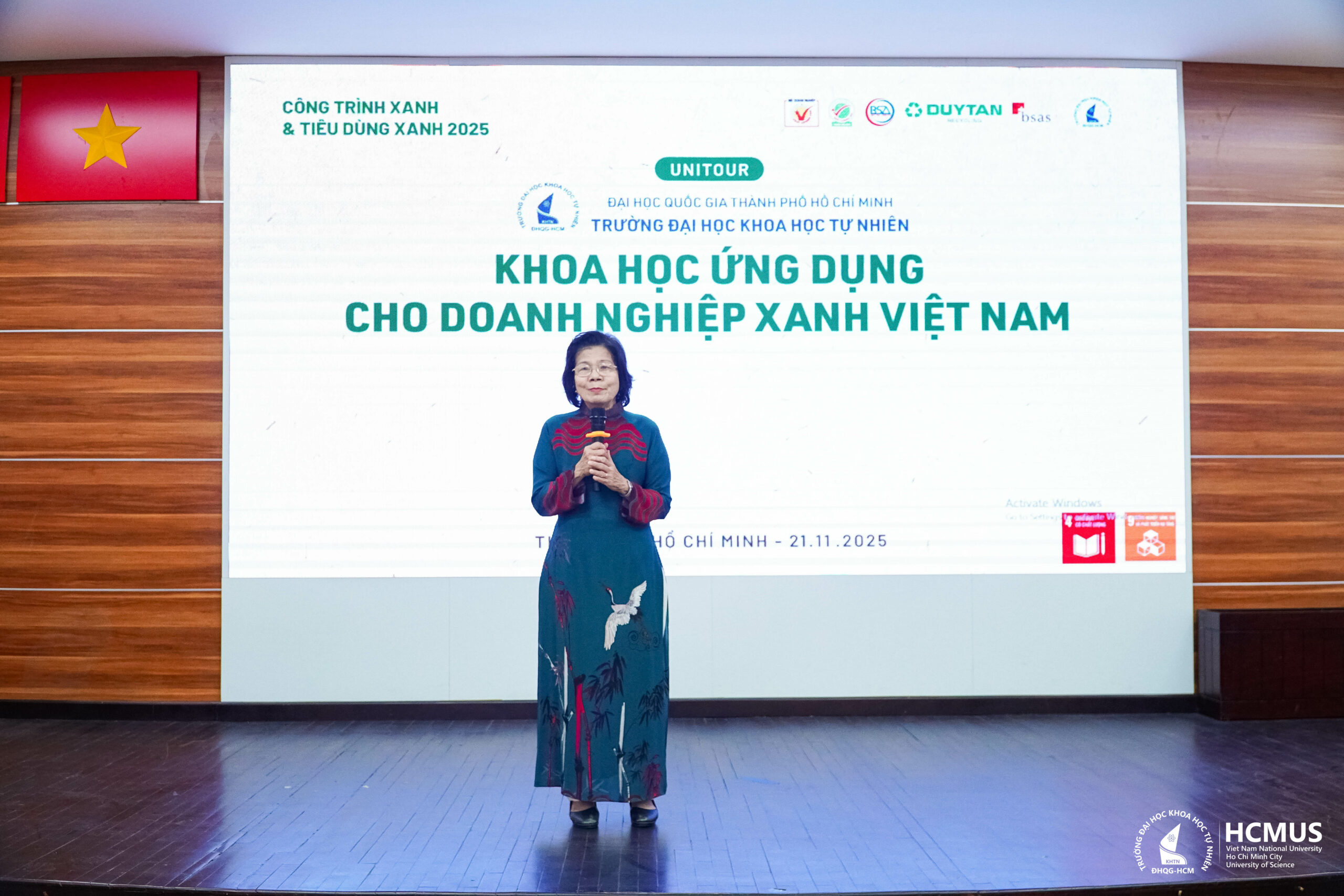
From the organising committee, Journalist Vũ Kim Hạnh—Chairwoman of HQVGBA—stated that the commitment between enterprises and research groups within the University will promote R&D activities and formulate new technological solutions. The Chairwoman stated that this activity is what sustains Vietnamese goods in general, and High-Quality Vietnamese Goods in particular.
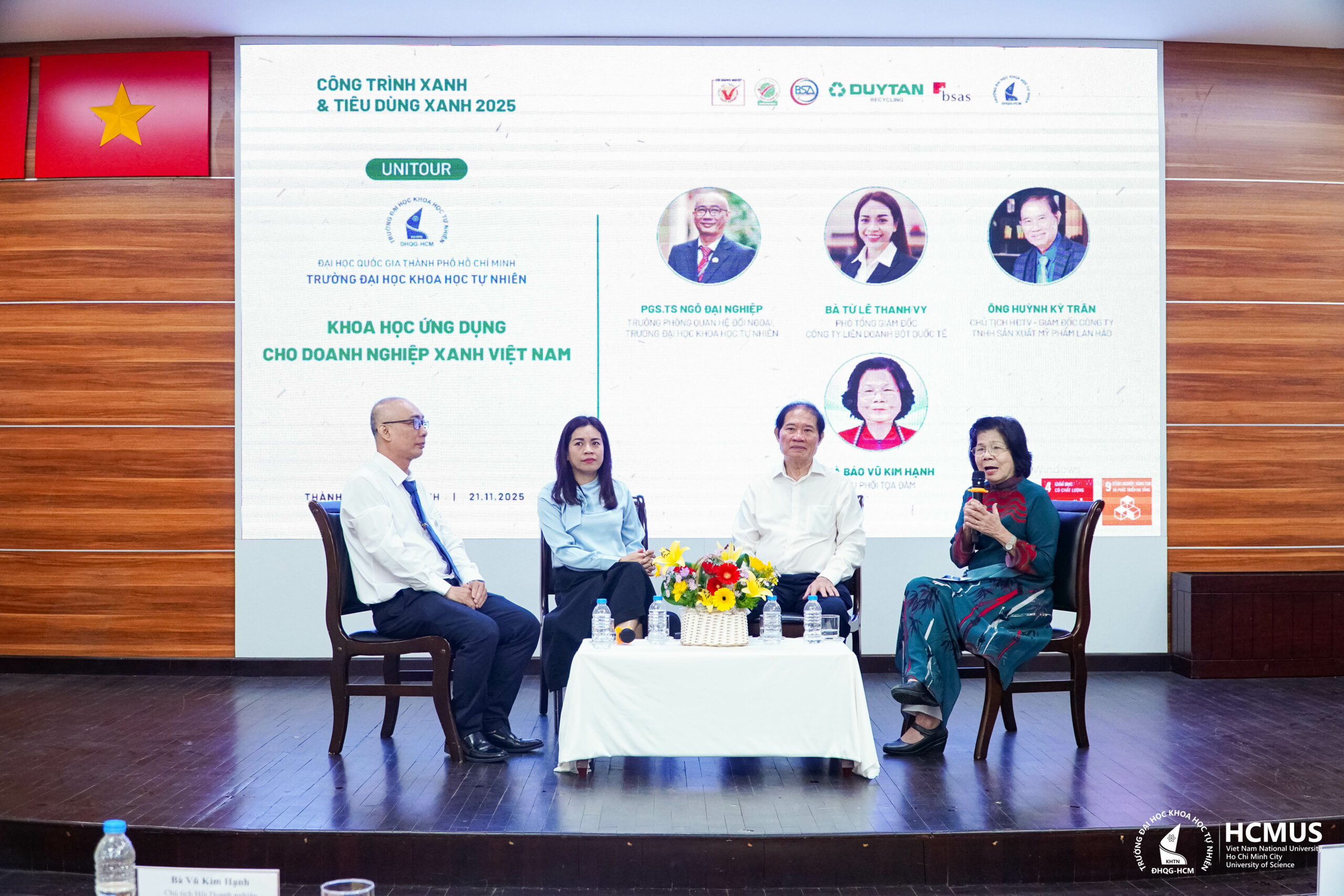
The highlight of the programme was the in-depth panel discussion chaired by Journalist Vũ Kim Hạnh, featuring Assoc. Prof. Ngô Đại Nghiệp – Head of the External Relations Office, HCMUS; Ms Từ Lê Thanh Vy – Deputy General Director of Intermix International Flour Joint Venture Company; and Dr Huỳnh Kỳ Trân – Chairman of the Members’ Council and Director of Lan Hảo Cosmetics Manufacturing Co., Ltd. The discussion focused on five key areas: enterprise R&D demands; the University’s capacity to meet those demands; the triple-helix cooperation model; high-quality human resources; and the future direction of green technology.
From the academic perspective, Assoc. Prof. Ngô Đại Nghiệp shared that HCMUS always values the spirit of lifelong learning and professional ethics—two competencies integrated into the University’s graduate output standards. The Professor analysed that enterprises and academia often have a ‘phase difference’ in goals—scientists pursue deep, long-term research, while enterprises require quick results to meet business strategies. The Professor emphasised: “Most research within the University is still limited to a laboratory scale. For commercialisation, enterprises need to participate early, collaborating right from the testing phase.”
From the market perspective, Ms Từ Lê Thanh Vy noted that the demand for product innovation is increasingly tied to criteria that are green, safe, and environmentally friendly. The company is actively seeking raw materials and processes aligned with green science to meet the increasingly stringent requirements of consumers and export markets.
According to Dr Huỳnh Kỳ Trân, the most important foundation for sustainable production is professional ethics. The doctor argued that the misuse of active ingredients, excessive advertising, or inflating product prices for luxurious packaging harms the community. The doctor stated: “Professionals must maintain boundaries, preserve reputation, and prioritise community benefit over immediate profit.”
The programme also created conditions for students to access enterprise realities, understanding recruitment requirements, internship criteria, and the necessary competencies when joining R&D teams in the fields of cosmetics, food, and the environment. This provided an opportunity for the participants to gain a clearer understanding of their future profession, while also opening up possibilities for participating in applied projects with enterprises.
The Unitour ‘Green Building – Green Consumption’ at VNUHCM-University of Science contributed to disseminating the spirit of sustainable development, while serving as a practical bridge between academic resources and the technological innovation needs of enterprises. The event not only supports enterprises in their green transformation but also contributes to training a high-quality scientific and technological workforce, meeting Viet Nam’s green growth strategy in the new era.
Leave a Reply