

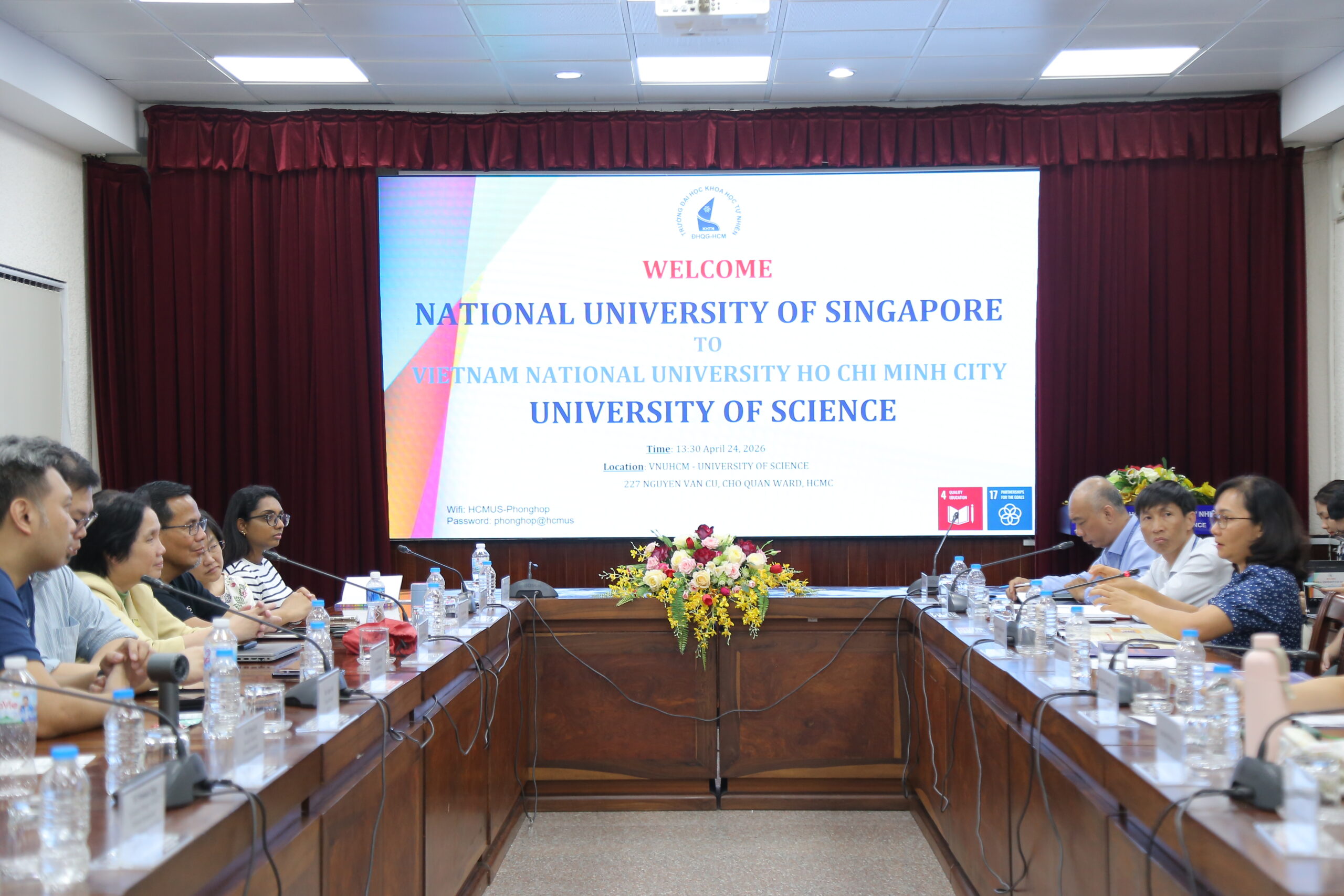
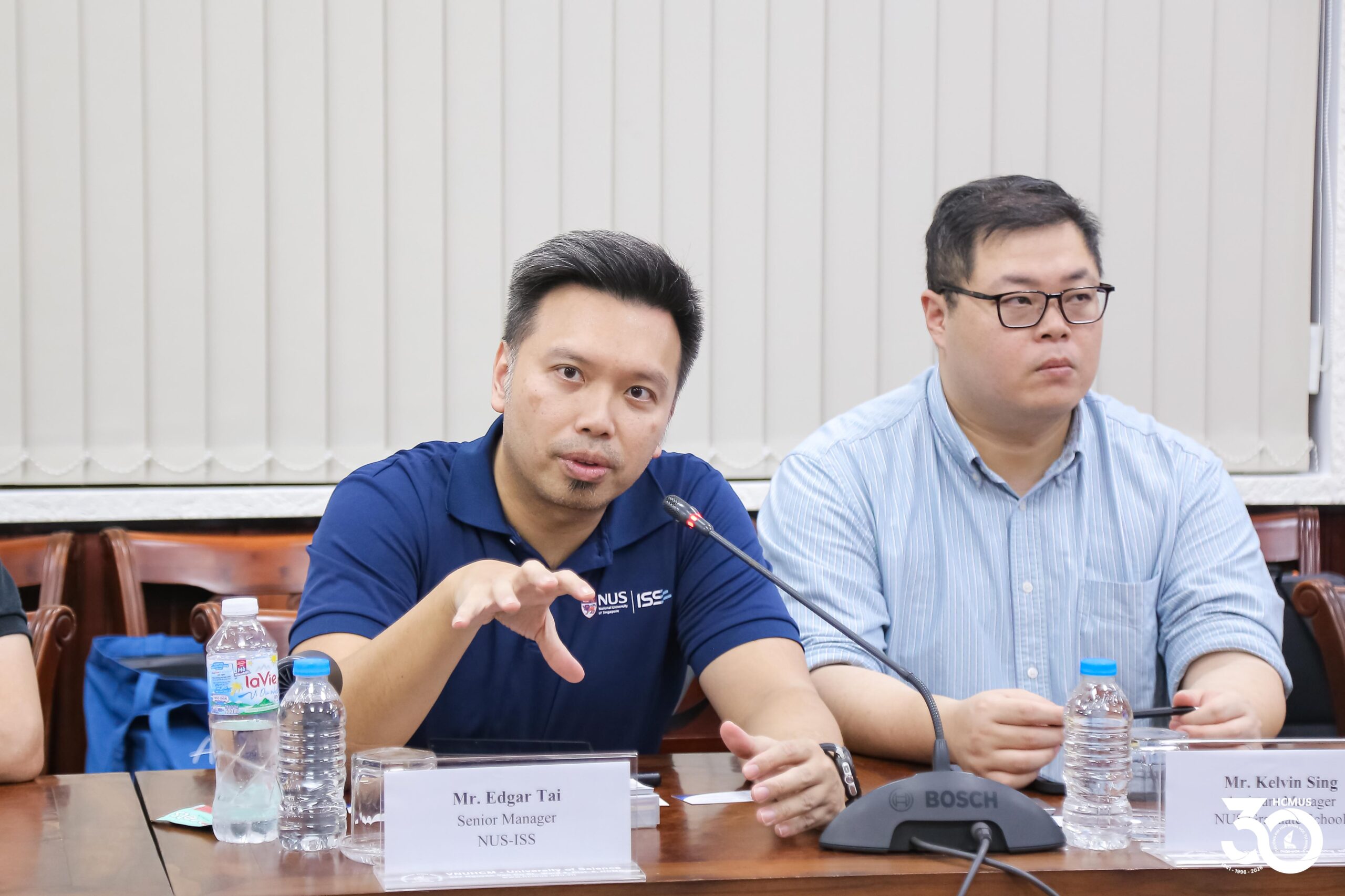
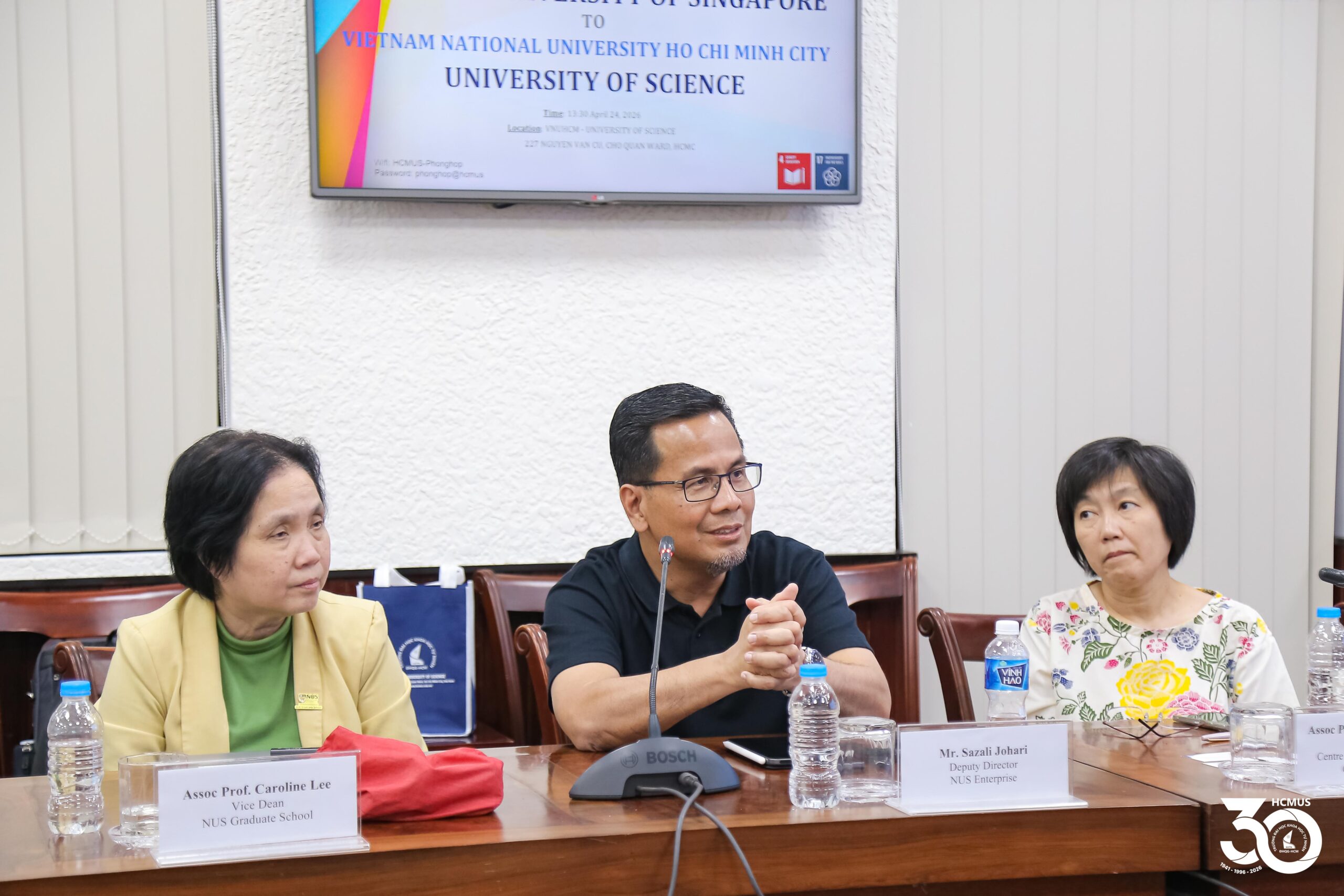
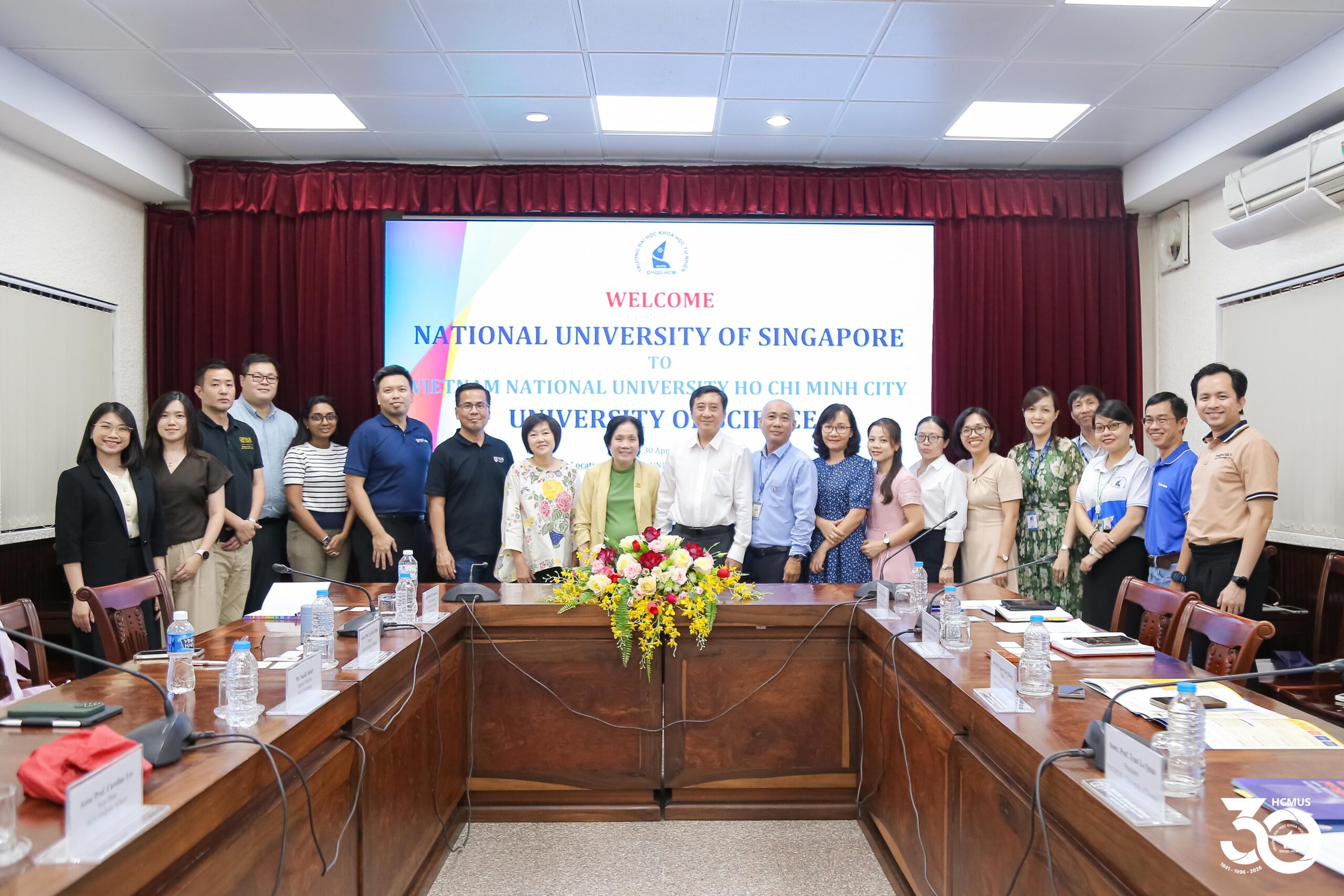
On the afternoon of 24 April 2026, VNUHCM–University of Science (HCMUS) hosted a delegation from the National University of Singapore (NUS), one of Asia’s leading higher education institutions, to discuss and promote future collaboration in academic education and research.
The NUS delegation comprised representatives from several specialised units, including the NUS Graduate School, the Centre for English Language Communication, NUS Enterprise, the NUS Institute of Systems Science, and the School of Continuing and Lifelong Education. The delegation was led by Associate Professor Caroline Lee, Vice Provost (Graduate Education) and Dean of the NUS Graduate School.
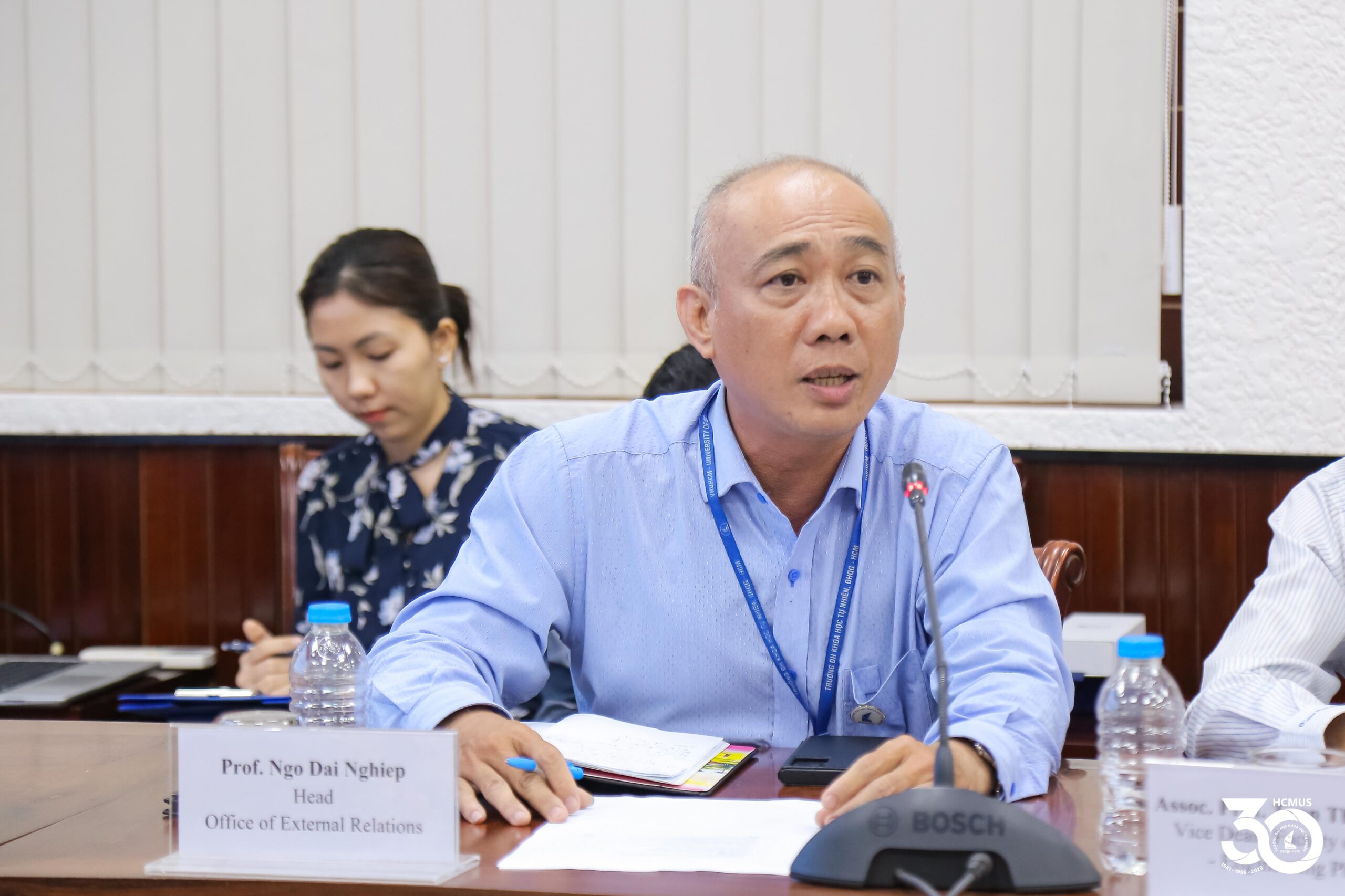
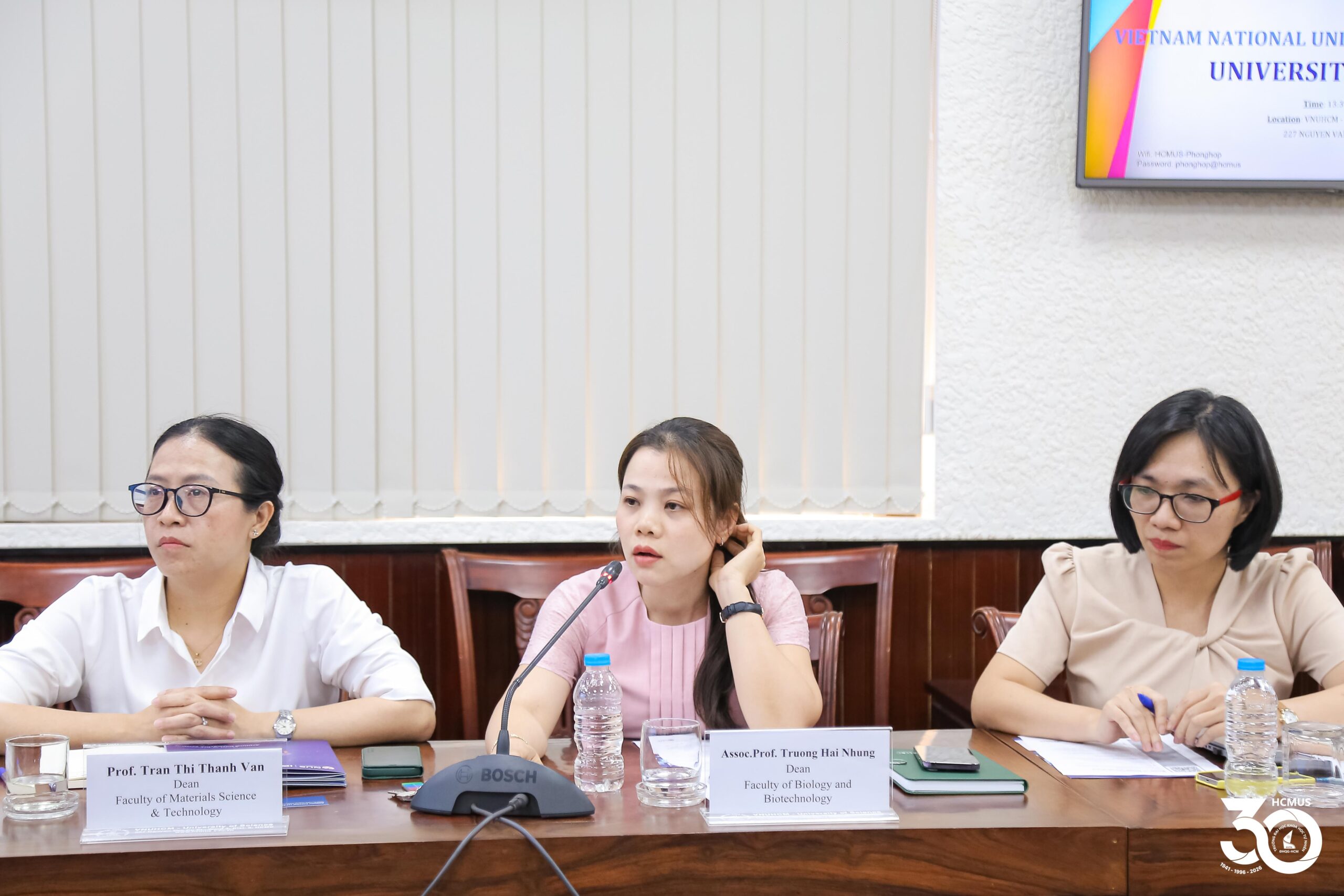
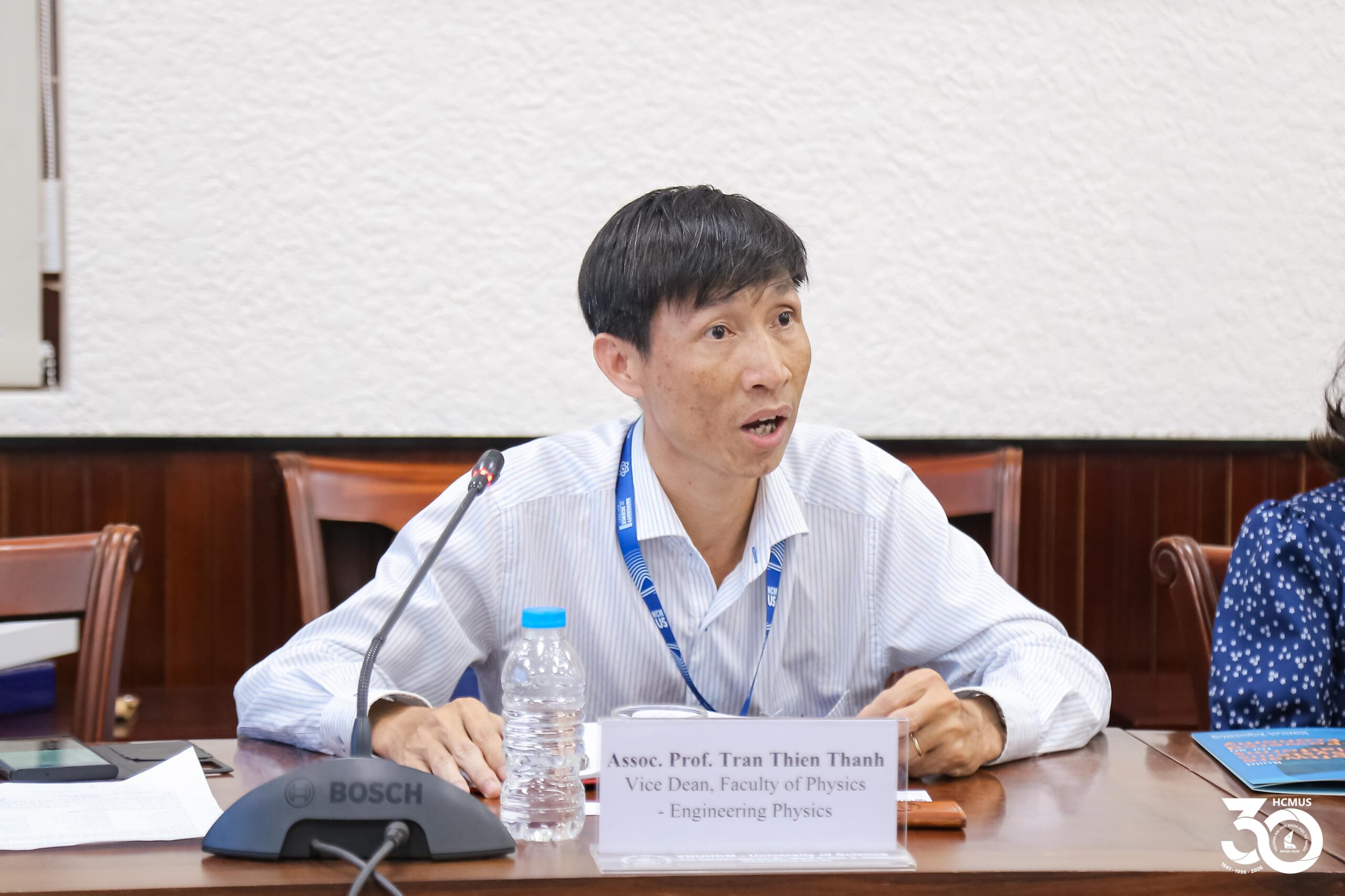
Representing HCMUS were Associate Professor Trần Lê Quan, President of the University; Professor Ngô Đại Nghiệp, Head of the External Relations Office; and leaders from the Faculties of Interdisciplinary Sciences, Physics and Engineering Physics, Environment, Geology, Materials Science and Technology, Biology and Biotechnology, and Information Technology.
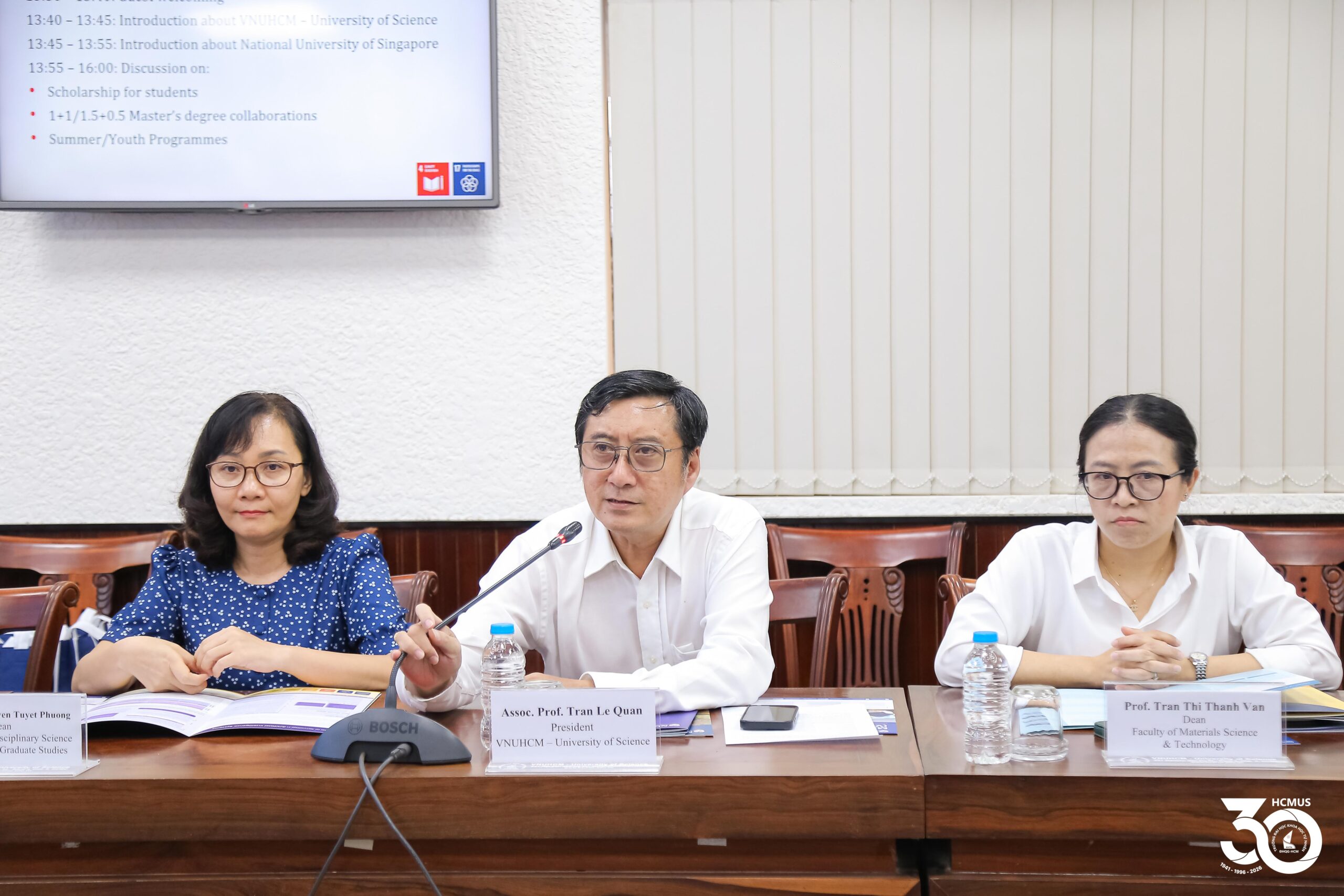
Speaking at the meeting, Associate Professor Trần Lê Quan emphasised the University’s commitment to developing academic programmes aligned with international integration. He noted that partnerships with prestigious institutions such as NUS play a vital role in enhancing the quality of postgraduate education. According to the President, establishing flexible joint models that address practical demands and emerging technological trends will broaden learning and research opportunities for students, particularly within interdisciplinary fields.
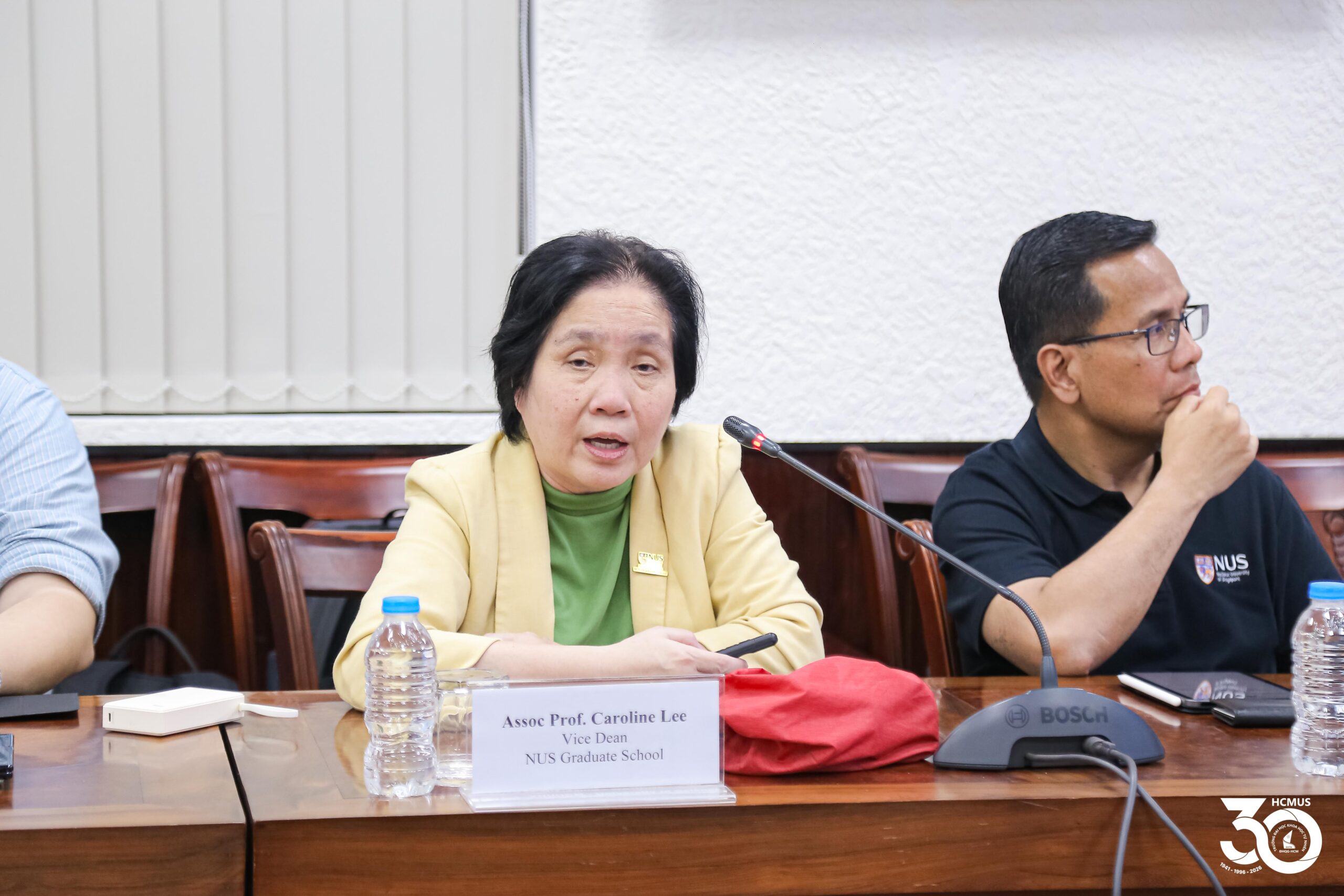
Representing NUS, Associate Professor Caroline Lee expressed high regard for the potential of collaboration with HCMUS, whilst sharing the NUS vision for postgraduate development focused on interdisciplinarity, technological integration, and internationalisation. She stated that NUS is prepared to coordinate the implementation of scholarship schemes, joint education programmes, and academic exchanges, aiming to build sustainable and profound collaborative models.
Discussions between the two institutions focused on three core areas of cooperation. The first involves postgraduate scholarship programmes provided by NUS, enabling students to access a world-class academic environment. The second concerns joint Master’s degree models, such as “1+1” or “1.5+0.5” structures, which optimise study duration and enhance educational efficiency. The third focus area includes summer programmes and short-term courses delivered by NUS Enterprise and affiliated units, designed to enhance practical experience, innovation, and global skills for students.
Furthermore, representatives from the Centre for English Language Communication introduced programmes to improve academic English proficiency, providing a necessary foundation for students participating in international schemes. Contributions from the NUS Institute of Systems Science and the School of Continuing and Lifelong Education also opened avenues for collaboration in digital skills education, lifelong learning, and short-term courses tailored to the needs of the contemporary labour market.
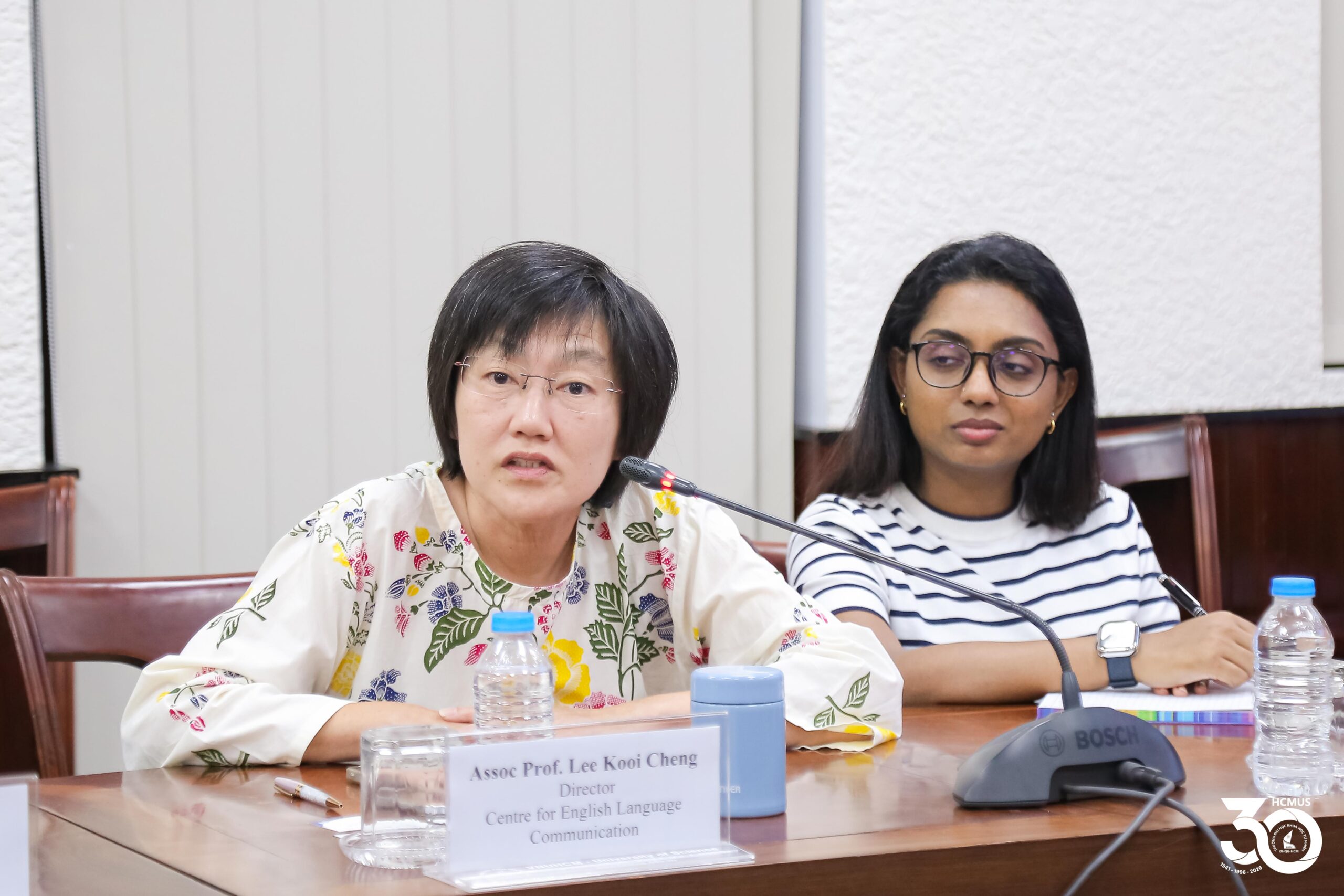
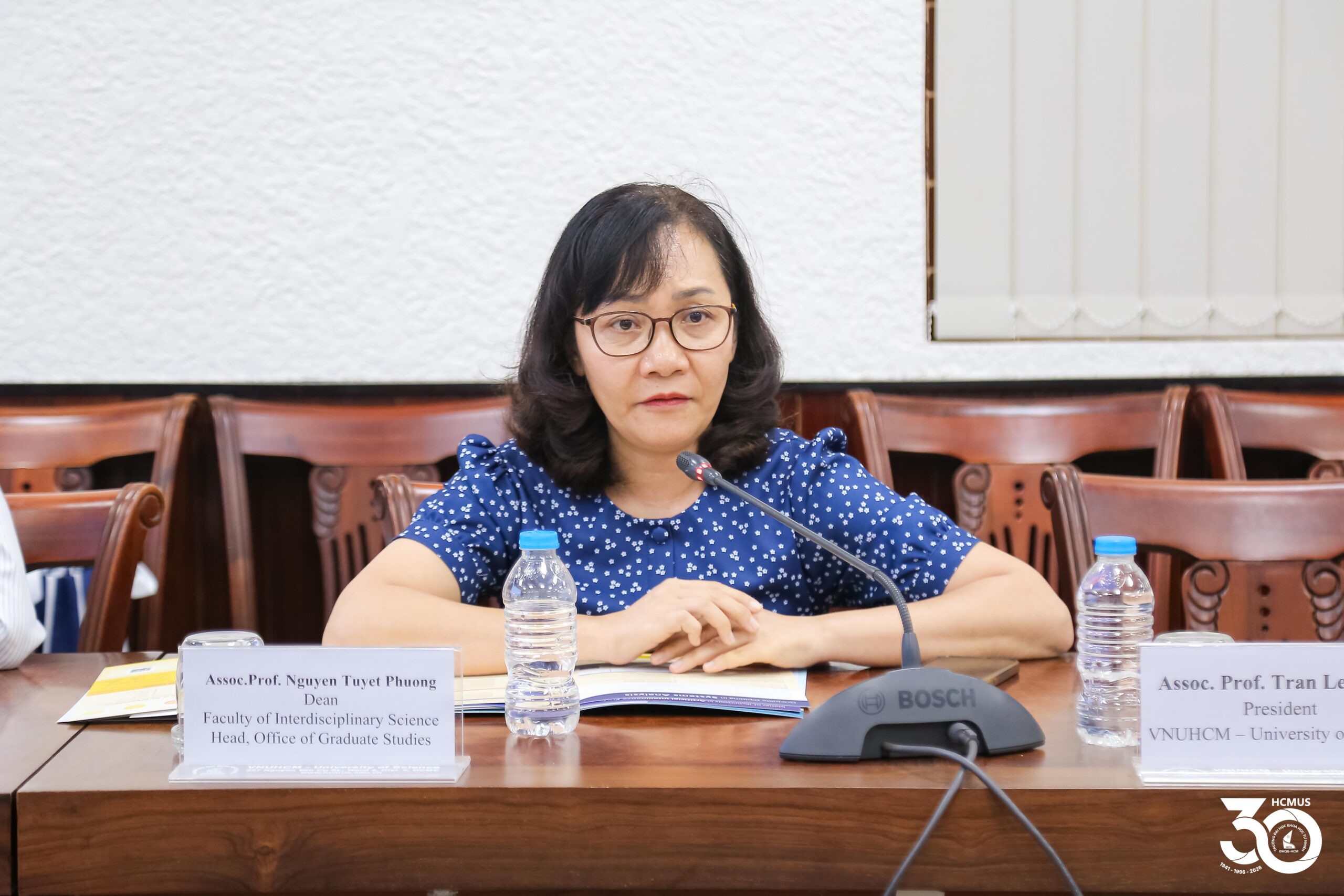
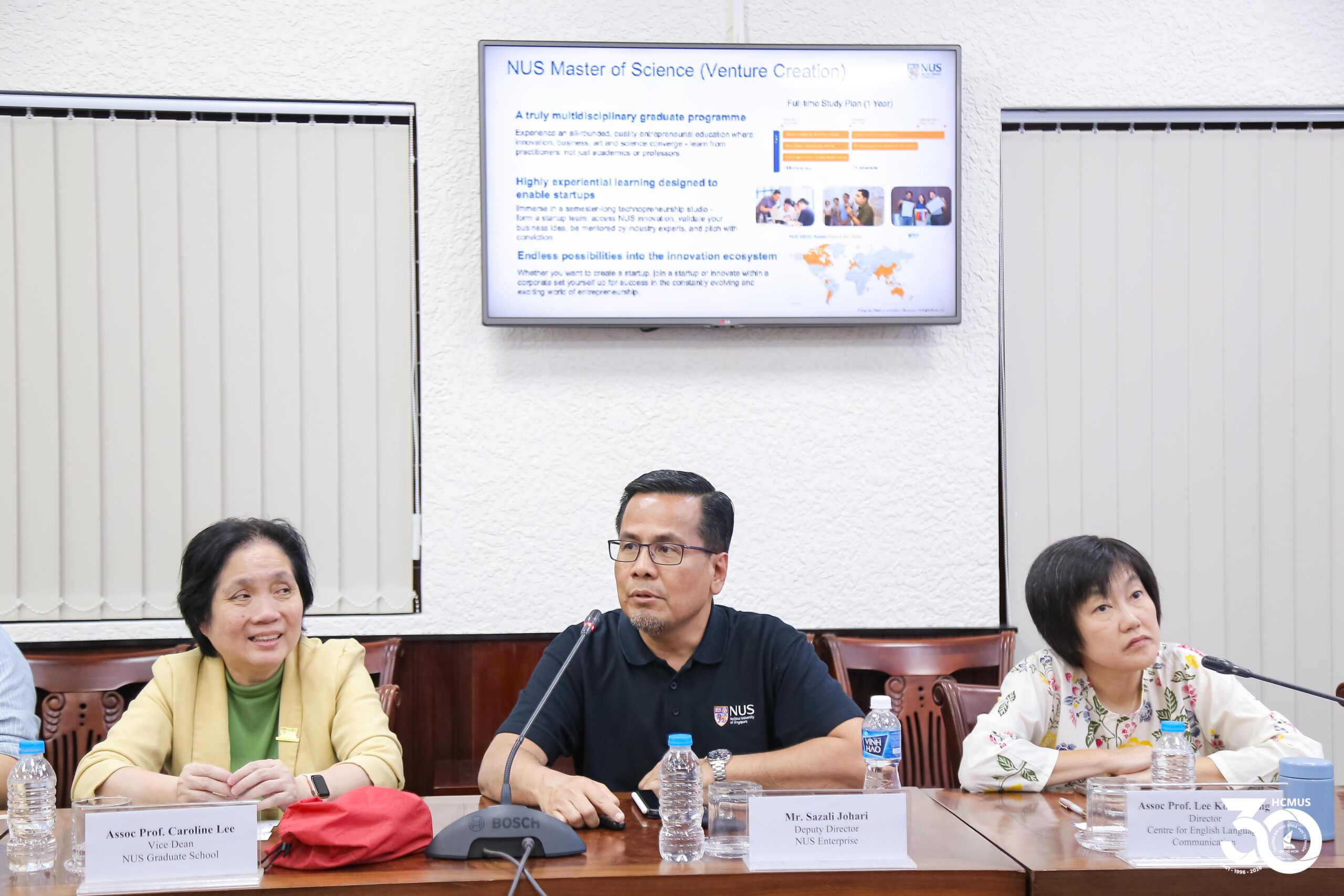
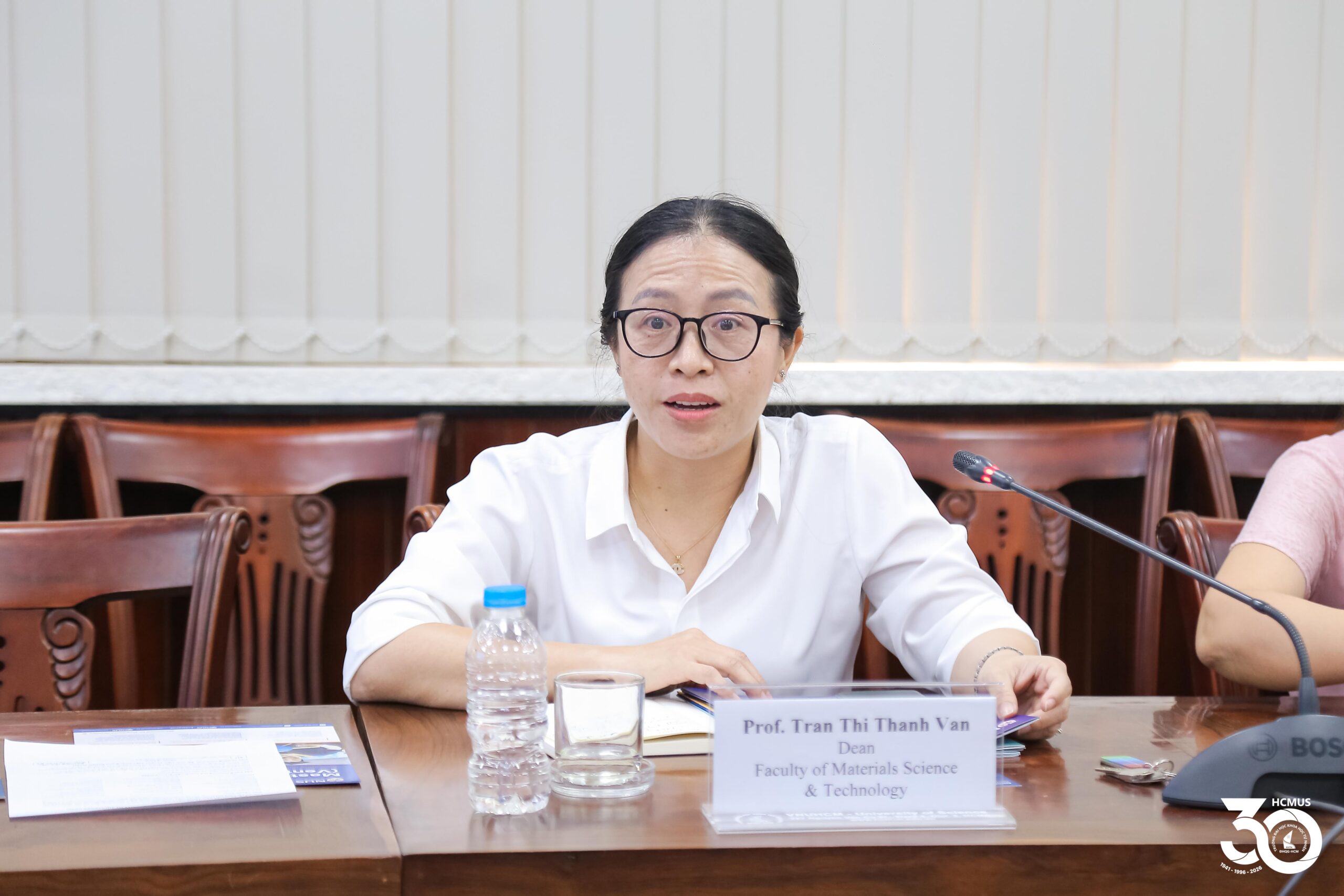
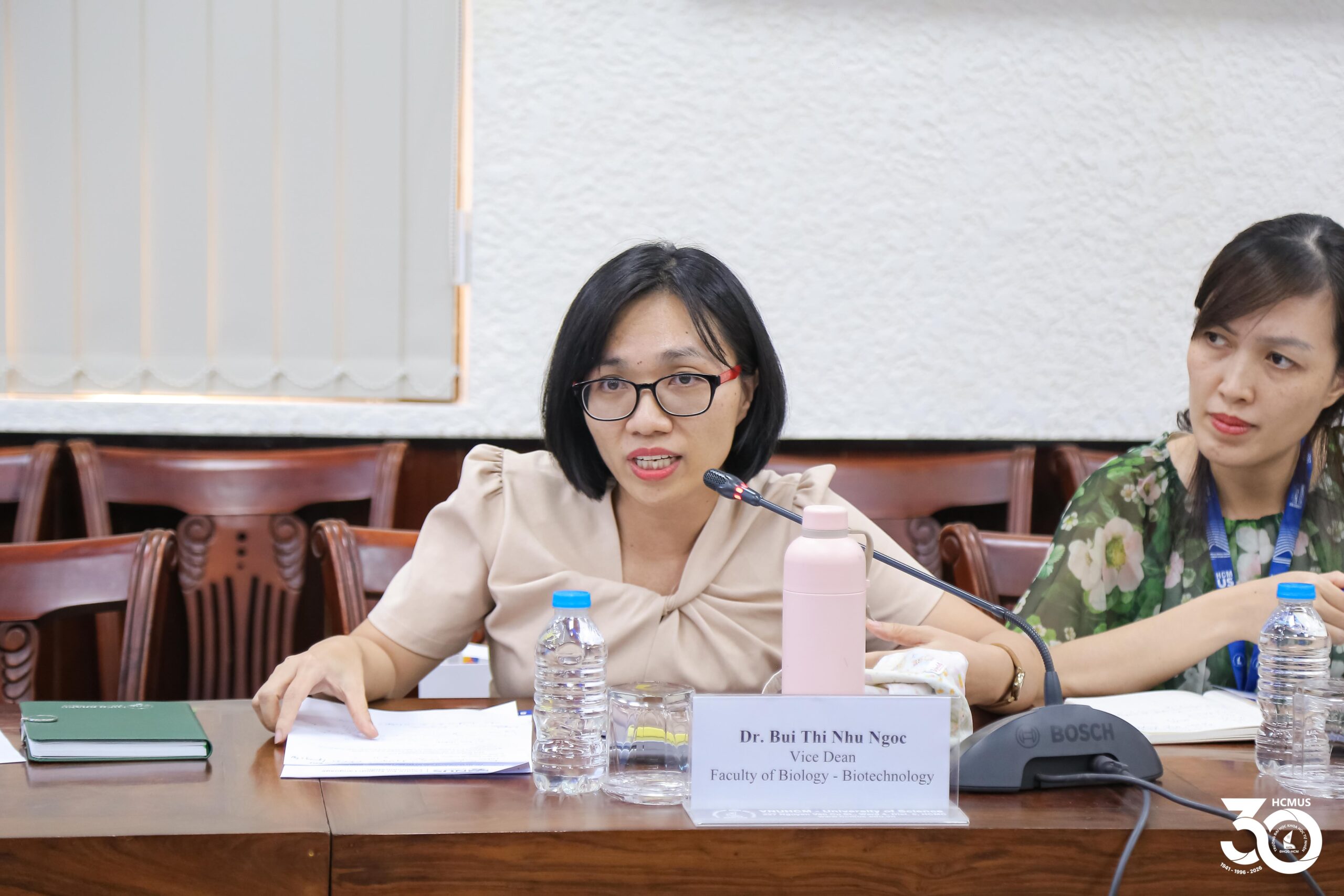
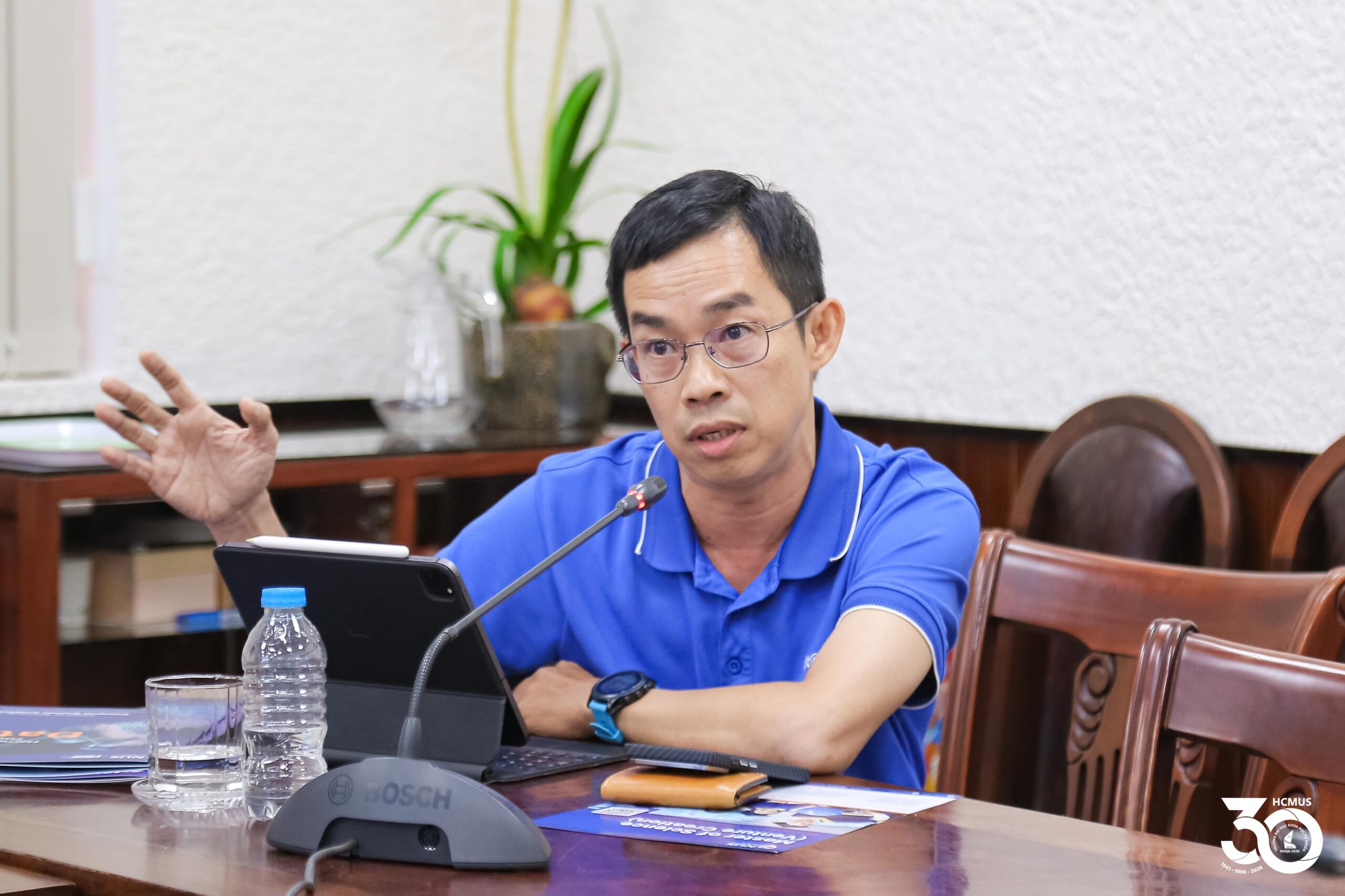
The proceedings focused on practical implementation, prioritising collaborative programmes with high feasibility that meet real-world requirements. Consequently, both parties agreed to maintain communication at the departmental level to gradually realise these collaborative initiatives. Particular emphasis will be placed on interdisciplinary sciences, materials science, environment, and biology-biotechnology, whilst increasing integration with information technology, machine learning, artificial intelligence, and data science.
This engagement represents a concrete step in the internationalisation strategy of VNUHCM–University of Science. This strategy aims to build flexible academic programmes and strengthen ties with regional and global academic networks, thereby expanding opportunities for students and enhancing the University’s standing in an increasingly competitive global knowledge landscape.
Leave a Reply