

![[OUTSTANDING ROLE MODELS] DR LÊ NGỌC NĂNG: FROM A PASSION FOR GEMSTONES TO A DOCTORATE IN GEOLOGY](https://en.hcmus.edu.vn/wp-content/uploads/2026/07/TS-Nang-3-1024x683-1.webp "TS-Nang-3-1024x683")
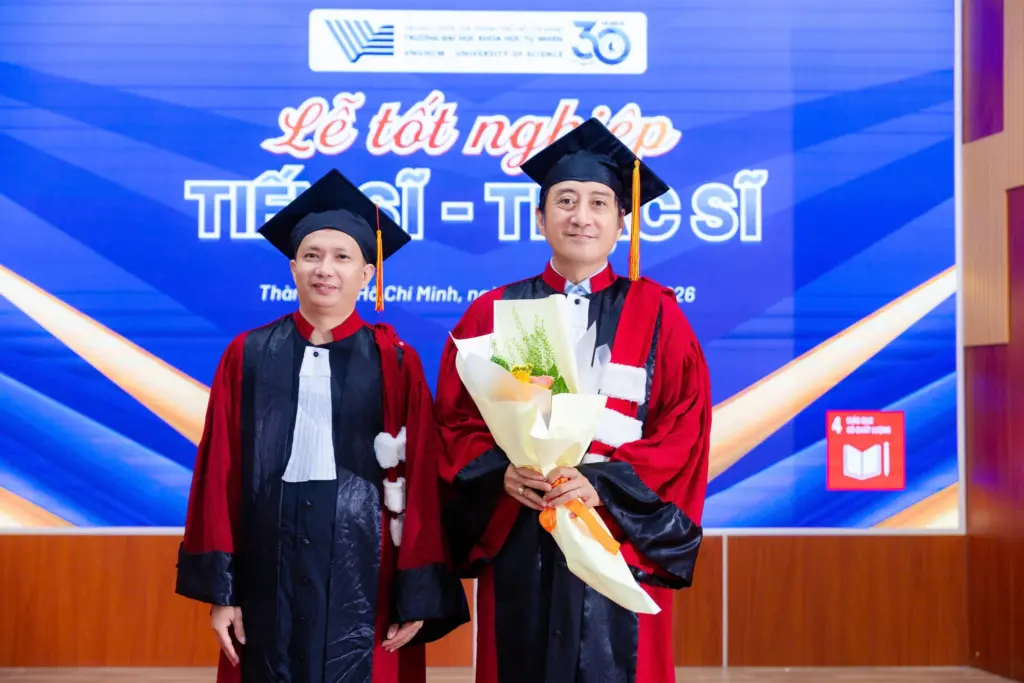
‘My initial motivation was not the pursuit of a degree, but rather stemmed from a passion for discovery and research.’ Driven by a fascination with the stories hidden behind each mineral, Lê Ngọc Năng has spent nearly two decades dedicated to the fields of gemmology, gemstone identification, and scientific research. In 2026, Dr Lê Ngọc Năng became the first doctoral graduate in Geology from VNUHCM–University of Science (HCMUS).
Geology offers profound inspiration for continuous exploration and research
Entering university in 2003, Lê Ngọc Năng had yet to fully envision a future career path. At the time, thoughts regarding Geology were quite simple: opportunities to travel widely, explore forests and mountains, observe nature, and discover new things.
‘That very excitement drove my decision to enrol. Later on, through fieldwork that brought closer contact with nature and professional work, my attachment to this field grew deeper,’ Dr Lê Ngọc Năng recalls.
Field trips during university years provided a step-by-step understanding that every soil layer, rock sample, or mineral holds information about the history of formation and movement of the Earth. Initial curiosity, therefore, expanded beyond a mere appreciation of nature, developing into a need for systematic study.
Following graduation in Mineral Resources in 2007, professional work began in the gemstone industry as a gemmological specialist. At that time, the gemstone identification sector in Viet Nam was relatively nascent. In Ho Chi Minh City, there were only about three to four gemstone testing laboratories and a single diamond grading lab. A shortage of specialized human resources, research data, and dedicated institutions presented challenges, yet simultaneously unlocked a highly promising career path for young individuals interested in gemmology.
In mid-2017, after accumulating substantial experience, the LIU Gemmological Research and Application Centre was founded, with Lê Ngọc Năng serving as Director ever since.
Identification work enabled contact with various types of gemstones, whilst prompting further questions regarding the characteristics, origin, and formation process of each specimen. For Dr Lê Ngọc Năng, a gemstone is defined by more than colour, clarity, or commercial value. Structural features, composition, and physical properties preserve traces of geological processes that took place long ago.
‘Geology provides immense motivation to continue exploring and conducting research. Even after graduating and entering the workforce, time was constantly dedicated to self-directed research and learning,’ shares Dr Lê Ngọc Năng.
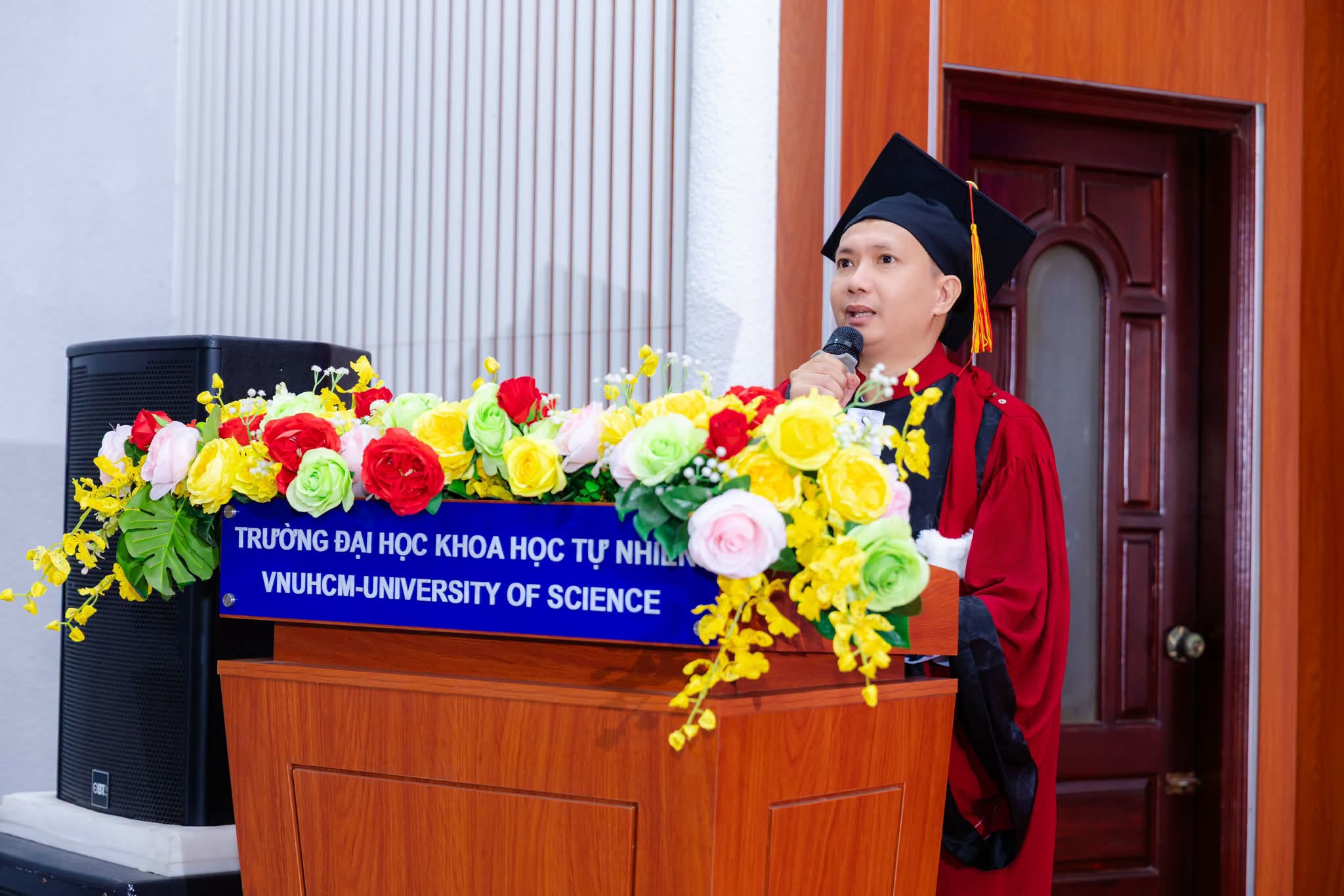
Returning to academia to address practical challenges
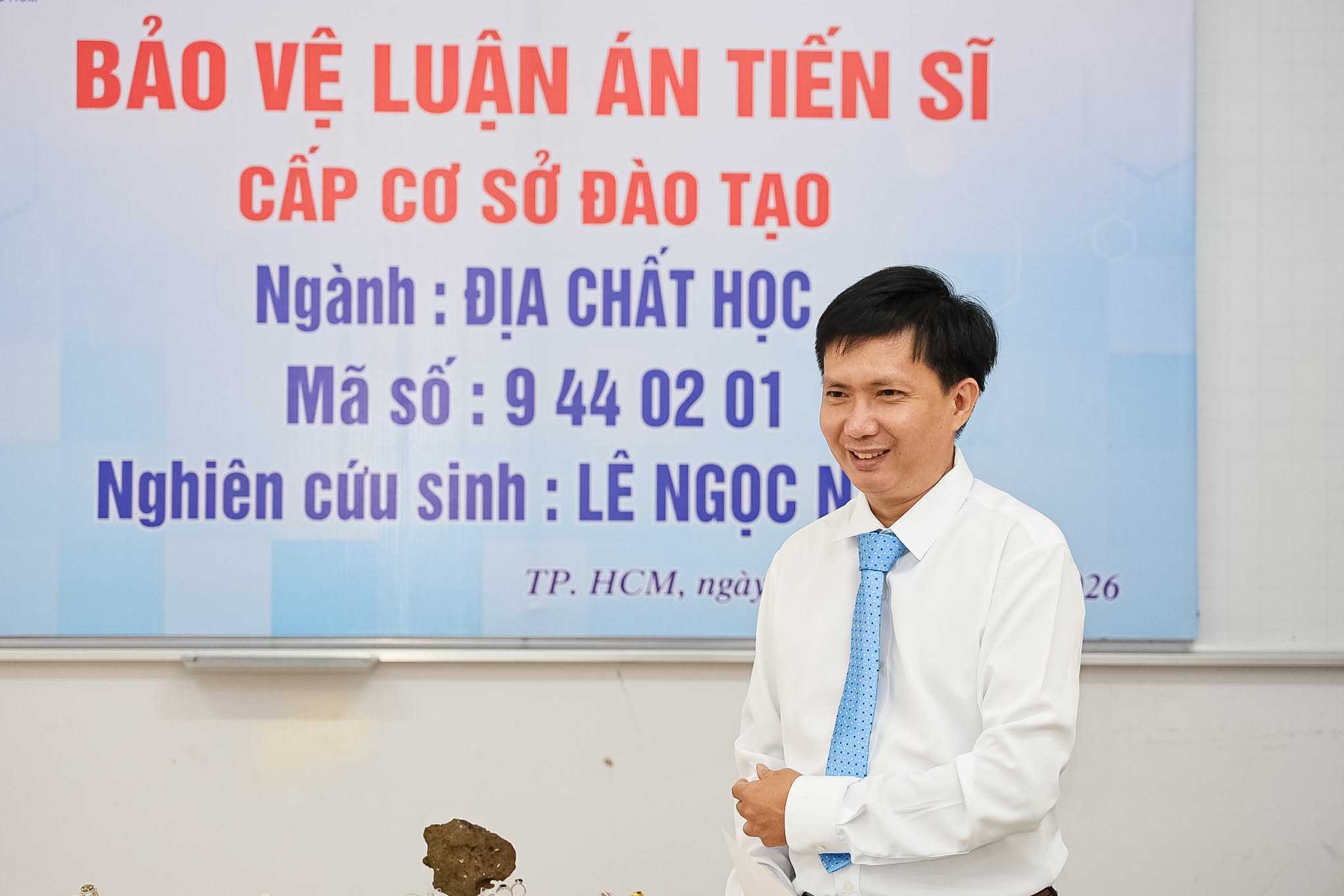
In 2023, Lê Ngọc Năng embarked on the doctoral training programme in Geology at HCMUS. The chosen research topic was ‘Mineralogical, gemmological characteristics and origin of gemstones associated with basalts in the Southeast region, Viet Nam’, under the academic supervision of Associate Professor Phạm Trung Hiếu.
The thesis focuses on investigating the mineralogical, gemmological characteristics and origin of gemstones related to Cenozoic basalt formations widely distributed across the Southeast region. By combining geological, petrological, and geochemical research methods with modern gemmological and spectroscopic analysis techniques, the study identified seven mineral types suitable for use as gemstones: sapphire, zircon, pyrope (garnet), anorthoclase (alkali feldspar), augite, brown peridot, and opal. Findings indicate that gemstones in the region generally share mineralogical and gemmological features comparable to characteristics documented globally. Nevertheless, certain notable differences were discovered, contributing valuable scientific data and refining the criteria for identifying and assessing the quality of basalt-associated gemstones in Viet Nam.
Alongside the thesis, Dr Lê Ngọc Năng has published seven scientific papers in prestigious domestic and international journals, demonstrating a rigorous approach and robust research capacity within the fields of geology and gemmology.
According to Dr Lê Ngọc Năng, the greatest challenge during doctoral studies was limited time. Research progressed alongside professional duties and personal responsibilities, requiring a long-term plan, the division of tasks into smaller stages, and regular adjustments to the timeline. Support from family and colleagues also proved vital in sustaining academic and research commitments.
An academic environment expanding research capabilities
Having received continuous education from undergraduate to doctoral level at HCMUS, Dr Lê Ngọc Năng notes that the learning and research environment at the university is built upon foundations of rigour, transparency, and responsibility. In the view of Dr Lê Ngọc Năng, although laboratory facilities and research spaces still face certain constraints, the quality of education, scientific spirit, academic integrity, and humanistic values have always been preserved and promoted across generations of learners.
Throughout the thesis preparation, guidance from faculty members along with domestic and international research collaboration networks supported academic exchange, specialized sample analysis, and the publication of scientific findings.
Drawing from personal experience, Dr Lê Ngọc Năng encourages passionate undergraduate and postgraduate students to confidently engage in scientific research, while proactively preparing specialized knowledge, foreign languages, research skills, and data analysis capabilities.
‘This path is not always smooth, as research demands perseverance, a willingness to learn, and the resilience to overcome setbacks. However, every achieved result is meaningful, representing a contribution to knowledge and national development,’ Dr Lê Ngọc Năng reflects.
Leave a Reply