

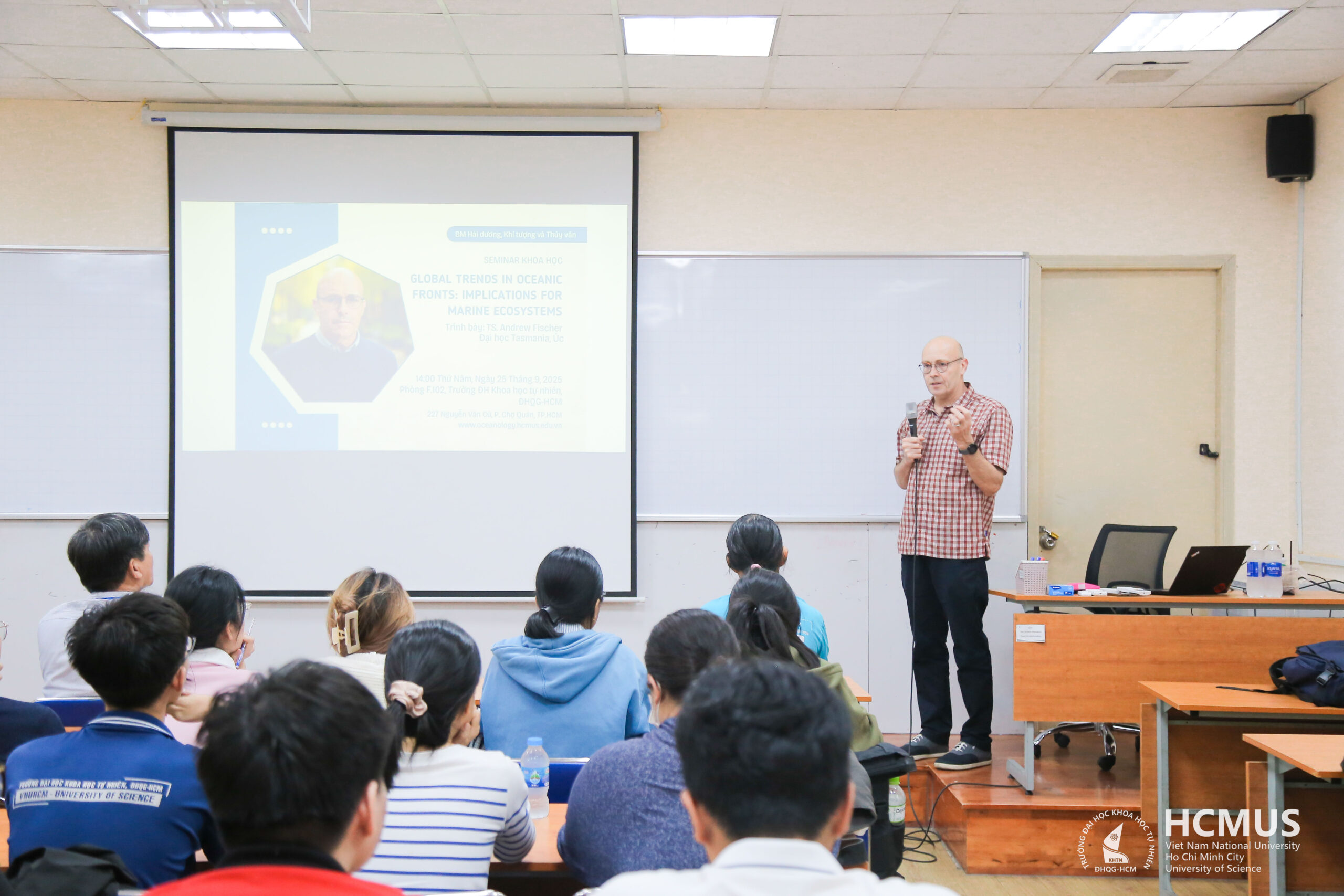
On 25 September, the Faculty of Physics and Engineering Physics at VNUHCM–University of Science hosted a scientific seminar entitled “Global Trends in Oceanic Fronts: Implications for Marine Ecosystems”, presented by Dr Andrew Fischer.
Dr Fischer is a specialist in marine and coastal ecology and biodiversity. His research focuses on coastal dynamics, including harmful algal blooms, the transport and transformation of materials from land to ocean, and the conservation of marine ecosystems.
In his presentation, Dr Fischer shared findings from studies led by Phuc Le and Dr Kai Yang under his supervision, examining the impact of climate change on ocean dynamics. Oceanic fronts—the boundaries separating water masses with different properties—play a crucial role in material transport, nutrient distribution, and the overall balance of marine ecosystems.
Analyses of data spanning the past two decades reveal a decline in the frequency of fronts across many global “hotspots”—regions of strong ocean dynamics, nutrient convergence, and high biological productivity. This trend correlates with a reduction in chlorophyll concentration, a key indicator of oceanic primary productivity, with further consequences for carbon dioxide absorption.
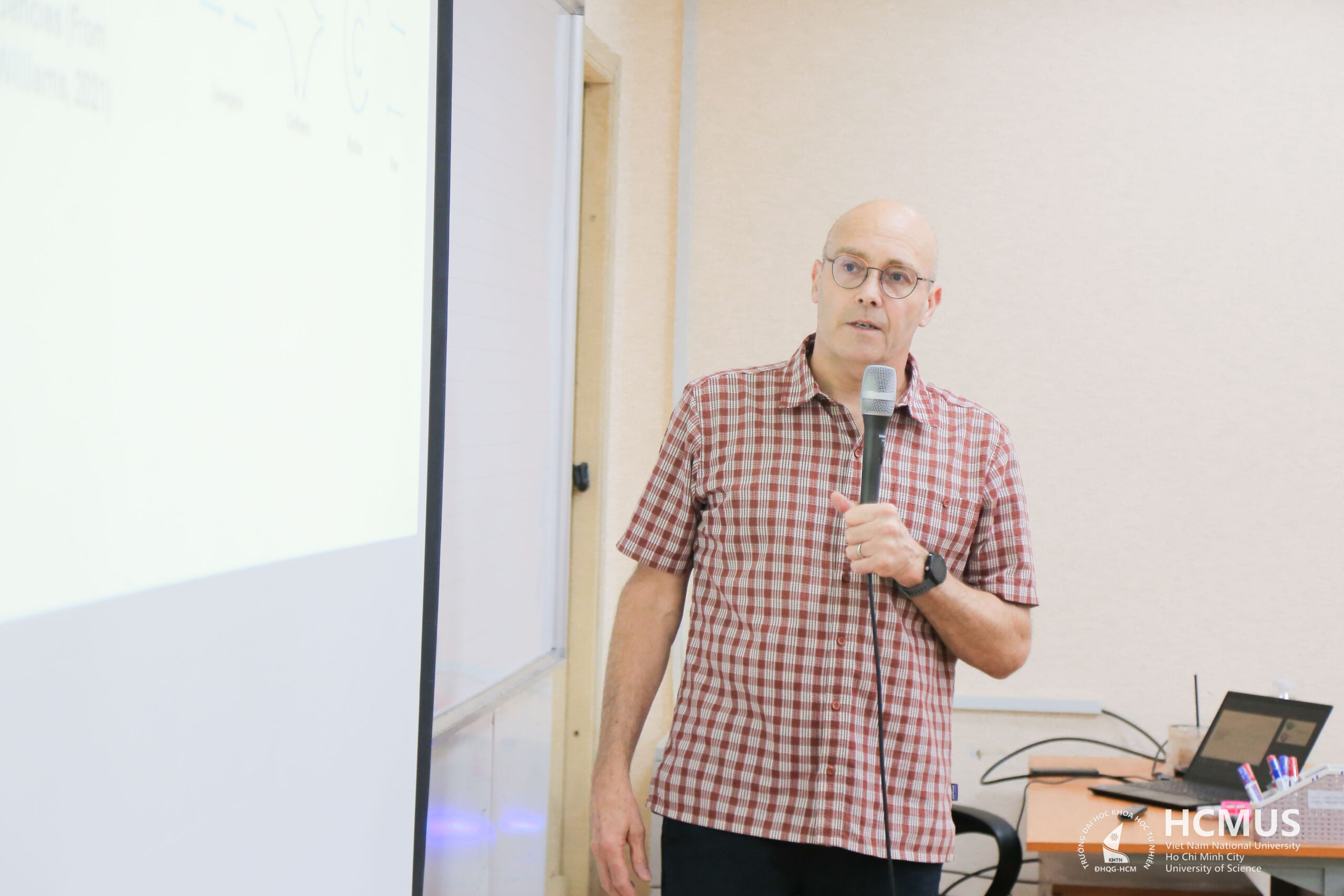
According to Dr Fischer, this decline not only threatens marine productivity but also directly undermines the ocean’s capacity to absorb CO₂. He emphasised: “The reduction in chlorophyll concentration in tropical and subtropical regions signals a potential decline in fisheries production in the future—areas where much of the world’s population is concentrated.” This finding highlights the close link between climate change, food security, and marine resource management.
The research team has also developed statistical models to predict “hotspots” of floating debris accumulation, identifying areas at highest risk. The combined challenges of weakening oceanic fronts, decreasing biological productivity, and increasing plastic accumulation pose significant concerns for ocean management—particularly for sustainable fisheries and ecosystem conservation in the context of global climate change.
TMT _ Translated by PMN
Leave a Reply