

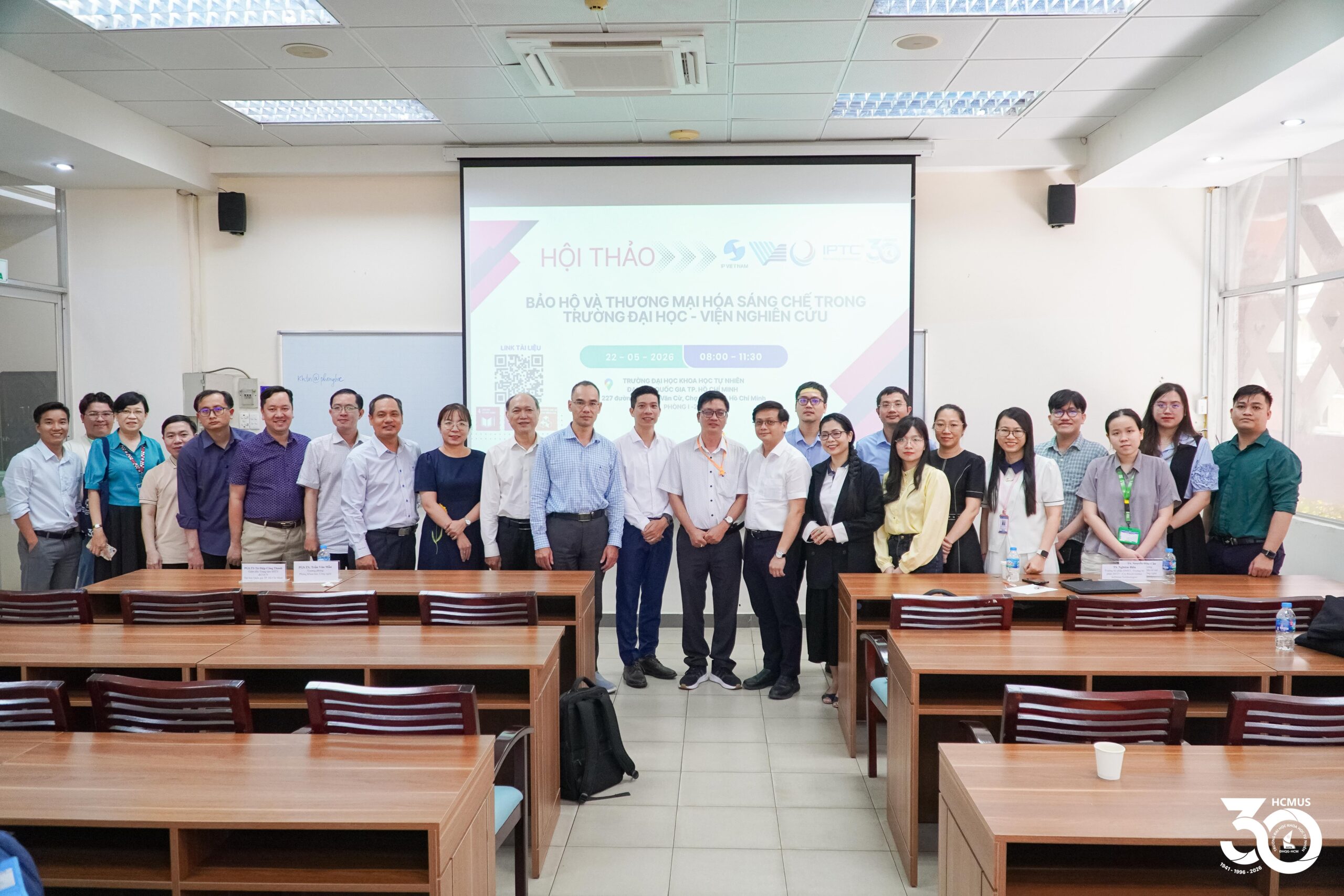
On 22 May 2026, a symposium themed ‘Patent Protection and Commercialisation in Higher Education and Research Institutes’ was hosted at VNUHCM–University of Science (HCMUS). The event aimed to raise awareness and catalyse the registration, management, and commercialisation of intellectual property derived from scientific, technological, and innovative activities within the higher education and research sectors.
The symposium was jointly organised by the Intellectual Property and Technology Transfer Center (IPTC) of Viet Nam National University Ho Chi Minh City – University of Science, and the Center for Research, Training, Support and Advisory Services under the Intellectual Property Office of Viet Nam (Ministry of Science and Technology). The event attracted a large audience of lecturers, scientists, intellectual property experts, and students interested in research, innovation, and technology transfer.
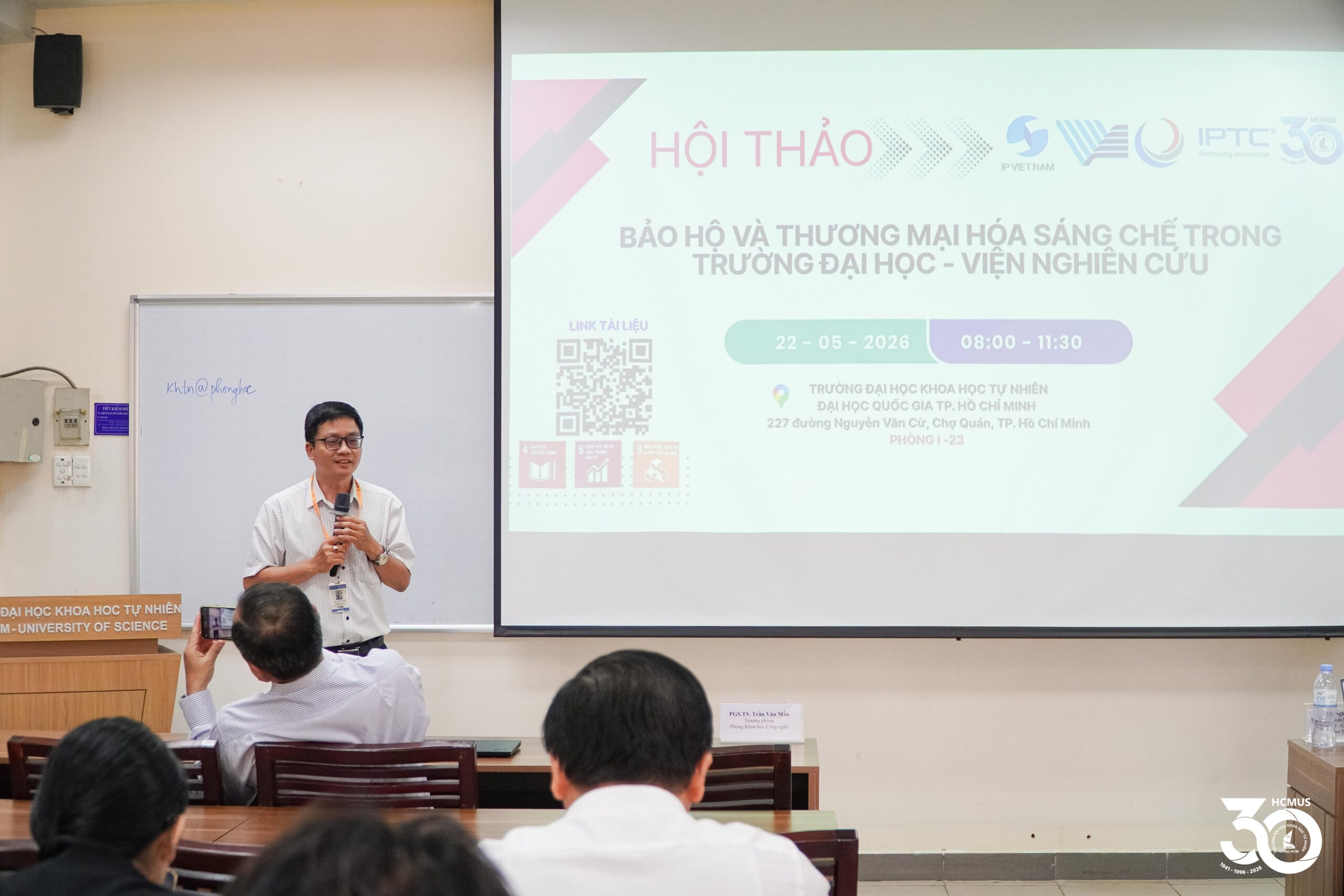
Addressing the symposium, speakers emphasised the escalating importance of intellectual property, noting that scientific research must transcend academic publication to foster intellectual assets with practical exploitation value. Such assets are vital for enhancing competitiveness, driving innovation, and developing a knowledge-based economy.
Session 1: Identifying Intellectual Property Formed from Research Activities: Practical Experiences
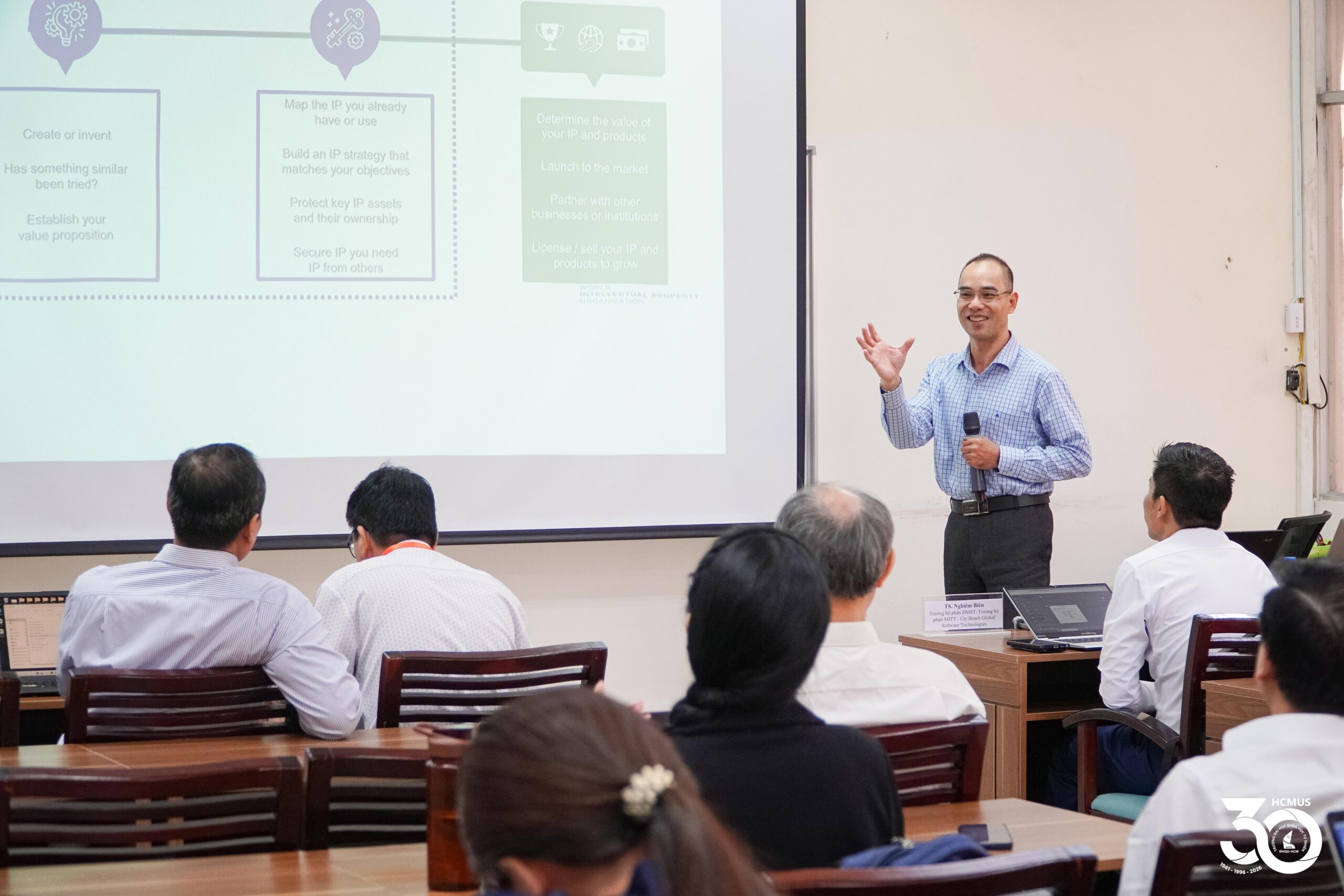
In the session titled ‘Identifying Intellectual Property Formed from Research Activities: Practical Experiences’, Dr Nghiêm Biên—Head of Innovation and Head of Intellectual Property at Bosch Global Software Technologies—offered a corporate perspective on identifying intellectual property within research and development (R&D) activities. The presentation highlighted that a single research output often encompasses multiple layers of intellectual property rights, such as patents, trade secrets, copyright, industrial designs, or trademarks; therefore, identifying the true nature of the output is essential to choosing the appropriate form of protection.
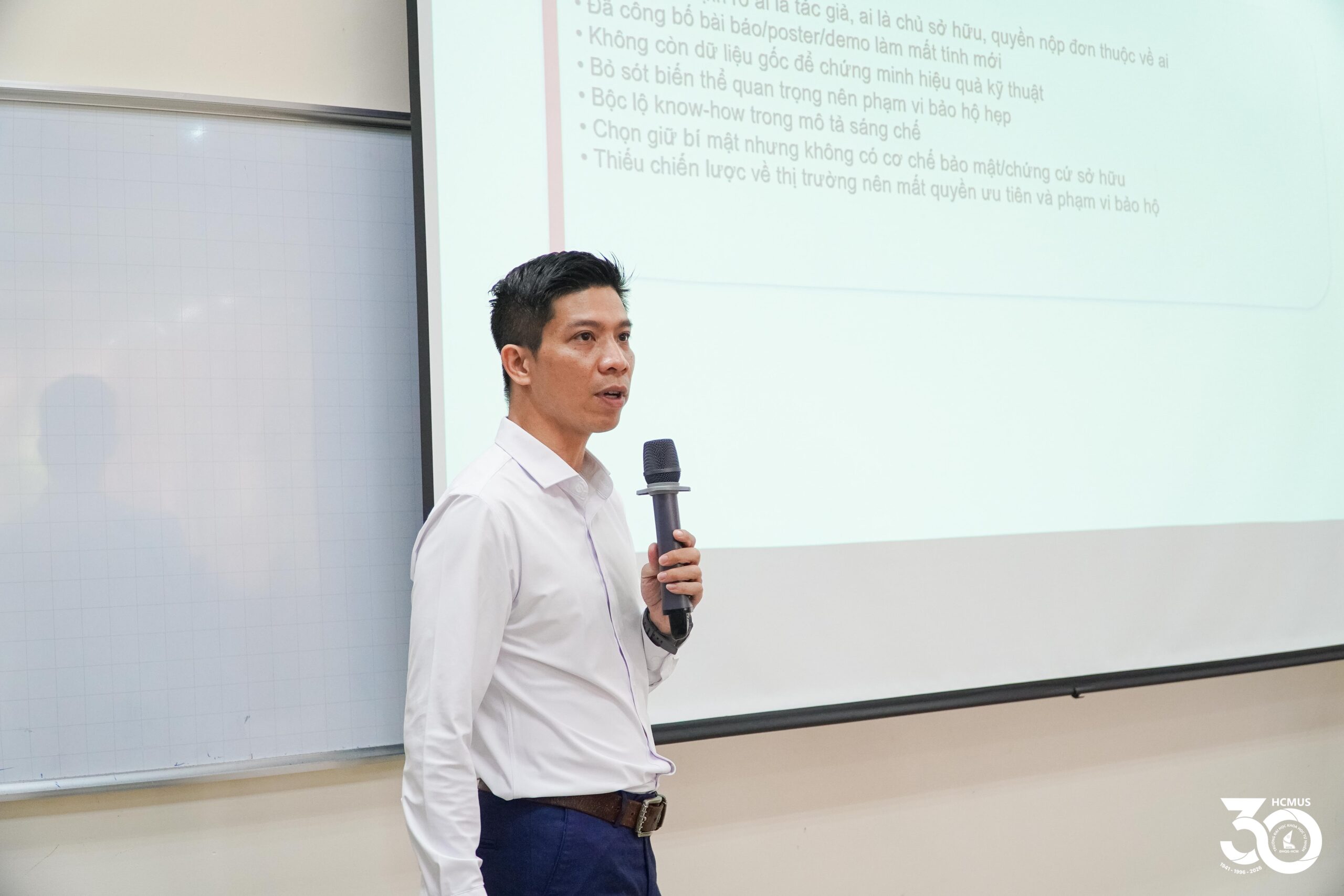
The speaker also introduced a structured patent identification process based on defining the technical problem, demonstrating technical efficacy, comparing the solution with existing technologies, and broadening the scope of protection. Case studies spanning autonomous vehicles, advanced materials, and industrial AI were presented to illustrate how research findings can be transformed into intellectual property with strong commercial potential.
Session 2: Patent Registration from Research Findings: Current Status and Solutions
During the session ‘Patent Registration from Research Findings: Current Status and Solutions’, Assoc. Prof. Từ Diệp Công Thành—Director of the Intellectual Property and Technology Transfer Center (IPTC), Viet Nam National University Ho Chi Minh City—analysed the comprehensive landscape of patent registration within universities and research institutes. The report indicated that intellectual property is evolving into a ‘core infrastructure’ for competitiveness, rather than being treated merely as a ‘by-product’ of scientific research. The speaker further distinguished between academic papers and patents, stating that publications aim to disseminate knowledge, whereas patents focus on protecting technical solutions and securing exclusive rights.
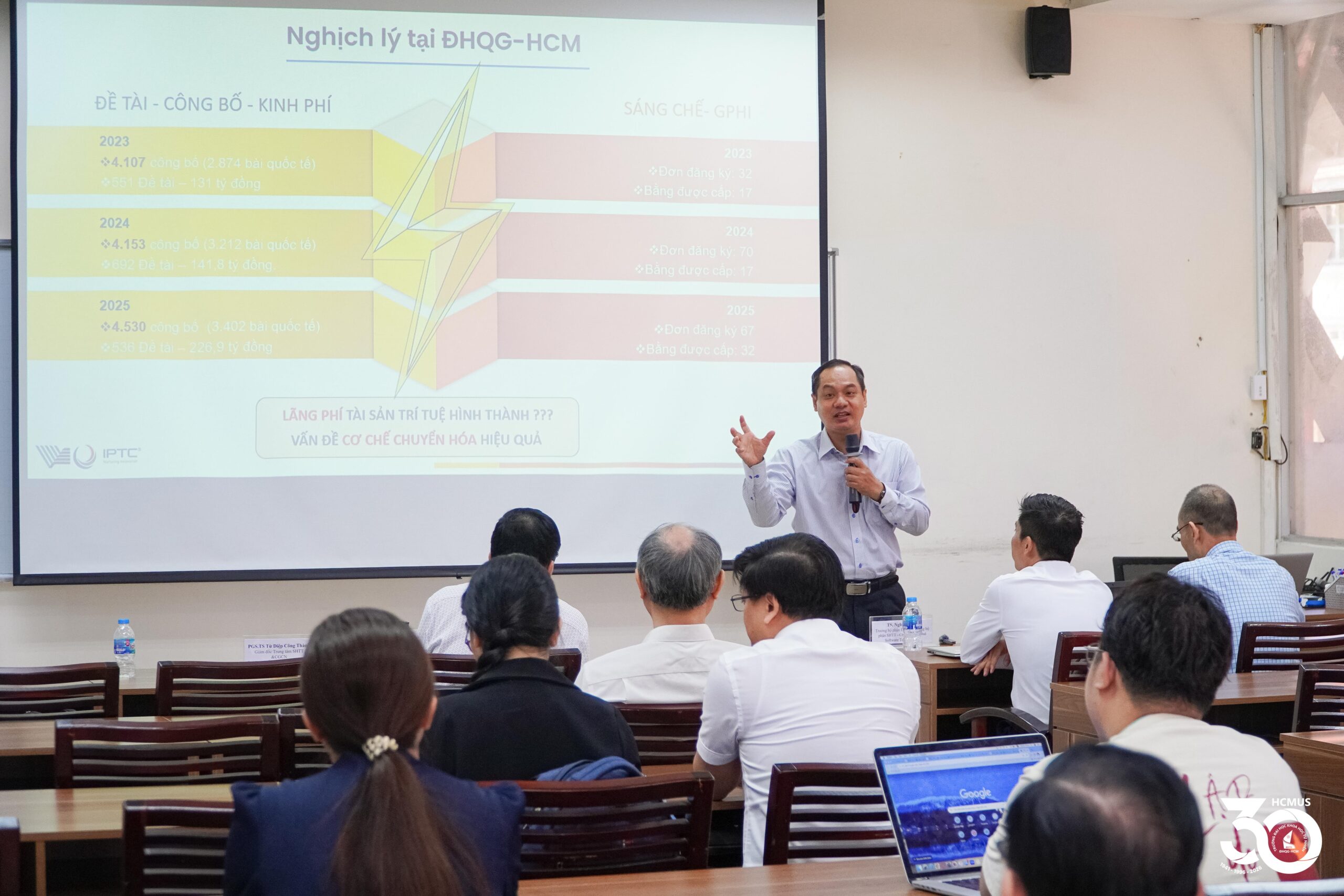
Several bottlenecks were identified, including a shortage of professional mechanisms to recognise and draft patent applications, limited capacity for rigorous examination akin to the standards of patent examiners, and the absence of centralised intellectual property governance with clearly defined responsibilities and cost structures. To address these challenges, IPTC proposed a centralised intellectual property management model designed to professionalise patent creation and prosecution, whilst strengthening screening, evaluation, and investment mechanisms aligned with commercialisation potential.
Session 3: Exploitation and Commercialisation of Patents from Universities and Research Institutes
In the final session, ‘Exploitation and Commercialisation of Patents from Universities and Research Institutes’, Dr Nguyễn Hữu Cẩn—Acting Director General of the Viet Nam Intellectual Property Research Institute, Ministry of Science and Technology—clarified the fundamental nature of commercialising intellectual assets. According to the speaker, commercialisation extends far beyond the mere buying and selling of technology; the process represents the transformation of knowledge into socio-economic value through the protection, governance, evaluation, development, and exploitation of intellectual property. The presentation also outlined prevalent commercialisation models, including technology licensing, spin-offs or startups, and joint research ventures with industry.
Furthermore, the speaker analysed various impediments to current intellectual property commercialisation, such as equating the sheer volume of patents with actual commercialisation capacity, a lack of comprehensive market assessments and legal risk evaluations, and institutional anomalies in benefit-sharing mechanisms between organisations and scientists.
Through insightful presentations and in-depth discussions, the symposium offered valuable practical perspectives on the trajectory from scientific research to the establishment of intellectual property rights and technology commercialisation. The event successfully fostered stronger connections between scientists, regulatory bodies, and industry partners, contributing to the development of a robust innovation ecosystem aimed at maximizing the value of intellectual property within higher education institutions and research bodies.
Leave a Reply