

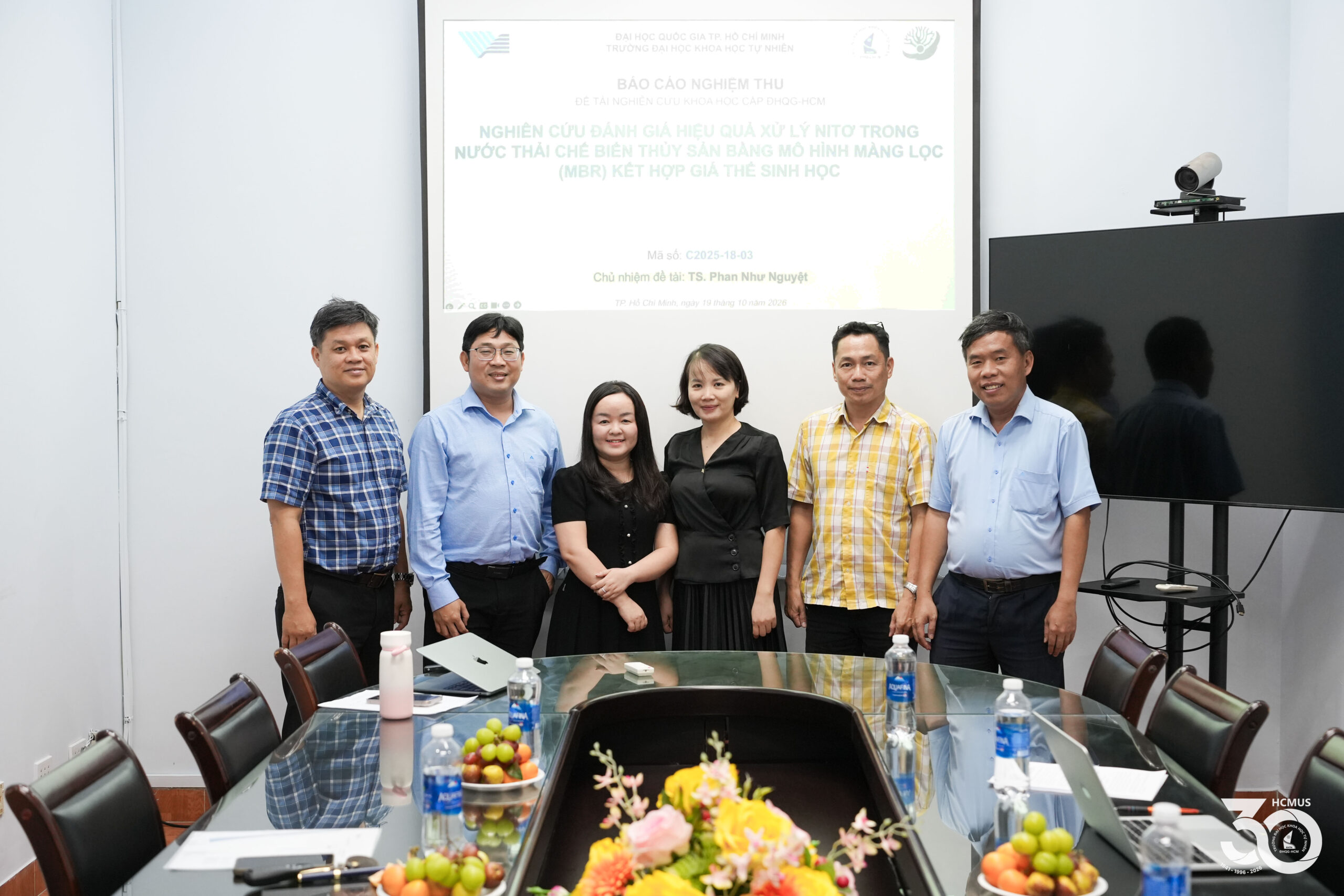
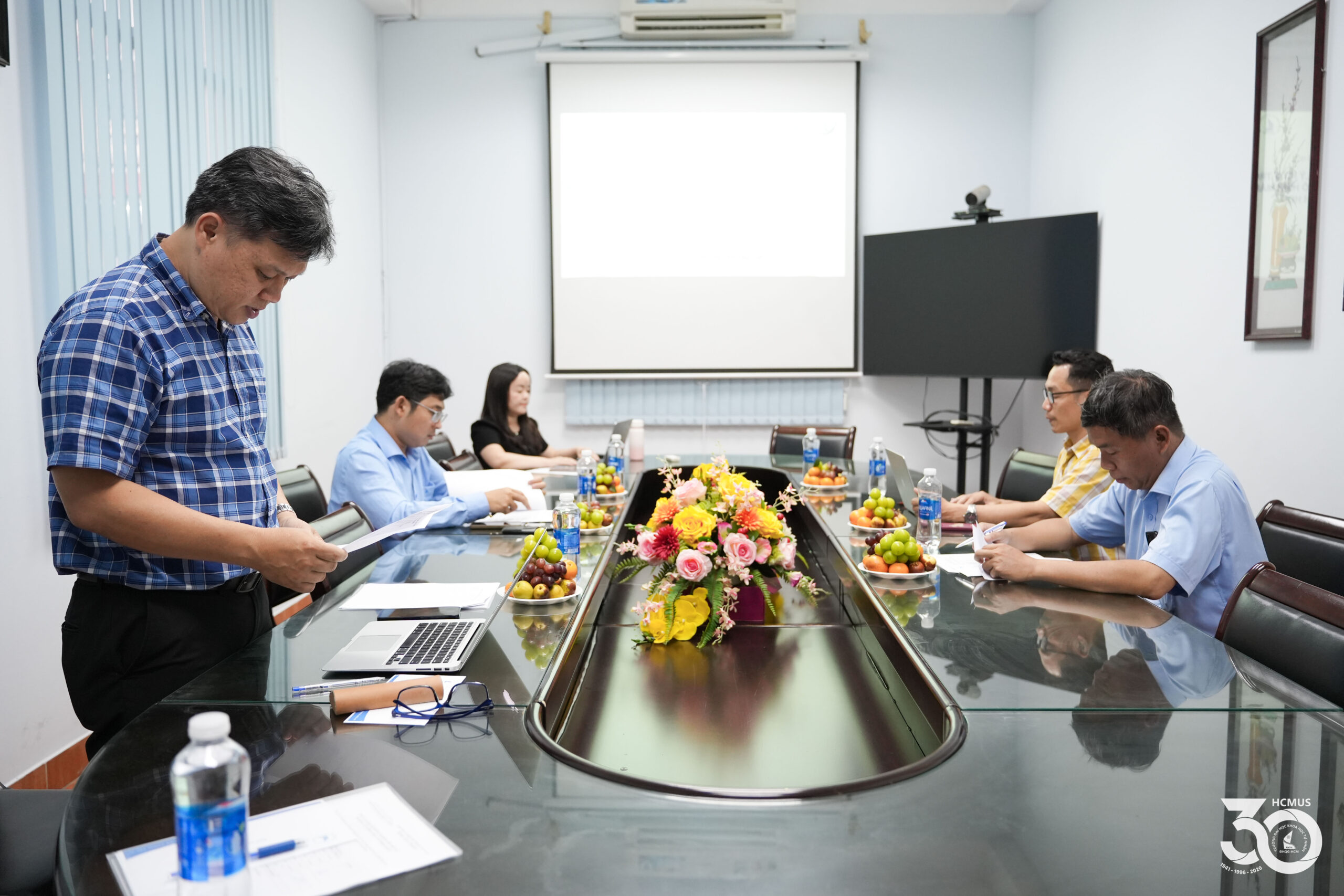
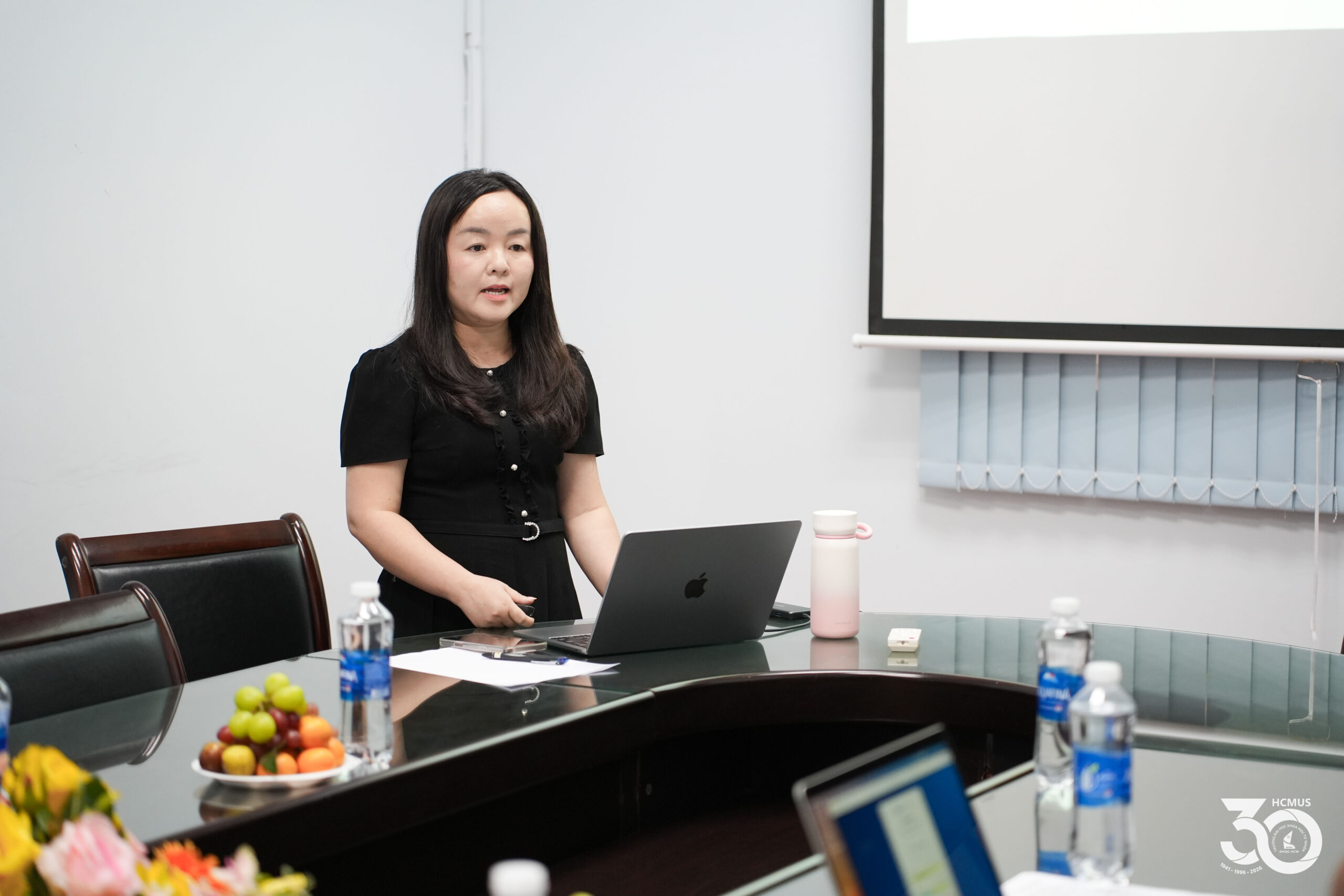
On 19 October, the VNUHCM-level Acceptance Council convened at VNUHCM–University of Science (HCMUS) to evaluate the research project entitled “Investigation of Nitrogen Removal Efficiency from Seafood Processing Wastewater Using a Membrane Bioreactor (MBR) Combined with Biological Carriers”, led by Dr Phan Như Nguyệt of the Faculty of Environment. The study evaluated nitrogen removal performance in an MBR system incorporating sponge media and rice husk biochar, while examining changes in the microbial community within the system.
In seafood processing wastewater treatment, controlling nitrogen compounds is an important consideration in improving treatment efficiency before wastewater is discharged into the environment. In response to this practical challenge, the project explored an approach combining membrane bioreactor (MBR) technology with biological carrier materials to assess the role of carrier media in nitrogen transformation within a wastewater treatment system under real operating conditions.
The study investigated the effects of two carrier materials — sponge and rice husk biochar — on nitrogen removal efficiency, biomass characteristics and microbial community structure in the MBR system. The results demonstrated high ammonia removal efficiency during both stages of carrier addition. In particular, the stage using rice husk biochar achieved a higher biomass-specific total nitrogen removal rate than the stage using sponge media.
In addition to treatment performance indicators, the research team analysed the microbial community using 16S rRNA gene sequencing. The results revealed distinct changes in microbial community structure associated with each carrier material. Specifically, sponge media enriched heterotrophic microbial groups, whereas rice husk biochar was associated with an increase in groups with the potential to degrade and transform a diverse range of organic compounds.
Notably, the observed changes in microbial communities, together with the nitrogen removal results, suggest the potential formation of microenvironments with different oxidation–reduction conditions within the biofilm, supporting simultaneous nitrification and denitrification. These findings help clarify the relationship between carrier properties, microbial community development and nitrogen transformation in the MBR system.
Based on the experimental results, rice husk biochar was identified as a promising material for supporting nitrogen removal in aerobic MBR systems. The use of agricultural by-products as wastewater treatment support materials also points towards more efficient resource utilisation in line with circular economy principles. However, further research is required to assess system stability and the feasibility of implementation at a larger scale.
The project also exceeded the registered target for scientific publications, producing two papers in reputable international journals: one Q1 paper indexed in Scopus (Case Studies in Chemical and Environmental Engineering) and one Q2 paper indexed in the Science Citation Index Expanded (SCIE) (Water Environment Research). Against the original target of one Q2 international journal paper, the publication output exceeded expectations. The project also successfully supported the training of three undergraduate students, meeting the registered target.
Through findings on nitrogen removal performance and microbial community dynamics, the study provides additional experimental evidence for the application of biological carriers in wastewater treatment technology. In particular, the potential of rice husk biochar highlights opportunities to integrate environmental technology research with agricultural by-product valorisation, providing a foundation for further studies on system stability and implementation at a larger scale.
Leave a Reply