

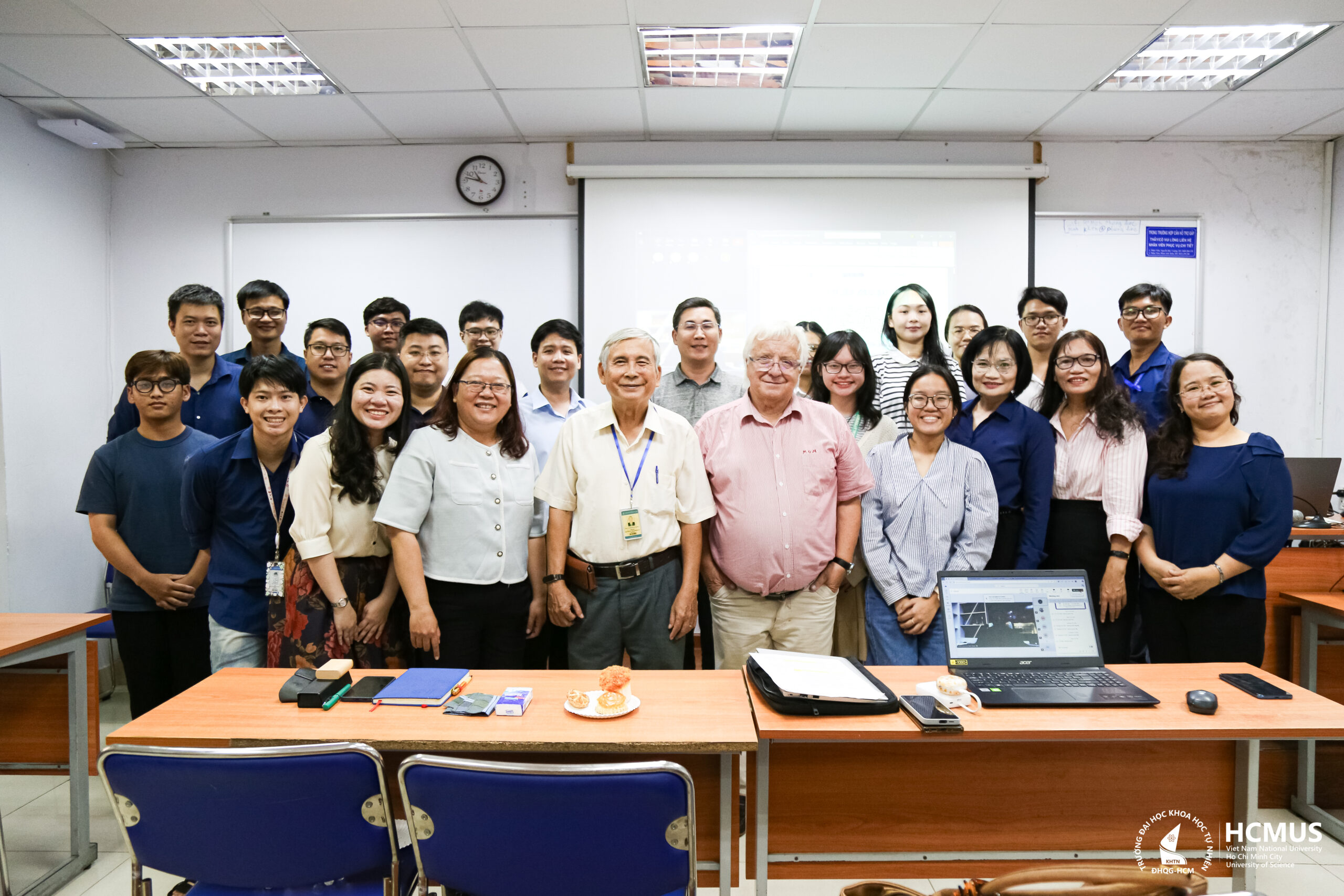
Speakers, invited guests, staff members, lecturers of HCMUS, and learners from within and outside the University taking a commemorative photograph at the scientific conference held on 30 July.
On 30–31 July, VNUHCM-University of Science organised a scientific conference on the theme “Ecosystem Services – A Potential Tool for Climate Change Adaptation”, under the leadership of the Centre for Greenhouse Gas and Climate Change Research, in collaboration with the Global Change Research Institute (CzechGlobe), Academy of Sciences of the Czech Republic.
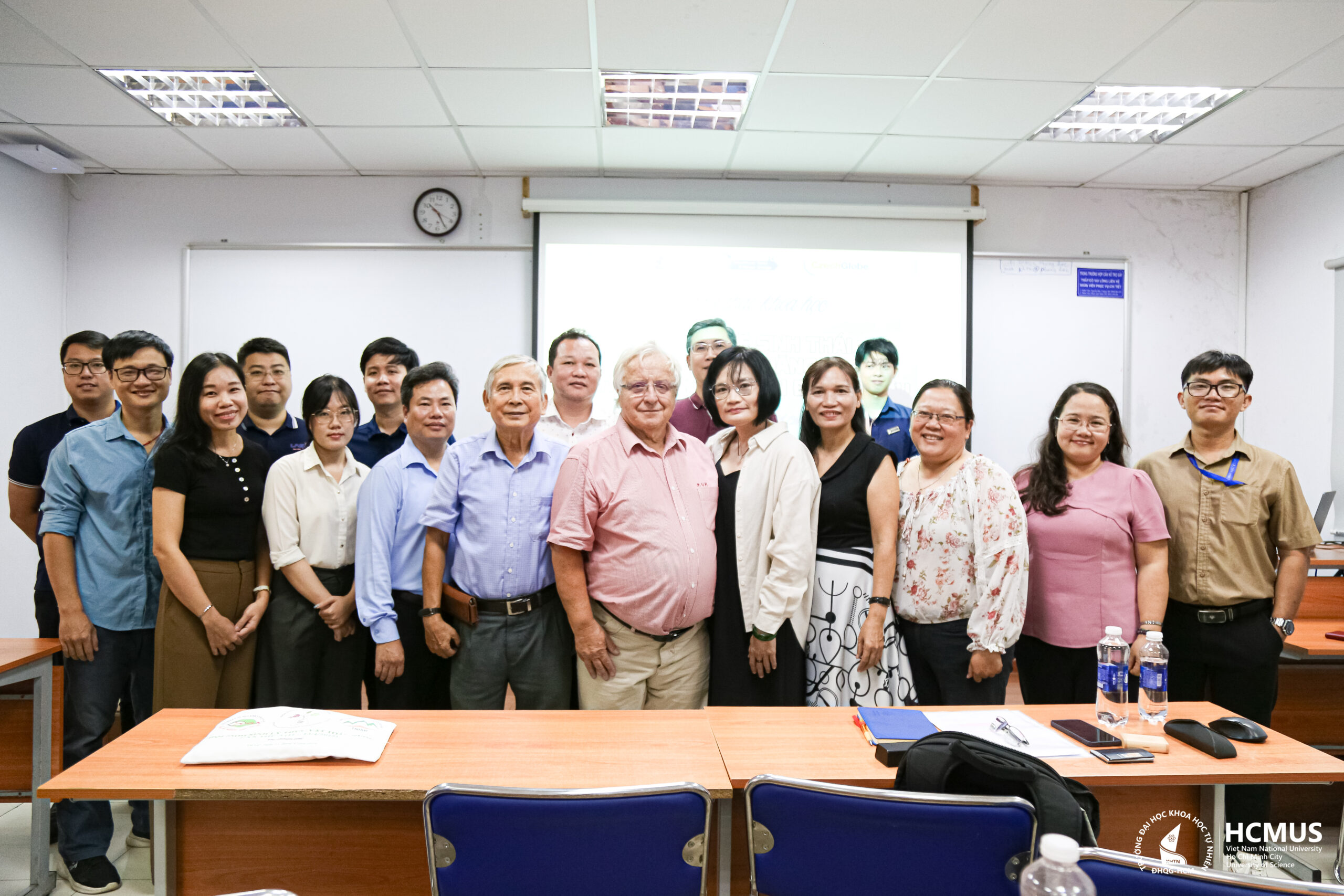
The event took place against the backdrop of a growing recognition of natural ecosystems as one of the key solutions to climate change. When conserved and managed appropriately, such natural systems can serve as “biological shields”, regulating climate, storing carbon, protecting soil, supporting livelihoods, and sustaining biodiversity. Integrating these values into planning and development policies represents a promising direction – and was the central focus of discussions throughout the conference.
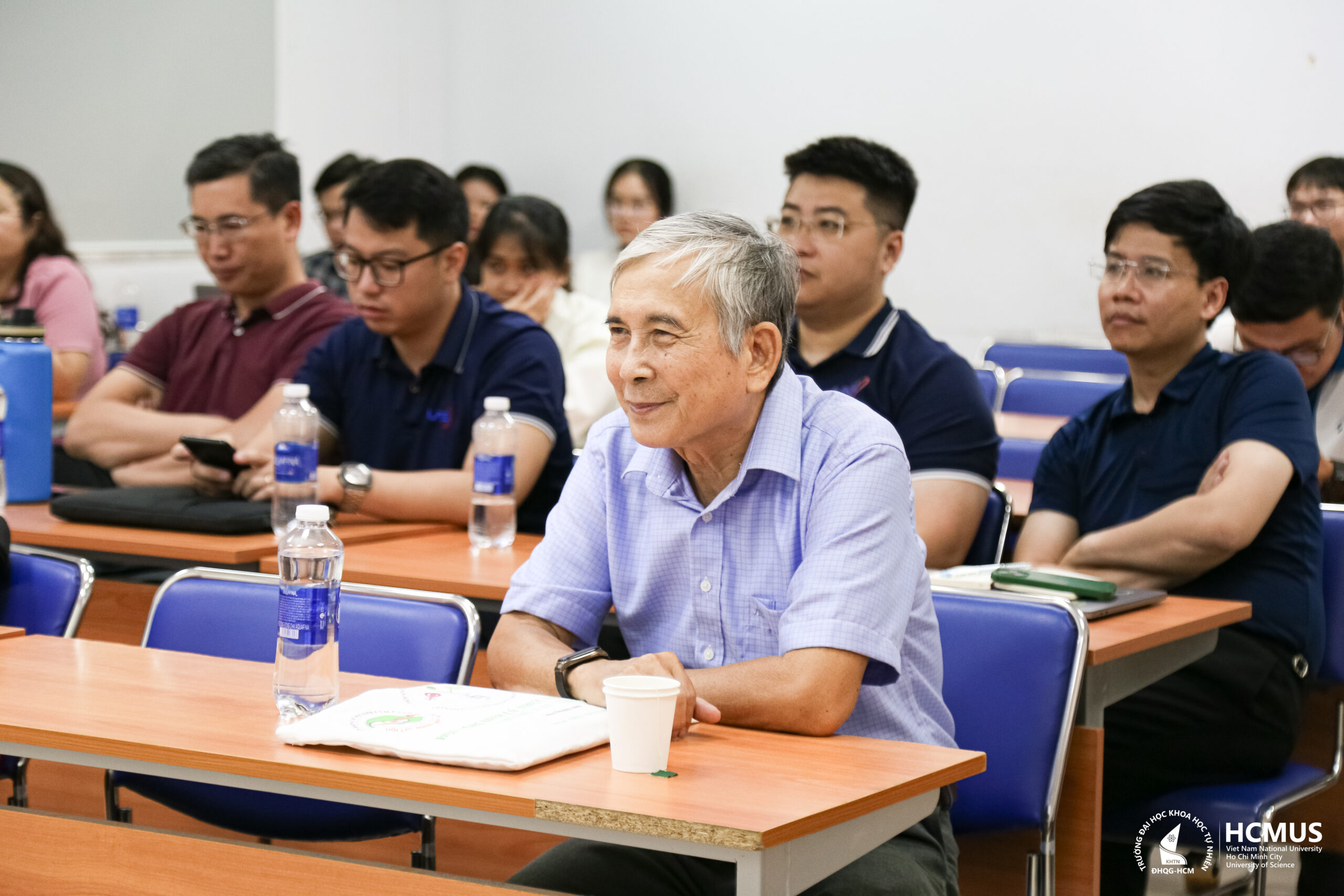
Opening the programme, Dr Phạm Quỳnh Hương – Director of the Centre for Greenhouse Gas and Climate Change Research and lecturer at the Faculty of Biology – Biotechnology – presented an overview of various types of ecosystem services and their potential contribution to adaptation strategies. According to Dr Hương, integrating this approach can enhance environmental resilience while creating a stable foundation for community livelihoods.

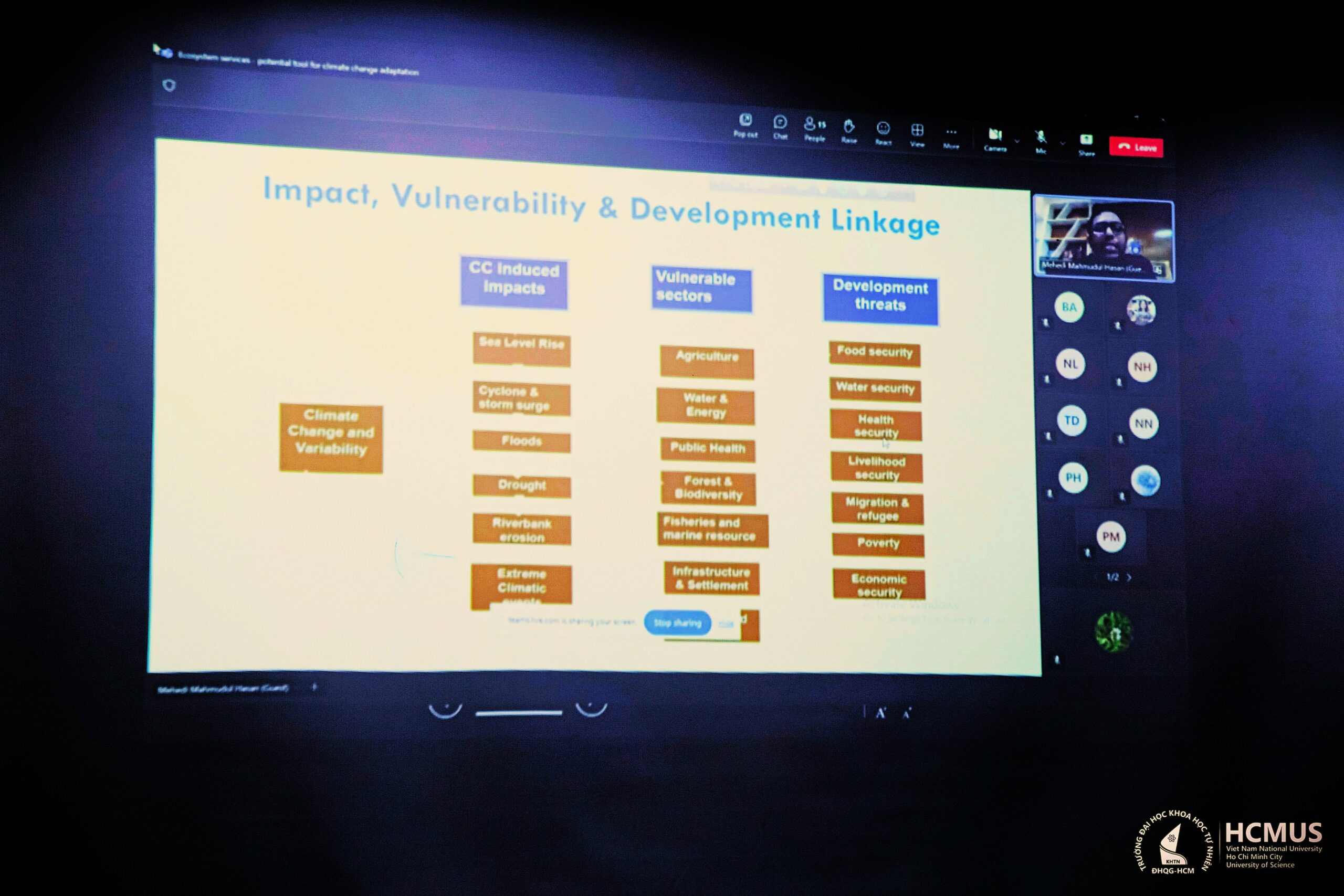
From the socio-ecological perspective of coastal regions affected by climate change, Prof. Mehedi Mahmudul Hasan – Dean of the Faculty of Fisheries and Marine Science, Noakhali Science and Technology University, Bangladesh – analysed the impacts of saltwater intrusion, pollution, and extreme climate events on the fisheries sector. The presentation highlighted the essential role of estuaries, tidal flats, and mangrove forests in protecting resources and sustaining the viability of coastal livelihoods.
From the perspective of forest ecology, Prof. Michal V. Marek – Director of CzechGlobe and Fellow of the Royal Swedish Academy of Agriculture and Forestry – introduced the concept of “sylvomitigation” (climate change mitigation through active silviculture). Techniques such as selective thinning and rotational harvesting, when appropriately implemented, can improve photosynthetic efficiency, increase carbon sequestration capacity, and enhance the effectiveness of forests as “natural carbon pumps”.
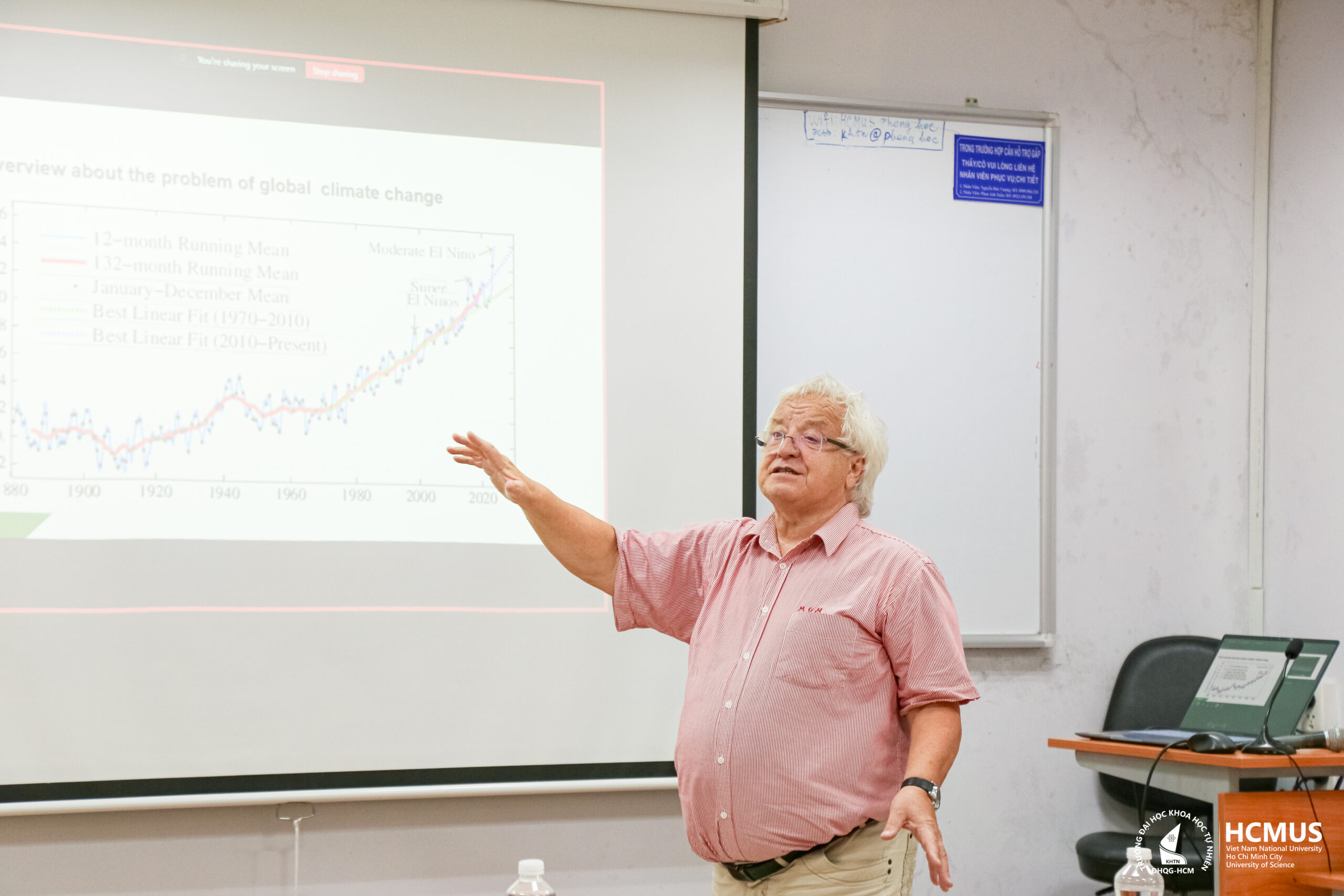
Regarding climate measurement, Prof. Marek also shared information on CzechGlobe’s advanced eddy covariance monitoring stations, which continuously track greenhouse gas and energy fluxes in different ecosystems. Complementing this, MSc. Vũ Hoàng Ngọc Khuê – research fellow at CzechGlobe and supervisor of the monitoring station at the Láng Sen Wetland Reserve (Long An Province) – presented a case study in Viet Nam. The system, located in the buffer zone of wetland forest and rice fields, demonstrated the effectiveness of eddy covariance technology in monitoring carbon fluxes, providing quantitative data for research in agriculture, environment, and climate science.
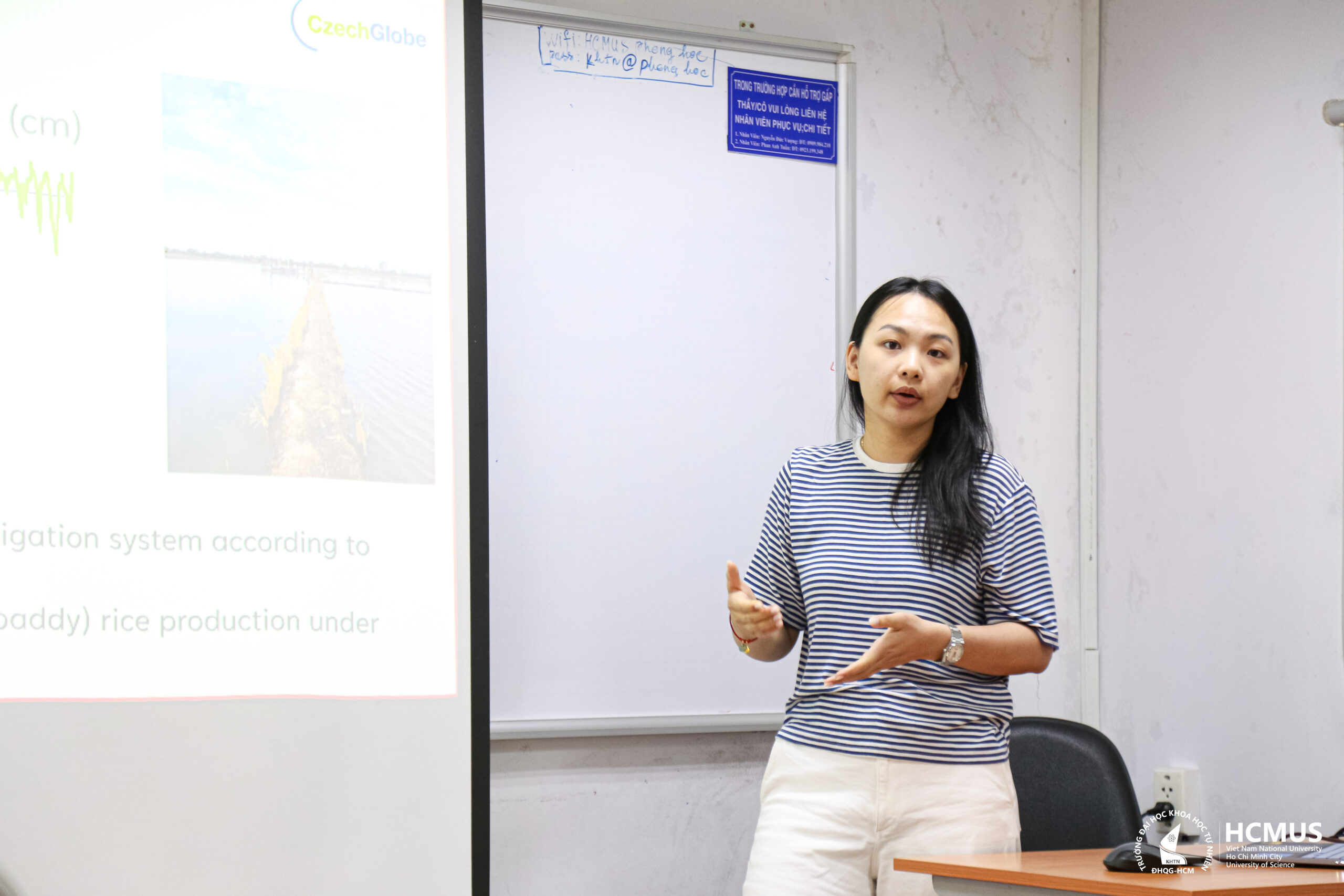
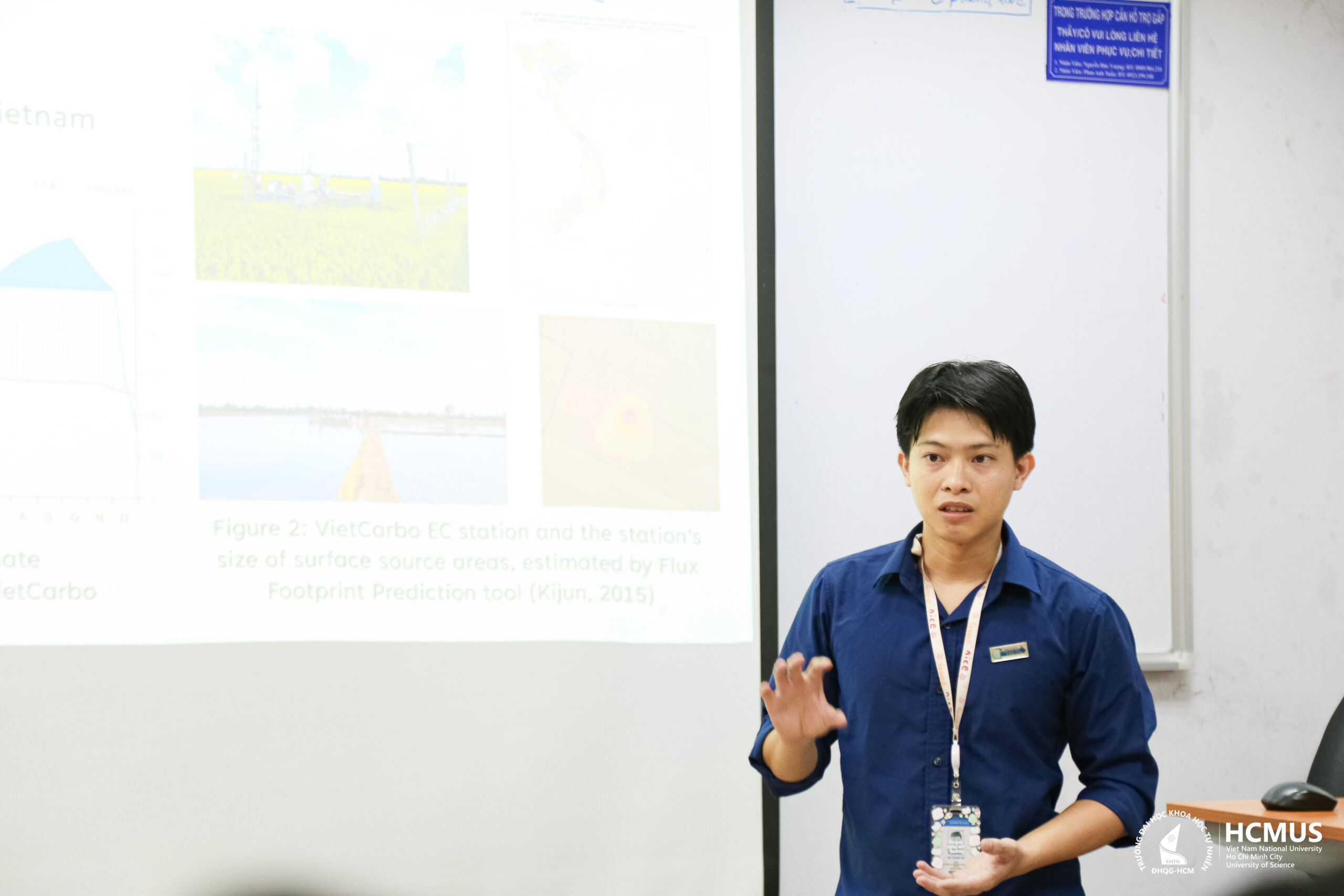
MSc. Vũ Hoàng Ngọc Khuê and her partner presenting research on the application of the eddy covariance system in the Láng Sen wetland area, Long An Province.
From a spatial and geographical approach, MSc. Lý Thị Bích Trâm – research fellow at the VNUHCM-Institute for Environment and Resources, and doctoral candidate at Chulalongkorn University (Thailand) – presented (online) a study on mangrove forest degradation in Phang Nga Province, southern Thailand. Using remote sensing and GIS data, the research analysed the decline in mangrove forest area due to shrimp farming, tourism, and unsustainable exploitation, and warned of the ecological imbalance risks facing Southeast Asian coastal zones.
Despite originating from diverse disciplines – biology, fisheries, silviculture, greenhouse gas monitoring, and remote sensing – the presentations converged on a unified message: ecosystem services are not merely natural assets but should be regarded as an active component of climate change adaptation and mitigation strategies.
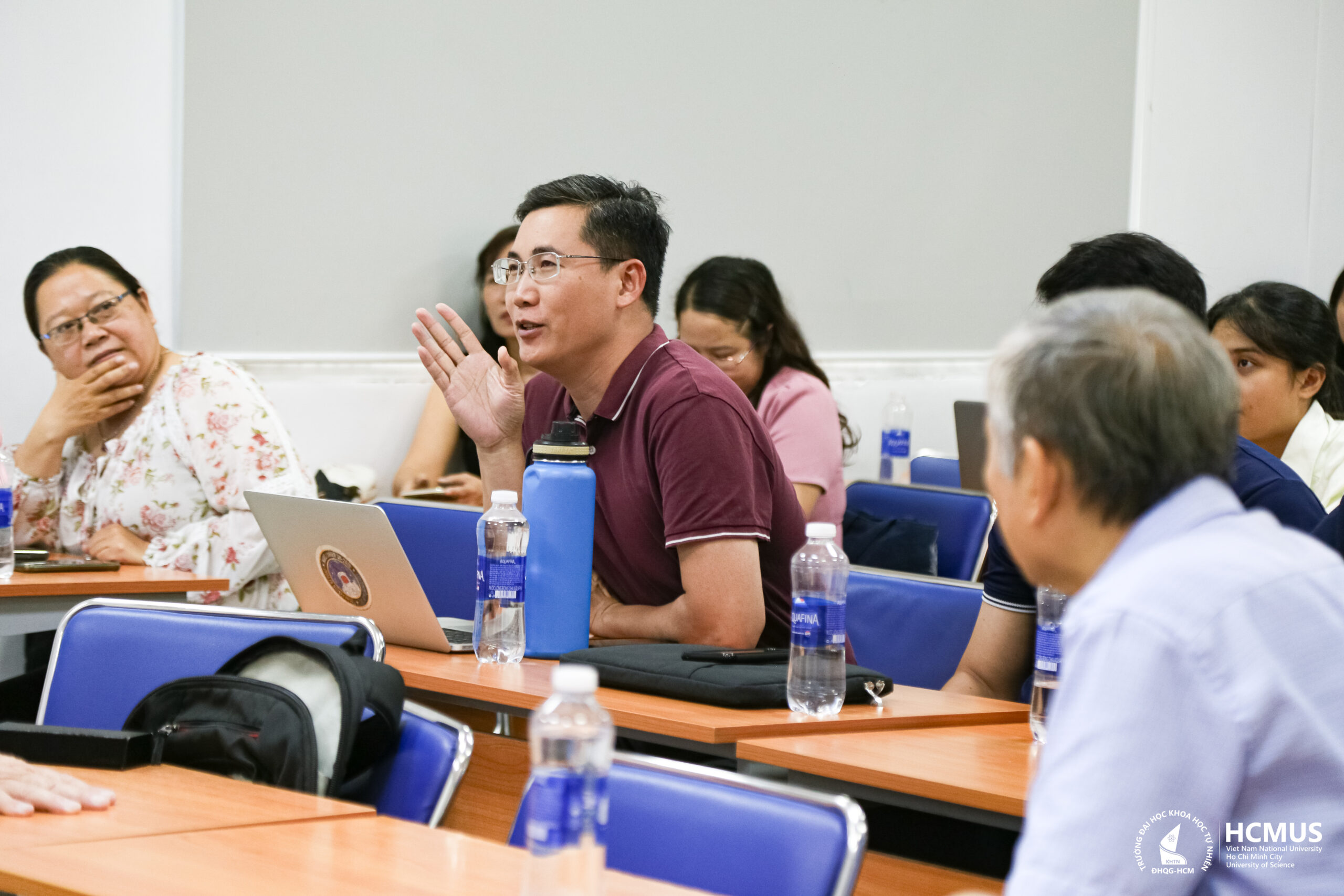
Strengthening interdisciplinary research, developing advanced monitoring systems, and expanding connections with the international scientific network are key conditions for transforming knowledge into practical action.
The conference concluded in an atmosphere of academic enthusiasm and constructive cooperation, opening up opportunities for research partnerships and scholarly exchange between HCMUS and international institutions. The event also reaffirmed the University’s pioneering role in education, research, and contributing knowledge to address global environmental challenges.
PMN
Leave a Reply