

![[DOCTORAL THESIS DEFENCE] DOCTORAL RESEARCHER HUỲNH ĐÌNH CHƯƠNG SUCCESSFULLY DEFENDS DOCTORAL DISSERTATION IN ATOMIC AND NUCLEAR PHYSICS](https://en.hcmus.edu.vn/wp-content/uploads/2025/08/P4T_9788-scaled.jpg "P4T_9788")
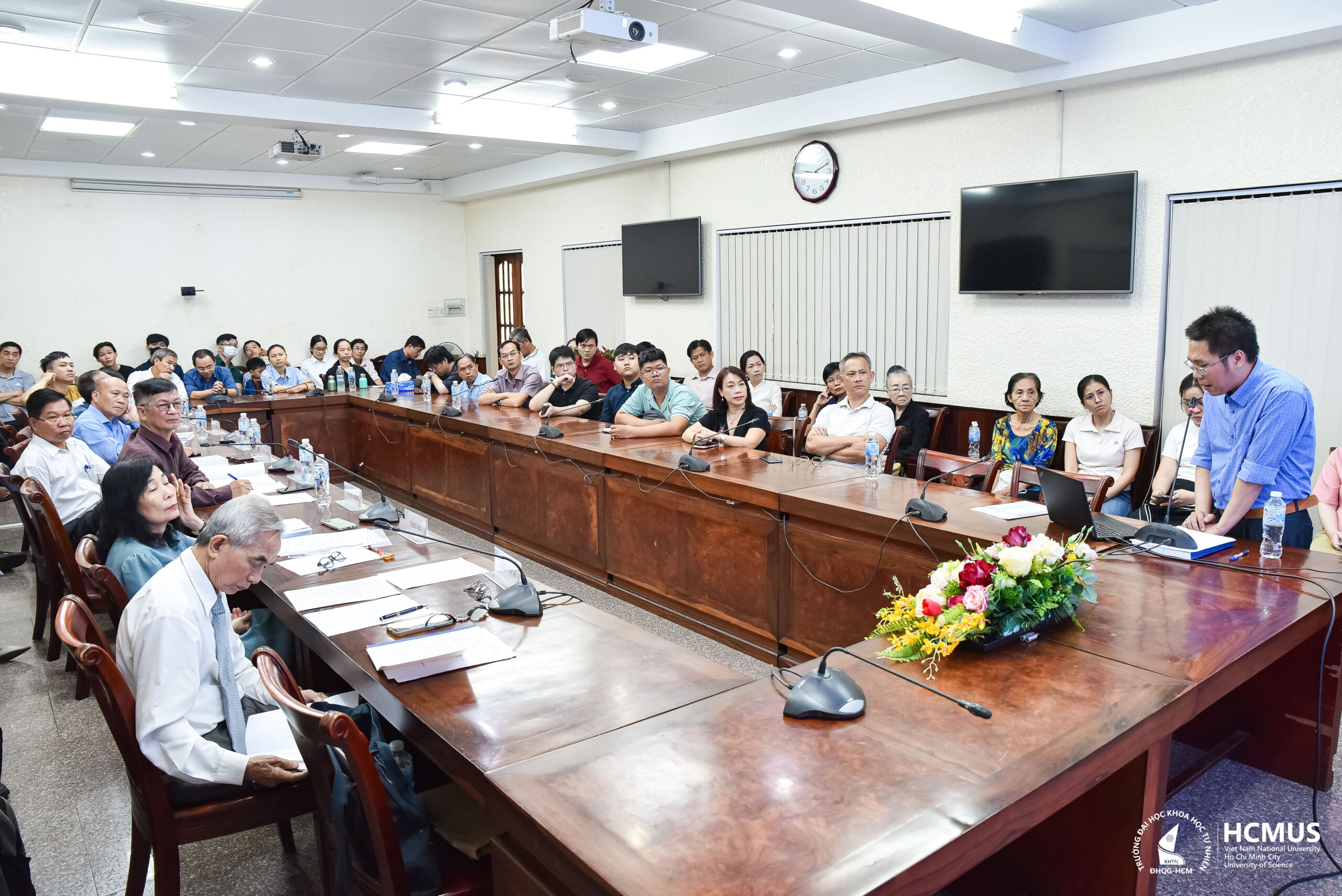
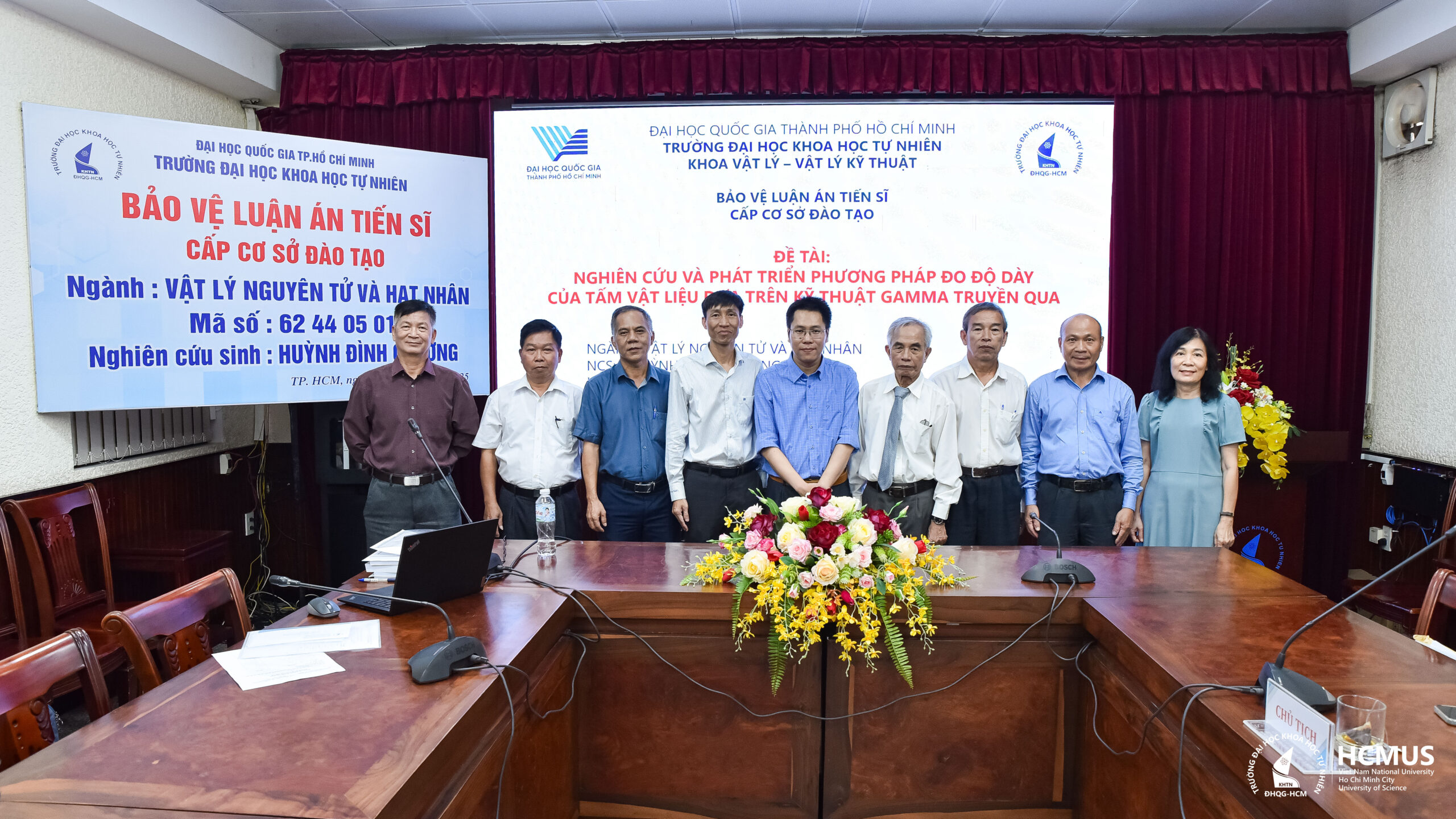
On 3 August 2025, at VNUHCM–University of Science (HCMUS), doctoral researcher Huỳnh Đình Chương successfully defended the doctoral dissertation at the institutional level with the topic “Research and Development of a Method for Measuring the Thickness of Material Plates Based on Gamma Transmission Technique”, under the scientific supervision of Assoc. Prof. Trần Thiện Thanh.
The dissertation focused on developing a gamma transmission (GT) measurement system using a ^137Cs radioactive source and an NaI(Tl) detector for determining the thickness of homogeneous material plates. To calibrate the system and optimise measurement accuracy, the candidate employed the Monte Carlo simulation programme MCNP version 6.1 to generate a comprehensive database covering various materials and thickness ranges.
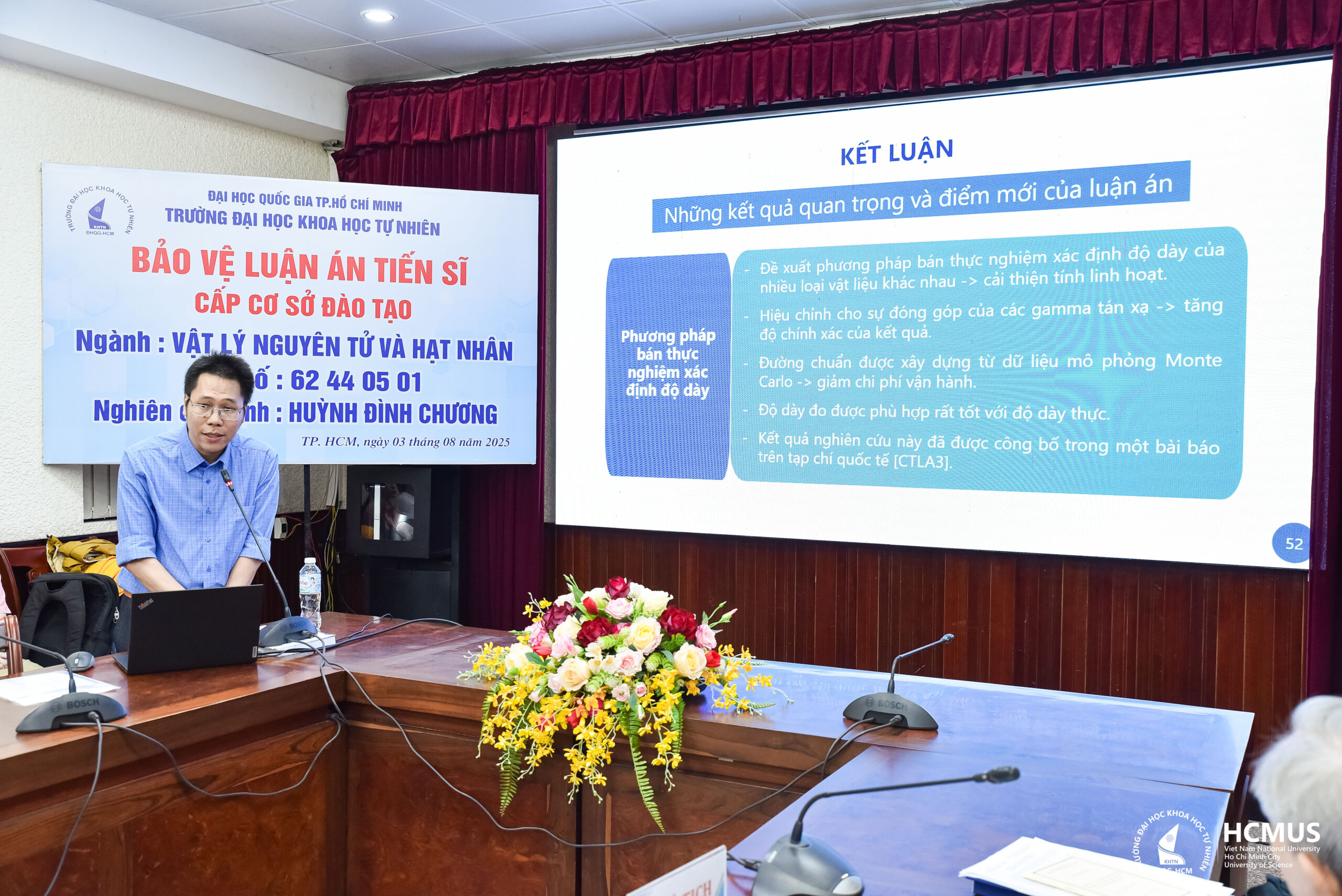
A notable contribution of the dissertation was the proposed method of low-energy photon beam scanning to determine critical detector parameters, including crystal diameter and length, distance from the entrance window to the crystal, and the mass density of the reflective layer. These parameters enabled the simulation configuration to achieve high accuracy, with the full-energy peak efficiency simulation error remaining below 3.5% across the energy range from 31 keV to 1408 keV.
From the simulation data, a library of gamma transmission spectra was established for numerous materials (effective atomic numbers from 3 to 83) and sample thicknesses from 0.1 mm to 70 mm. The candidate defined the ratio R – the area ratio between the spectrum with a sample and without a sample – to determine material thickness by interpolating ln(R) values into a calibration curve derived from simulation analysis.
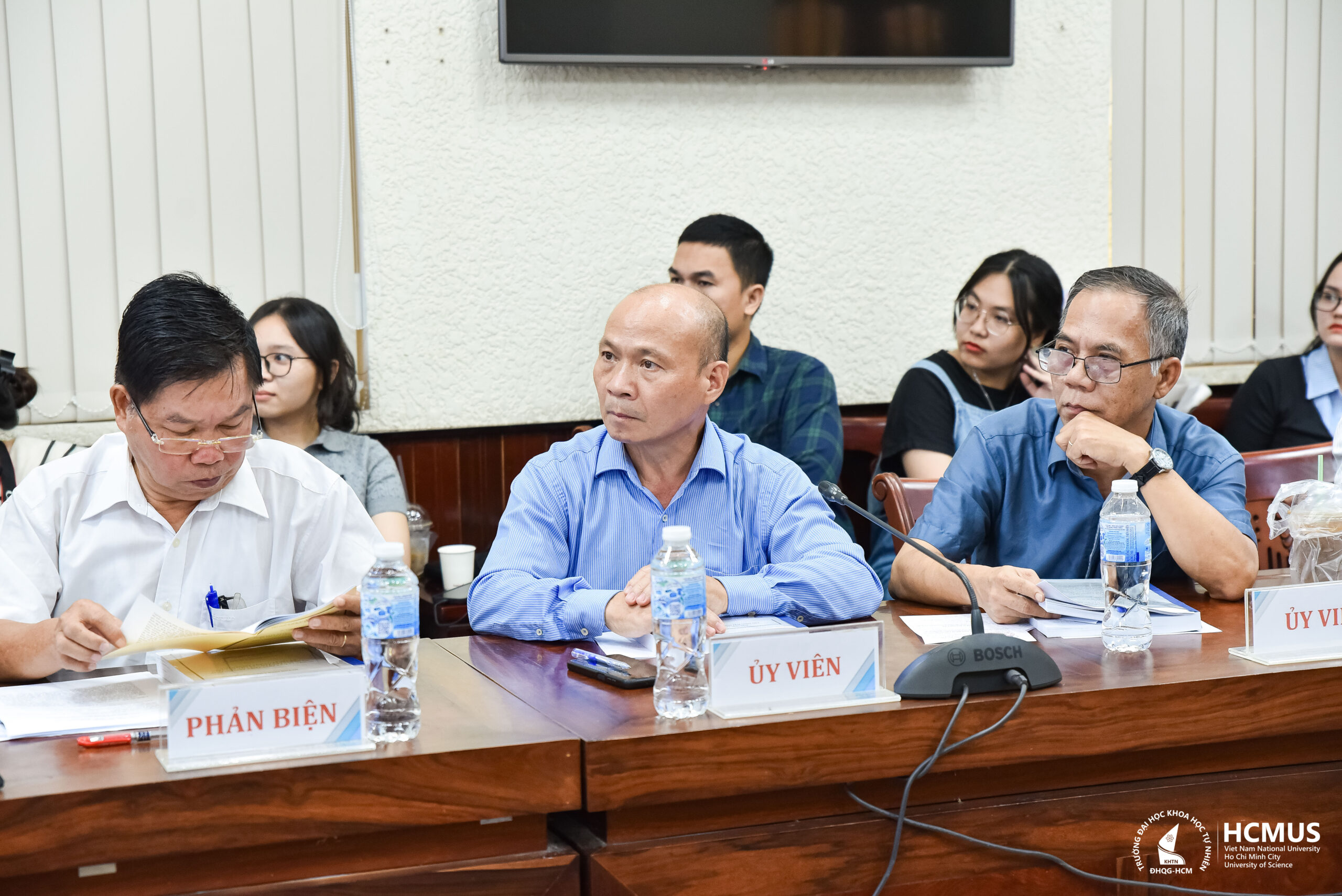
The method was verified through 162 practical measurements on four materials: graphite, aluminium, C45 steel, and copper. Results demonstrated an average relative deviation of only 0.52% between the measured and actual thickness values, with a maximum deviation of 2.17%. These figures confirm the reliability of the proposed measurement system and analytical model.
Beyond enhancing the measurement method, the dissertation introduced a model to estimate the measurable thickness range (RMT) corresponding to the desired accuracy (DA) within the GT technique. This tool serves as valuable support for users in selecting appropriate measurement parameters, reducing measurement time, and ensuring accurate results in non-destructive testing applications.
In terms of application potential, the measurement system and analytical tools developed in the study can be implemented directly in industrial production lines where material quality inspection is required. To broaden applicability, the candidate also identified future research directions, including thickness measurement for multilayer materials and calibration for complex geometries such as round tubes, curved surfaces, or inclined surfaces, which are common in manufacturing processes.
Building on these directions for further study, the doctoral defence brought the research to a successful conclusion. In a rigorous academic atmosphere, doctoral researcher Huỳnh Đình Chương presented the work with clarity, addressed all review questions with well-founded responses, and received high commendation from the academic committee for the scientific contribution and practical relevance of the dissertation.
Leave a Reply